







Fast Shipping
Carrier information

20k products
Payment methods

24/7 Support
Unlimited help desk

2-day Delivery
Track or off orders
Specified per material — tool head, vacuum zoning and cutting speed are matched to your actual sheet stock before the RT-D2516/RT-S2516 leaves the factory, not guessed from a working area dimension.
Technical Specifications
| Parameter | Value |
|---|---|
| Model | RT-D2516/RT-S2516 |
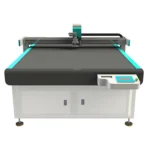
| Product Type | CNC Oscillating Knife Cutting Table |
| Working Area | 1600 × 2500 mm |
| Overall Dimensions | 3450 × 2300 × 1250 mm |
| Rated Power | 9 kW |
| Voltage | 380V ±10% |
| Tool Head | Multifunctional head with Swiss imported knife (vibration full cut, half cut, cursor location) |
| Cutting Thickness | Up to ≤100 mm (varies by material) |
| Translational Velocity | 800–2000 mm/s |
| Cutting Speed | 200–800 mm/s (according to different cutting materials) |
| Repeated Accuracy | ≤0.1 mm |
| Transmission System | Imported digital servo motor, linear guide, synchronous belt, ball screw |
| Guide Rail | Taiwan Hiwin straight-line square guide |
| Servo Motor | Taiwan Delta servo motor and driver |
| Vacuum Table | Aluminum alloy honeycomb structure, zoned follow-cut adsorption; 7.5 kW vacuum pump |
| Auto Feeding | Equipped with Germany imported conveyor belt |
| Safety Device | Infrared sensors and emergency stop |
| Instruction System | HP-GL compatible format |
| Software | Professional carton nesting and cutting software; multi-format import; auto positioning for cut, mark, crease |
| Language Options | English, Russian, Italian, Chinese; special languages customizable |
| Key Features | Flat working table, fully assembled delivery, CCD camera contour recognition available |
Application Suitability
| Application | Material or Output |
|---|---|
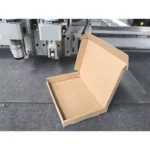
| Packaging carton and sample making | Cardboard, corrugated board, greyboard with lamination |
| Sticker and label contour cutting | Vinyl, printed adhesive sheets, reflective film |
| Advertising signage and billboard | PVC foam board, KT board, honeycomb paper board |
| Business cards, tags and card cutting | Coated paper stock, plastic card sheets |
| Flexible material fabrication | Leather, sponge composite, PVC, soft glass, silicone, rubber |
What the "≤100mm Cutting Thickness" Claim Actually Depends On
Maximum cutting depth is a function of material density and tool head configuration, not a single number on a brochure.
I have watched a packaging sample shop order a machine rated for thick corrugated, only to stall on high-density greyboard with lamination because the oscillating frequency and blade geometry were set for softer stock. The stated thickness ceiling holds for low-density foam or honeycomb paper but drops substantially when you move to compressed gasket rubber or multi-ply laminated board. Matching the CNC oscillating knife cutting table specifications to your densest daily material prevents blade chatter, ragged edges, and mid-run tool changes [NEED_CITE: oscillating knife cutting mechanics for varying material densities].
Tool Head Assignment by Material, Not by Assumption
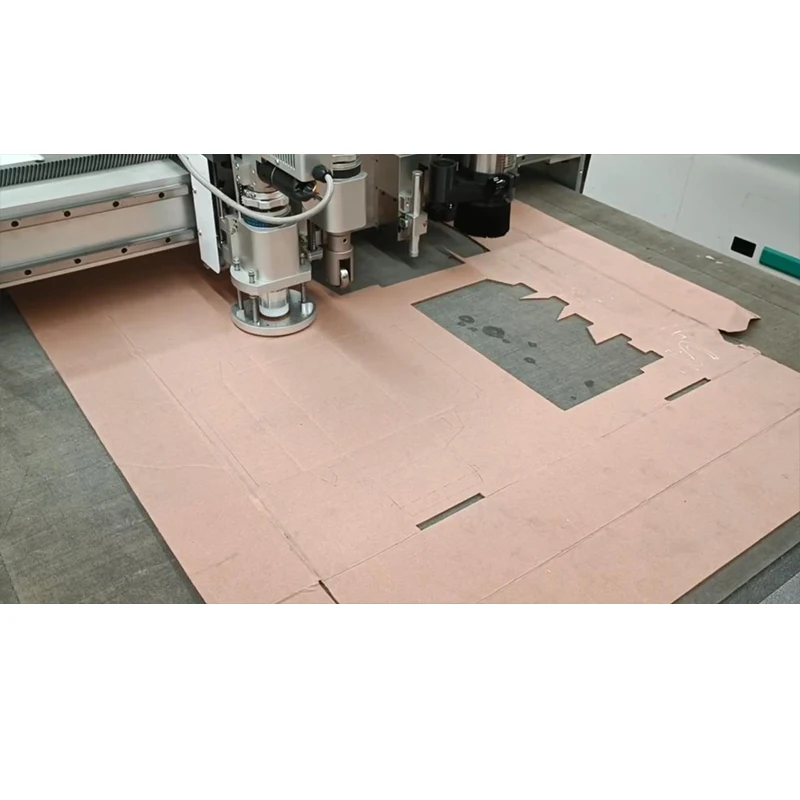
The multifunctional head on the RT-D2516/RT-S2516 carries a Swiss imported oscillating knife that performs full cutting, half cutting and cursor location in one setup. For corrugated board and standard cardboard, the vibration full-cut mode clears the kerf cleanly at higher travel speeds. When the job shifts to self-adhesive vinyl or thin sticker stock, half-cut mode scores the face layer without penetrating the backing paper — a capability that matters to signage shops running mixed batches. The oscillating knife cutting table specifications here are meaningful only when the tool head is configured against the buyer’s actual material stack before the machine ships.
Vacuum Zoning That Follows the Cut Path
The aluminum honeycomb table is divided into adsorption zones that activate based on where the head is working, rather than pulling vacuum across the entire surface at once. This zoned follow-cut approach matters when nesting small gasket parts or sticker contours across the 1600 × 2500 mm bed. A full-table vacuum on small parts risks lifting the leading edge as the blade exits, producing dimensional drift or catching the knife tip. The 7.5 kW pump maintains hold-down pressure in the active zone while keeping energy draw proportional to the work area actually in use [NEED_CITE: vacuum hold-down principles in flatbed digital cutting].
Reading the Motion Specs for Real Production Impact
The repeated accuracy of ≤0.1 mm is delivered through Taiwan Hiwin linear guides paired with Delta servo motors — a combination that controls positional drift across long cutting paths. For carton sample makers producing packaging prototypes, this tolerance keeps fold lines aligned with cut edges over the full 2500 mm travel, so assembled boxes close square. Translational velocity reaches 2000 mm/s for non-cutting moves, while cutting speed ranges between 200 and 800 mm/s depending on material resistance. The practical implication: dense materials like rubber gaskets require the lower end of that speed band for clean edges, while corrugated board can be cut near the upper limit without edge compression.
The Hidden Cost of a Wrong Configuration Call
Choosing an oscillating knife head when a drag knife or creasing wheel suits the material produces visible consequences within the first production hour. Foam cuts with crushed edges instead of clean faces, laminated greyboard chips blade tips prematurely, and crease lines on carton stock appear shallow and inconsistent. On the vacuum side, undersized zoning lets small nested parts drift during the final cuts in a sheet, forcing operators to manually reposition and re-register mid-job [NEED_CITE: tool head selection errors in digital flatbed cutting operations]. These are not wear issues — they are specification mismatches that no amount of operator adjustment fixes.
Why Buyers Source This Platform From Realtop
In-house design covering both knife cutting and laser cutting technologies means the buyer selects the method that fits the material, rather than forcing one process to cover everything. Tool head and table configuration are documented per material type and production volume before order confirmation, not left as a generic default. Software file format compatibility is verified against the buyer’s existing CAD and nesting workflow during the inquiry stage. Voltage, plug type, control language and CE declaration status are confirmed on the electrical schematic before the machine enters assembly. Sample cutting runs on the buyer’s own material stock, with edge quality and dimensional accuracy recorded in a report before commitment.
Documentation & Verification
- Machine specification sheet listing tool head, vacuum zoning and servo configuration per your order
- Electrical schematic with voltage and frequency confirmed against your facility supply
- Sample cutting report on your material stock with edge quality and dimensional data
- Tool head and table configuration list matched to your material type and thickness
- Software licence with file format compatibility note for your nesting workflow
- Factory test record documenting repeatability across the full working area before dispatch
Installation, Commissioning & Support
- 3450 × 2300 mm footprint requires level floor with clearance for conveyor feed and operator access
- 9 kW rated power plus 7.5 kW vacuum pump need dedicated three-phase circuit at confirmed voltage
- Machine ships fully assembled; position, level and connect utilities on arrival
- First-run commissioning includes vacuum zone calibration and servo parameter tuning on your material
- Operator training covers tool head changeover, nesting software and crease-cut sequencing
- Spare blade stock and wear-part list provided matching the Swiss imported knife specification
What to Include With Your Inquiry
Send the material types you cut most often, including thickness range and whether lamination or coating is involved. Specify your daily sheet volume and the nesting layout you typically run so vacuum zoning can be sized accordingly. Confirm your facility voltage and frequency, the control language your operators need, and whether your existing CAD files use DXF, PLT or another format so software compatibility is verified before the order is placed.
Frequently Asked Questions
Q: How is cutting thickness verified per material, and what determines the actual speed range?
A: Cutting depth is tested on your specific material during a sample run before commitment, recording edge quality and achievable thickness. Speed within the 200–800 mm/s band is then set based on material density — softer stock runs faster, while dense rubber or laminated board requires slower travel for clean edges.
Q: Which tool head is correct for my material and thickness?
A: Oscillating knife suits thicker foam, corrugated and composite sheets. Drag knife handles thin vinyl and sticker contour work. Creasing wheel scores fold lines on carton stock. The correct head is determined by your material type, thickness and required edge finish, and is specified before the machine ships.
Q: Is the vacuum table zoning sufficient for small-part nesting layouts?
A: The zoned follow-cut system activates adsorption only in the area where the head is working, concentrating hold-down force on the active cutting region. Zone count and layout are confirmed against your typical nesting pattern during the configuration stage to prevent part lift on small contours.
Q: Will the software import my existing file formats and nesting workflow?
A: The included carton nesting software supports HP-GL and multiple import formats. Compatibility with your specific CAD output files is confirmed during the inquiry stage, and a test import is run before order to ensure your creasing, marking and cutting layers transfer correctly.
Q: What voltage, plug type and control language ship with the machine?
A: Standard configuration is 380V ±10% with language options in English, Russian, Italian or Chinese. Custom voltage, plug type and special languages are configured before assembly based on your electrical schematic and operator requirements, documented in the pre-shipment specification confirmation.


商品评价
Clear filtersThere are no reviews yet.