




Fast Shipping
Carrier information

20k products
Payment methods

24/7 Support
Unlimited help desk

2-day Delivery
Track or off orders
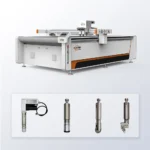
Configured Tool Heads — Each RT-D2516/RT-S2516 ships with the knife, creasing and drag tooling matched to the buyer’s material sample rather than a generic bundle.
Technical Specifications
| Parameter | Value |
|---|---|
| Model | RT-D2516/RT-S2516 |
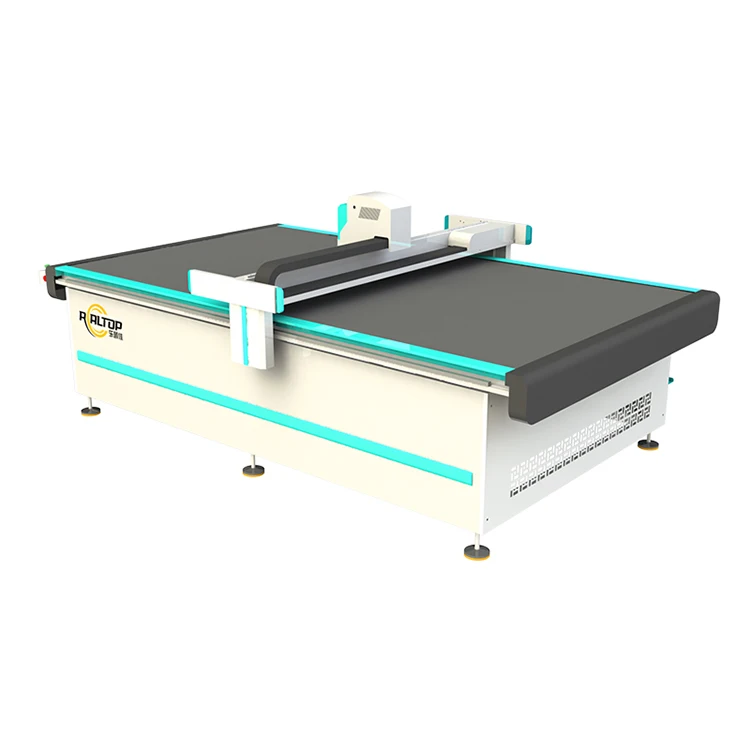
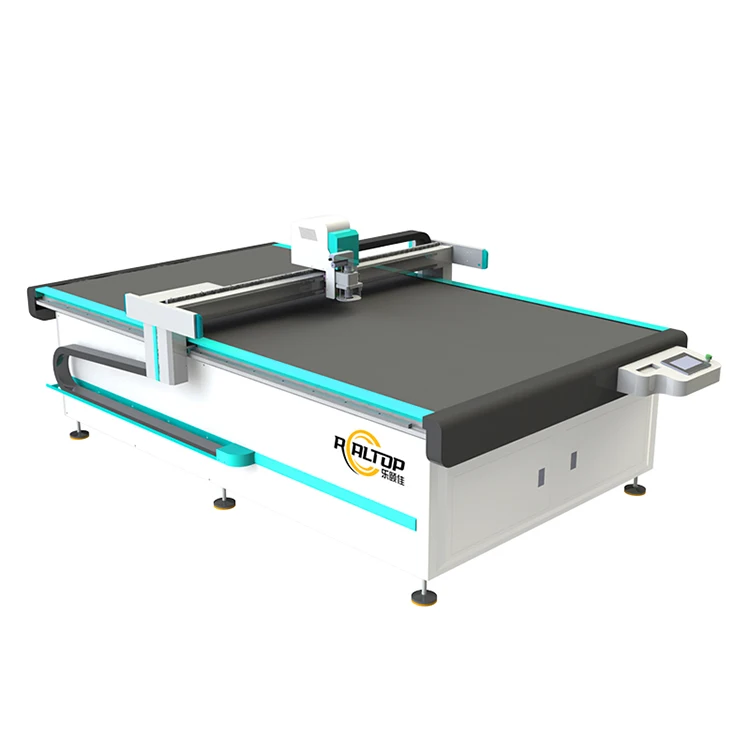
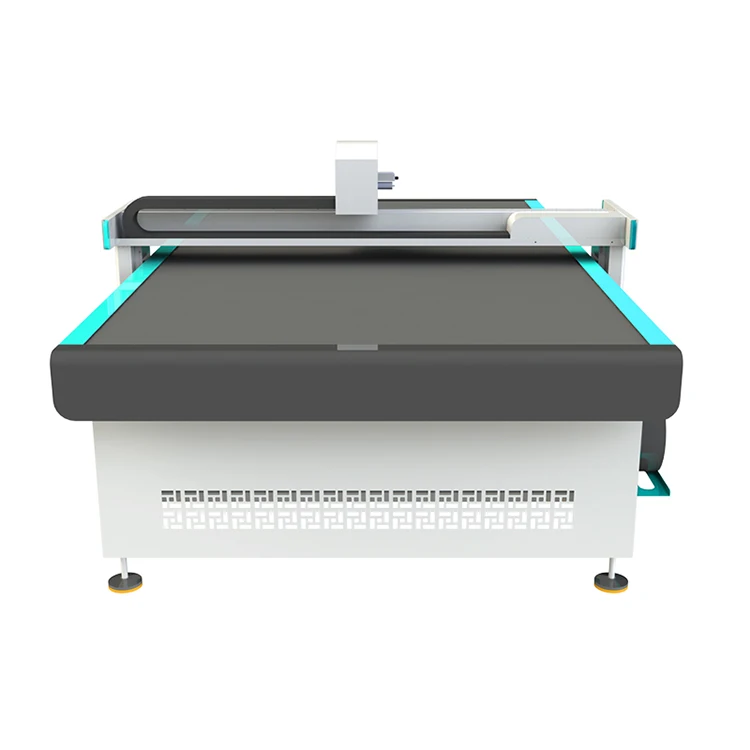
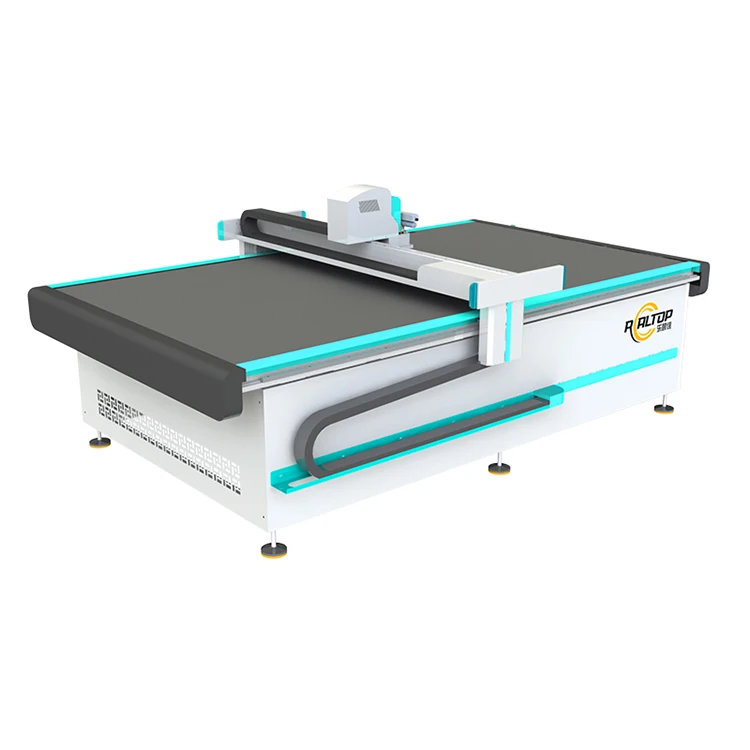
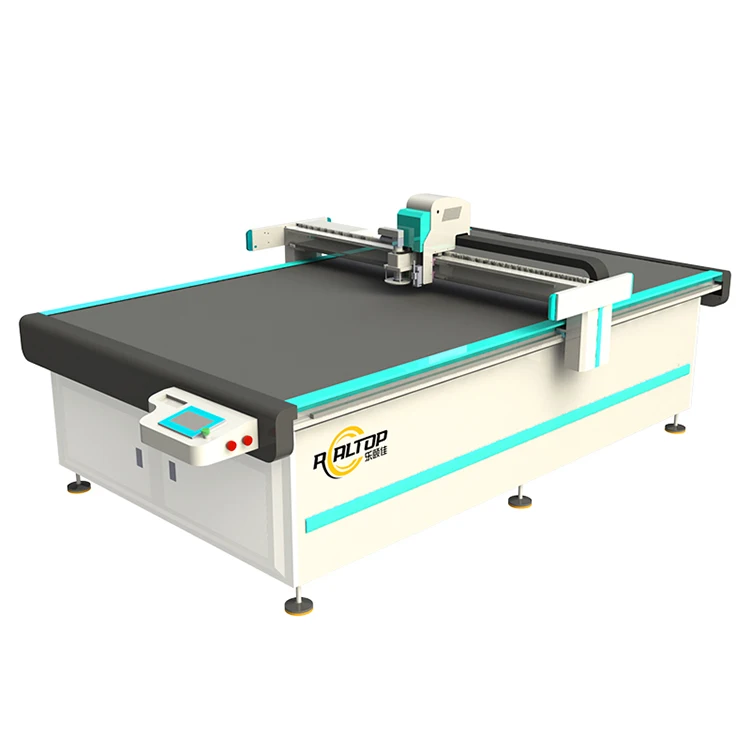
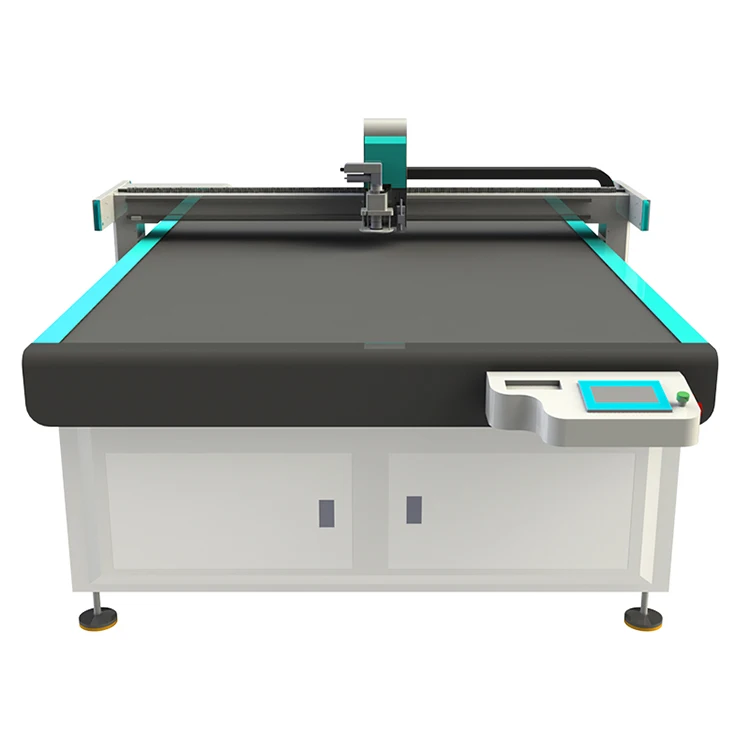
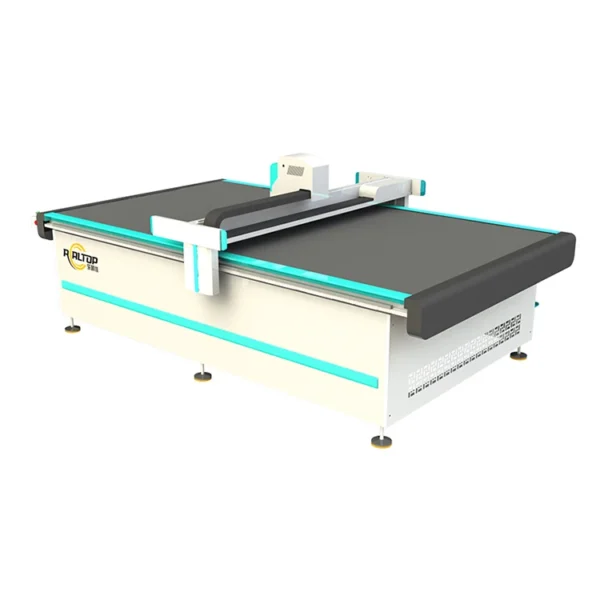
| Product Type | CNC Oscillating Knife Cutting Machine |
| Working Area | 1600 × 2500 mm |
| Machine Dimensions | 3450 × 2300 × 1250 mm |
| Rated Power | 9 kW |
| Work Table | Flatbed vacuum table with auto-feeding conveyor |
| Tool Head | Swiss imported oscillating knife with full-cut, half-cut and cursor location |
| Safety Device | Infrared sensors |
| Translational Velocity | 800–1200 mm/s |
| Cutting Speed | 200–800 mm/s (basis not stated in source — confirm material and thickness) |
| Repeated Accuracy | ≤0.1 mm |
| Transmission System | Digital servo motor, linear guide, synchronous belt, imported ball screw |
| Servo Motor | Japanese Yaskawa |
| Linear Rail | Taiwan Hiwin |
| Conveyor Belt | Germany imported |
| Vacuum Pump | 7.5 kW |
| Instruction System | HP-GL compatible format |
| Voltage | 380V ±10% |
| Warranty | 12 months whole machine, 3 months consumables (source value — verify against manufacturer catalog) |
| Standards | CE |
Application Suitability
| Application | Material or Output |
|---|---|
| Packaging sample making | Corrugated board, card stock, folding carton stock, greyboard |
| Carton and box prototyping | Single-face and double-wall corrugated, honeycomb paper |
| Garment and footwear cutting | Leather, sponge composite leather, fabric layers, synthetic uppers |
| Automotive interior and gasket production | Rubber, silicone, PVC, soft glass, foam composites |
| General flexible material processing | Silicon rubber sheets, soft glass sealing strips, composite laminates |
Why Voltage Verification Must Precede the Cutting Test
A misread voltage plate can destroy a servo drive before the first sheet is loaded.
I have watched a 380V oscillating knife table burn out its Yaskawa servo driver within seconds of being connected to a 415V supply in a Dubai workshop. The production line sat idle for weeks waiting for replacement parts while the end user absorbed daily penalty charges from their client. The cutting speed figures on the nameplate mean nothing if the electrical infrastructure has not been mapped first. [NEED_CITE: voltage and frequency standards by export market]
Matching the Knife Profile to the Substrate
The Swiss imported oscillating knife on the RT-D2516/RT-S2516 vibrates at high frequency to shear through fibrous and cellular materials without dragging or tearing. This CNC Oscillating Knife Cutting Machine specifications set includes full-cut and half-cut modes so the operator can kiss-cut a crease line on corrugated board in one pass and shear through a 10 mm foam gasket in the next. Selecting the correct blade angle and amplitude for each substrate is the difference between a clean edge and a frayed one.
Vacuum Zoning for Small Geometry Retention
A 7.5 kW vacuum pump pulls air through the flatbed table to pin material in place, but small parts near the edge of a nesting layout tend to lift once the blade exits the cut. Configuring the vacuum table into independently valved zones lets the operator concentrate suction under the active cutting area, keeping narrow gasket strips and carton sample tabs flat against the conveyor belt during high-speed traverses. [NEED_CITE: vacuum table zoning practices for CNC flatbed cutting]
Reading the Drive Train Against the Accuracy Claim
The ≤0.1 mm repeatability figure depends on every mechanical link between the servo motor and the tool head. Japanese Yaskawa digital servos deliver closed-loop position feedback, Taiwan Hiwin linear rails constrain lateral drift and the imported ball screw converts rotary motion to linear travel with minimal backlash. When any one of these components wears or is improperly tensioned, the accumulated error shows up as mismatched crease lines on a folding carton blank or a gasket that fails to seat.
The Cost of Skipping the Material Sample Run
Buyers who approve a configuration based on a catalog photo rather than a physical test cut often discover edge quality problems only after the machine is bolted to their floor. Ragged foam edges, incomplete corrugated cuts at production speed and crushed honeycomb cores all trace back to a tool head and feed rate combination that was never validated on the actual substrate. Resolving these issues on site means exchanging knife holders, reprogramming cut paths and retraining operators while the production schedule slips. [NEED_CITE: material sample testing before CNC equipment commissioning]
Why Source the RT-D2516/RT-S2516 From This Build Line
In-house design covers both knife and laser cutting methods, so the buyer selects the process that fits the material rather than forcing one technology across every substrate. Tool head and table configuration are specified per material type and production volume before the order is locked. CCD camera positioning is available for printed contour work where registration marks drive the cut path. Software compatibility with the buyer’s existing HP-GL nesting workflow is confirmed before production begins. Sample cutting on the buyer’s own material is conducted and documented before commitment. Voltage, control language and plug type are verified against the destination facility supply.
Documentation & Verification
- Machine specification sheet listing confirmed tool head and vacuum zone layout
- Electrical schematic with voltage and phase sequence matched to destination supply
- Sample cutting report produced on buyer-supplied material before dispatch
- Factory test record documenting repeatability and cutting edge quality
- HP-GL file format compatibility note for nesting software integration
- Spare parts list identifying consumable knife blades and belt segments
Installation, Commissioning & Support
- 3450 × 2300 mm footprint requires a level concrete slab with anchor bolt provisions
- 9 kW rated power plus 7.5 kW vacuum pump demand a dedicated 380V ±10% three-phase circuit
- Machine ships with table and gantry separated; on-site reassembly and tramming required
- First-power commissioning includes servo tuning, vacuum zone balancing and test cuts
- Operator training covers tool head changeover, HP-GL file import and nesting workflow
- Consumable knife blades and synchronous belt segments stocked for first-year maintenance
Preparing a Specification Inquiry
Share the material type, thickness range, maximum sheet size and expected daily cut volume so the tool head and vacuum zone layout can be matched before quotation. Specify the facility voltage, phase configuration and preferred control panel language to avoid on-site electrical rework. Confirm whether your nesting software exports HP-GL or requires an alternative format bridge.
Frequently Asked Questions
Q: How do I determine whether oscillating knife, drag knife or creasing wheel suits my material?
A: The tool head selection depends on material density, thickness and whether the job requires through-cutting, kiss-cutting or fold-line creasing. Corrugated board typically needs a creasing wheel paired with a drag knife, while dense foam and rubber require the oscillating knife at specific amplitude settings. A sample cutting report on your own material confirms the correct combination before the order is finalized.
Q: How is cutting speed validated on my specific material before shipment?
A: The factory runs your supplied material sample across the RT-D2516/RT-S2516 flatbed at incremental feed rates and documents edge quality, dimensional accuracy and cycle time for each pass. The resulting sample cutting report lists the confirmed speed range for your substrate, replacing the generic 200–800 mm/s catalog figure with tested data tied to your actual production scenario.
Q: What vacuum table zoning is available for small parts that lift during cutting?
A: The flatbed vacuum table can be divided into independently valved zones so suction concentrates under the active cutting region. This prevents small gasket strips and narrow carton tabs from shifting when the blade exits the material at high translational velocity. Zone layout is specified during the configuration stage based on your typical nesting pattern and part geometry.
Q: Which file formats does the control system accept, and how is compatibility confirmed?
A: The instruction system is HP-GL compatible, covering the output of most nesting and CAD packages used in packaging and flexible material production. Before the order is placed, the factory requests a sample file from your existing workflow and runs it through the controller to verify tool path interpretation, layer recognition and cut sequence accuracy.
Q: What voltage and control language options can be set before delivery?
A: The standard voltage is 380V ±10%, but the electrical configuration including plug type, phase sequence and grounding standard is confirmed against your facility supply before production. Control panel language and software interface labels are set to your operator requirement so the machine is ready for immediate use upon commissioning without on-site translation work.


商品评价
Clear filtersThere are no reviews yet.