








Fast Shipping
Carrier information

20k products
Payment methods

24/7 Support
Unlimited help desk

2-day Delivery
Track or off orders
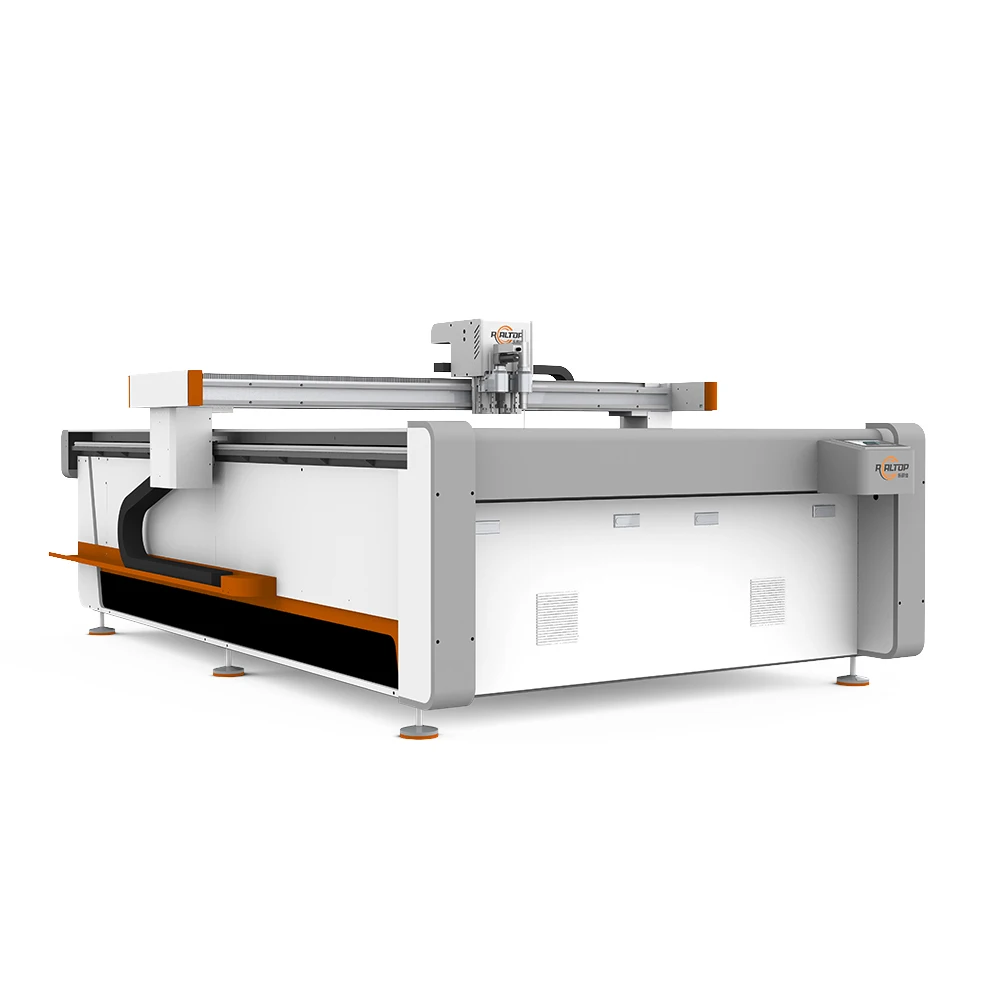
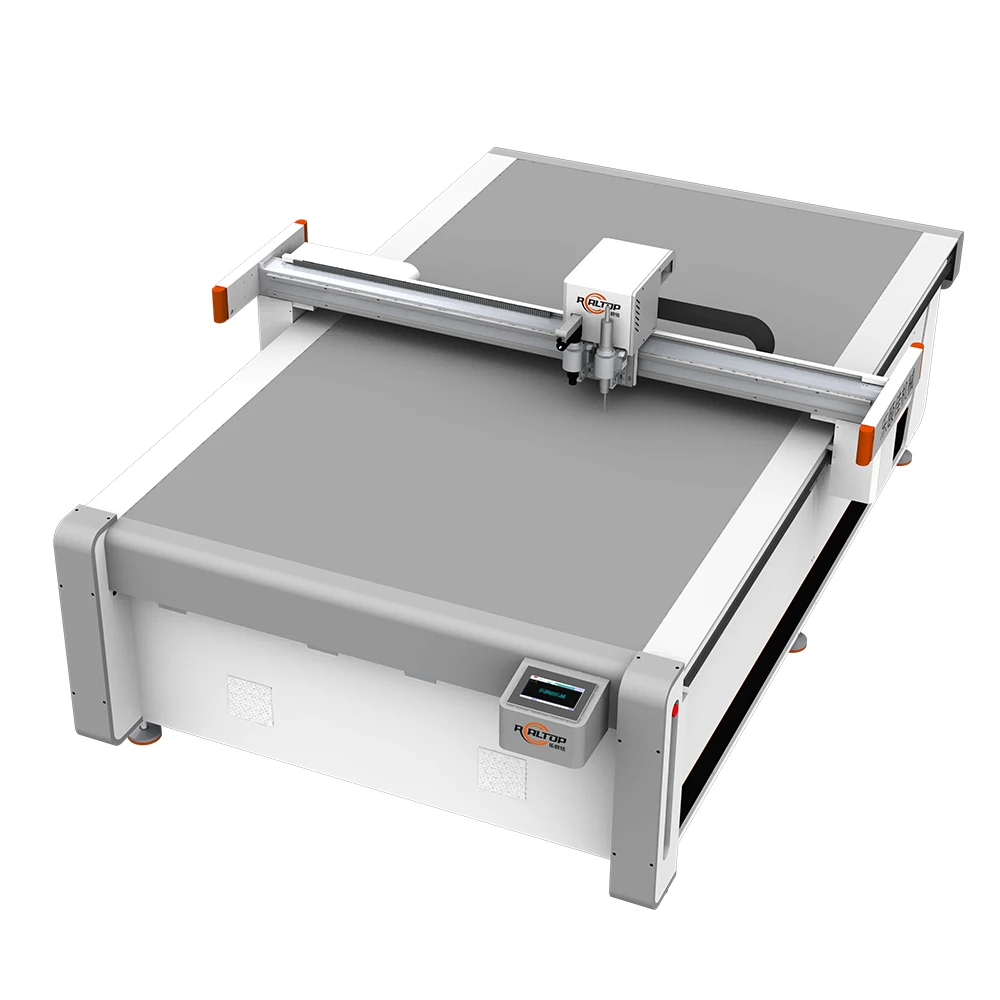
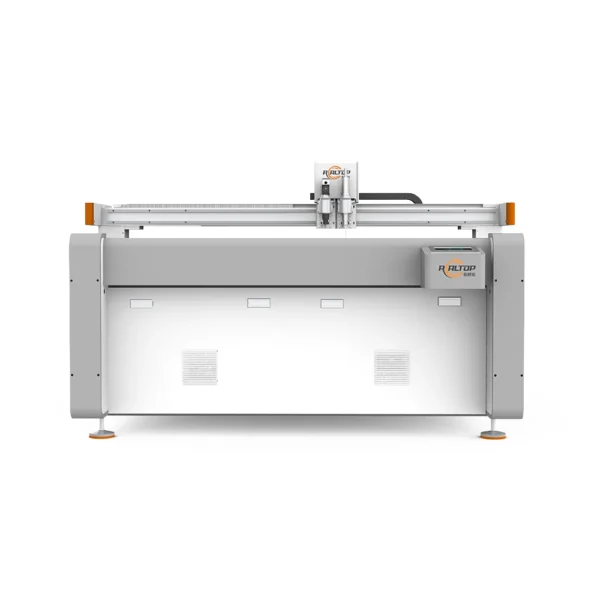
Configuration matched to material and volume — tool heads and vacuum zoning are specified per corrugated flute type and board weight rather than quoted as a generic flatbed.
Technical Specifications
| Parameter | Value |
|---|---|
| Product Type | CNC Oscillating Knife Cutting Machine |
| Working Area | 1600 × 2500 mm |
| Tool Head Options | Oscillating knife, Driven rotary knife, Creasing wheel, Kiss cutting tool, Pneumatic knife, Milling tool, V-groove knife |
| Cutting Speed | 0–1500 mm/s |
| Cutting Thickness | Up to 40 mm (basis to be confirmed by flute and substrate) |
| Cutting Accuracy | ±0.1 mm |
| Vacuum Table | Aluminum bellows vacuum table |
| Vacuum Pump | 9 kW |
| Machine Frame | Heavy-duty frame with precision-ground surface |
| Servo Motors | Panasonic, Delta, or Dorna |
| Control System | PLC control panel with optional display languages |
| Compatible Formats | PLT, DXF, AI, PDF |
| Voltage Options | 110V, 220V, 380V |
| Safety Devices | Infrared sensor and emergency stop |
| Machine Dimensions | 3300 × 2100 × 1350 mm |
| Certification | CE |
Application Suitability
| Application | Material or Output |
|---|---|
| Corrugated carton sample making | E-flute, B-flute, BC-flute single and double-wall board |
| Greyboard and specialty paper prototyping | Greyboard, cardstock, art paper, specialty paper |
| Foam insert and protective packaging | EVA foam, EPE foam, PU foam contour cutting |
| Short-run corrugated box production | Corrugated board with kiss cutting and creasing |
| Non-packaging flatbed cutting | PVC, PET, leather, rubber mats, non-woven fabric, thin plastic sheets |
Why Specifying Working Area Alone Misses the Real Constraint
A machine that covers 1600 × 2500 mm still fails if the tool head cannot penetrate the board at production speed.
I have watched packaging plants receive a CNC oscillating knife cutting machine with the right footprint, only to discover the oscillating knife stalls on BC-flute double-wall at full traverse speed. The vacuum table holds the sheet, but the blade deflection leaves crushed flutes and ragged edges on the cut path. [NEED_CITE: oscillating knife penetration limits by corrugated flute type] The buyer assumed working area was the only selection variable worth checking, and the quotation reflected that assumption. Months of sample adjustments follow because nobody confirmed cutting depth against the actual flute profile before the order was placed.
Matching the Tool Head to the Flute Profile
Corrugated board is not a single material — it is a laminated structure where the flute geometry dictates which tool produces a clean edge. An oscillating knife handles E-flute and B-flute cleanly at full cutting speed, but BC-flute double-wall often requires a driven rotary knife to shear through both walls without crushing the inner corrugation. A creasing wheel scores fold lines without cutting through, and a V-groove knife removes a channel for rigid box construction. The seven available tool heads on this machine exist because no single blade geometry works across all flute types. Specifying the tool head after seeing the buyer’s material stack is the difference between a clean sample and a rejected batch.
Vacuum Zoning for Small Carton Parts
The 9 kW vacuum pump paired with the aluminum bellows table is designed to hold corrugated sheets flat, but small die-cut parts present a different challenge. When the cut path isolates a small flap or insert, the vacuum zone beneath that part may not generate enough hold-down force to resist blade lift at higher traverse speeds. [NEED_CITE: vacuum hold-down requirements for small profile CNC knife cutting] Zoning the table into independently controlled sections allows the operator to concentrate suction under the active cutting area, which matters when the daily volume includes nested small parts from packaging sample runs.
Reading the Spec Sheet Against the Production Reality
Cutting thickness listed at up to 40 mm does not mean every corrugated substrate cuts cleanly at that depth. Single-face E-flute and BC-flute double-wall occupy very different positions on that range, and the verified capacity depends on which flute the buyer actually runs. The ±0.1 mm cutting accuracy relies on the servo drive system maintaining path fidelity through complex packaging contours — fold lines, radius corners, and interlocking tab slots all demand consistent acceleration control. The dedicated packaging box structure design software imports PLT, DXF, AI, and PDF files, which matters when the buyer’s existing design workflow uses one format and the nesting engine must translate it without geometry loss. Voltage must be confirmed as 110V, 220V, or 380V before shipment because rewiring a PLC control panel on-site is not a simple swap.
What Happens When the Configuration Guess Is Wrong
A wrong tool head on BC-flute produces crushed edges that fail the buyer’s own quality inspection, and the problem is not visible until the first production run. An undersized vacuum zone means small carton parts lift during cutting, shifting the contour path and wasting the sheet. [NEED_CITE: cost of material waste from misconfigured CNC flatbed cutting] Skipping the sample cutting step on the buyer’s own material before commitment turns the installation week into a troubleshooting week, and trust erodes faster than the blade.
Why Source This Machine from the Factory That Builds It
The in-house design team covers both knife and laser cutting technologies, so the buyer can match the cutting method to corrugated board rather than force one approach across every substrate. Tool head and table configuration is specified per material stack and daily volume, not quoted from a standard list. CCD camera positioning is available for printed contour work on pre-printed corrugated sheets. Software compatibility with the buyer’s existing file format and nesting workflow is confirmed before the order goes to production. Sample cutting on the buyer’s own corrugated material at production speed validates edge quality on the specific flute type before any commitment is made.
Documentation & Verification
- Machine specification sheet listing all seven tool head options and their rated materials
- Electrical schematic confirming voltage selection and PLC control panel language before shipment
- Sample cutting report on the buyer’s own corrugated board at stated flute type and speed
- Tool head and vacuum table configuration list matched to the buyer’s material stack
- Software licence and file format compatibility note for PLT, DXF, AI, PDF workflows
- Factory test record documenting cutting accuracy and path fidelity before dispatch
Installation, Commissioning & Support
- Heavy-duty frame requires level concrete floor capable of supporting the 3300 × 2100 mm footprint
- Dedicated electrical circuit matching confirmed 110V, 220V, or 380V supply with correct frequency
- 9 kW vacuum pump requires separate power feed and exhaust routing away from the cutting zone
- First-run parameter setting includes oscillation frequency, blade depth, and vacuum zone mapping for the buyer’s flute type
- Operator training covers tool head changeover between oscillating knife, creasing wheel, and V-groove knife
- Spare parts list includes oscillating knife blades, creasing wheels, and vacuum table seals
What to Include in Your Inquiry
Share the corrugated flute types and board weights you run most frequently, along with typical sheet dimensions and daily sample or short-run volume. Confirm your local voltage and frequency, the display language your operators need, and the file format your current packaging design software exports. If you can send a few sheets of your actual corrugated material for test cutting, we can confirm edge quality and tool head selection before any specification is finalized.
Frequently Asked Questions
Q: How do I choose between oscillating knife, creasing wheel, and V-groove knife for corrugated board?
A: Oscillating knife cuts through E-flute and B-flute cleanly at production speed. Creasing wheel scores fold lines without penetrating the board, which is essential for box construction. V-groove knife removes a channel for rigid box corners. The correct tool depends on the flute profile and the structural requirement of each cut path.
Q: Will the 9 kW vacuum pump hold small carton parts without lift during cutting?
A: The aluminum bellows vacuum table supports zoning, which concentrates suction under the active cutting area. Small nested parts require the operator to map vacuum zones before the run. Without zoning, isolated flaps can shift at higher traverse speeds regardless of pump capacity.
Q: What is the actual cutting thickness on BC-flute double-wall compared to single-face corrugated?
A: The machine lists cutting capacity up to 40 mm, but verified depth depends on flute geometry and board density. BC-flute double-wall requires a driven rotary knife at reduced traverse speed compared to single-face E-flute. Sample cutting on your specific board confirms the achievable speed and edge quality.
Q: Does the packaging design software accept my existing DXF and AI files?
A: The dedicated packaging box structure design software imports PLT, DXF, AI, and PDF formats. File format compatibility with your existing nesting workflow is confirmed before order placement, so there is no geometry loss when translating fold lines and interlocking tabs from your design environment.


商品评价
Clear filtersThere are no reviews yet.