



Fast Shipping
Carrier information

20k products
Payment methods

24/7 Support
Unlimited help desk

2-day Delivery
Track or off orders
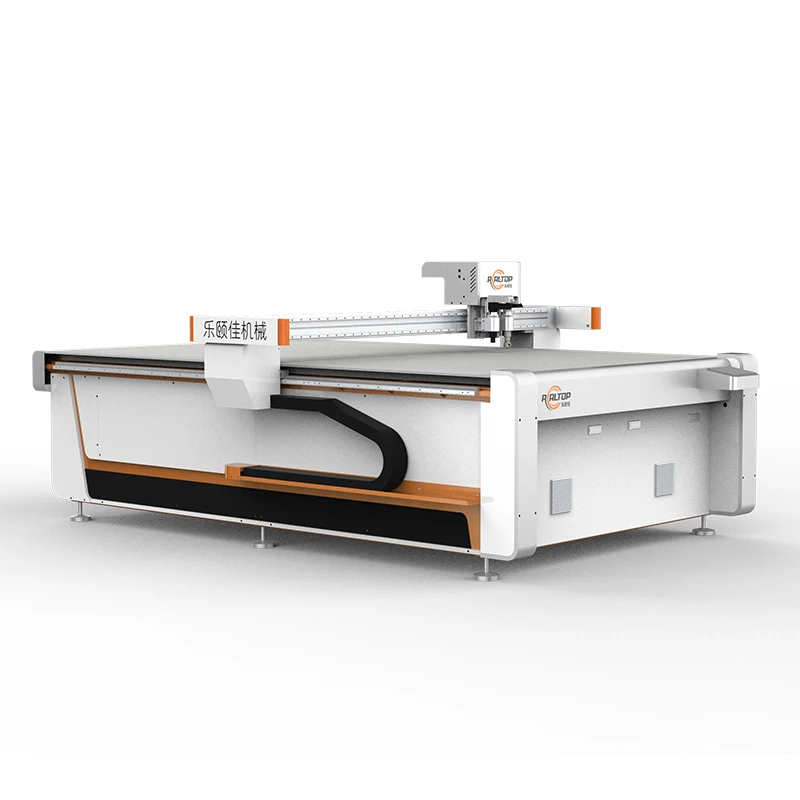
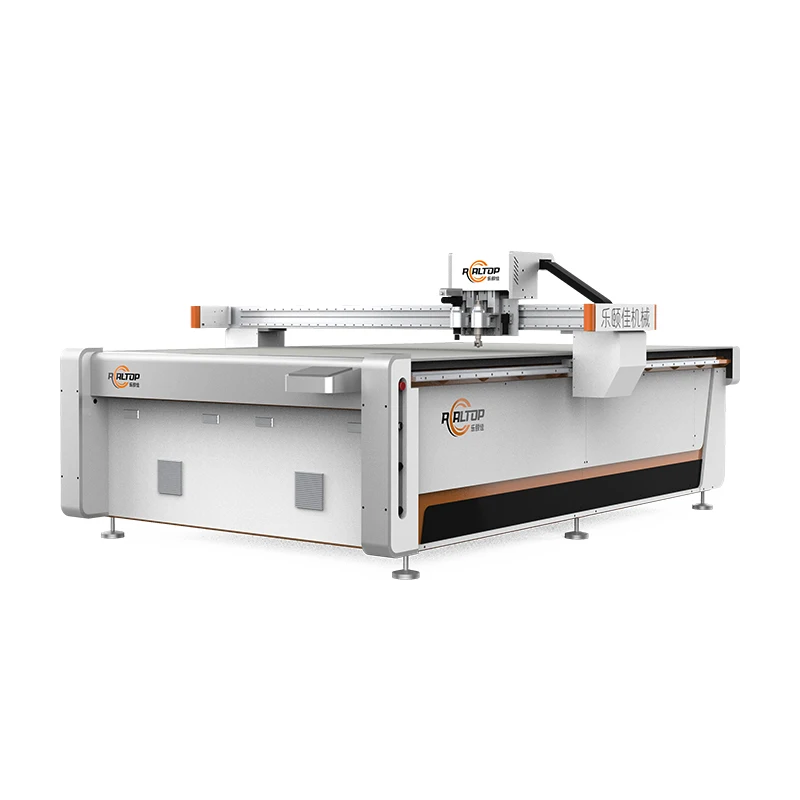
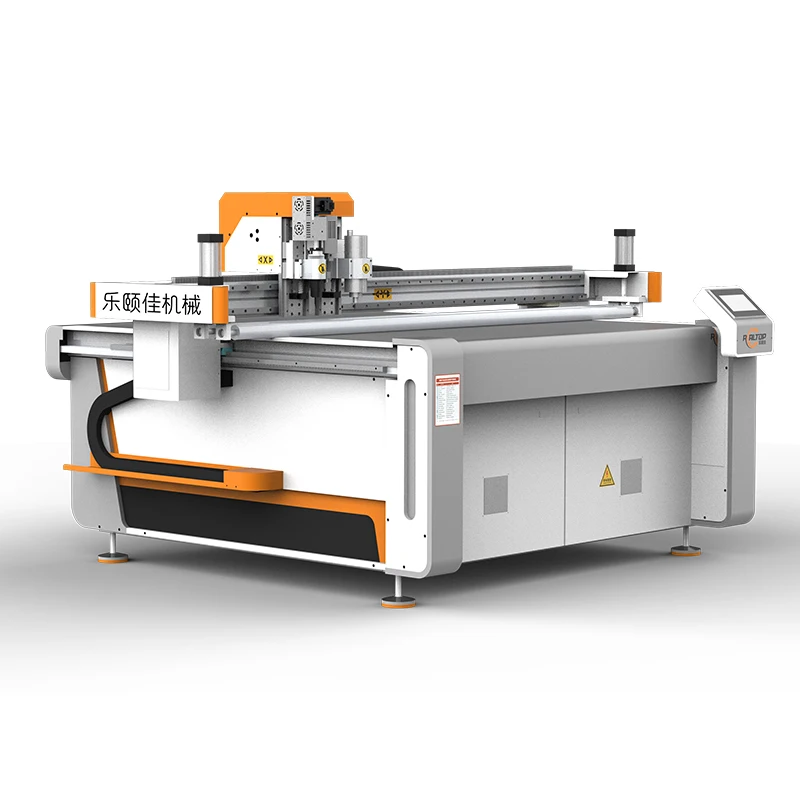
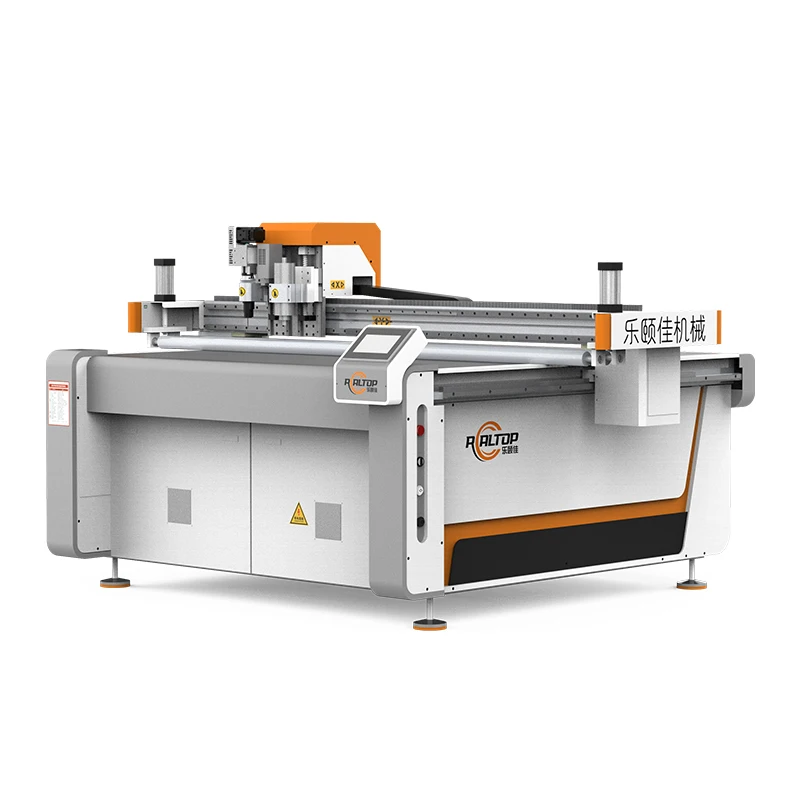
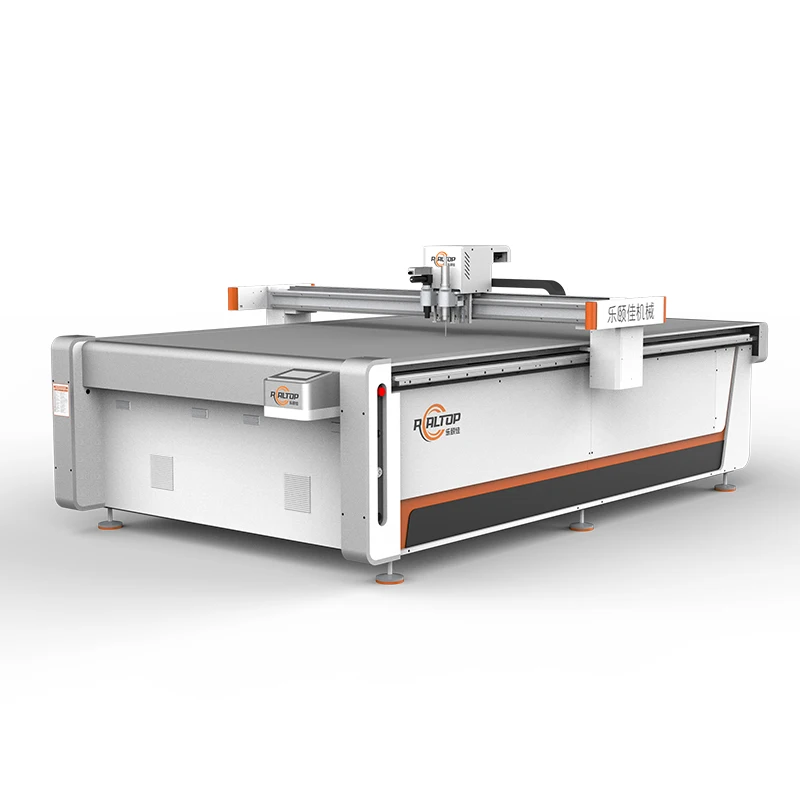
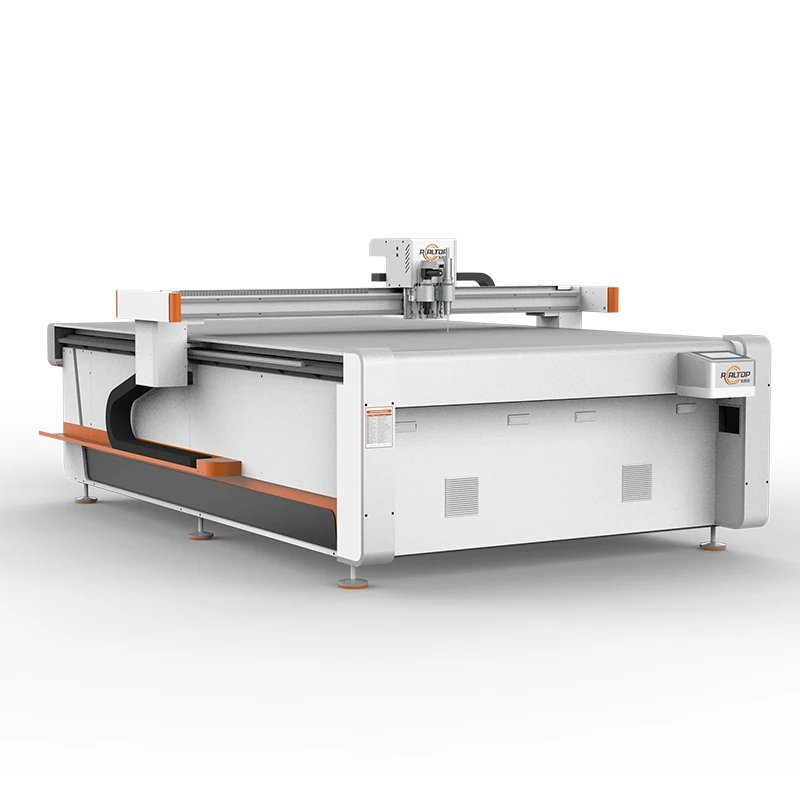
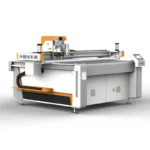
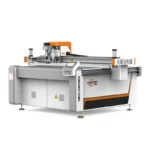
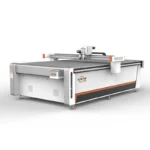
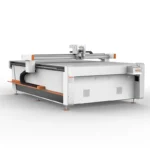
Precision tooling matched to board flute — every oscillating, drag and creasing head on the RT-D2516/RT-S2516 platform is specified against your corrugated stock before the machine ships.
Technical Specifications
| Parameter | Value |
|---|---|
| Model | RT-D2516/RT-S2516 |
| Product Type | CNC Oscillating Knife Cutting Machine |
| Working Area | 1600×2500 mm |
| Machine Dimensions | 3450×2300×1250 mm |
| Rated Power | 9 kW |
| Voltage | 380V±10% |
| Vacuum Pump | 7.5 kW, integrated aviation aluminum shell with built-in silencer |
| Table Type | Magnesium-aluminum alloy vacuum adsorption table (auto feeding table option) |
| Translational Velocity | 800–2000 mm/s |
| Cutting Speed | 200–800 mm/s (dependent on material density and flute profile) |
| Repeated Accuracy | ≤0.1 mm |
| Transmission System | Digital servo motor (Delta or Panasonic, IP67), Taiwan Hiwin linear guide, synchronous belt, ball screw |
| Visual Positioning | Small CCD camera mark point, panoramic camera recognition, or projection positioning (configurable) |
| Control System | CNC with touch screen control panel |
| Instruction Format | HP-GL compatible |
| Software Compatibility | PLT, DXF, AI; auto typesetting |
| Safety Devices | Infrared induction blocking, anti-collision beam sensors, emergency stop with in-situ resume |
Application Suitability
| Application | Material or Output |
|---|---|
| Packaging sample making | Single-face, double-wall and honeycomb corrugated board |
| Short-run carton production | Crease-and-cut on printed corrugated stock with CCD tracking |
| Gasket and sealing fabrication | Foam, rubber, PTFE and composite sheets with tool head swap |
| Graphic display and signage | Foam board, PVC, PP and sticker film contour cutting |
Why Flute Profile Dictates Your CNC Oscillating Knife Cutting Machine Specifications
A blade that slices E-flute cleanly will crush the walls of a triple-wall honeycomb panel before it reaches full depth.
When a packaging buyer specifies a cutter purely on bed size, the tool head often arrives mismatched to the board they actually run. Single-wall corrugated requires a high-frequency oscillating knife to shear the flute without delaminating the liner, while honeycomb cardboard demands a V-cutting knife or a pneumatic knife with enough stroke to penetrate the core structure without tearing the facing paper [NEED_CITE: corrugated flute profiles and cutting resistance]. The cutting speed figure on a brochure means little if the tool cannot maintain edge quality through your specific board grade.
Tool Head Mapping for Corrugated and Composite Stock
The RT-D2516/RT-S2516 platform carries a Swiss imported knife base and supports oscillating, pneumatic, high-power vibrating, circular, V-cutting, drag, creasing wheel, dotted line, punching and brush tools. Each head addresses a different failure mode: the creasing wheel scores fold lines without severing the liner, the V-cutting knife removes material to create clean 90-degree folds on thick honeycomb, and the oscillating knife handles standard single and double-wall flutes. Selecting the right combination eliminates the ragged edge and crushed flute defects that force manual trimming downstream.
Vacuum Zoning and Material Hold-Down
The magnesium-aluminum alloy vacuum table is divided into adsorption zones designed to grip small carton blanks that would otherwise lift during high-speed knife travel. The 7.5 kW vacuum pump runs through an integrated aviation aluminum shell with a built-in silencer to maintain suction without excessive workshop noise. For producers running nested layouts of small packaging inserts, confirming the zone layout against the smallest part footprint prevents material shift and the resulting dimensional inaccuracy [NEED_CITE: vacuum hold-down requirements for small nested parts].
Reading the Drive and Motion Specifications
The IP67-rated servo drives from Delta or Panasonic are paired with Taiwan Hiwin linear guides to deliver repeated accuracy of ≤0.1 mm across the full 1600×2500 mm working area. In a packaging environment where dust and paper fiber accumulate on exposed rails, the IP67 sealing prevents ingress that degrades positioning over time. Translational speeds up to 2000 mm/s govern how fast the head moves between cuts, while the 200–800 mm/s cutting speed range reflects actual material engagement — the upper end applies to thin film and sticker stock, and the lower end to dense honeycomb or multi-layer gasket material. The ball screw and synchronous belt transmission ensures that acceleration and deceleration at corner points do not leave witness marks on the board surface.
The Cost of Skipping the Material Test
I configured a CNC knife cutting table for a carton plant that had specified their machine purely on the 2500 mm bed length they needed for full sheets. Their honeycomb board had a higher moisture content than the standard test stock, and the cutting resistance doubled once the line started running. Production dropped to half the expected rate, and the entire line bottlenecked at the cutting station. Only after re-evaluating the knife angle and feed speed against their actual material did throughput recover. A sample cutting report on your own board stock, run before the order is finalized, catches this mismatch at the factory rather than on your production floor [NEED_CITE: moisture content impact on corrugated cutting resistance].
Why Source the RT-D2516/RT-S2516 From This Build
In-house design covers both oscillating knife and creasing tool heads on one platform, so a packaging producer matches the cutting method to the board flute rather than forcing a single head to cover every job. Tool head and table configurations are specified per material and daily volume before the quotation is issued. CCD camera positioning and panoramic recognition are validated against the buyer’s own printed registration marks. Software file format compatibility is confirmed so PLT, DXF and AI workflows integrate without conversion errors. Voltage, plug type and control language are locked on the electrical schematic before production begins.
Documentation & Verification
- Electrical schematic confirming voltage and frequency for your facility
- Tool head and table configuration list matched to your board flute and thickness
- Sample cutting report on your own corrugated or honeycomb stock
- Machine specification sheet with full servo and guide component detail
- Software license with confirmed PLT, DXF, AI file format compatibility
- Factory test record on your material before dispatch
Installation, Commissioning & Support
- 3450×2300 mm footprint requires level concrete floor with clearance for auto-feeding table
- 9 kW rated power plus 7.5 kW vacuum pump demands dedicated 380V circuit
- Machine ships with frame and table separated for container loading, reassembled on site
- First-run calibration sets vacuum zone suction against your smallest carton blank
- Touch screen panel configured to your operator language before commissioning
- Swiss imported knife and creasing wheel spares listed with replacement intervals
- Linear guide and ball screw lubrication schedule tied to production shift count
Preparing Your Inquiry
Send a sample of the corrugated or honeycomb board you run most often, including the flute type, board thickness and moisture range. Note the smallest part dimension in your typical nesting layout so the vacuum zone configuration can be validated. Confirm your local voltage and frequency, the control panel language your operators need, and whether your workflow relies on PLT, DXF or AI files from existing design software.
Frequently Asked Questions
Q: How do I choose between oscillating knife, drag knife and V-cutting knife for my board types?
A: Oscillating knife suits single and double-wall corrugated by shearing flutes cleanly at high frequency. Drag knife handles thin card and sticker film where through-cutting is sufficient. V-cutting knife removes a channel of material from thick honeycomb to produce sharp 90-degree folds. The correct choice depends on your thickest and most abrasive board grade.
Q: Will the CCD camera track printed registration marks at full cutting speed?
A: The system offers small CCD mark-point positioning and panoramic camera recognition options. Both track printed marks, but performance depends on mark contrast, print quality and board surface reflectivity. Request a sample cutting run on your own printed stock to verify tracking accuracy at the cutting speed your board grade requires.
Q: Is the vacuum table zoning sufficient for my smallest carton blank?
A: The magnesium-aluminum alloy table is divided into adsorption zones, but the zone size determines whether a small part will lift during cutting. Provide your smallest blank dimensions at inquiry stage so the zone layout can be configured to grip that footprint before the machine is built.
Q: How are voltage, plug and control language confirmed before shipment?
A: These are documented on the electrical schematic that accompanies your quotation. The 380V±10% supply is standard, but voltage and frequency requirements vary by market. Control panel language options include English, Russian, Italian and Chinese, with special languages configurable. Confirm your exact requirements before production starts.
Q: Can I get a sample cut on my own corrugated material before committing?
A: Yes. Send your actual board stock to the factory for a sample cutting test. The resulting report documents edge quality, flute integrity, cutting speed achieved and tool head used, so you can evaluate production suitability before the order is placed.


商品评价
Clear filtersThere are no reviews yet.