



Fast Shipping
Carrier information

20k products
Payment methods

24/7 Support
Unlimited help desk

2-day Delivery
Track or off orders
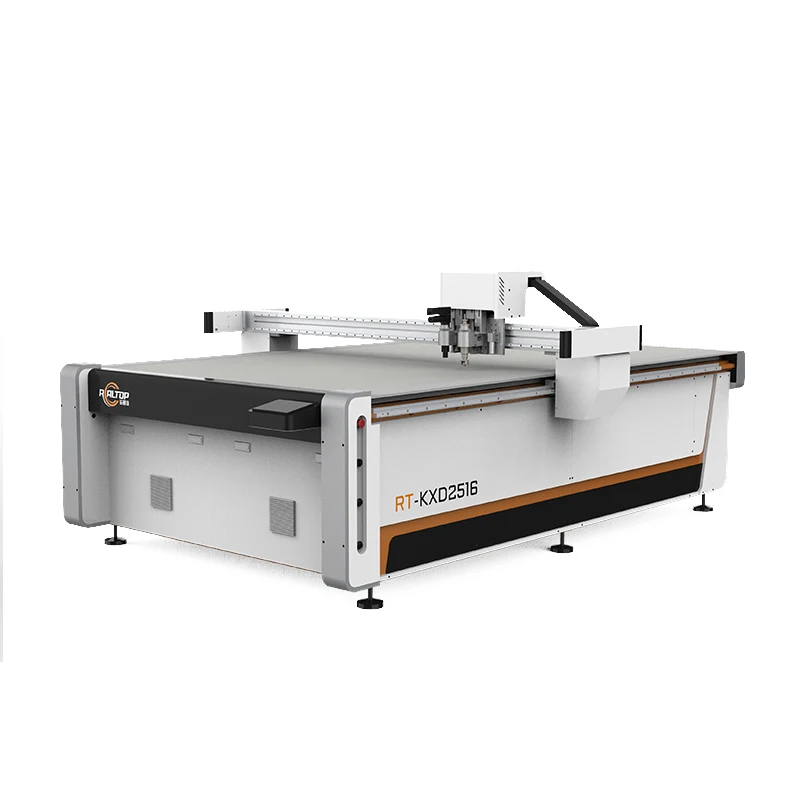
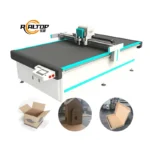
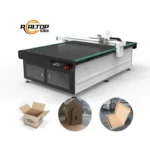
Tool head and table configuration specified per board grade and flute profile — the oscillating knife, drag knife and creasing wheel are matched to the buyer’s actual carton stock, not defaulted to a single setup.
Technical Specifications
| Parameter | Value |
|---|---|
| Model | RT-D2516/RT-S2516 |
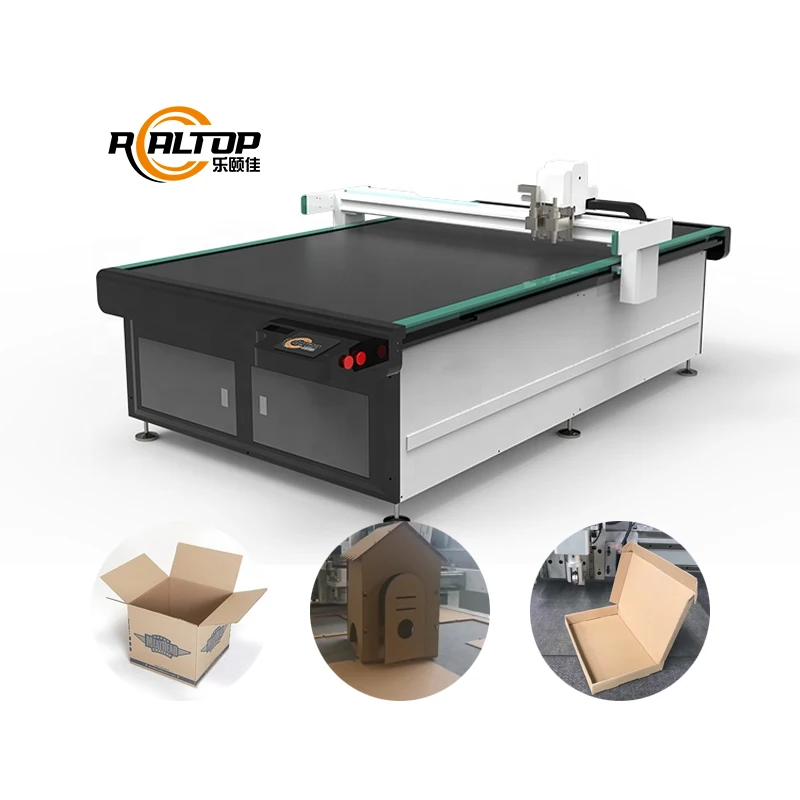
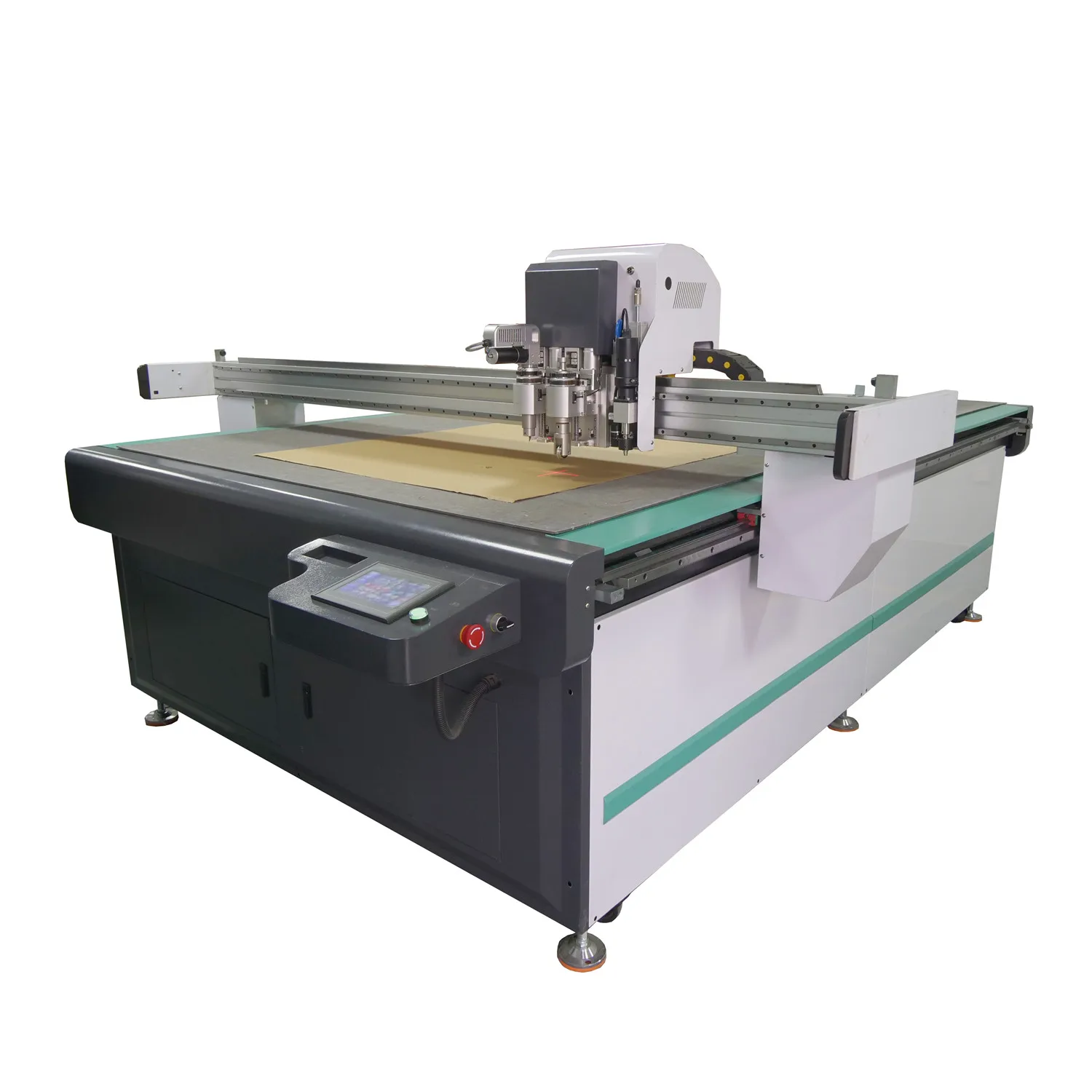
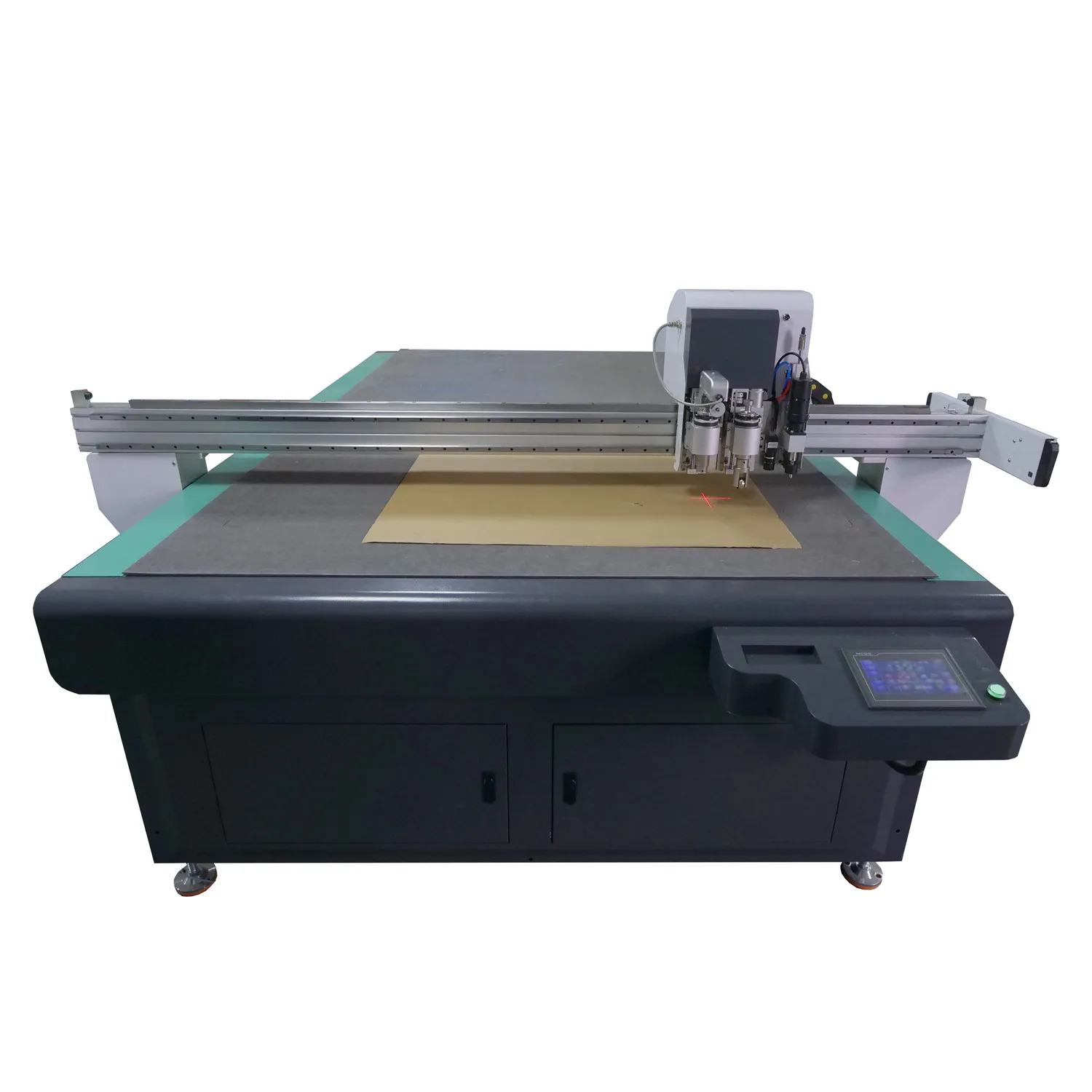
| Product Type | CNC Oscillating Knife Cutting Machine for Packaging |
| Working Area | 1600×2500 mm |
| Overall Dimensions (L×W×H) | 3450×2300×1250 mm |
| Rated Power | 9 kW |
| Voltage | 380V ±10% |
| Table Type | Aluminum alloy honeycomb vacuum adsorption platform |
| Tool Head | Swiss imported knife with vibration full cutting, half cutting and cursor location |
| Translational Velocity | 800–2000 mm/s |
| Cutting Speed | 200–800 mm/s (varies with material) |
| Repeated Accuracy | ≤0.1 mm |
| Transmission System | Digital servo motor, linear guide, synchronous belt, ball screw |
| Servo Motor | Delta servo motor and drivers |
| Linear Guide | Taiwan Hiwin rail |
| Vacuum Pump | 7.5 kW |
| Conveyor Belt | Germany imported (auto feeding) |
| Safety Device | Infrared sensors, emergency stop |
| Instruction System | HP-GL compatible format |
| Control Language | English, Russian, Italian, Chinese (special languages customizable) |
| Software | Professional carton nesting software (included free) |
| Cutting Thickness | ≤100 mm (varies with material) |
| Certification | CE (basis not stated in source) |
Application Suitability
| Application | Material or Output |
|---|---|
| Carton box and packaging sample making | Corrugated board, grey board, art card, single-face and double-wall flute |
| Sticker and label contour cutting | Self-adhesive vinyl, printed label stock, reflective film |
| Signage and billboard production | PVC foam board, acrylic sheet, corrugated plastic |
| Business card and tag manufacturing | Cardstock, laminated paper board, synthetic paper |
| Flexible material cutting | Leather, PVC, sponge composite leather, soft glass, silicon, rubber |
Why Board Weight Matters More Than Working Area When Choosing a CNC Oscillating Knife Cutting Machine for Packaging
A machine quoted on bed size alone will underperform if the tool head and vacuum zoning are not matched to the actual board grade.
I once set up a packaging sample table in a carton plant where the buyer had specified a large working area but never mentioned they were running 450 GSM grey board for luxury box prototypes. The standard oscillating knife setup handled E-flute corrugated fine, but on that dense grey board the blade pressure was insufficient and every fold line tore instead of scoring cleanly. A full morning of sample boards went straight to the recycling bin. [NEED_CITE: relationship between board grammage and required knife pressure in digital cutting]
The lesson from that job is simple: the 1600×2500 mm bed on the RT-D2516/RT-S2516 is only half the conversation. The board weight, flute profile and whether you are cutting, half-cutting or creasing all determine which tool head goes on the gantry and how the vacuum zones are mapped. Without that alignment, even the most precise servo drive cannot save the edge quality.
Matching the Knife to the Flute and the Fold Line
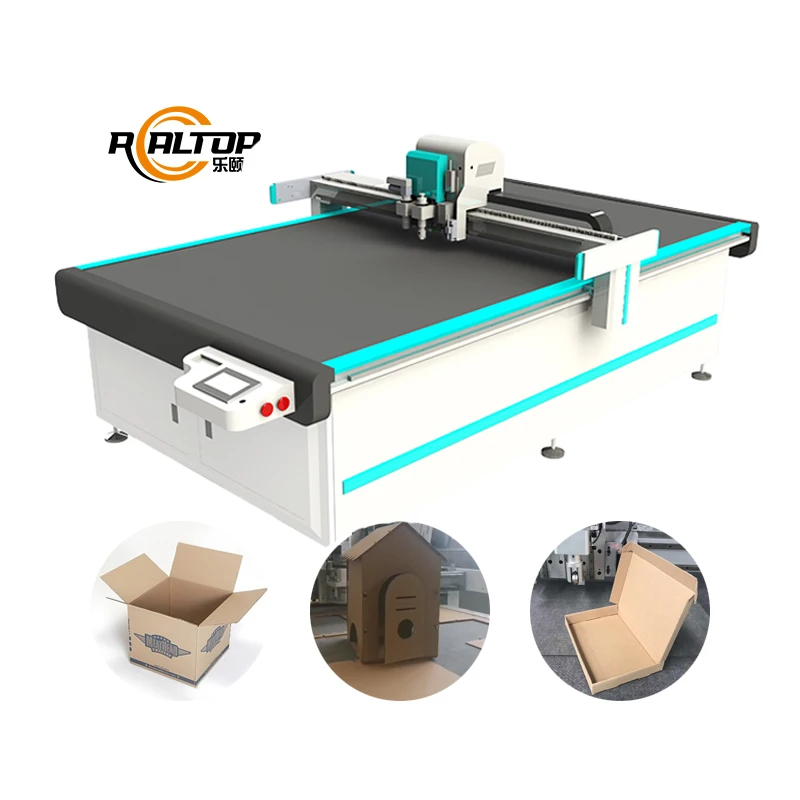
The RT-D2516/RT-S2516 carries a Swiss imported tool head that supports full cutting, half cutting and cursor location in a single setup. For standard B and E-flute corrugated board, the oscillating knife slices cleanly through the flute structure without crushing it. When the job switches to creasing fold lines on a packaging prototype, the same head accommodates a creasing wheel that compresses the board rather than cutting it, preserving the structural integrity of the hinge. This CNC oscillating knife cutting machine for packaging is configured so that a sample maker can run a complete carton blank — cut lines and crease lines together — without stopping to swap heads manually.
Vacuum Zoning and Small Part Hold-Down
A recurring problem on flatbed cutting tables is that small carton inserts and partition pieces lift off the bed once the knife exits the cut, because the vacuum pull-through is spread across zones larger than the part itself. The aluminum alloy honeycomb platform on this machine is divided into adsorption zones that can be activated selectively. If the nesting layout places a 60×40 mm label or divider tab in one corner, only that zone needs full suction while the rest of the bed holds the main blank. The 7.5 kW vacuum pump provides enough draw to keep lightweight cardstock flat, and the honeycomb structure distributes airflow evenly so there are no dead spots where a thin sticker sheet can bubble up mid-cut. [NEED_CITE: vacuum hold-down requirements for small-format parts on flatbed digital cutting tables]
What the Specs Actually Mean on the Shop Floor
The Delta servo motor and Taiwan Hiwin linear guide combination is responsible for the ≤0.1 mm repeated accuracy figure. In packaging sample making, that tolerance matters most when a carton blank has multiple score lines that must align precisely after folding — even a 0.3 mm drift across a 2500 mm traverse will show up as a misaligned glue flap. The translational velocity range of 800–2000 mm/s governs how fast the head moves between cut paths, while the cutting speed of 200–800 mm/s is where the actual blade engagement happens; harder boards like grey board and dense corrugated require the lower end of that range to maintain edge quality. The HP-GL compatible instruction system and included carton nesting software mean that common die-line file formats import directly, and the nesting algorithm arranges blanks to reduce board waste before the first cut is made.
The Cost of Skipping the Material Test
When a buyer orders a CNC knife cutting table without sending a sample of their actual board stock, the tool head arrives set to a default pressure that may be too light for heavy double-wall flute or too aggressive for thin art card. The result is either incomplete cuts that leave the operator tearing out blanks by hand, or a blade that punches through the conveyor belt underneath. [NEED_CITE: common causes of incomplete cuts and belt damage on oscillating knife tables] I have seen plants lose entire shifts to re-cutting sample runs because the initial configuration never matched the material it was actually asked to process.
What You Get from a Manufacturer That Builds Both the Knife and the Laser Side
Realtop designs and produces both oscillating knife and laser cutting systems in-house, which means the RT-D2516/RT-S2516 is specified as a knife table because the material calls for knife cutting — not because the factory only makes one type. The tool head and table configuration are documented per board grade before the order is confirmed, so the buyer receives a configuration list rather than a generic packing slip. Software compatibility is verified against the buyer’s existing nesting workflow and die-line file format during the inquiry stage. Voltage, plug type and control language are confirmed in writing before the machine enters production, not discovered at the dock. Sample cutting on the buyer’s own corrugated or grey board is completed and a cutting report is shared before commitment.
Documentation & Verification
- Sample cutting report produced on the buyer’s own board grade and flute profile
- Tool head and creasing wheel configuration list matched to specified material
- Electrical schematic with confirmed voltage, plug type and control language
- Vacuum table zoning diagram showing hold-down coverage for the smallest nested part
- Operation and maintenance manual in the confirmed control language
- Spare parts list covering blades, creasing wheels and vacuum seals
Installation, Commissioning & Support
- The 3450×2300 mm footprint requires a level concrete floor with clearance on three sides for material loading and maintenance access.
- A dedicated 380V three-phase circuit with appropriate breaker rating is needed to serve the 9 kW rated power plus the 7.5 kW vacuum pump.
- The machine ships fully assembled; on-site placement requires a forklift rated for the total weight and a clear path from the dock to the installation point.
- First-run commissioning includes vacuum zone calibration, servo tuning and a test cut on the buyer’s board stock to verify crease depth and cut-through.
- Operator training covers nesting software workflow, tool head changeover and daily blade inspection routines.
- First-year replacement parts are provided at no charge with the buyer covering shipping; on-site engineer dispatch is available with the buyer covering travel costs.
What to Prepare Before Requesting a Quote
To configure this CNC oscillating knife cutting machine for packaging accurately, send the actual board types you run — including flute profile, grammage and sheet thickness — along with the smallest and largest blank dimensions in your typical nesting layout. Confirm your local voltage and frequency, the plug standard required at the connection point, and the control language your operators need. If you already use a specific nesting software or die-line file format, share a sample file so compatibility can be verified before the order is placed.
Frequently Asked Questions
Q: How is cutting thickness verified for different board weights and flute profiles?
A: Before any commitment, we run a sample cut on your actual board stock — whether that is single-face E-flute, double-wall corrugated or high-GSM grey board. The test covers full cut, half cut and crease depth. A cutting report documenting blade pressure, speed settings and edge quality is shared with you before the machine configuration is finalised.
Q: Which tool head is specified for my carton material?
A: The tool head selection depends on your board type and the job mix. Oscillating knife handles corrugated and thick board cleanly. A creasing wheel scores fold lines without cutting through. A drag knife suits thin cardstock and sticker stock. The configuration list provided with your quotation specifies exactly which heads are included and which materials each one covers.
Q: Can the CCD camera track printed registration marks at full production speed?
A: CCD contour recognition is available as a configuration option for printed sticker and label contour cutting. The system’s ability to track marks at cutting speed depends on print contrast, mark size and board surface reflectivity. We test with your printed sheet sample to confirm reliable tracking before the configuration is locked in.
Q: What voltage, plug and control language are confirmed before shipment?
A: Voltage, plug type and control interface language are documented and confirmed in writing before the machine enters production. The RT-D2516/RT-S2516 supports 380V ±10% as standard with control languages including English, Russian, Italian and Chinese. Special language requirements are addressed during the specification stage so there are no surprises at delivery.
Q: How is vacuum table zoning configured to prevent small parts from lifting?
A: The aluminum honeycomb platform is divided into independently controllable vacuum zones. Your nesting layout is reviewed before shipment to confirm that the smallest part — a divider tab, label or insert — falls within a zone that provides sufficient hold-down. The zoning diagram is included in your documentation package so operators know which zones to activate for each job.


商品评价
Clear filtersThere are no reviews yet.