




Fast Shipping
Carrier information

20k products
Payment methods

24/7 Support
Unlimited help desk

2-day Delivery
Track or off orders
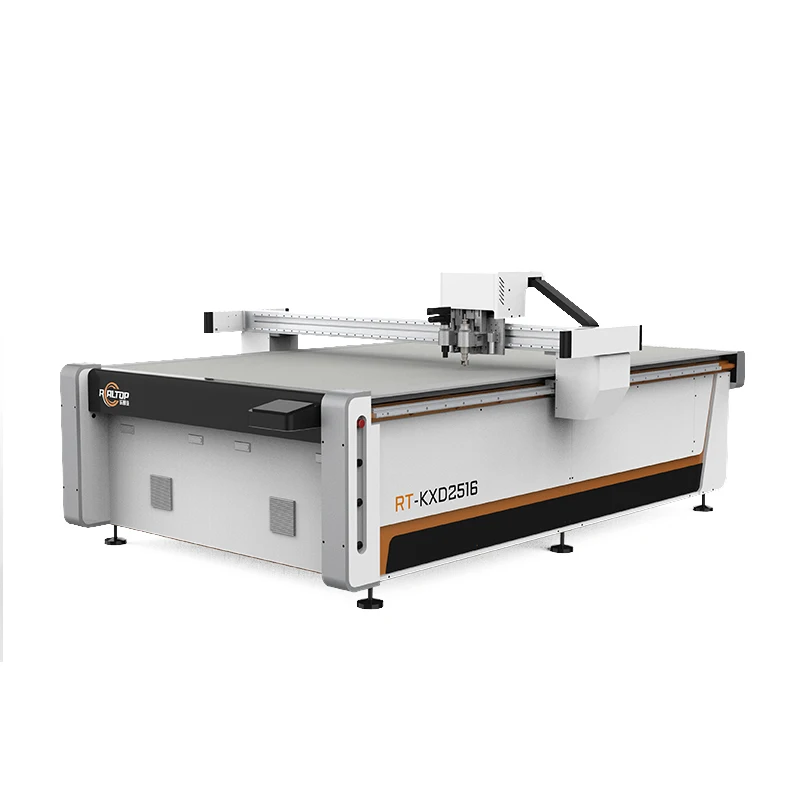
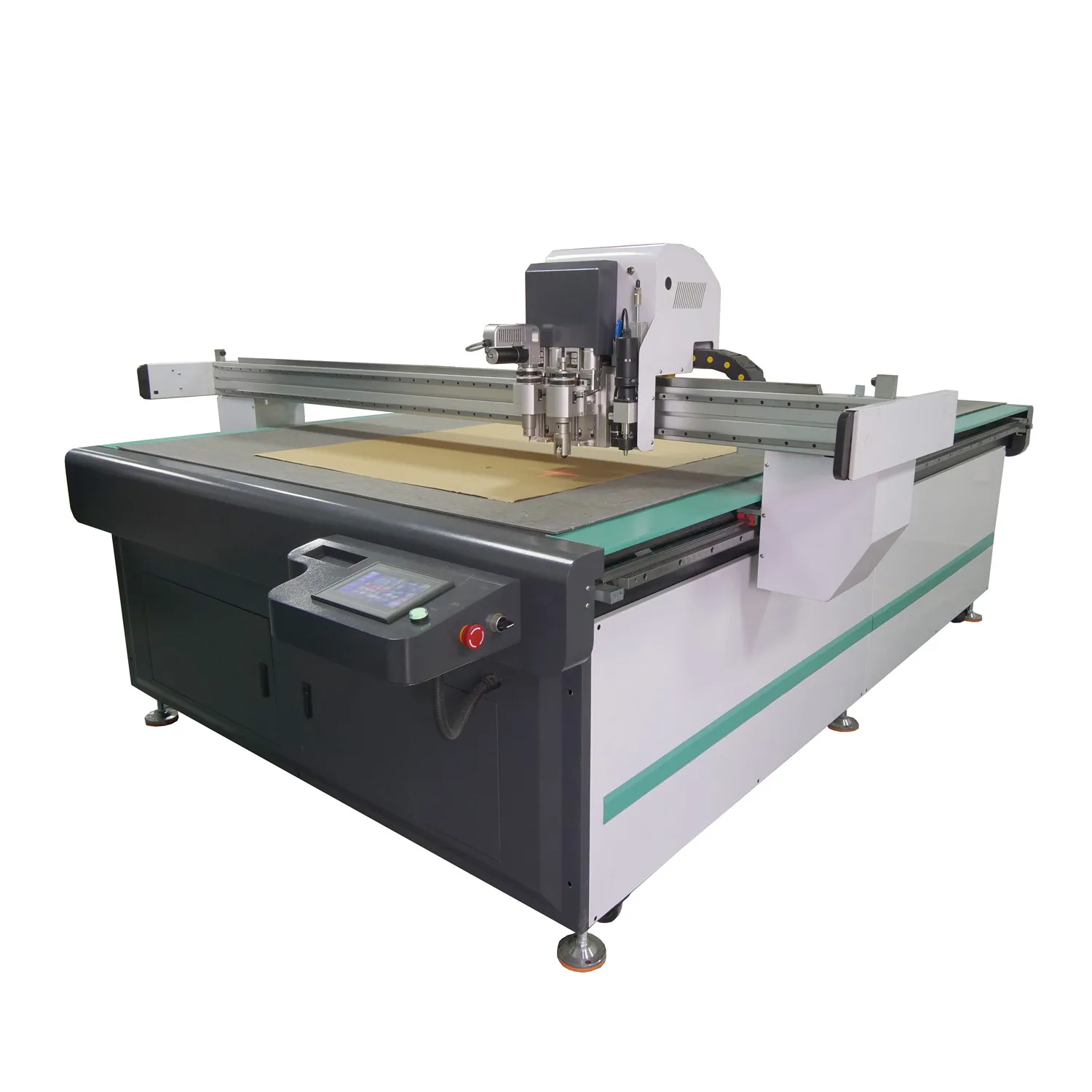
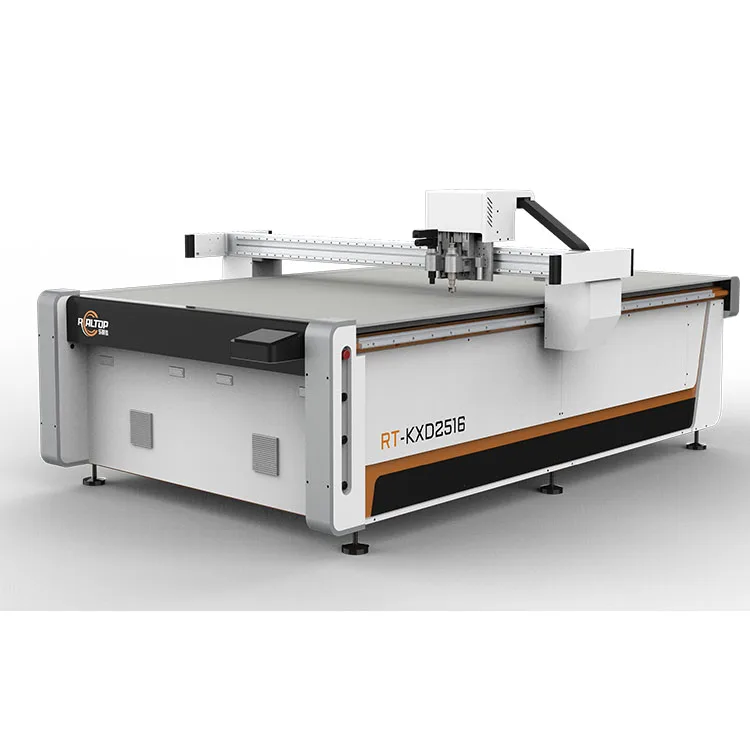
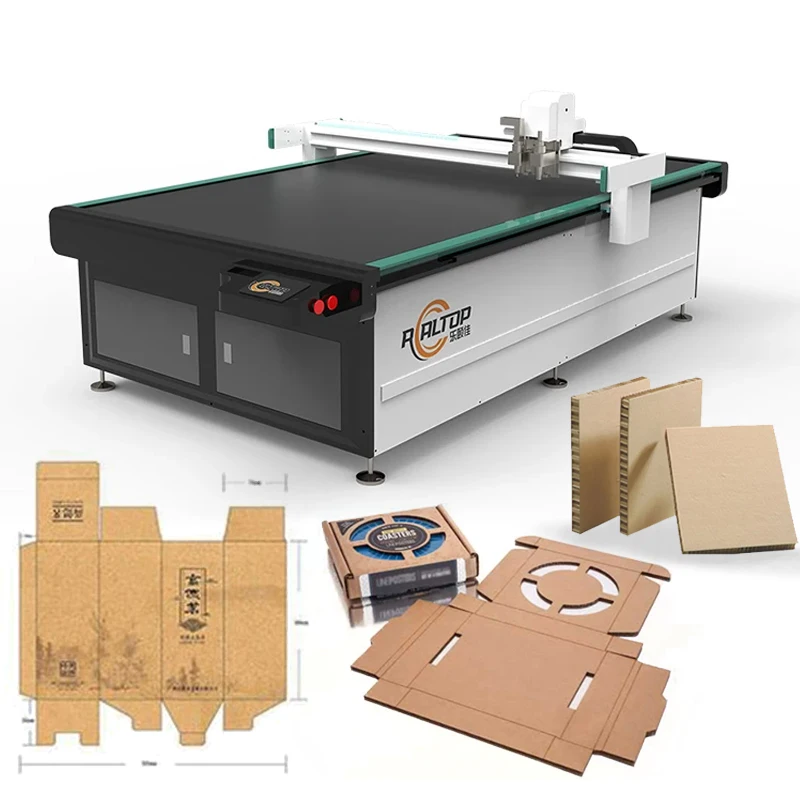
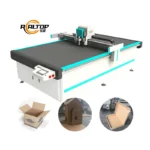
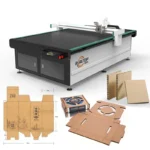
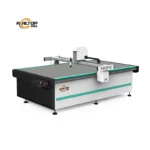
Matched Tooling to Material Grade — Every corrugated flute profile and board density demands a distinct oscillation frequency and blade geometry, which is why the RT-D2516 and RT-S2516 ship with tool head configurations validated against your physical samples before production begins.
Technical Specifications
| Parameter | Value |
|---|---|
| Model | RT-D2516 / RT-S2516 |
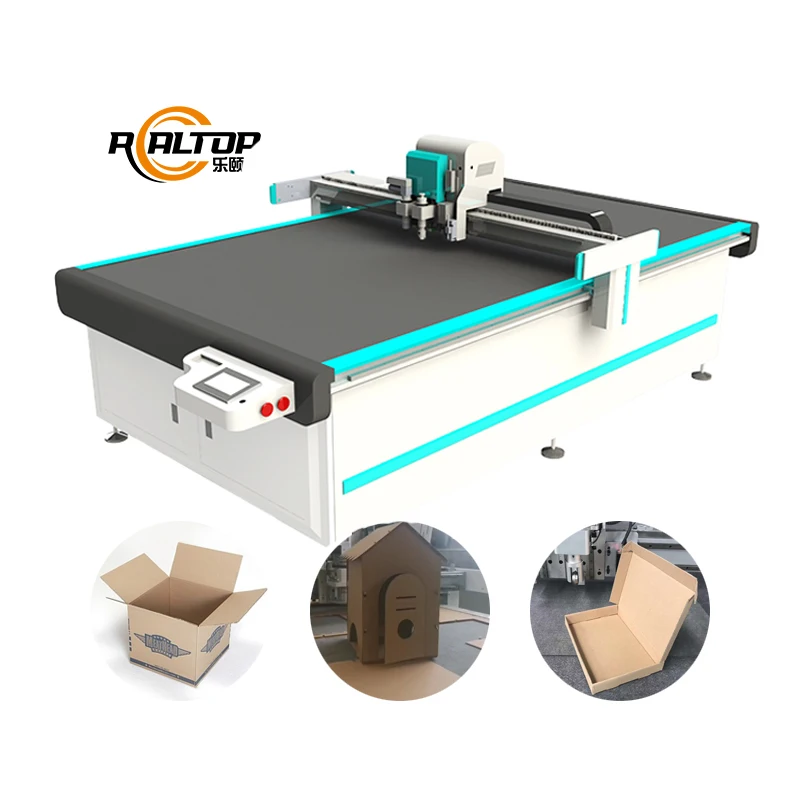
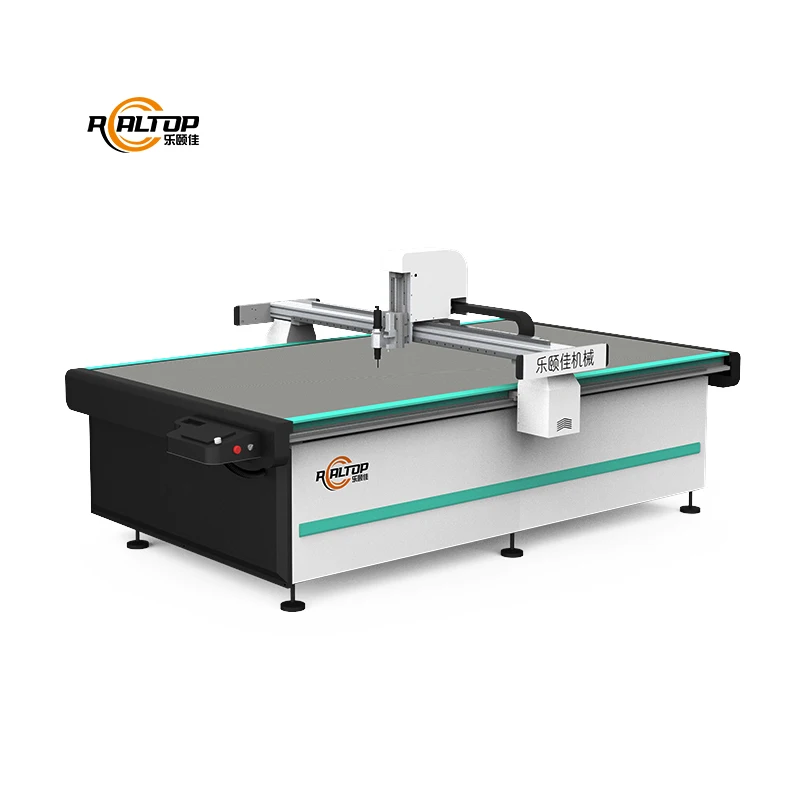
| Product Type | CNC Oscillating Knife Cutting Table for Packaging and Carton Sample Making |
| Working Area | 1600 × 2500 mm |
| Machine Dimensions (L×W×H) | 3450 × 2300 × 1250 mm |
| Rated Power | 9 kW |
| Voltage Requirement | 380V ±10% (frequency to be confirmed) |
| Table Construction | Aluminum alloy honeycomb flat vacuum adsorption table |
| Vacuum Pump | 7.5 kW |
| Tool Head Configuration | Swiss imported oscillating knife (full cut, half cut, cursor location) |
| Servo Motor | Taiwan Delta digital servo |
| Linear Guide | Taiwan Hiwin |
| Transmission | Synchronous belt and ball screw |
| Translational Velocity | 800–2000 mm/s |
| Cutting Speed | 200–800 mm/s (varies by material density and thickness) |
| Repeatability | ≤ 0.1 mm |
| Maximum Cutting Thickness | ≤ 100 mm (material dependent) |
| Safety Devices | Infrared sensors, emergency stop |
| Control Format | HP-GL compatible |
| Software | Professional carton nesting software included |
| Language Options | English, Russian, Italian, Chinese (customizable) |
| Certification | CE (applicability to specific configuration to be confirmed) |
Application Suitability
| Application | Material or Output |
|---|---|
| Carton sample making and prototyping | Single, double and triple-wall corrugated cardboard |
| Short-run packaging production | Folding carton stock, greyboard and honeycomb paperboard |
| Signage and display board cutting | PVC foam board, corrugated plastic, cardboard |
| Sticker and label contour cutting | Vinyl, self-adhesive paper and synthetic films |
| Gasket and seal fabrication | Non-asbestos fiber, rubber sheet, cork composite |
| Flexible material processing | Leather, garment fabric, sponge composite, soft PVC |
Why Specified Cutting Speed Means Nothing Without Board Grade Context
Cutting speed on corrugated board is entirely dependent on flute type, liner density and moisture content.
I once configured a cutting table for a Middle East packaging house based on sample boards they sent, only to discover their actual production stock was a much denser five-wall grade that the selected oscillation frequency could not penetrate cleanly. The tool head stalled mid-sheet, edges crushed rather than sheared, and the machine sat idle for two weeks while replacement tooling shipped. That incident changed how I approach every configuration: no board grade, no quote [NEED_CITE: effect of corrugated flute profile on oscillating knife cutting performance].
When evaluating CNC oscillating knife cutting table specifications, buyers often compare maximum cutting speed numbers across brochures without asking what material those numbers were measured on. A machine cutting 800 mm/s through single-face E-flute will slow considerably on BC-flute double-wall, and the edge quality on the latter depends more on blade oscillation amplitude than on travel speed. How to choose the right setup begins with sending your actual production board to the factory for test cutting under controlled conditions.
Oscillating Knife Mechanics on Corrugated Substrates
The Swiss imported oscillating knife head on this table performs vibration full cutting, vibration half cutting and cursor location within a single tool setup. Full cutting shears completely through corrugated board for carton outlines, while half cutting scores the liner without severing the flute structure — essential for fold lines on sample boxes. CNC oscillating knife cutting table specifications mean little if the oscillation frequency cannot match the shear strength of your particular board grade.
Vacuum Zoning and Small-Part Hold-Down
The 7.5 kW vacuum pump feeds an aluminum alloy honeycomb table with zoned suction regions. When cutting small carton components or nested sticker arrays, inadequate zoning allows air to bleed across the surface, and lightweight parts lift into the knife path. Proper zone isolation ensures suction concentrates only under the area being cut, maintaining flat registration across the 1600 × 2500 mm working envelope [NEED_CITE: vacuum hold-down requirements for flatbed digital cutting tables].
Drive System Tolerance and Crease Line Accuracy
The Taiwan Delta servo motors paired with Hiwin linear guides deliver repeatability within 0.1 mm across the full travel range. For carton sample making, this tolerance matters most at crease intersections where a drag knife or creasing wheel must meet a previously cut score line precisely. Any accumulated positional error produces misaligned fold lines that compromise box assembly and structural integrity during client presentations.
The Cost of Skipping Material Trials Before Shipment
Ordering a cutting table based solely on working area and published speed figures leads to predictable failures: crushed flute edges on dense board, incomplete kiss cuts on adhesive-backed stock, or delamination of laminated carton surfaces. Once the machine arrives and these problems surface, the buyer faces production downtime while tooling is exchanged or vacuum configurations are reworked — losses that compound far beyond the initial delay [NEED_CITE: common causes of CNC knife cutting machine reconfiguration after installation].
Why Source This Configuration From Jinan
In-house design covers both knife and laser cutting technologies, so the cutting method is matched to the material rather than forced into one approach. Tool head selection and vacuum table zoning are specified per material grade and production volume rather than offered as a fixed package. CCD camera positioning is available for printed contour work on signage and labels. Software file format compatibility is confirmed against your existing CAD workflow before order placement. Sample cutting on your own corrugated board or flexible material is completed and documented before commitment. Voltage, control language and documentation are customized for the destination market.
Documentation & Verification
- Machine specification sheet detailing RT-D2516 or RT-S2516 configuration as built
- Electrical schematic with voltage and frequency confirmation for destination grid
- Tool head and vacuum table zoning configuration list matched to your material
- Sample cutting report on your corrugated board grade documenting edge quality
- Factory test record showing repeatability measurement before crating
- Spare parts list identifying consumable blades and vacuum seals
Installation, Commissioning & Support
- Floor space planning around the 3450 × 2300 mm footprint with operator access clearance
- Dedicated 380V circuit provision sized for the combined 9 kW machine and 7.5 kW vacuum load
- Fully assembled delivery with level adjustment and vacuum seal verification on site
- First-run parameter tuning on your production board grade including oscillation amplitude setting
- Operator training covering tool head changes, vacuum zone selection and nesting software workflow
- Consumable blade inventory planning based on your daily cutting volume and material abrasiveness
Before You Request a Quotation
Send your typical corrugated board grades with flute designation, liner weight and moisture range so tooling can be matched before pricing. Specify the voltage and frequency standard at your facility along with the control interface language your operators require. If you run existing nesting software, share a sample file so format compatibility can be verified against the bundled carton nesting package.
Frequently Asked Questions
Q: How is cutting speed verified for my specific corrugated board grade?
A: You send production-representative board samples to the factory, and we run cutting trials across a range of oscillation frequencies and travel speeds. The results are documented in a sample cutting report showing edge quality, flute compression and achievable speed for your exact material before any configuration is finalized.
Q: What vacuum zoning is provided for small carton sample parts?
A: The honeycomb table is divided into suction zones that can be selectively activated. You provide your typical nested layout and smallest part dimensions, and we confirm which zones hold those parts securely without lift during oscillating knife passes. Zone layout is documented before shipment.
Q: Which tool heads are recommended for mixed corrugated and flexible materials?
A: The oscillating knife handles corrugated board, card stock and thicker composites. A drag knife suits vinyl and thin films, while a creasing wheel produces fold lines on carton stock. We recommend the combination based on your material list, and tool changes are manual with quick-release tool holders.
Q: Does the carton nesting software import my existing design files?
A: The bundled software supports HP-GL compatible formats and common vector imports. Before order confirmation, you share a sample file from your current design workflow, and we verify import fidelity including layer recognition, crease line assignment and contour extraction.
Q: What electrical and language customization is confirmed before dispatch?
A: Voltage tolerance, frequency, plug type and control interface language are specified on the purchase documentation. The electrical schematic reflects these parameters, and the machine is wired and tested at those values during factory commissioning before packing.


商品评价
Clear filtersThere are no reviews yet.