






Fast Shipping
Carrier information

20k products
Payment methods

24/7 Support
Unlimited help desk

2-day Delivery
Track or off orders
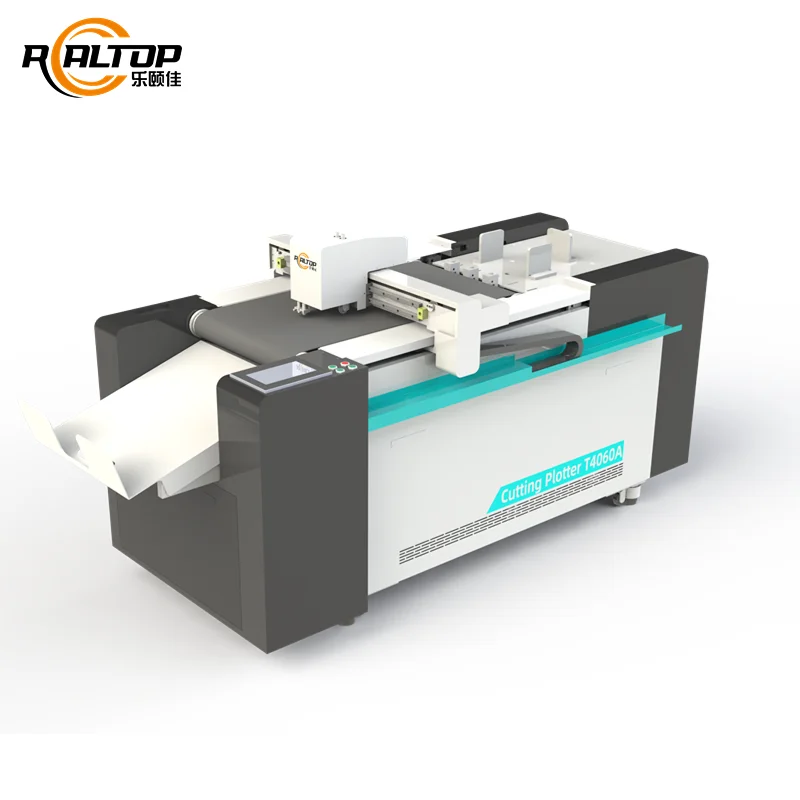
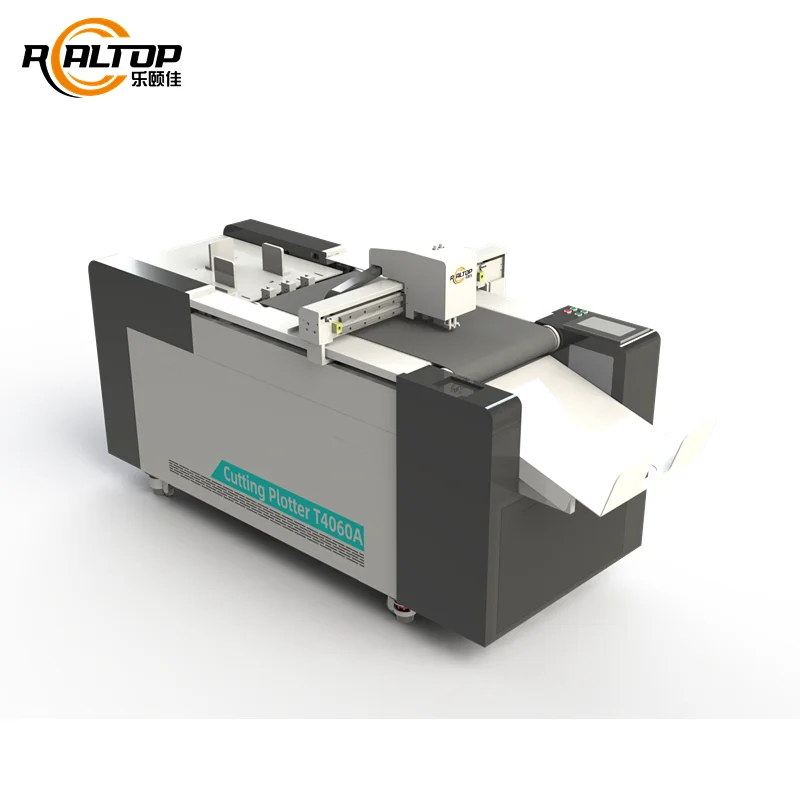
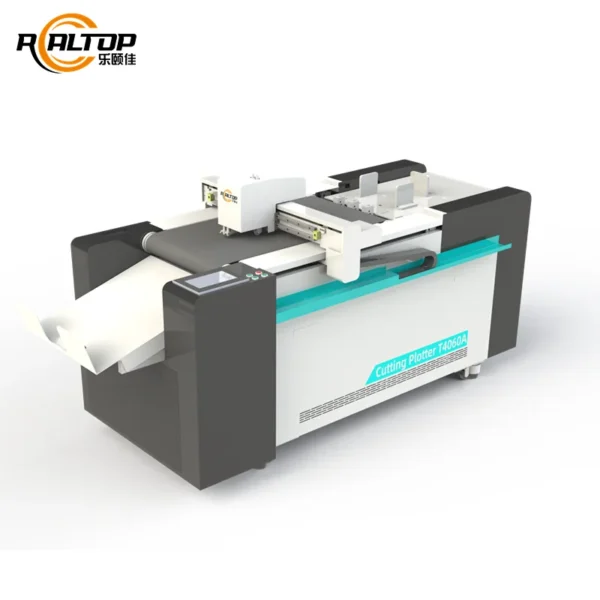
Tool Head Matched to Material — the RTT4060 groups oscillating knife, drag knife, creasing wheel and CCD positioning into one head, so you select by material rather than forcing a single method.
Technical Specifications
| Parameter | Value |
|---|---|
| Product Type | CNC Digital Cutting Plotter |
| Model | RTT4060 |
| Series | T series |
| Working Area | 400 × 600 mm |
| Tool Head Configuration | Multi-tool combination: cutting, creasing, kiss-cutting, dotted-line |
| Positioning System | CCD camera auto positioning |
| Control Interface | HD touch control panel |
| Automation Level | Fully automated feeding, cutting and picking |
| Network Connectivity | Ethernet port for file transfer |
| Warranty | 12 months for whole machine |
| Certification | CE declaration where applicable |
Application Suitability
| Application | Material or Output |
|---|---|
| Packaging sample making | Corrugated cardboard, grey board, coated paper up to typical carton thickness |
| Carton prototyping | Self-adhesive sheets, PP and PVC sheet stock |
| Graphic finishing | Pre-printed coated paper, vinyl, self-adhesive label stock |
| Small-batch box production | Short-run cardboard and composite packaging formats |
Why Tool Head Selection Matters More Than Working Area Alone
A machine specified only by bed size often fails when the material thickness or finish requirement changes mid-run. The RTT4060 combines cutting, creasing, kiss-cutting and dotted-line tools in a single head so the operator switches function by material, not by swapping machines.
I have watched packaging shops buy a flatbed based on table dimensions, then discover the single-blade setup tears through coated paper or crushes the flute on micro-corrugated board. The wrong tool head produces ragged edges that fail quality checks, and the machine sits idle while the buyer searches for an add-on head that was never in the original quote. [NEED_CITE: CNC oscillating knife cutting table specifications for packaging materials] Matching the tool to the stock before purchase avoids this costly mismatch.
CCD Contour Recognition for Printed Packaging
The integrated CCD camera reads registration marks on pre-printed sheets and adjusts the cutting path in real time. This means contour-cut stickers, window-patch boxes and die-cut labels follow the printed image even when sheet registration drifts during feeding. Without camera-based tracking, operators manually align each sheet, adding minutes per job and accumulating registration errors across a short run.
Automation That Fits Short-Run Reality
The automatic feed-and-pick cycle handles sheet loading, cutting and part removal without an operator at the table. For sample rooms producing a dozen different box structures per day, this removes the bottleneck of manual weeding between jobs. The HD touch panel stores job queues so the next file loads while the previous sheet is still being picked. [NEED_CITE: automation levels in flatbed digital cutting tables]
Reading the Specs That Actually Affect Cut Quality
Working area defines the maximum sheet, but tool head travel depth decides which materials the machine can actually process. The RTT4060 multi-tool head carries a creasing wheel alongside the oscillating knife, so a single pass scores the fold line and cuts the outline without a second tool change. CCD positioning accuracy governs how tightly a contour-cut label can hug the printed edge; camera resolution and mark contrast on the buyer’s own stock must be verified before sign-off. Ethernet connectivity allows the nesting software on the office PC to push files directly to the machine, eliminating USB-drive swaps that introduce version errors. Vacuum hold-down must be zoned to match the small parts common in packaging samples, otherwise half-cut labels lift off the table during the final pass.
What Happens When Configuration Is Skipped
Skipping material-specific tool configuration leads to crushed foam gaskets, delaminated sticker faces and creasing lines that crack under folding. [NEED_CITE: tool head selection errors in digital cutting operations] The buyer receives a machine that technically runs but cannot hold tolerance on the actual stock in the shop. Reworking the job manually defeats the purpose of automated cutting, and the production manager absorbs the delay.
Why This Source Supports CNC Knife Cutting Verification
In-house design covers both knife and laser cutting, so the cutting method is matched to the material rather than forced into one technology. Tool head and vacuum table configuration are specified per material and daily volume, not quoted from a generic price list. CCD camera positioning is validated on the buyer’s printed stock before order confirmation. Software compatibility — file format import and nesting workflow — is confirmed in writing before production starts. Voltage, plug type and control panel language are documented against the destination market so the machine arrives ready to power on. Sample cutting on the buyer’s own material is conducted before commitment, with a written report showing edge quality, registration accuracy and cycle time.
Documentation & Verification
- Machine specification sheet listing every configured tool head and option
- Electrical schematic with voltage and frequency locked to destination market
- Tool head and table configuration list matched to buyer’s material range
- Sample cutting report produced on buyer’s own stock before dispatch
- Factory test record documenting positioning accuracy and cut edge quality
- Software licence and file format compatibility note for buyer’s nesting workflow
Installation, Commissioning & Support
- Foundation and floor-levelness check aligned to the RTT4060 400 × 600 mm bed footprint
- Dedicated circuit matching confirmed voltage and frequency before power-on
- Assembly and motion calibration by technician upon arrival at site
- First-run parameter tuning on buyer’s actual cardboard and PP sheet stock
- Operator training covering tool head changes, CCD mark setup and nesting queue
- Spare parts list covering blades, creasing wheels and vacuum cups at delivery
Before You Send the Drawing
Tell us the exact material type, thickness range and whether sheets arrive pre-printed or blank. Share your daily sample volume and the file formats your design department already uses. Confirm the local voltage and frequency so the electrical package is built to match before the machine leaves the factory.
Frequently Asked Questions
Q: How is the tool head configuration specified for different packaging materials?
A: We list each material the buyer intends to cut — cardboard weight, PP thickness, self-adhesive face stock — and match it to a tool from the RTT4060 multi-tool head. A sample cutting report on the buyer’s actual stock confirms edge quality and creasing depth before the order is finalised.
Q: What printed mark formats does the CCD camera support?
A: The CCD system reads standard registration marks printed on the sheet margin. Mark size, contrast and placement are checked during the sample cutting stage using the buyer’s own print file, so tracking performance is verified before shipment rather than assumed at delivery.
Q: Which design file formats import directly into the control software?
A: Common vector formats including DXF and PLT are supported. Before order confirmation we provide a written compatibility note listing the exact formats and nesting workflow the buyer’s design software outputs, ensuring no file conversion bottleneck on the shop floor.
Q: How are voltage, plug type and control language confirmed?
A: The destination market voltage and frequency are recorded during inquiry. An electrical schematic confirming these values is sent to the buyer for sign-off before assembly. Control panel language is set to the buyer’s preference and documented in the specification sheet.
Q: What does the 12-month warranty cover and which spares ship with the machine?
A: The warranty covers the complete RTT4060 machine for twelve months from dispatch. A spare parts list — including oscillating blades, creasing wheels and vacuum cups — is included in the packing case so wear items are available from day one of production.


商品评价
Clear filtersThere are no reviews yet.