




Fast Shipping
Carrier information

20k products
Payment methods

24/7 Support
Unlimited help desk

2-day Delivery
Track or off orders
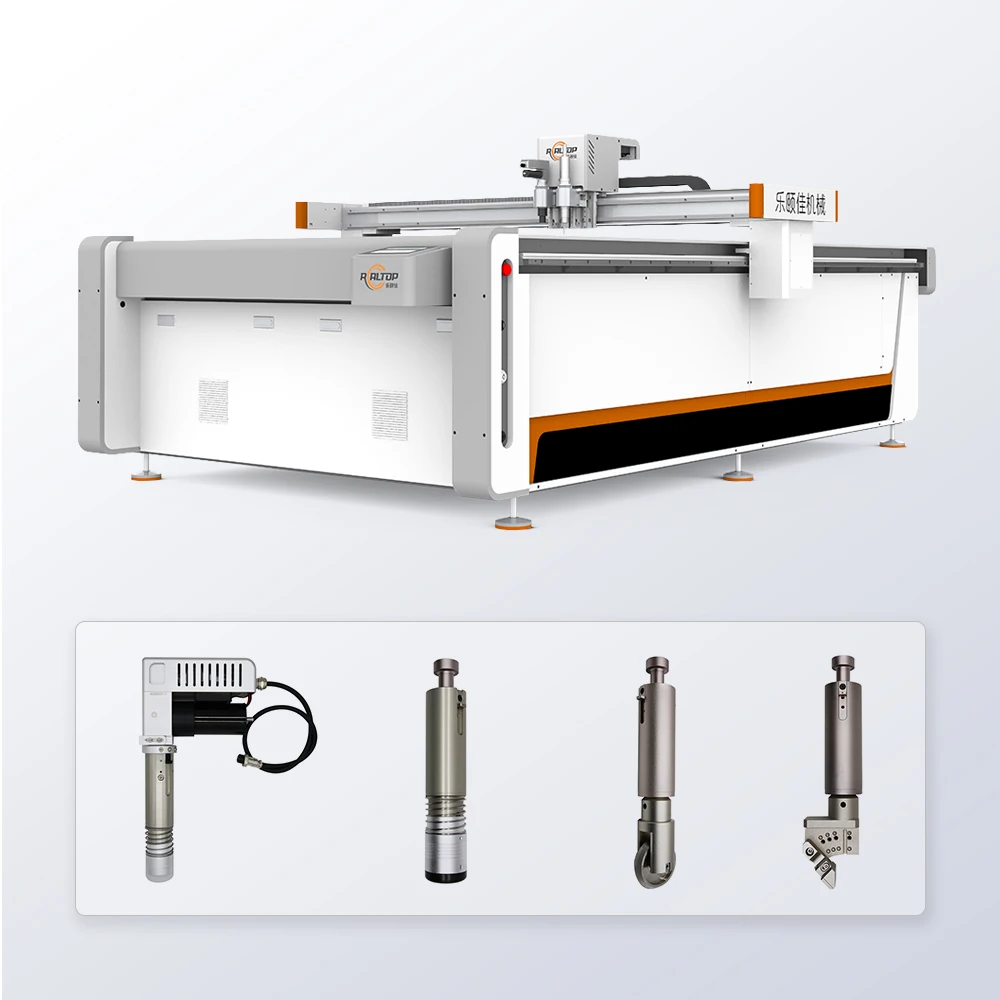
Multi-Tool Head Matching — each oscillating knife, creasing wheel and rotary tool is assigned by material test, not by catalogue default.
Technical Specifications
| Parameter | Value |
|---|---|
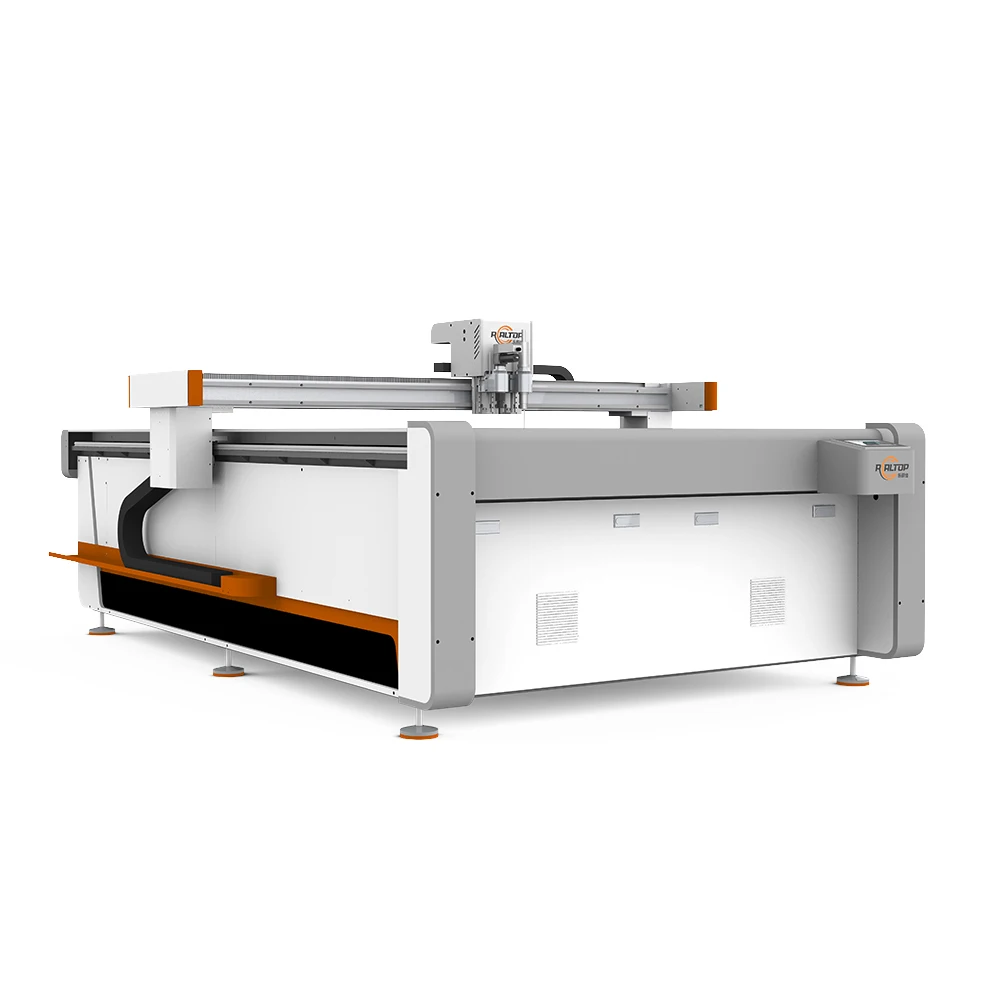
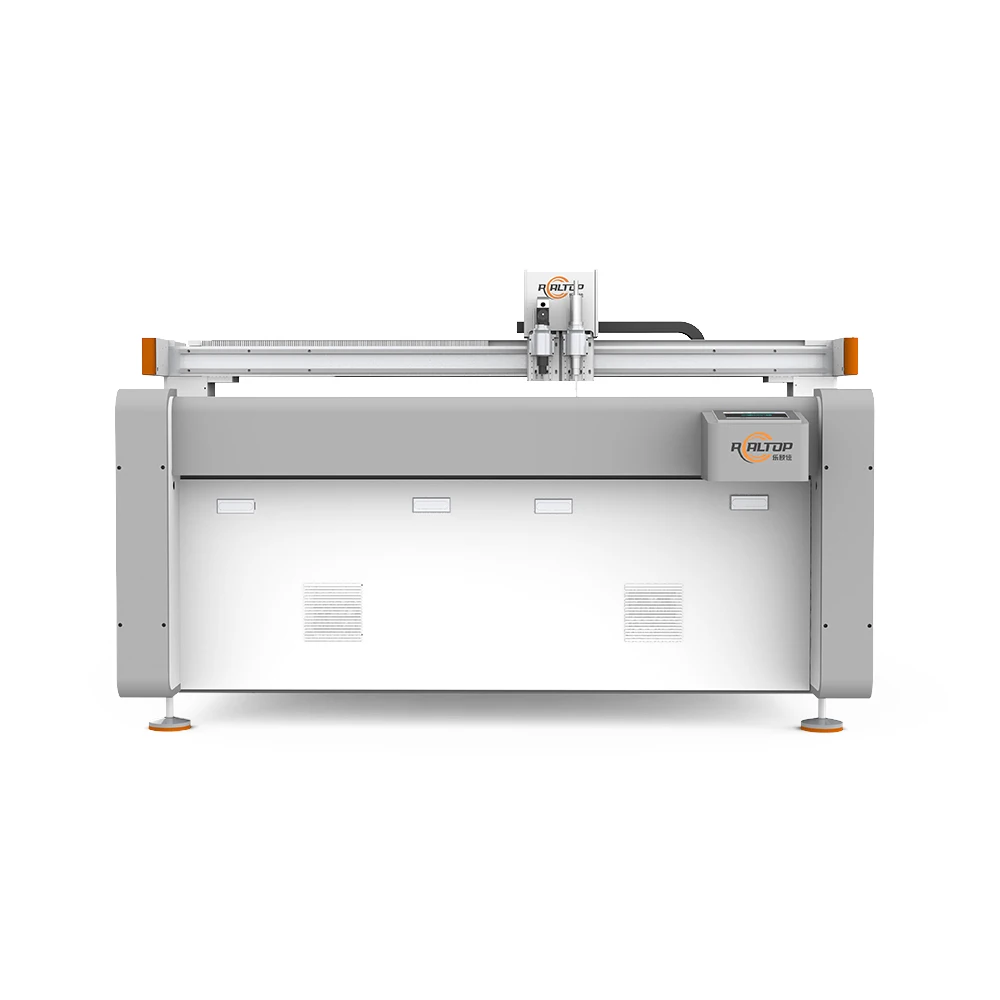
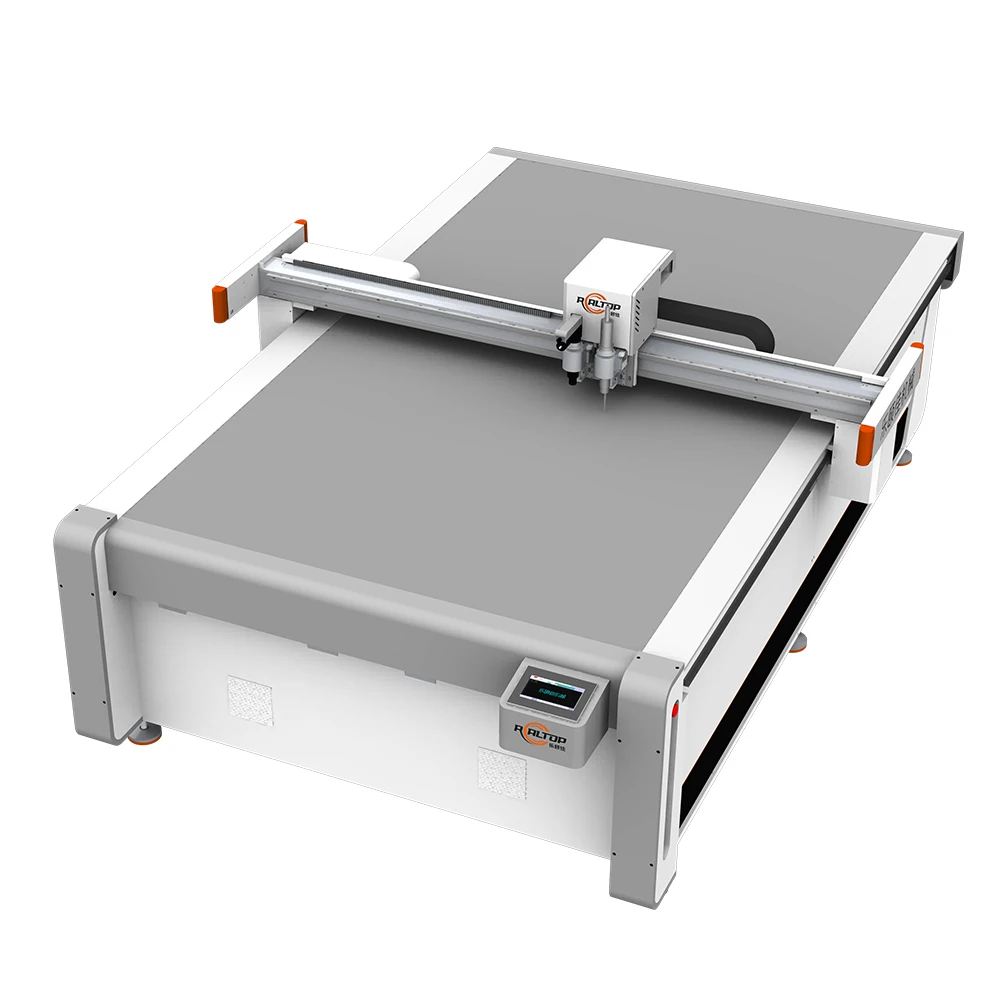
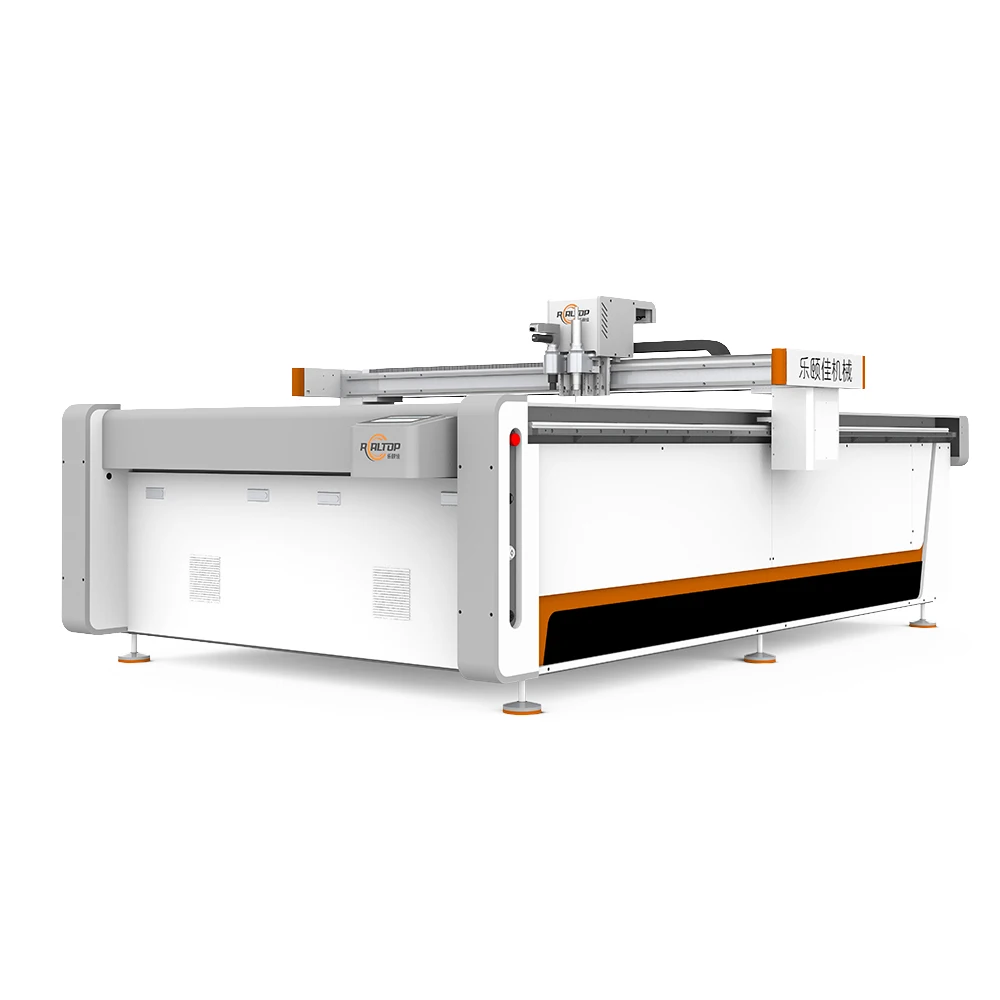
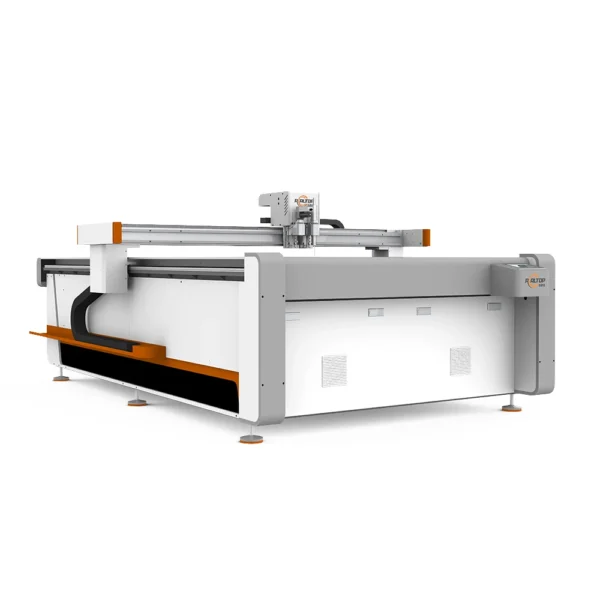
| Product Type | CNC Oscillating Knife Cutting Machine |
| Working Area | 1600×2500 mm |
| Tools Available | Oscillating knife, Driven rotary knife, Creasing wheel, Kiss cutting tool, Pneumatic knife, Milling tool, V groove knife |
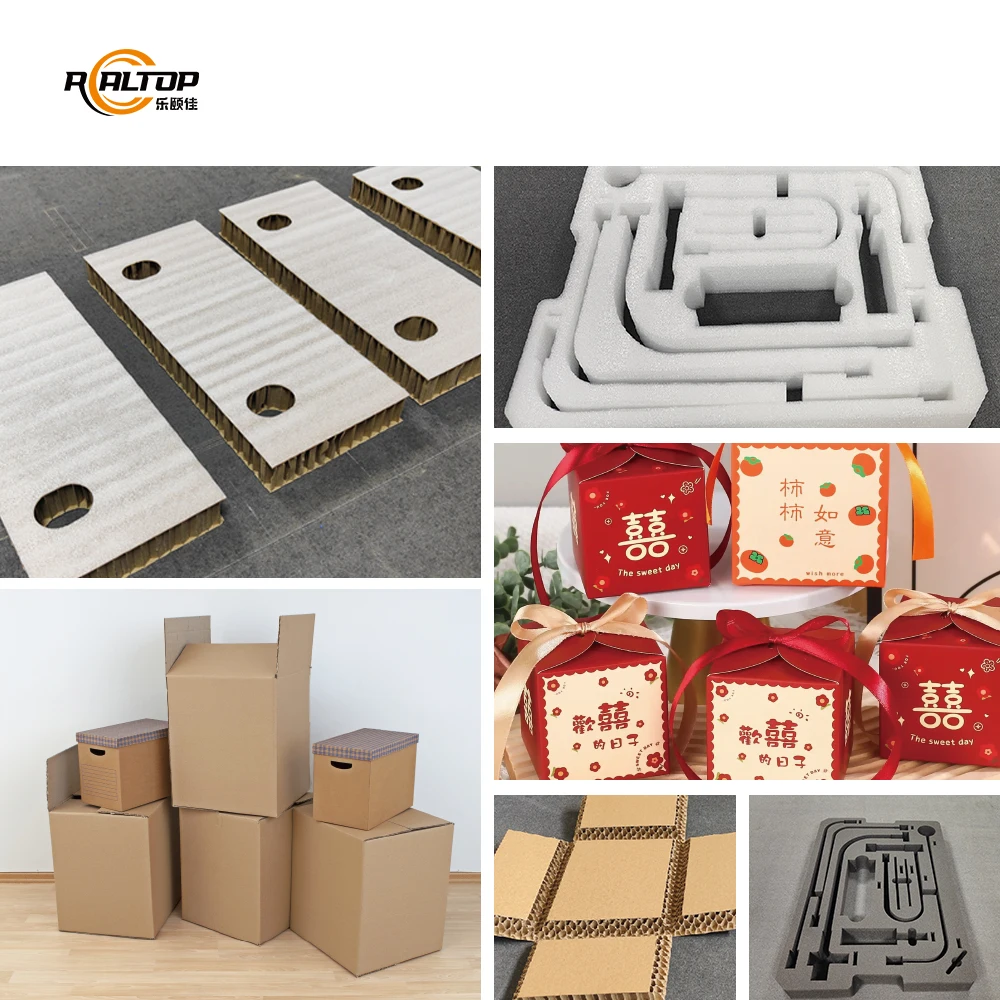
| Applicable Materials | Fabric, Cardboard, Carton, Mats, PVC, EVA, Leather, Acrylic, Foam, PTFE, Rubber |
| Cutting Speed | 0-1500 mm/s |
| Cutting Thickness | ≤ 40 mm |
| Cutting Accuracy | ±0.1 mm |
| Vacuum Pump | 9 kW |
| Voltage Options | 110V, 220V, 380V |
| Profile Format | PLT, DXF, AI, PDF |
| Safety Device | Infrared sensor and emergency stop |
| Machine Size | 3300×2100×1350 mm |
| Control System | PLC control panel |
| Language Options | English, Russian, Italian, Chinese (customizable) |
| Certification | CE |
Application Suitability
| Application | Material or Output |
|---|---|
| Corrugated carton prototyping | Single, double and triple-wall corrugated board with creasing and kiss-cut lines |
| Packaging sample making | Greyboard, folding carton stock, honeycomb paper |
| Foam gasket fabrication | EVA, EPE, PU foam sheets up to stated thickness limit |
| Textile and leather cutting | Velvet, fleece, non-woven fabric, synthetic leather |
| Non-metal industrial parts | Rubber mats, PTFE gaskets, thin PVC and PET sheets |
Why the Right Tool Head Matters More Than the Working Area
Choosing a CNC oscillating knife cutting table specifications sheet based on bed size alone leaves the most critical variable unaddressed: whether the tool head can actually hold an edge on your specific stock.
I spent years running material trials in packaging plants across the Middle East, and the most common failure I have seen is a machine that cuts standard corrugated cleanly but tears through high-density reinforced core board. The operator swaps blades, adjusts speed, and the edge still frays. Production slows, and the line misses its daily target. This is not a machine defect — it is a specification gap. [NEED_CITE: relationship between oscillating frequency and abrasive corrugated core materials]
A buyer who commits to a CNC oscillating knife cutting table specifications package before testing their actual heaviest and most abrasive stock often discovers the limitation during commissioning, when returns are costly and lead times stretch.
Matching Oscillation Frequency to Board Density
The oscillating knife on this system handles standard and heavy corrugated grades, but the real test comes with reinforced or coated liners. Every CNC oscillating knife cutting table specifications list should be read alongside a sample cutting report run on the buyer’s own material, confirming that the knife stroke and frequency produce a clean shear rather than a crushed edge on the flute tips.
Creasing Wheels and Kiss-Cut Tools for Fold Lines
Carton and packaging sample work requires more than straight cuts. The creasing wheel scores fold lines without penetrating the outer liner, while the kiss cutting tool cuts through one layer while leaving the backing intact. Having both available on the same tool carriage means a single setup completes the entire carton blank — cut, crease and perforate — without re-fixturing the sheet.
Vacuum Zoning and Small Part Hold-Down
A 1600×2500 mm bed holds a full carton sheet, but packaging runs also produce small offcut inserts and corner braces. The 9 kW vacuum pump supplies the aluminum bellows table, which provides flatness and consistent suction. Zoning matters here: if the vacuum zones are too coarse, a small part lifts mid-cut and the edge walks off tolerance. [NEED_CITE: vacuum table zoning practices for nested packaging components]
Reading the Specs That Actually Affect Your Output
Cutting thickness rated at 40 mm covers most corrugated, foam and gasket stock encountered in packaging and non-metal fabrication. The ±0.1 mm accuracy applies across the full working area, which matters when a carton blank must fold to a precise register line. The PLC control panel with selectable languages (English, Russian, Italian, Chinese) reduces setup errors when operators rotate across shifts or when the machine ships to a facility where the primary working language is not English. Voltage options (110V, 220V, 380V) mean the electrical schematic can be confirmed against the buyer’s facility supply before the machine leaves the factory, avoiding on-site transformer work.
The Cost of Skipping the Material Trial
I once configured a vibrating knife unit for a Dubai carton plant using standard B-flute samples. When production started, the actual stock was a high-hardness reinforced core, and the knife edge degraded within the first few sheets. The line tempo dropped by half until replacement tooling arrived. That single oversight cost more in lost production time than the trial would have taken. Buyers who skip the sample cutting step absorb this risk silently. [NEED_CITE: tooling wear rates on abrasive reinforced corrugated materials]
Why Source This Configuration Here
The tool head and table configuration is specified per material and production volume, so a corrugated carton producer does not receive a generic flatbed forced to handle every substrate. The in-house design team covers knife cutting technology directly, meaning the cutting method is matched to the stock rather than adapted after delivery. Sample cutting on the buyer’s own corrugated or foam stock runs before order commitment, producing a report that documents edge quality and tool wear. Software compatibility (PLT, DXF, AI, PDF) is confirmed against the buyer’s existing design workflow before the machine ships. Voltage, plug type and control language are locked in the specification sheet, so the electrical installation matches the facility on arrival.
Documentation & Verification
- Electrical schematic confirming the selected voltage option and circuit protection before dispatch
- Tool head and table configuration list showing exactly which knives and wheels ship with the machine
- Sample cutting report run on the buyer’s own corrugated or foam stock with edge quality photographs
- Software licence and file format compatibility note covering PLT, DXF, AI and PDF workflows
- Factory test record documenting cutting accuracy across the full 1600×2500 mm working area
- CE declaration documentation for applicable market entry requirements
Installation, Commissioning & Support
- Floor space allocation for the 3300×2100×1350 mm machine footprint plus operator clearance on three sides
- Dedicated electrical circuit matching the confirmed voltage (110V, 220V or 380V) with appropriate breaker rating for the 9 kW vacuum pump
- PLC control panel language set to the operator’s working language during commissioning before training begins
- First-article test on the buyer’s corrugated stock to verify cutting accuracy and creasing wheel alignment
- Spare oscillating knife blades, creasing wheels and vacuum table seals included for initial production runs
- Maintenance schedule covering vacuum pump filter, linear guide lubrication and knife holder inspection intervals
What to Share With Your Inquiry
To size the tool configuration correctly, send the heaviest and most abrasive corrugated grade in your production mix along with your standard stock. Include the daily sheet volume and the dimensions of your largest carton blank. Note your facility voltage and frequency, and the preferred control panel language for your operators.
Frequently Asked Questions
Q: How do I know which tool head to select for my corrugated grade?
A: Tool head selection depends on the flute profile, liner coating and board density. An oscillating knife handles standard grades, but reinforced or coated stock may require a specific oscillation frequency or blade geometry. The correct choice is confirmed by running a sample cut on your actual material before the machine configuration is finalized, so the edge quality is verified in advance.
Q: Will the vacuum table hold small packaging inserts without lifting?
A: The aluminum bellows table paired with the 9 kW vacuum pump provides consistent suction across the 1600×2500 mm bed. For very small parts nested inside a larger sheet, vacuum zoning determines whether peripheral suction is sufficient. This should be tested during the sample cutting stage with your actual nesting layout to confirm hold-down.
Q: Can the software accept files from my existing packaging design system?
A: The system accepts PLT, DXF, AI and PDF profile formats. Before order confirmation, your existing file format and nesting workflow are checked against the software to ensure compatibility. This avoids discovering a conversion issue after the machine has been installed on your production floor.
Q: What electrical and language details are confirmed before shipment?
A: Voltage (110V, 220V or 380V), plug type, circuit protection and control panel language (English, Russian, Italian, Chinese or custom) are documented in the specification sheet and confirmed before production begins. The electrical schematic is reviewed with the buyer to match the facility supply, preventing on-site rewiring after delivery.


商品评价
Clear filtersThere are no reviews yet.