





Fast Shipping
Carrier information

20k products
Payment methods

24/7 Support
Unlimited help desk

2-day Delivery
Track or off orders
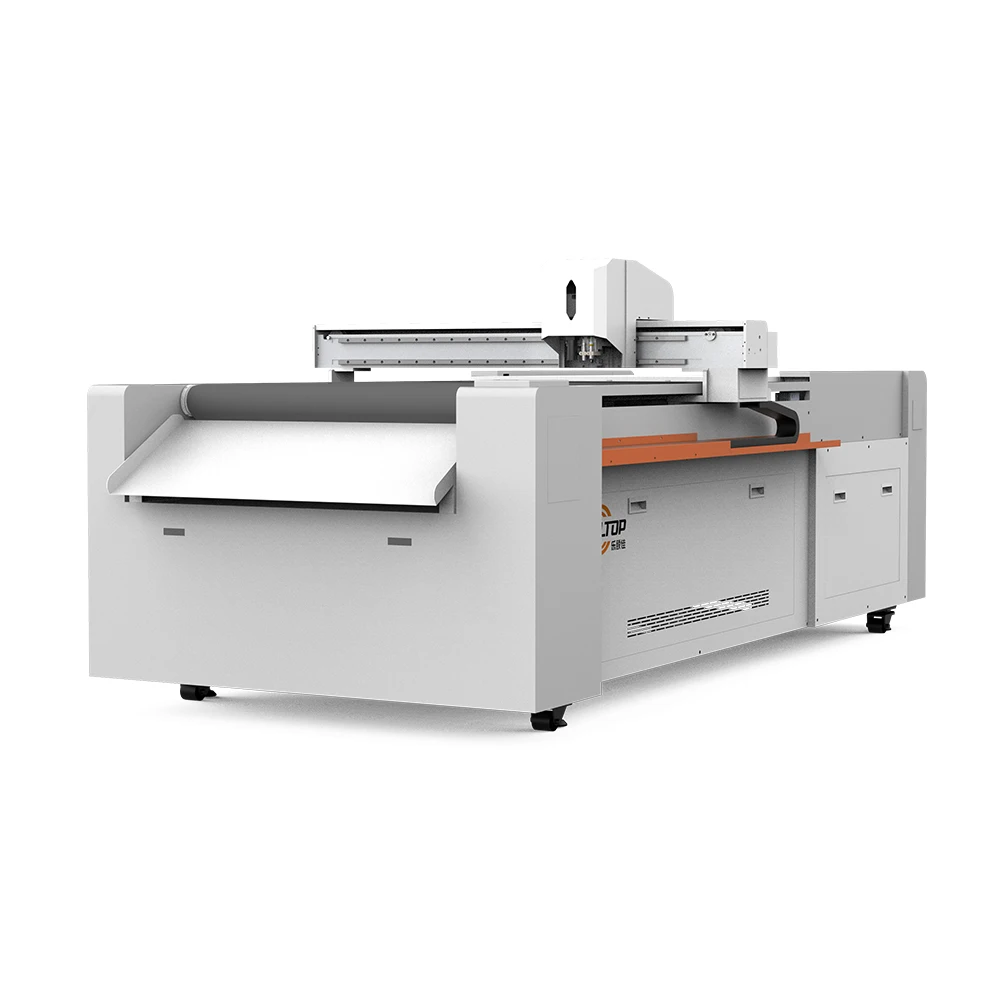
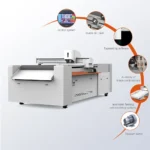
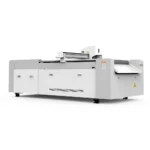
Material-Matched Configuration — Every CNC oscillating knife cutting table ships with a tool head and vacuum zoning plan selected against the buyer’s actual material samples rather than generic catalog defaults.
Technical Specifications
| Parameter | Value |
|---|---|
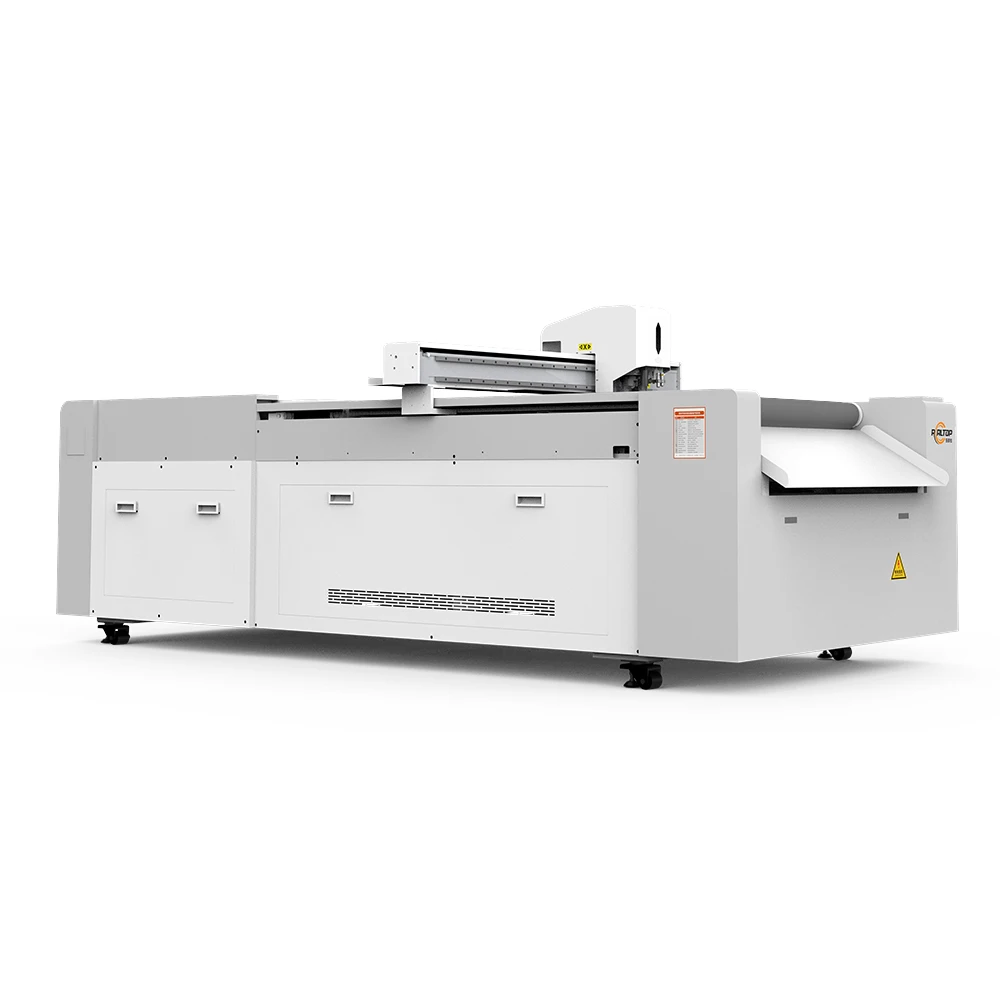
| Product Type | CNC Oscillating Knife Cutting Machine |
| Working Area Options | 400×600 mm / 600×800 mm / 900×1200 mm |
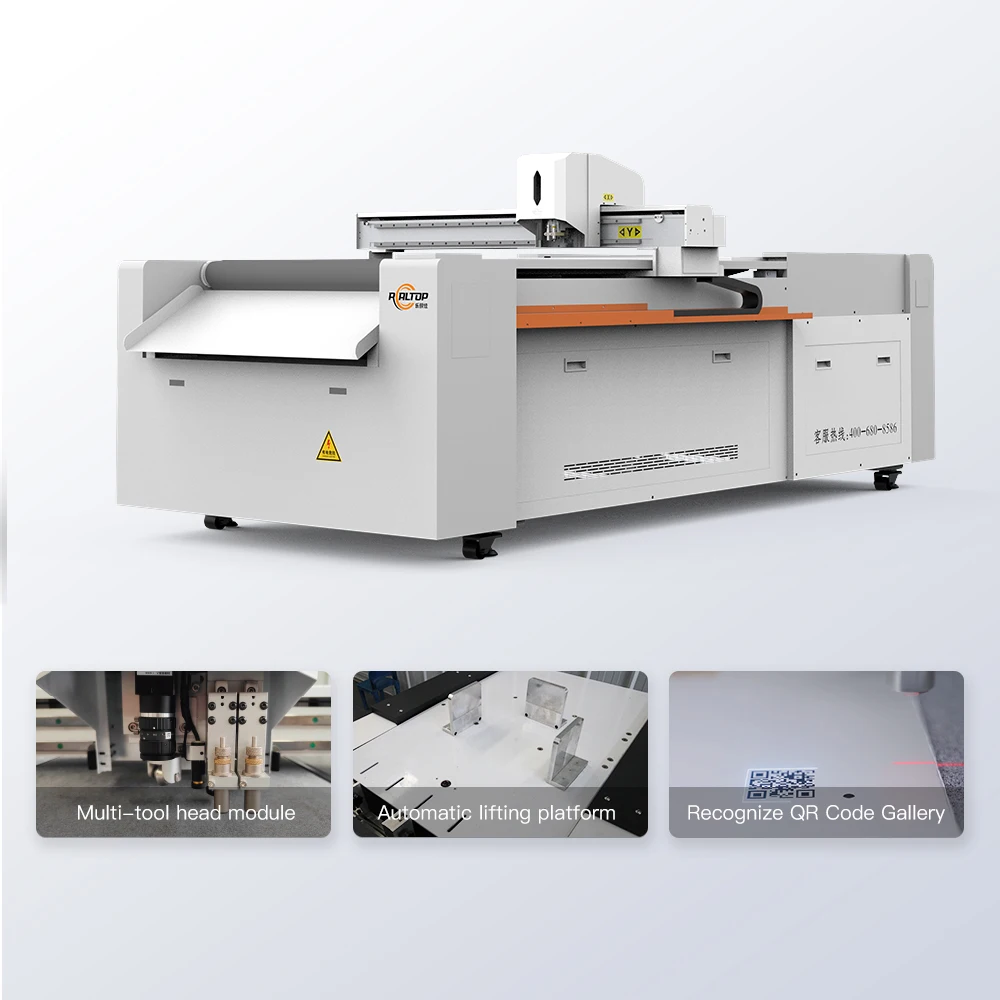
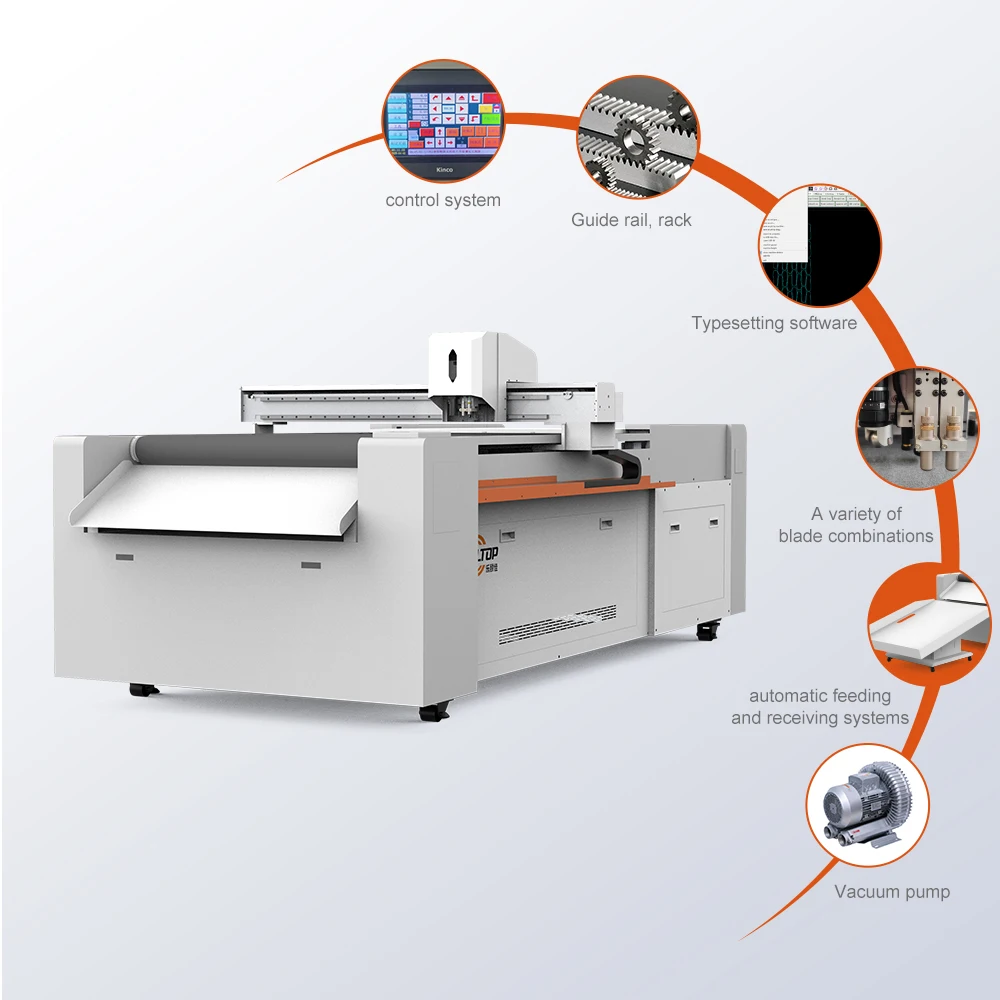
| Tool Head Options | Oscillating knife, creasing wheel, kiss cutting tool, CCD camera, marking pen |
| Cutting Speed | 0–1500 mm/s |
| Cutting Thickness | ≤20 mm (basis not stated in source) |
| Positioning Accuracy | ±0.1 mm |
| Vacuum Pump | 2.5 kW / 3.2 kW |
| Voltage Options | 110V / 220V (frequency to be confirmed) |
| Accepted File Formats | PLT, DXF, AI, PDF |
| Safety Devices | Infrared sensor, emergency stop |
| Control Language | English, Russian, Italian, Chinese (special languages customizable) |
| Control System | CNC (controller brand/model to be confirmed) |
| Assembly State | Desktop structure (standard 60×40 cm footprint on compact model) |
| Certification | CE |
Application Suitability
| Application | Material or Output |
|---|---|
| Packaging and carton sample making | Printed carton, corrugated cardboard, cardstock with creasing and cutting in one pass |
| Advertising and signage production | Vinyl sticker, self-adhesive vinyl, PVC stickers, printed board contour cutting |
| Craft and cultural product fabrication | Paper-cut lamps, leather bookmarks, 3D greeting cards, keychains |
| Educational teaching aids | Puzzles, cards, science experiment templates on paper and thin board |
| Light industry small-batch cutting | Electronic foam gaskets, photo backing paper, leather tags |
What "≤20 mm Cutting Thickness" Leaves Out When Quoting CNC Oscillating Knife Cutting Machine Specifications
Thickness ratings mean nothing without the material density and tool head behind them.
I once watched a Southeast Asian packaging line stall for three days because the supplier quoted a thickness range based on standard white card, but production was running laminated color boxes. The CCD could not lock onto the registration marks through the laminate, and the cutting head dragged instead of slicing cleanly. When you review CNC oscillating knife cutting machine specifications, the thickness figure must be tied to a specific material type, density, and the correct tool head selection for that material [NEED_CITE: material density and tool head compatibility for oscillating knife cutting]. Without that context, you are comparing numbers that do not describe what will actually happen on your shop floor.
Tool Head Selection Drives the Real Cutting Capacity
The oscillating knife handles corrugated board and thicker gasket stock by vibrating through the material at high frequency, while the creasing wheel scores fold lines on carton samples without penetrating the sheet. Kiss cutting tools slice through vinyl and self-adhesive layers while leaving the backing paper intact — a configuration that matters for signage and decal runs. Drag knife heads suit thinner materials like cardstock and PVC stickers where full oscillation is unnecessary. Selecting the right head is the difference between a clean edge and crushed foam or ragged laminate [NEED_CITE: oscillating versus drag knife edge quality on composite materials].
CCD Camera Contour Recognition for Printed Workflows
The CCD camera option tracks registration marks on pre-printed carton and vinyl, allowing the cutting path to follow the printed contour rather than relying on sheet alignment alone. This matters when your artwork has tight bleed allowances or when print registration drifts slightly across a run. The camera must read marks reliably at production speed — not just during a slow demo pass — so confirming capture rate on your actual printed stock before ordering prevents the exact line stoppage I witnessed in that Vietnam packaging plant.
How Positioning Accuracy, Vacuum, and Software Interact on the Production Floor
The ±0.1 mm repeat positioning accuracy keeps intricate fonts and curved die-lines within tolerance across long runs, but accuracy means little if the vacuum table cannot hold small parts flat during cutting. The 2.5 kW and 3.2 kW vacuum pump options serve different table sizes and part geometries; a table zoned for large sheets may leave small gasket pieces lifting at the edges. The software accepts PLT, DXF, AI, and PDF files, which covers most packaging and signage workflows, but verifying import compatibility with your existing nesting or CAD system before shipment avoids discovering a format mismatch after the machine arrives.
The Hidden Cost of Choosing the Wrong Vacuum Zone Layout
Buyers often focus on working area size and overlook how the vacuum table is divided into zones. A single-zone table sized for full sheets will struggle to hold small carton samples or gasket pieces because the suction spreads across unoccupied surface area. Material lifts during the cutting pass, the knife catches the lifted edge, and you get ragged cuts that fail quality inspection. On a recent gasket project, switching to a multi-zone vacuum layout resolved a persistent edge-lift problem that the operator had blamed on blade sharpness for weeks [NEED_CITE: vacuum table zoning and small-part hold-down in digital cutting].
Why Source This CNC Oscillating Knife Cutting Table from Realtop
The in-house design team covers both knife and laser cutting technologies, so the cutting method is matched to your material rather than forcing one platform to do everything. Each table ships with a tool head and vacuum configuration list written against your stated material type and daily volume, not a generic build sheet. CCD camera positioning is specified and tested on your printed stock before the order is finalized. Software compatibility — including file format import and nesting workflow — is confirmed in writing before production begins. Voltage, plug type, and control language are locked down for your target market so there are no surprises at installation.
Documentation & Verification
- Machine specification sheet listing every tool head and vacuum zone as configured for your order
- Electrical schematic with voltage and frequency confirmed for your local power standard
- Sample cutting report produced on your actual material with measured edge quality and tolerance
- Factory test record documenting positioning accuracy and CCD tracking on your printed stock
- Software licence documentation with file format compatibility note matching your CAD or nesting system
- Packing photographs showing machine condition and tool head configuration before crating
Installation, Commissioning & Support
- Confirm floor load capacity for the selected working area size and vacuum pump weight before delivery
- Provide a dedicated circuit matching the specified 110V or 220V supply with correct frequency
- Desktop compact models arrive largely assembled; larger-format tables require on-site frame alignment
- First-run commissioning includes vacuum zone calibration and CCD mark recognition testing on your material
- Operator training covers tool head changeover, file import workflow, and nesting parameter adjustment
- Spare parts list includes oscillating blades, creasing wheels, and vacuum seals sized to your configuration
- Daily maintenance schedule covers vacuum filter cleaning and guide rail lubrication intervals
What to Include in Your Inquiry
Send your material type, typical sheet size, maximum thickness, and the daily cutting volume you need to sustain. Specify your local voltage and frequency standard along with your preferred control language. If you run printed contour work, provide a sample sheet with your actual registration marks so we can test CCD tracking before building your configuration.
Frequently Asked Questions
Q: How do I select the correct tool head for my material?
A: The tool head is chosen based on your material type, thickness, and desired edge finish. Oscillating knives suit thicker corrugated board and foam, creasing wheels score fold lines without cutting through, and kiss cutting tools handle vinyl stickers. We test on your sample material to confirm the right head before finalizing the order.
Q: What cutting thickness is realistic on my specific material?
A: The published ≤20 mm figure depends on material density and tool head selection. Dense corrugated board behaves differently from foam or gasket rubber at the same thickness. We run a sample cutting report on your actual stock so you see real cutting depth and edge quality before committing.
Q: Does the CCD camera work reliably at full production speed?
A: The CCD camera tracks registration marks on printed carton and vinyl, but capture reliability depends on mark contrast, laminate finish, and cutting speed. We test with your printed sheets to verify tracking at your target production rate before shipment.
Q: Which voltage and plug options are available?
A: The machine is configurable for 110V or 220V supply, with frequency to be confirmed for your market. Plug type, cable specification, and control language are documented in the electrical schematic before production so installation matches your local standard.
Q: Can the software work with my existing file formats?
A: The system accepts PLT, DXF, AI, and PDF files. We confirm file format compatibility and nesting workflow integration with your current CAD setup before the order is finalized, and this compatibility is recorded in the software licence documentation.


商品评价
Clear filtersThere are no reviews yet.