









Fast Shipping
Carrier information

20k products
Payment methods

24/7 Support
Unlimited help desk

2-day Delivery
Track or off orders
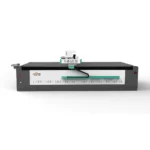
Tool Head Configuration — Each gasket material, from PTFE to reinforced composites, demands a specific oscillating or driven rotary knife setup rather than a generic blade selection
Technical Specifications
| Parameter | Value |
|---|---|
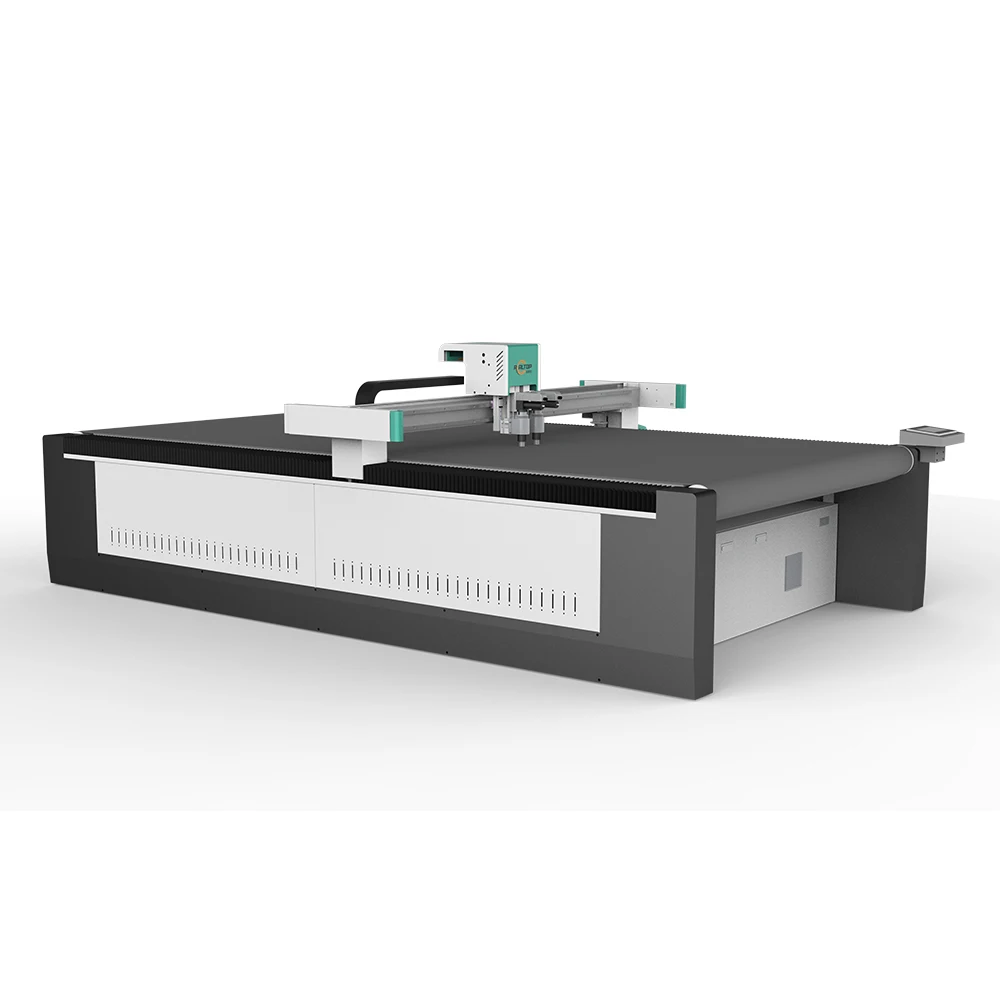
| Product Type | CNC Oscillating Knife Cutting Machine |
| Working Area | 1600 × 2500 mm |
| Cutting Speed Range | 0 – 2000 mm/s |
| Maximum Cutting Thickness | ≤ 30 mm |
| Cutting Accuracy | ± 0.1 mm |
| Tool Head Options | Oscillating knife, Driven rotary knife, Creasing wheel, Kiss cutting tool, Pneumatic knife, Milling tool, V groove knife |
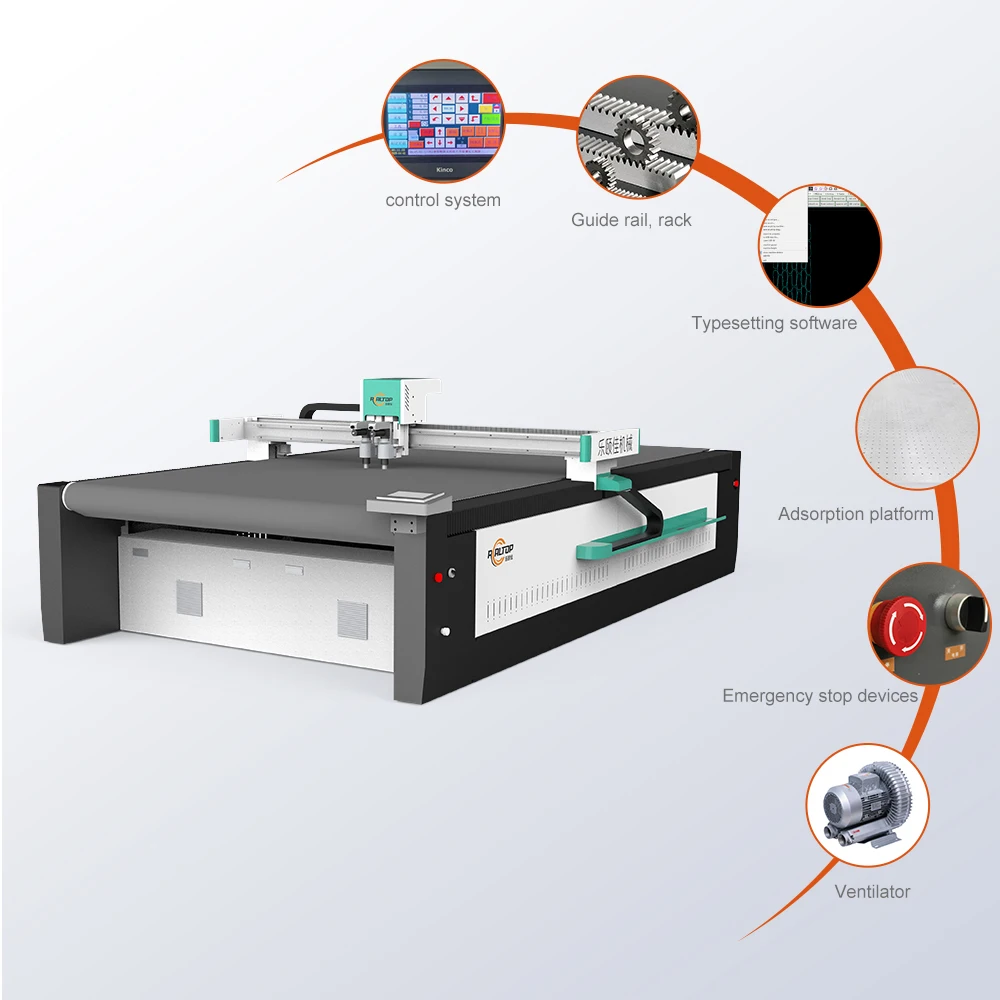
| Vacuum Table Construction | Aluminum bellows vacuum table |
| Vacuum Pump Power | 9 kW |
| Control System | PLC control panel |
| Servo Motor Options | Panasonic, Delta, Dorna (source value — verify against manufacturer catalog) |
| Voltage Options | 110V / 220V / 380V |
| Language Options | English, Russian, Italian, Chinese (source value — verify against manufacturer catalog) |
| Software File Compatibility | PLT, DXF, AI, PDF |
| Safety Features | Infrared sensor device and emergency stop device |
| Machine Dimensions | 3300 × 2100 × 1350 mm |
| Compliance | CE declaration where applicable (source value — verify against manufacturer catalog) |
Application Suitability
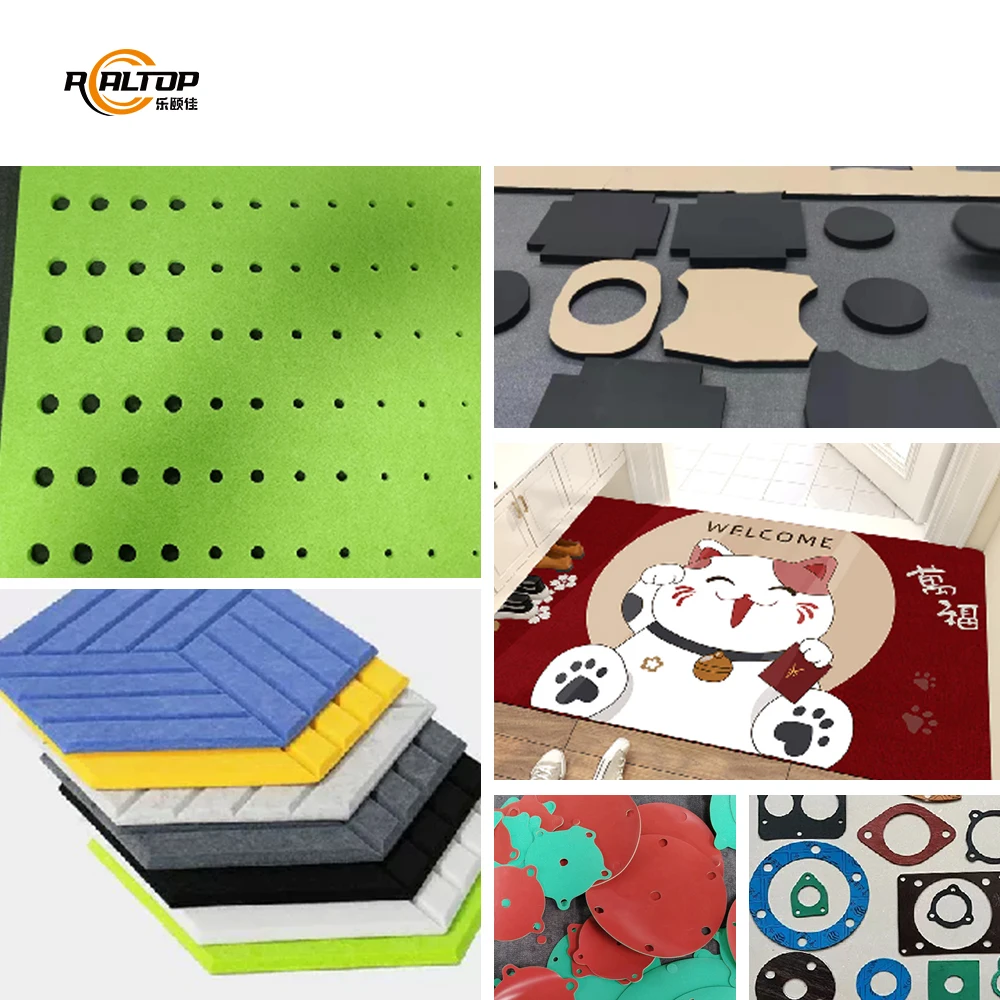
| Application | Material or Output |
|---|---|
| Automotive gasket and sealing strip production | PTFE sheets, reinforced rubber compounds, compressed non-asbestos fiber |
| Aerospace insulation and sealing components | Prepreg laminates, aramid honeycomb cores, ceramic fiber blankets |
| Wind energy blade and nacelle gaskets | Large-format fiberglass cloth, PVC foam cores, composite insulation pads |
| New energy battery insulation fabrication | Flexible mica composites, EVA sheets, thermal barrier materials |
| Industrial flange and pipe gaskets | Compressed fiber boards, graphite composites, rubber cork blends |
Why Material Thickness Alone Does Not Determine Machine Choice
A CNC oscillating knife gasket cutting machine specifications how to choose decision that starts and ends with sheet size and thickness will produce ragged edges on reinforced composites or crushed foam on softer sealing materials within the first production run.
The tool head must match the gasket material behavior, not just its measured thickness.
I once watched a gasket workshop run a standard oscillating knife on steel-reinforced graphite composite because the material thickness fell well within the machine’s rated capacity. The blade edge chipped on the first sheet, and within two days the knife had torn through three full batches of expensive stock. The problem was never the working area or the cutting depth rating — it was a mismatch between the tool head and the internal structure of the material. A driven rotary knife handles reinforced layers differently from a standard oscillating blade, and that distinction only surfaces when you run the actual production stock, not a sample swatch. [NEED_CITE: tool head selection criteria for composite gasket materials]
Cold-Cutting Mechanics and Gasket Material Integrity
Thermal cutting methods alter the molecular structure at the cut edge, creating a hardened or carbonized zone that can compromise the seal under compression. The oscillating knife operates as a cold-cutting process, leaving the cross-section of PTFE, rubber, and composite fiber gaskets untouched by heat. This matters for applications where the gasket must compress uniformly across flange faces or where edge delamination would create a leak path under pressure cycling.
Vacuum Table Zoning for Small and Irregular Gasket Geometry
The aluminum bellows vacuum table on this system provides high flatness across the 1600 × 2500 mm surface, but flatness alone does not hold a small ring gasket in place during a high-speed pass. Vacuum zoning determines whether air is pulled evenly under a large sheet or concentrated under nested small parts. When a gasket profile leaves most of the table surface uncovered, uncontrolled air bleed through the open zones reduces hold-down force precisely where it matters. Confirming zone configuration against your typical nesting layout prevents the material from lifting mid-cut. [NEED_CITE: vacuum table zoning principles for flatbed digital cutting systems]
Reading the Specification Sheet Against Your Production Reality
The ± 0.1 mm cutting accuracy rating suits aerospace and automotive gasket tolerances, but that tolerance is achievable only when the servo system, vacuum hold-down, and knife condition are all maintained within specification. The 9 kW vacuum pump delivers the suction needed for dense composite boards, while lighter materials like EVA foam may require reduced vacuum to avoid distortion. The PLC control panel manages the speed-to-thickness ratio, and the 0 – 2000 mm/s cutting speed range allows fine adjustment — a thick graphite composite demands a slower feed than a thin PTFE sheet. Software compatibility with PLT, DXF, AI, and PDF files means most nesting workflows integrate without format conversion, though it is worth confirming your specific software export settings before the order is finalized.
The Hidden Cost of Skipping the Material Trial
When a machine is ordered based on a catalog cutting thickness figure without testing the buyer’s actual gasket stock, the first sign of trouble typically appears after installation. Ragged edges on fiber composites, delamination on layered PTFE, or incomplete cuts through reinforced rubber all point to a tool head that was selected for a material category rather than a specific compound. The cost is not just the wasted material — it is the production downtime while replacement knives are sourced and parameters are re-tuned from scratch. [NEED_CITE: production loss causes from incorrect cutting tool configuration]
Why Sourcing This Cutter Through Our Process Works
In-house design covers both knife and laser cutting technologies, so a buyer can match the cutting method to the gasket material rather than force one method to handle everything. Tool head and table configurations are specified per material type and production volume, not pulled from a default list. CCD camera positioning is available for printed contour work where gaskets must follow pre-printed registration marks. Software compatibility is confirmed before the order, not discovered during commissioning. Voltage, plug type, and control language are locked in during the specification stage, so the machine arrives ready for the target market. Sample cutting runs on the buyer’s own gasket material happen before commitment, not after delivery.
Documentation & Verification
- Machine specification sheet with confirmed tool head and vacuum table configuration
- Electrical schematic with voltage, plug type, and frequency matched to destination market
- Sample cutting report on buyer’s actual gasket material with edge quality photographs
- Factory test record documenting cutting accuracy across the specified material range
- Software licence and file format compatibility note for PLT, DXF, AI, and PDF workflows
- Operation and maintenance manual in confirmed control language
Installation, Commissioning & Support
- Floor space allocation based on 3300 × 2100 × 1350 mm machine dimensions with operator clearance
- Dedicated electrical circuit matching confirmed voltage option (110V / 220V / 380V)
- Vacuum pump commissioning and zone calibration against buyer’s typical gasket nesting pattern
- First-run parameter tuning on buyer’s gasket stock covering speed, depth, and oscillation frequency
- Operator training on PLC control panel in confirmed language option
- Spare parts list covering oscillating knife blades, vacuum seals, and drive belts
What to Prepare Before Requesting a Quotation
To match the correct tool head and vacuum configuration, we need your gasket material type, sheet thickness range, and typical part profile sizes. Specify your daily production volume and whether your nesting software exports in PLT, DXF, AI, or PDF format. Confirm the voltage and frequency at your facility so the electrical system is built to your grid standard from the start.
Frequently Asked Questions
Q: How do I choose the right tool head for my gasket material?
A: The selection depends on material composition and structure, not just thickness. Standard oscillating knives work for homogeneous PTFE and rubber, while reinforced composites with embedded wire or fiber layers require a driven rotary or pneumatic knife to prevent blade damage. We run your actual production material to determine the correct tool head before the order is confirmed.
Q: How is cutting capacity verified on my specific gasket material before shipment?
A: We conduct a sample cutting run using your production stock at our factory, documenting edge quality, dimensional accuracy against the ± 0.1 mm specification, and cut-through completeness at your required thickness. The cutting report with photographs is shared for approval before the machine leaves the production floor.
Q: What voltage and control language options are confirmed for my market?
A: Voltage options include 110V, 220V, and 380V configurations, with plug type matched to the destination market. Control language is selected from available options including English, Russian, Italian, and Chinese during the specification stage, and confirmed in writing before production begins.
Q: How does vacuum table zoning affect small gasket parts?
A: Small gasket profiles leave much of the 1600 × 2500 mm table surface uncovered, which reduces hold-down force through air bleed. Zone configuration is set to concentrate vacuum under the nesting area where parts are placed, preventing material lift during high-speed cutting passes.
Q: Which file formats does the software support for gasket nesting workflows?
A: The system accepts PLT, DXF, AI, and PDF file formats directly. Compatibility with your specific nesting software and export settings is verified during the specification stage to ensure smooth workflow integration without manual file conversion.


商品评价
Clear filtersThere are no reviews yet.