






Fast Shipping
Carrier information

20k products
Payment methods

24/7 Support
Unlimited help desk

2-day Delivery
Track or off orders
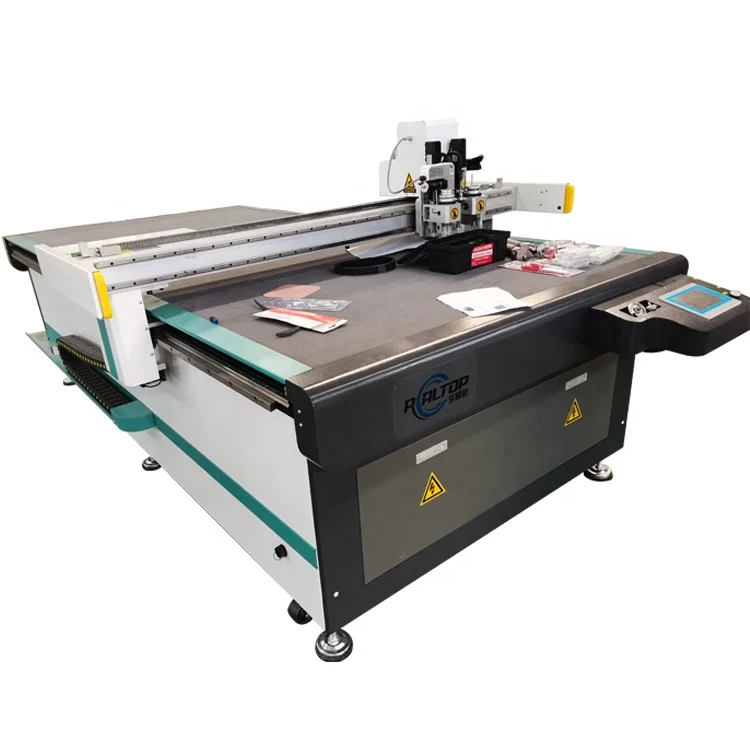
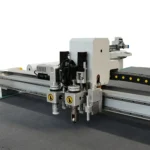
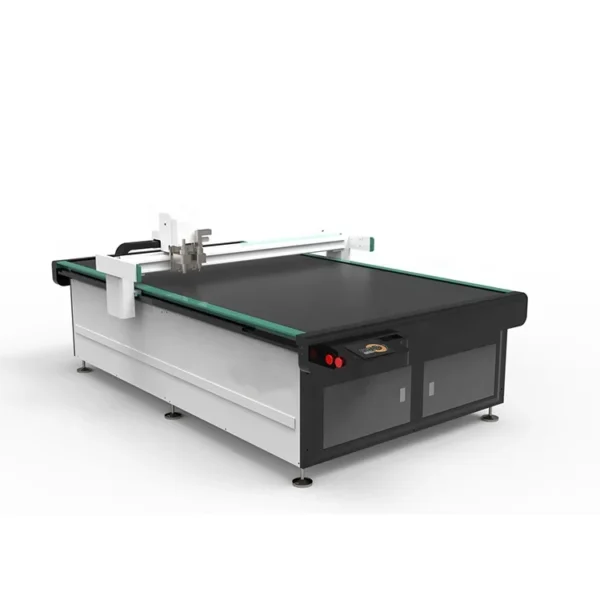
Swiss Knife Meets Servo Precision — RT-D2516/RT-S2516 combines an imported oscillating head with Yaskawa-driven motion for clean-edge cutting on gasket, foam, and packaging stock without ragged tear-out.
Technical Specifications
| Parameter | Value |
|---|---|
| Model | RT-D2516 / RT-S2516 |
| Product Type | CNC Oscillating Knife Flat Table Cutter |
| Working Area | 1600 × 2500 mm |
| Overall Dimensions | 3450 × 2300 × 1250 mm |
| Rated Power | 9 kW |
| Vacuum Pump | 7.5 kW flat working table |
| Multifunctional Head | Swiss imported knife with vibration full cut, half cut, cursor location |
| Compatible Tool Heads | Oscillating knife, drag knife, creasing wheel, pneumatic cutting tool |
| Translational Velocity | 800–1200 mm/s |
| Cutting Speed | 200–800 mm/s (according to different cutting materials) |
| Repeated Accuracy | ≤0.1 mm |
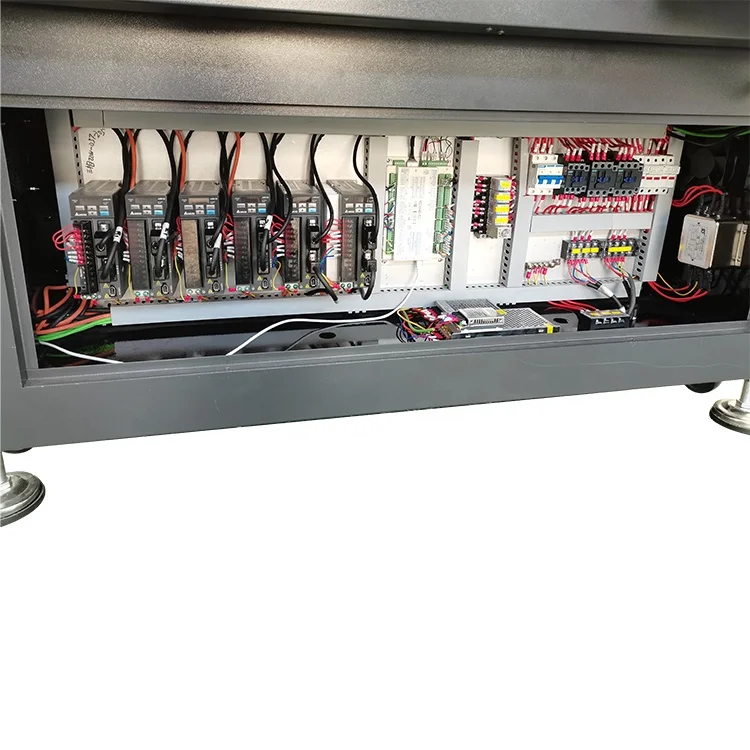
| Transmission System | Digital servo motor, linear guide, synchronous belt, ball screw (imported components) |
| Servo Motor | Japanese Yaskawa |
| Linear Rail | Taiwan Hiwin |
| Conveyor Belt | Germany imported |
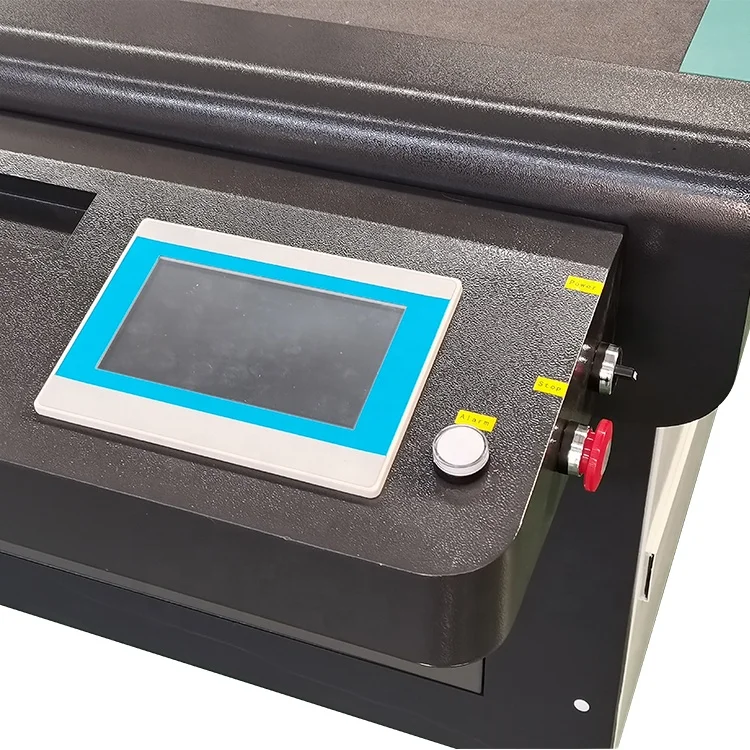
| Instruction System | HP-GL compatible format |
| Auto Feeding | Yes |
| Safety Device | Infrared sensors |
| Voltage | 380V ±10% |
| Assembly State | Fully assembled |
| Standards | CE |
Application Suitability
| Application | Material or Output |
|---|---|
| Gasket and seal production | Rubber, silicon, sponge composite, soft PVC sheets cut into precision profiles |
| Packaging and carton sample making | Cardboard, grey board, corrugated board with registered crease lines |
| Sticker and label cutting | Adhesive-backed vinyl and sticker sheets on release liner |
| Leather goods and footwear components | Natural and synthetic leather, flexible composite stacks |
| Automotive interior and carpet | Formed carpet blanks and interior trim composites |
| Gift box sample making | Rigid board and laminated paper stock for short-run prototypes |
Why "Cutting Speed Up to 800 mm/s" Can Mislead Buyers
Actual throughput depends on material density, thickness, and tool path complexity, not a single headline number.
A gasket shop cutting 3 mm silicone will run a different speed than a packaging house creasing 2 mm grey board, even on the same CNC oscillating knife cutting machine specifications sheet. When buyers compare machines only by the top speed figure, they miss the variables that determine real daily output: material hold-down, blade wear rate, and the number of tool changes per job. [NEED_CITE: typical cutting speed variance across flexible materials in CNC knife cutting]
Oscillating Knife Mechanics and Material Response
The Swiss imported knife head on the RT-D2516/RT-S2516 vibrates at high frequency to slice through fibrous and composite materials without dragging or tearing. This matters when processing layered gasket stock or sponge composites where a drag knife would compress the top layer before cutting through. The vibration full cut and half cut modes let operators switch between through-cutting and kiss-cutting without changing the blade holder, keeping job changeover time short.
Vacuum Hold-Down and Small Part Stability
The 7.5 kW vacuum pump paired with the flat table holds flexible materials down across the entire 1600 × 2500 mm surface. For sticker sheets and small gasket profiles, inadequate vacuum causes material lift mid-cut, producing misaligned edges and wasted sheets. When choosing a CNC oscillating knife cutter, verifying that the vacuum zoning matches your typical part size prevents this failure mode before the machine arrives on your floor. [NEED_CITE: vacuum table zoning requirements for small-part CNC cutting]
Reading the Specification Sheet Against Your Production Reality
The ≤0.1 mm repeated accuracy comes from the combination of Yaskawa servo motors, Hiwin linear rails, and ball screw drive — components that maintain positioning under continuous load. A machine using belt-only drive may show similar accuracy on a short test run but drift over long production shifts. The HP-GL compatible instruction system accepts output from common nesting software, but file format compatibility should be confirmed with your existing workflow before order placement. Cutting speed ranges from 200 to 800 mm/s depending on the material, and requesting a sample cut on your actual stock is the only reliable way to validate what your shop will achieve.
The Cost of Skipping the Material Test
Buyers who specify a machine based on working area alone often discover at commissioning that the tool head cannot handle their material thickness or composition. A pneumatic knife may be necessary for dense rubber above a certain durometer, while a standard oscillating blade handles softer composites cleanly. When the wrong configuration ships, the result is weeks of downtime while replacement tooling arrives, and the production schedule absorbs the delay. [NEED_CITE: common CNC knife cutter tool head mismatch consequences]
Why Source This Machine Through Our Workshop
In-house design and production cover both knife and laser cutting technologies, so the cutting method matches the material rather than forcing one approach. Tool head and table configuration gets specified per material type and production volume before the order is finalized. Voltage, plug type, and control language are confirmed against your factory supply before shipment. Sample cutting on your own material happens before commitment, with a documented report showing edge quality, achievable speed, and blade wear. Software compatibility with your existing nesting output is verified during the pre-order stage.
Documentation & Verification
- Machine specification sheet listing included and optional tool heads for the RT-D2516/RT-S2516
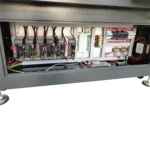
- Electrical schematic with 380V ±10% confirmation and plug type for your facility
- Sample cutting report on your actual gasket or packaging material before dispatch
- Factory test record documenting repeated accuracy and vacuum hold-down performance
- Software licence and HP-GL file format compatibility note for your nesting workflow
- Spare parts list covering blade types, belts, and wear components with reorder codes
Installation, Commissioning & Support
- Fully assembled 3450 × 2300 × 1250 mm frame requires level concrete floor with clearance for auto-feed conveyor
- Dedicated 9 kW circuit at 380V ±10% with confirmed frequency before the RT-D2516/RT-S2516 is energized
- 7.5 kW vacuum pump commissioning includes zoning setup matched to your typical part dimensions
- Operator training covers vibration full cut and half cut mode switching on your production materials
- Twelve-month whole machine warranty plus three-month consumable coverage with documented spare blade inventory
What to Include in Your Inquiry
Send a sample of the material you will cut most often — type, thickness, and whether it has reinforcement layers — along with your typical sheet size and daily volume. Confirm your factory voltage, frequency, and preferred control language so the electrical and interface configuration is locked before production starts. If your nesting software outputs formats beyond HP-GL, provide a sample file so compatibility can be verified on the RT-D2516/RT-S2516 before shipment.
Frequently Asked Questions
Q: Which tool head handles thick rubber gasket material versus thin sticker sheets?
A: The oscillating knife works well for mid-density foams and composites, while the pneumatic cutting tool addresses thicker or denser rubber profiles. Drag knives suit thin vinyl and sticker sheets. We match the tool head to your specific material sample before finalizing the configuration, so edge quality is validated on your stock rather than assumed from a general chart.
Q: How does vacuum table zoning affect small gasket part cutting?
A: Small profiles can lift off the table during cutting if the vacuum zone is too large for the part footprint. The 7.5 kW pump on the RT-D2516/RT-S2516 flat table is set up with zoning matched to your typical part size range. We confirm zone layout during the pre-order material test so small gasket pieces stay flat through the entire cut path.
Q: What file formats does the control system accept from nesting software?
A: The instruction system is HP-GL compatible, which covers output from most mainstream nesting and CAD packages. If your workflow uses a different format, send us a sample file before ordering. We verify import and cutting accuracy on the RT-D2516/RT-S2516 during the pre-shipment testing stage to avoid conversion issues at your facility.
Q: How can I verify cutting speed claims for my specific material?
A: The 200–800 mm/s range varies by material density and thickness. Request a sample cutting report run on your actual stock — it documents the speed achieved, edge quality, and blade condition after the test run. This gives you a realistic baseline for daily throughput planning instead of relying on a general specification figure.
Q: What spare parts are included and how do I reorder consumables?
A: The spare parts list covers blade types matched to your tool head configuration, synchronous belts, and wear components specific to the RT-D2516/RT-S2516. The warranty covers twelve months for the whole machine and three months for consumables. Reorder codes are documented in the manual so you can source replacements directly or through your local supplier.


商品评价
Clear filtersThere are no reviews yet.