


Fast Shipping
Carrier information

20k products
Payment methods

24/7 Support
Unlimited help desk

2-day Delivery
Track or off orders
Tooling Matched to Material — We configure the oscillating knife, creasing wheel, and vacuum zones based on your specific board grade and sheet dimensions rather than shipping a standard setup.
Technical Specifications
| Parameter | Value |
|---|---|
| Model | RT-D2516/RT-S2516 |
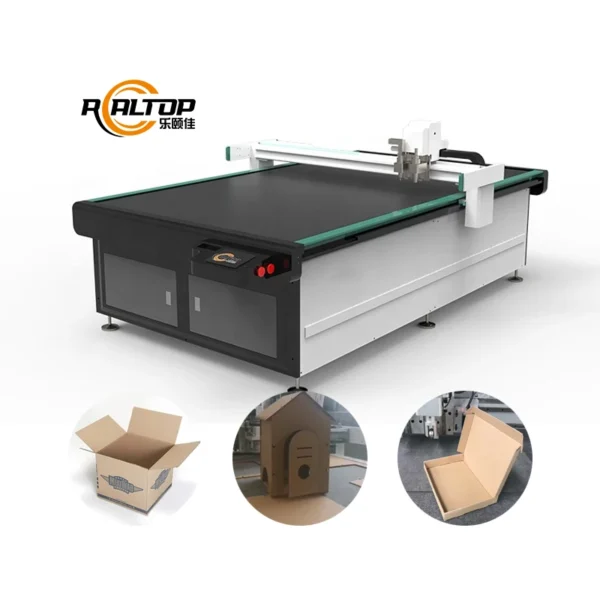
| Product Type | CNC Oscillating Knife Cutting Table |
| Working Area | 1600×2500 mm |
| Machine Size | 3450×2300×1250 mm |
| Rated Power | 9 kW |
| Vacuum Pump | 7.5 kW |
| Translational Velocity | 800–1200 mm/s |
| Cutting Speed | 200–800 mm/s (varies by material) |
| Repeated Accuracy | ≤0.1 mm |
| Cutting Thickness | ≤100 mm (varies with material) |
| Voltage | 380V±10% |
| Transmission System | Imported digital servo motor, linear guide, synchronous belt, ball screw, rack transmission |
| Servo Motor | Taiwan Delta servo motors and drivers |
| Guide Rail | Taiwan Hiwin rail |
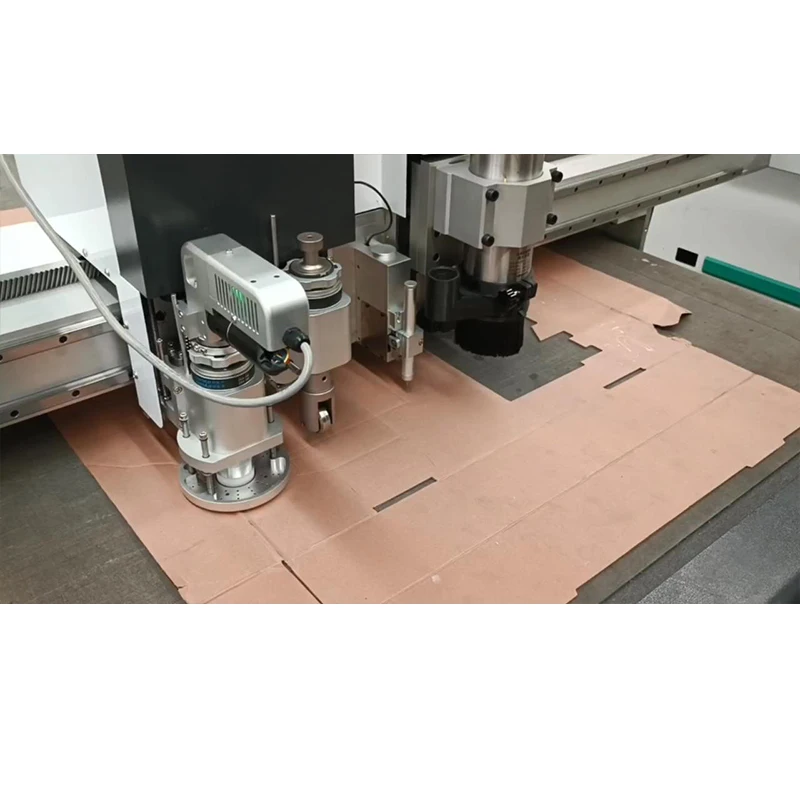
| Multifunctional Head | Swiss imported knife with vibration full cutting, half cutting, cursor location |
| Tool Head Options | Oscillating knife, creasing wheel, pen/marking |
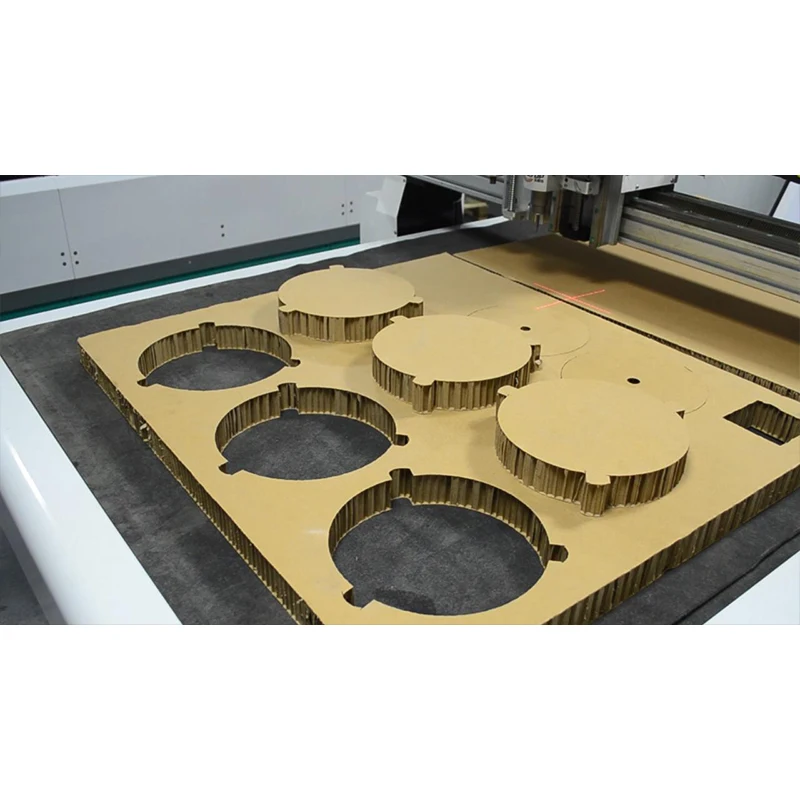
| Table Type | Flat working table with aluminum alloy honeycomb structure vacuum adsorption |
| Conveyor Belt | Germany imported conveyor belt |
| Safety Device | Infrared sensors and emergency stop |
| Instruction System | HP-GL compatible format |
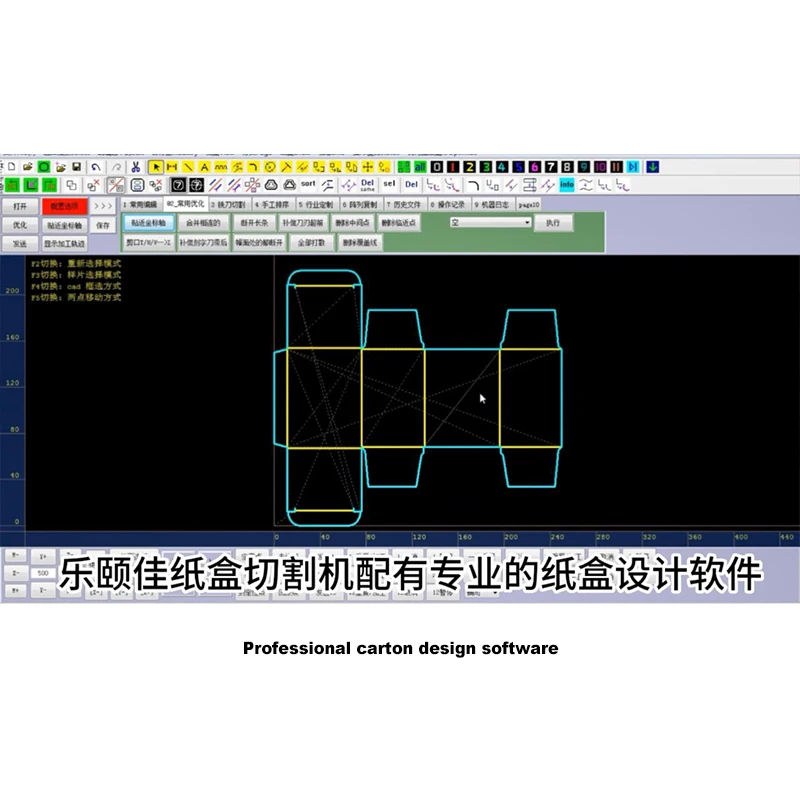
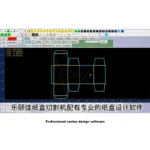
| Software | Professional carton nesting software (free, custom language, lifelong technical support) |
| Software Language Options | English, Russian, Italian, Chinese; special languages customizable |
| Warranty | 1 year (free parts replacement; buyer covers shipping, engineer travel and accommodation) |
Application Suitability
| Application | Material or Output |
|---|---|
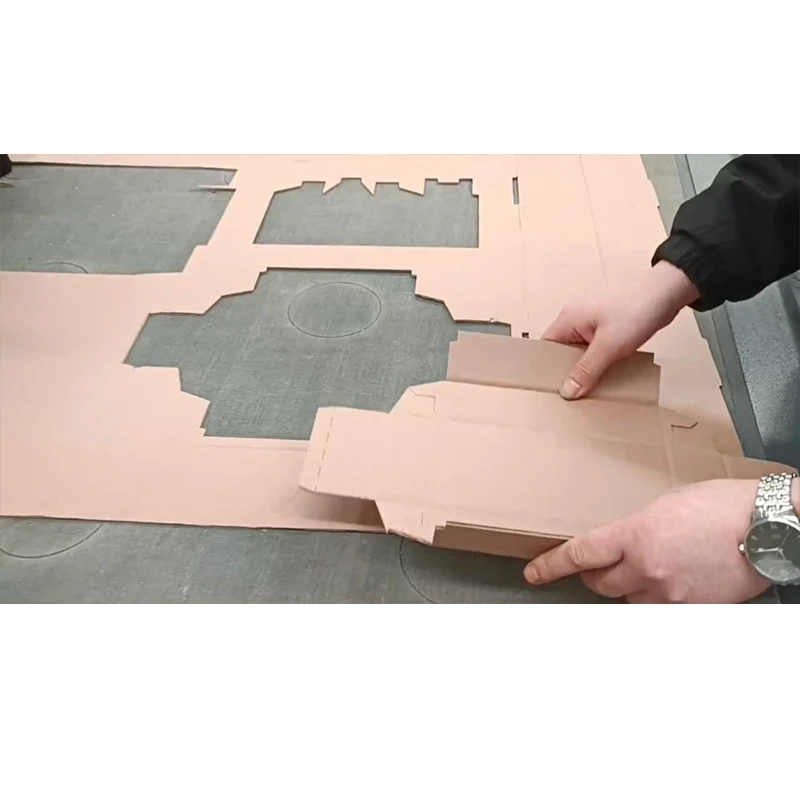
| Carton and packaging sample making | Corrugated board, grey board, kraft paper |
| Sticker and label contour cutting | Vinyl, adhesive-backed paper, printed stock |
| Cardboard prototyping and short-run | Foldable carton board, honeycomb paper board |
| Flexible non-metal cutting | Leather, sponge composite leather, silicone, foam |
| Signage and business card production | PVC soft glass, billboard material, hang tag stock |
Why "Working Area" Alone Will Cost You More Than the Machine
A machine specified only by table size is a machine that hasn’t been specified at all.
When a buyer selects a CNC oscillating knife cutting table based on the 1600×2500 mm working area and nothing else, the first real test comes when material hits the table. Corrugated board at 8 mm needs a different knife stroke and vacuum pressure than 2 mm cardstock for a gift box prototype. A machine that cuts both — but is set up for neither — wastes time on blade changes, produces ragged edges on one material while crushing the other, and turns small carton blanks into lifting projectiles when the vacuum zones are too large for the part [NEED_CITE: vacuum table zoning requirements for small-format die cutting]. The cutting speed range of 200–800 mm/s only matters if the right tool head is mounted and the vacuum is holding the sheet flat at the point of cut.
Tool Head Selection by Material and Cut Type
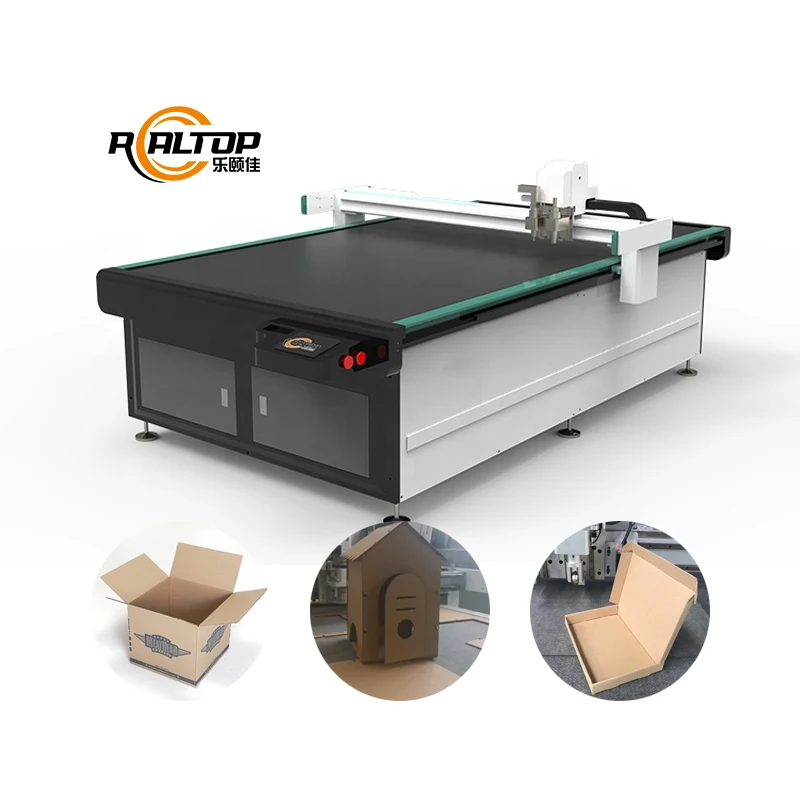
The oscillating knife on the RT-D2516/RT-S2516 handles full-cut and half-cut operations using a Swiss imported blade with vibration action, which prevents the material from dragging or bunching at the cut point. For corrugated and grey board packaging samples, the creasing wheel mounts alongside the knife to score fold lines in a single pass — eliminating the need for a separate creasing station. Marking pens handle part numbering or assembly notes directly on the board. Each tool head swaps based on the production job, and the multifunctional head holds the cursor location function to maintain registration when tools change mid-file.
Vacuum Zoning That Follows the Cut Path
The aluminum alloy honeycomb vacuum table divides the 1600×2500 mm surface into adsorption zones that activate based on where the knife is working. For full-sheet corrugated cutting, the entire surface engages. For small carton blanks or sticker runs, only the zone beneath the cutting path pulls vacuum — concentrating hold-down force on the actual part rather than dissipating it across an empty table. This zoning is what keeps small parts flat when the knife exits a cut at high translational velocity. Without it, the material lifts into the blade path and the CNC oscillating knife cutting table specifications on paper never translate to clean production output [NEED_CITE: vacuum adsorption zoning principles in flatbed digital cutting].
Reading the Specs That Actually Affect Output
The Taiwan Delta servo motors paired with Hiwin linear guides and rack transmission deliver the ≤0.1 mm repeatability across the full working area — this tolerance matters when a packaging sample requires multiple passes for crease and cut, and the second pass must land exactly on the first. The 7.5 kW vacuum pump is sized to maintain suction through the honeycomb structure even when cutting porous corrugated stock that bleeds air. The HP-GL compatible instruction system and professional carton nesting software accept DXF, AI, and PLT files, with nesting algorithms that arrange parts to minimize board waste. Software language is configurable at order, so the operator interface matches the shop floor rather than requiring translation at every shift change.
What Happens When Configuration Misses the Material
A flatbed cutter with a single large vacuum zone will hold a full sheet of corrugated board without issue. Cut that same sheet into six small carton blanks, and the vacuum force spreads across empty space while the finished parts sit on a zone with insufficient suction. The knife catches a lifted edge, the part tears, and the operator stops the machine to reposition — multiplying cycle time without any change to the CNC oscillating knife cutting table specifications listed in the brochure. Wrong knife selection produces similar results: a drag knife on foam crushes the cell structure, while an oscillating knife on thin vinyl without the correct stroke frequency leaves micro-tears along curves. These failures trace back to configuration, not the machine frame [NEED_CITE: tool head and material compatibility in digital cutting systems].
Why Sourcing Direct from the Design Floor Matters
The RT-D2516/RT-S2516 comes from a facility that designs and builds both knife and laser cutting systems under one roof, so a buyer evaluating carton sample work isn’t pushed toward a laser solution when an oscillating knife is the correct tool. Tool head and vacuum configurations are specified per material before production begins, documented in a configuration list that travels with the machine. Sample cutting runs on the buyer’s own material stock confirm edge quality, cutting depth, and cycle time before commitment. Software file format compatibility is verified at order, so your existing DXF or AI files import without rework. Voltage and electrical schematics are confirmed against the destination facility’s supply — the 380V±10% rating is validated and plug configuration matched before the machine leaves the factory.
Documentation & Verification
- Machine specification sheet with confirmed tool head and vacuum zone layout per your material
- Electrical schematic and voltage confirmation matched to your facility supply and plug type
- Sample cutting report on your own board stock documenting edge quality and cycle time
- Software licence with file format compatibility note for your existing DXF and AI workflows
- Tool head and table configuration list specifying knife type, creasing wheel, and zone mapping
- Factory test record with positional accuracy verification across the full 1600×2500 mm working area
Installation, Commissioning & Support
- Flat foundation required; machine footprint of 3450×2300 mm with clearance for sheet loading on the long side
- Dedicated 380V±10% circuit with capacity for 9 kW rated power plus 7.5 kW vacuum pump draw
- Assembly state confirmed before shipment; on-site engineer available for commissioning and first-run parameter setting
- Operator training covers tool head swaps between oscillating knife, creasing wheel, and pen on your production files
- Spare parts list provided at delivery with recommended wear items for the Swiss knife and conveyor belt
- Lifelong technical support on nesting software including language customization and HP-GL format troubleshooting
What We Need to Configure Your Machine
Send the material types you run — corrugated grade, board thickness, sticker stock, or flexible composite — along with your typical sheet dimensions and daily volume. Include your facility voltage and frequency, preferred operator interface language, and the file formats currently in your design workflow. If you want sample cutting on your own stock before order confirmation, ship a sheet and we document edge quality, hold-down performance, and cycle time.
Frequently Asked Questions
Q: How is cutting thickness confirmed for my specific board material?
A: The listed ≤100 mm cutting thickness varies significantly by material — corrugated board cuts differently than solid grey board or foam. We run sample cuts on your actual stock before order confirmation, documenting the effective thickness, edge quality, and cycle time so the configuration matches your production reality rather than a catalog maximum.
Q: Which tool head handles my packaging samples versus my sticker runs?
A: The oscillating knife with full-cut and half-cut modes handles corrugated and board work, while the creasing wheel scores fold lines in the same pass. Sticker and label contour cutting typically requires the CCD camera option for printed mark tracking. We specify the tool head combination based on your material list at the quotation stage.
Q: Will small carton blanks stay flat on the vacuum table during cutting?
A: The honeycomb vacuum surface uses zoned adsorption that activates only beneath the active cutting area. Small parts receive concentrated hold-down force rather than having suction dissipated across an empty 1600×2500 mm table. Zone layout is confirmed during the configuration stage based on your smallest part dimensions.
Q: What file formats does the nesting software accept from my existing design workflow?
A: The professional carton nesting software accepts HP-GL compatible formats along with DXF, AI, and PLT files. We test your actual production files for import compatibility before shipment and document the results. Software language is configurable to English, Russian, Italian, Chinese, or other languages by request.
Q: Is the 380V±10% voltage compatible with my facility power supply?
A: We confirm your local voltage and frequency before production and match the electrical schematic, plug type, and wiring to your destination standard. The confirmation is documented in the electrical schematic provided with the machine documentation package so your electrician can verify the dedicated circuit requirements.


商品评价
Clear filtersThere are no reviews yet.