

Fast Shipping
Carrier information

20k products
Payment methods

24/7 Support
Unlimited help desk

2-day Delivery
Track or off orders
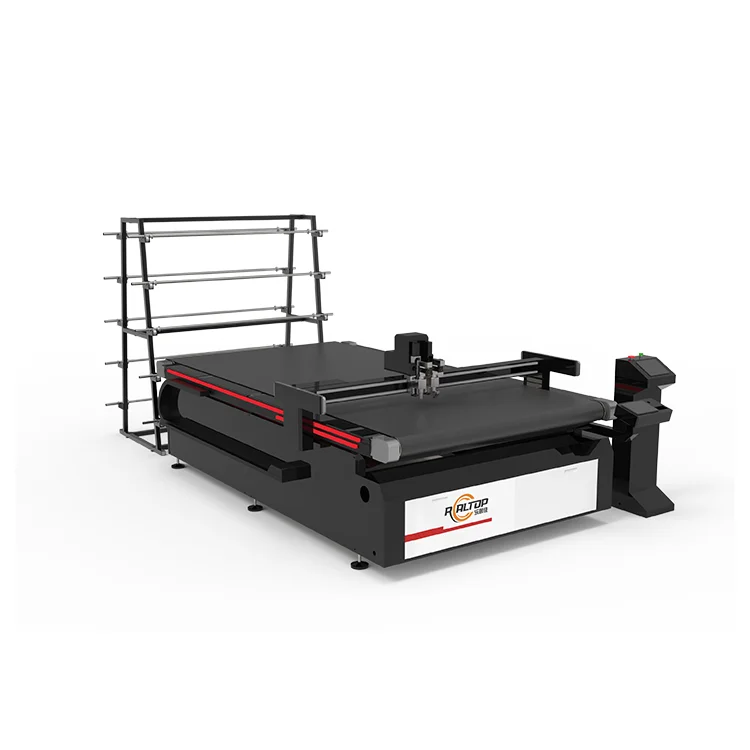
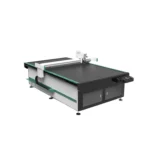
Configuration Integrity — Tool head, vacuum zoning and control voltage are locked to your actual material and shop supply before the RT-D2516/RT-S2516 leaves the factory, not guessed from a catalog grid.
Technical Specifications
| Parameter | Value |
|---|---|
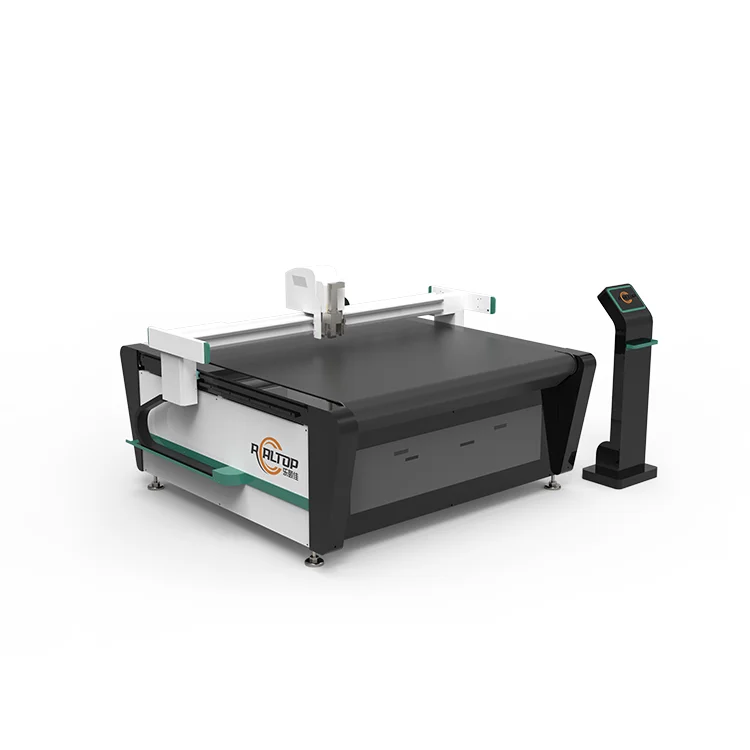
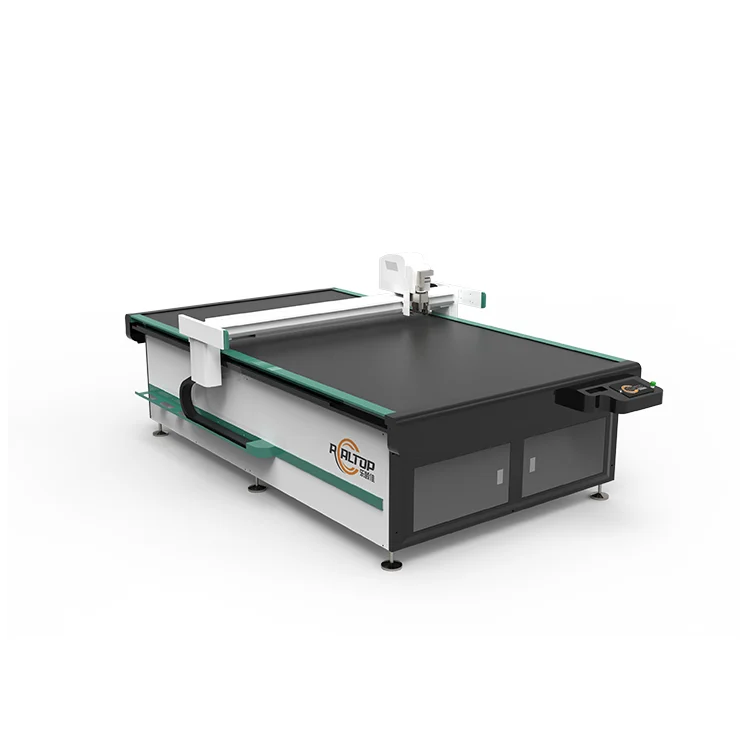
| Model | RT-D2516 / RT-S2516 |
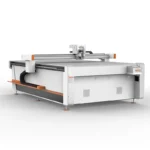
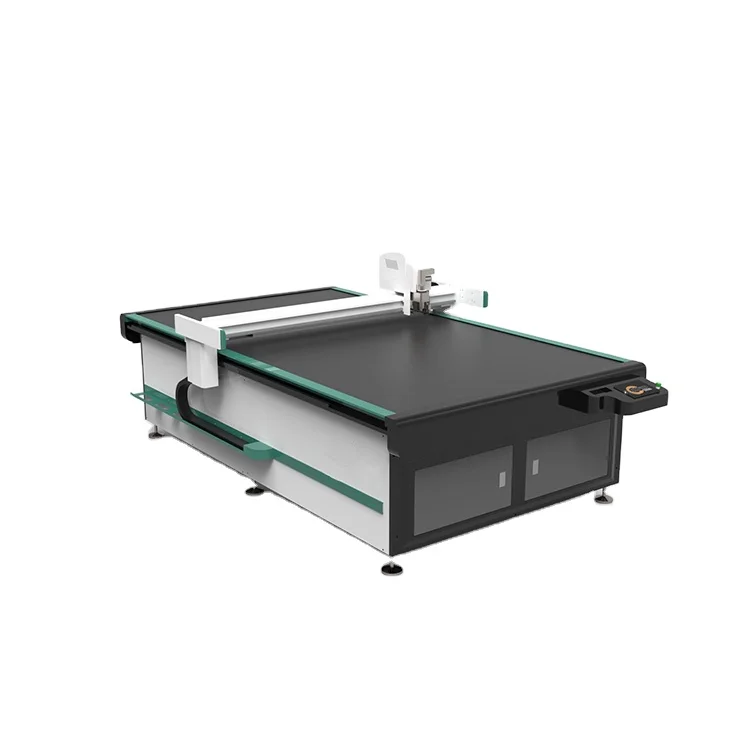
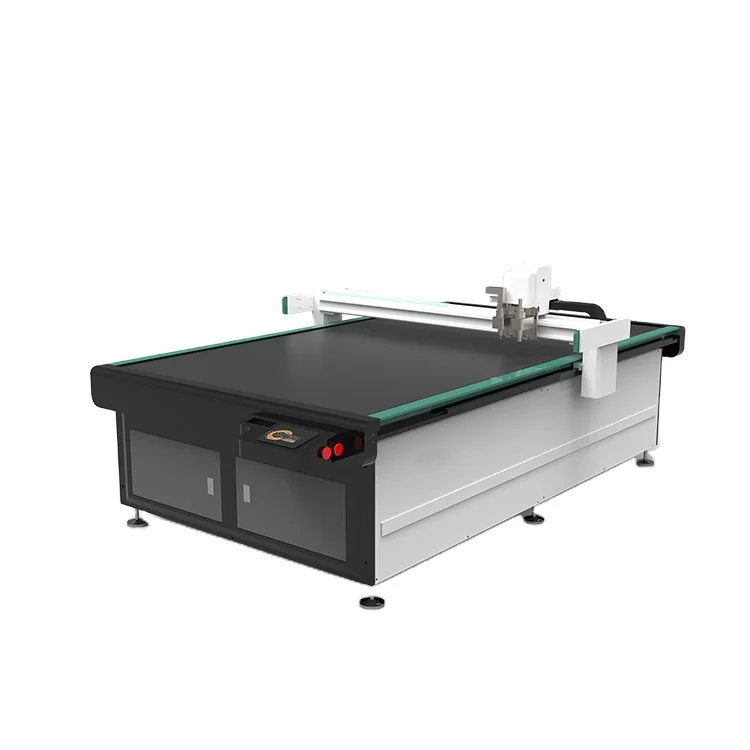
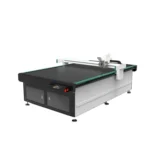
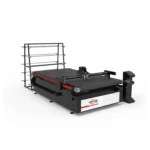
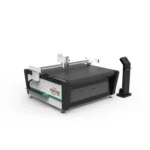
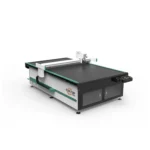
| Product Type | CNC Flatbed Digital Cutting Machine |
| Working Area | 1600 × 2500 mm |
| Machine Size (Overall Dimensions) | 3450 × 2300 × 1250 mm |
| Rated Power | 9 kW |
| Table Type | Flat working table with vacuum and conveyor belt |
| Vacuum Pump | 7.5 kW |
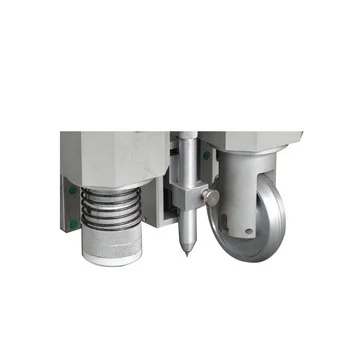
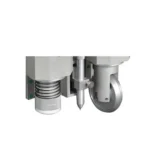
| Multifunctional Head | Swiss imported knife with vibration full cutting, vibration half cutting, and cursor location function |
| Safety Device | Infrared sensors |
| Translational Velocity | 800–1200 mm/s |
| Cutting Speed | 200–800 mm/s (basis not stated in source — confirm material type / thickness) |
| Pneumatic Cutting Tool Max Thickness | Up to 70 mm |
| Repeated Accuracy | ≤ 0.1 mm |
| Servo Motor | Japanese Yaskawa |
| Linear Guide | Taiwan Hiwin rail |
| Conveyor Belt | Germany imported |
| Instruction System | HP-GL compatible format |
| Voltage | 380V ± 10% |
| Functions | Cutting, creasing, marking |
| Feeding | Auto feeding |
| Standards | CE (confirm per model) |
Application Suitability
| Application | Material or Output |
|---|---|
| Carton Box Prototyping & Short Runs | Corrugated board, grey board, folding carton stock |
| Packaging Sample Making | Sticker and label sheets, gift box substrates |
| Automotive Interior & Gasket Fabrication | Car floor mat materials, sponge composite leather, rubber |
| Footwear & Garment Cutting | Leather, clothing flexible materials, fabric |
| Industrial Sealing & Insulation | PVC, soft glass, silicon, rubber |
The Material Thickness Trap Behind CNC Oscillating Knife Cutting Table Specifications
A working area of 1600 × 2500 mm tells you the sheet size the RT-D2516/RT-S2516 accepts, but it tells you nothing about whether the installed tool head can slice through 8 mm laminated grey board without fraying the edge or crushing the flute. The only way to match a CNC oscillating knife cutting table to packaging stock is by running a sample on your exact material before the configuration is finalized. I learned this the hard way in Southeast Asia, where a machine set up for single-wall corrugated was asked to cut laminated rigid card, and the result was four days of rework on the factory floor. When the tool pressure, oscillation frequency, and knife geometry are not mapped to the actual substrate, the quoted cutting speed becomes meaningless and the edge quality fails on the first production batch [NEED_CITE: material testing protocols for digital flatbed cutters].
Matching the Swiss Knife Head to Packaging and Soft Stock
The multifunctional head on this CNC flatbed cutting machine uses a Swiss imported oscillating knife that supports both vibration full cutting and half cutting (kiss cutting) in the same setup. For corrugated and grey board, full cutting at the right amplitude shears the fibers cleanly rather than tearing them, while half cutting lets you score sticker sheets and folding cartons without cutting through the liner. Switching between these modes on the RT-D2516/RT-S2516 happens in software, so a packaging sample maker can run a mixed job of carton outlines and label kiss cuts without stopping to change the physical blade holder.
Vacuum Hold-Down and Auto Feeding for Continuous Sheet Work
A 7.5 kW vacuum pump paired with a Germany-imported conveyor belt gives the RT-D2516/RT-S2516 the suction and transport needed for unattended feeding of sheet after sheet. In packaging sample making and short-run carton production, the flatbed must grip the board across the entire table surface, especially when cutting small die-shapes where edge lift is a constant risk. The auto-feeding function advances the next sheet while the previous one is being cleared, which keeps the workflow moving without requiring an operator to manually position each blank [NEED_CITE: vacuum zoning requirements for small-part cutting on flatbed tables].
Reading the Drive and Accuracy Numbers
The repeated accuracy of ≤ 0.1 mm on the RT-D2516/RT-S2516 comes from the combination of Japanese Yaskawa digital servo motors and Taiwan Hiwin linear guides. In packaging and carton sample cutting, this matters because a creasing line that is off by even a few tenths of a millimeter will cause the box to fold incorrectly at the glue flap. The translational velocity of 800–1200 mm/s governs how fast the head moves between cuts, while the cutting speed of 200–800 mm/s depends entirely on the material thickness and density — dense grey board at 2 mm will run at a different point in that range than single-wall corrugated at 5 mm. The pneumatic cutting tool option handles thicknesses up to 70 mm, which covers heavy foam inserts and multi-layer gasket stacks that the oscillating knife alone cannot penetrate.
When the Wrong Head Configuration Ships
Choosing a drag knife where an oscillating knife is needed, or setting the oscillation amplitude too low for the board grade, produces ragged edges on corrugated flutes and delaminated edges on laminated carton stock. For packaging producers running short-run and sample work, this means every rejected blank is wasted material and delayed delivery. On the gasket and automotive interior side, a head configured for thin vinyl will crush sponge composite leather instead of cutting it, ruining the material surface. These failures are not machine defects — they are configuration errors that happen when the tool head and table setup are decided without seeing the buyer’s actual material [NEED_CITE: edge quality failures in digital flatbed cutting of laminated board].
Why Source the RT-D2516/RT-S2516 From This Build Line
The in-house design team covers both oscillating knife and drag knife cutting technologies, so the tool head is matched to your material rather than forcing one method across all substrates. Every CNC oscillating knife cutting table configuration is specified per material type, thickness, and production volume, documented in a configuration list that ships with the machine. Sample cutting on your own material is completed before you commit to the order, which catches the exact kind of mismatch I once had to fix on site in Vietnam. Voltage, control language, and software file format compatibility are confirmed before production starts, not discovered after the container arrives. The machine is tested at the factory on the documented configuration before it is crated.
Documentation & Verification
- Machine specification sheet listing the exact working area and rated power shipped
- Electrical schematic with 380V ± 10% confirmation matched to your local supply
- Tool head and table configuration list documenting knife type and vacuum setup
- Sample cutting report on your corrugated or gasket material with edge photos
- Software licence and HP-GL file format compatibility note signed before order
- Operation and maintenance manual with spare parts list for consumables
Installation, Commissioning & Support
- Foundation must be level to support the 3450 × 2300 × 1250 mm footprint and dynamic cutting loads
- Dedicated 380V ± 10% circuit rated for the 9 kW machine plus 7.5 kW vacuum pump draw
- Machine arrives with head and gantry assembled; conveyor belt tensioned and tested at site
- First-run commissioning includes cutting, creasing, and marking parameter setup on your stock
- Operator training covers HP-GL file import, tool head changeover, and vacuum zone management
- Consumable spare parts list provided with recommended reorder intervals for knife blades
What to Send With Your Inquiry
To get an accurate configuration and quotation for the RT-D2516/RT-S2516, share your primary material types with thickness ranges, typical sheet dimensions, and daily cutting volume. Confirm the voltage and frequency at your facility, the control panel language your operators need, and whether your current design software outputs HP-GL or a different nesting format. If you can send physical samples of your most demanding substrate, a cutting test will be run before the tool head and vacuum zoning are finalized.
Frequently Asked Questions
Q: How is cutting speed verified for my specific material and thickness?
A: The listed cutting speed of 200–800 mm/s is a range, not a guarantee for any single material. Before the RT-D2516/RT-S2516 is configured, your material sample is test-cut to determine the actual speed, knife amplitude, and downforce that produce a clean edge at production pace, and the result is documented in a sample cutting report.
Q: Which tool head configuration fits my material — oscillating knife, drag knife, or pneumatic?
A: Oscillating knife handles corrugated, fabric and most packaging boards; drag knife suits vinyl and thin sticker sheets; the pneumatic tool cuts dense stacks up to 70 mm. The correct head is chosen after reviewing your material samples, and the selected configuration is documented in the tool head list that ships with the machine.
Q: Is the vacuum table zoning sufficient for small parts, or will material lift during cutting?
A: The 7.5 kW vacuum pump provides strong hold-down across the flatbed, but very small die-cut shapes can still lift if the zoning is not matched to the nesting layout. Your typical part size and nesting pattern are reviewed during configuration so that the vacuum zones and table surface are set up to keep small pieces flat through the final cut.
Q: What voltage and control language options are confirmed before shipment?
A: The RT-D2516/RT-S2516 is configured for 380V ± 10% as standard, and your local supply is verified against this before production. Control panel language and software interface language are confirmed at the quotation stage and documented in the electrical schematic and software compatibility note so there are no surprises at installation.
Q: Can the machine import my existing file format and nesting software workflow?
A: The instruction system is HP-GL compatible, and file format support is confirmed before you place the order. If your current nesting or design software outputs a different format, this is flagged during the pre-order review so that a compatible software solution or conversion workflow is in place before the machine arrives.


商品评价
Clear filtersThere are no reviews yet.