




Fast Shipping
Carrier information

20k products
Payment methods

24/7 Support
Unlimited help desk

2-day Delivery
Track or off orders
Precision Tool Head Matching — our oscillating knife platform is configured only after sample cutting on your actual gasket stock, ensuring the selected blade and vacuum zoning handle your specific material without ragged edges or crushed layers.
Technical Specifications
| Parameter | Value |
|---|---|
| Model | 1625 |
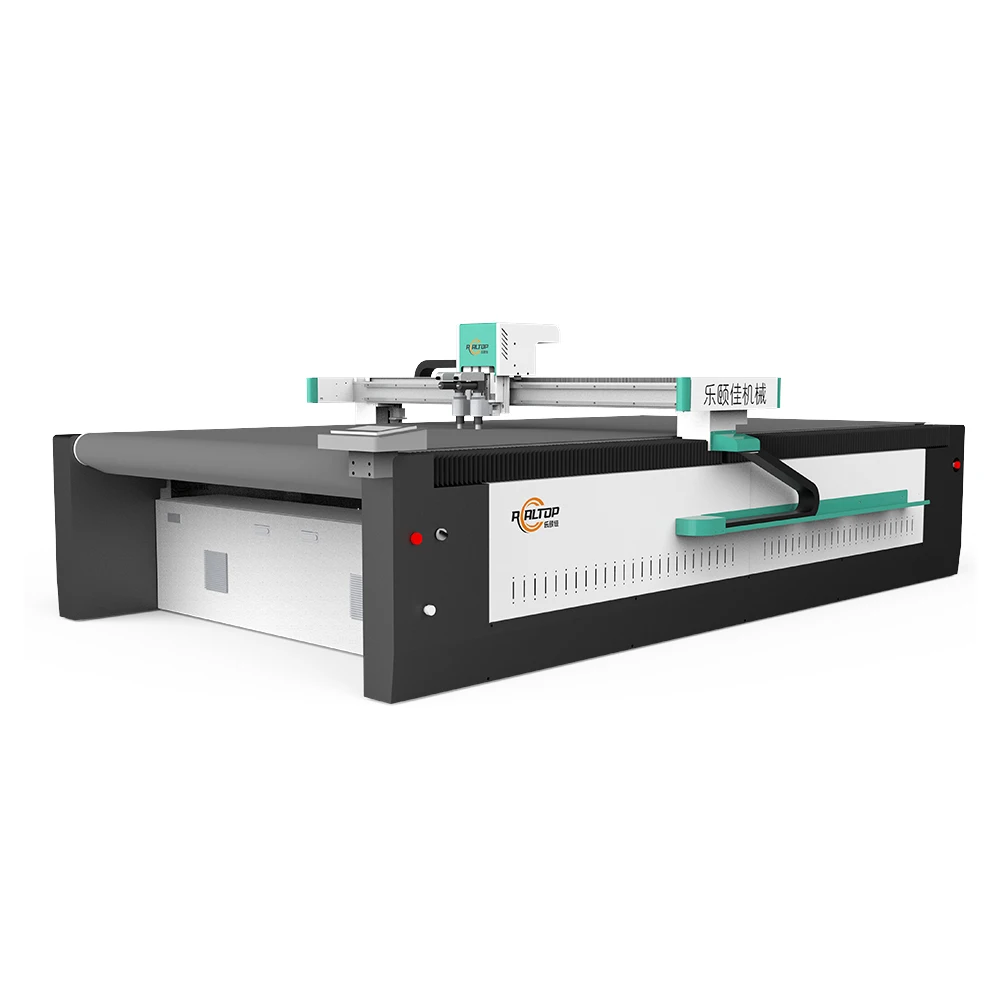
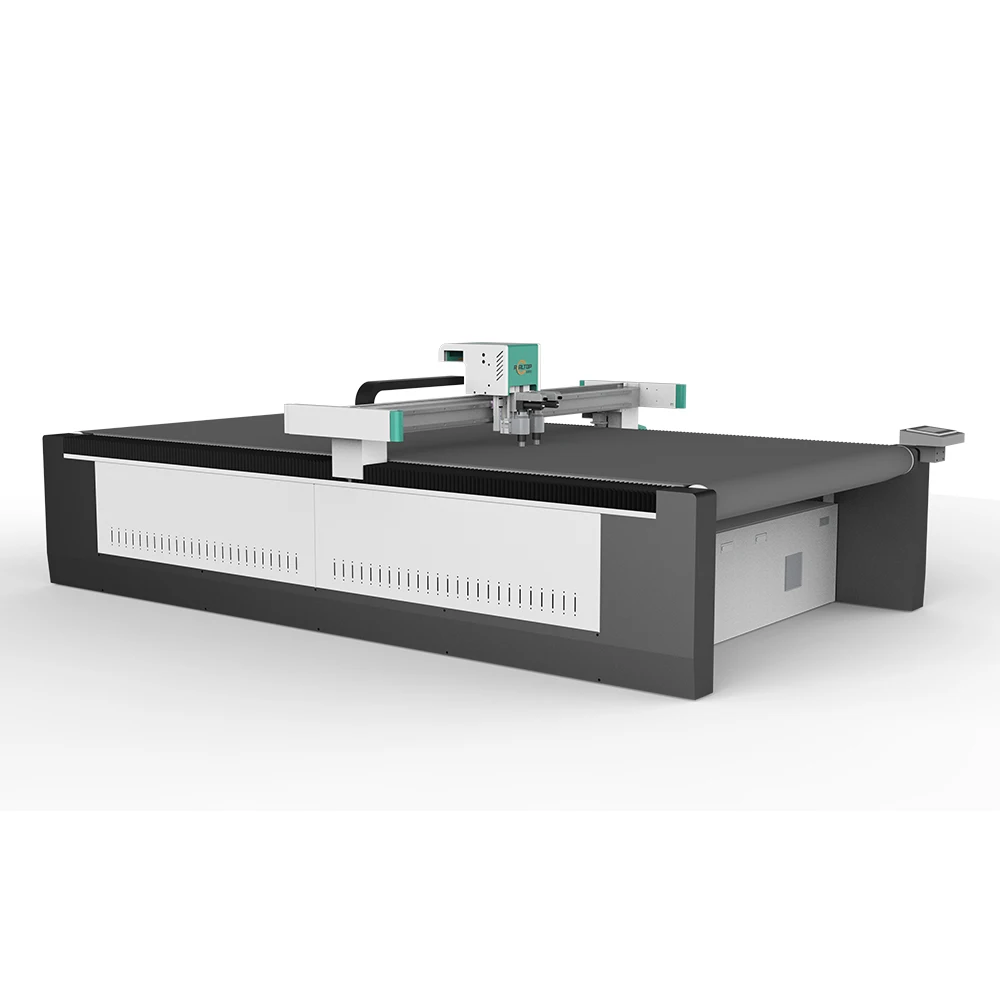
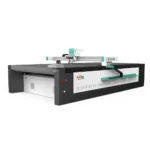
| Product Type | CNC Oscillating Knife Cutting Machine |
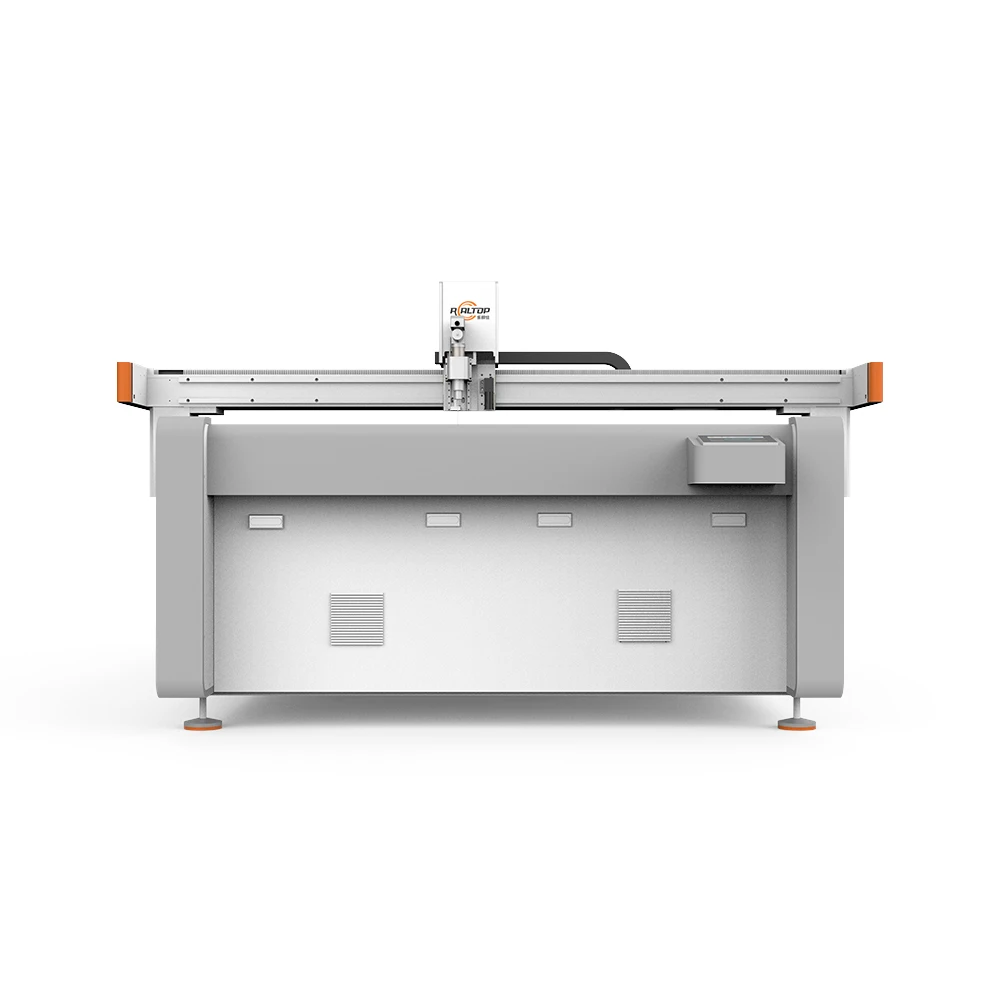
| Working Area | 1600 × 2500 mm |
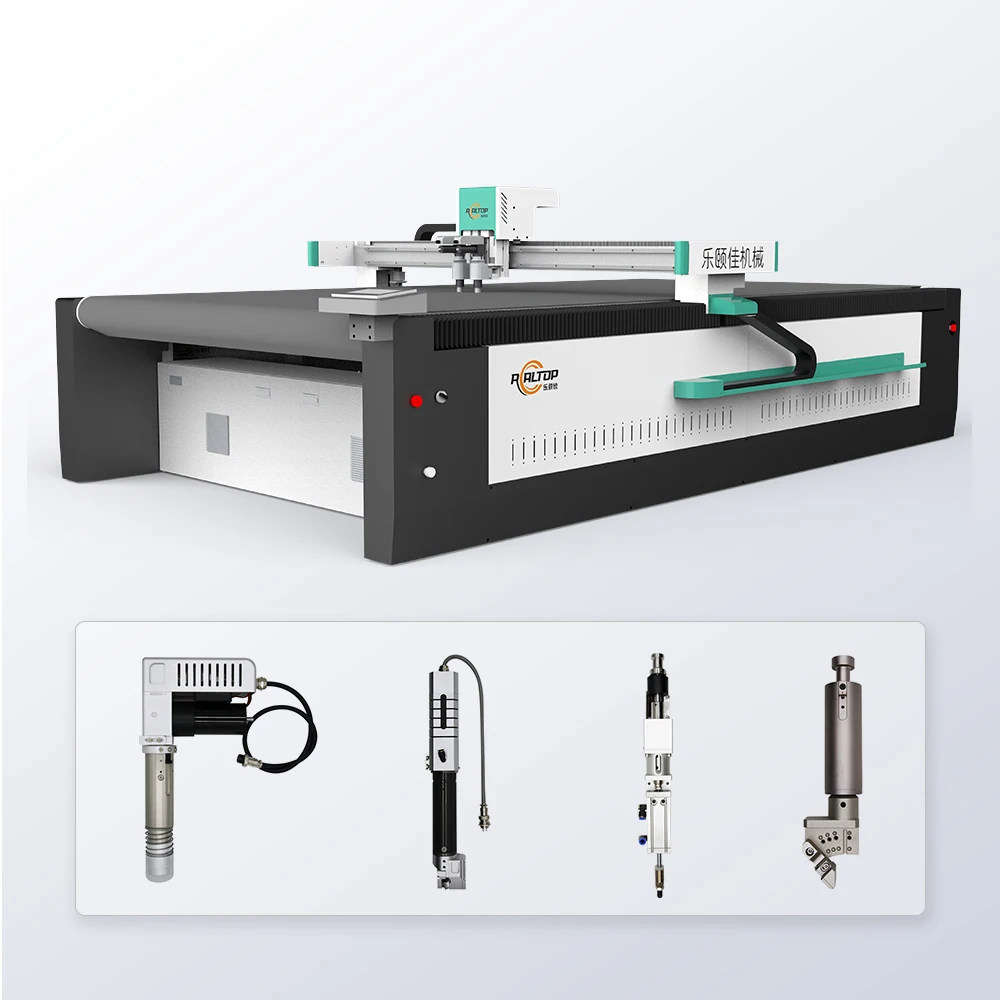
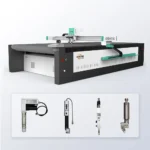
| Tool Head Options | Oscillating knife, Driven rotary knife, Creasing wheel, Kiss cutting tool, Pneumatic knife, Milling tool, V-groove knife |
| Cutting Speed | 0 – 2000 mm/s |
| Cutting Thickness | ≤ 30 mm (basis not stated in source) |
| Cutting Accuracy | ±0.1 mm |
| Vacuum Pump | 9 kW |
| Vacuum Table | Aluminum bellows vacuum table |
| Control System | PLC control panel |
| Supported File Formats | PLT, DXF, AI, PDF |
| Servo Motor Options | Panasonic, Delta, Dorna (source value — verify against manufacturer catalog) |
| Voltage Options | 110V / 220V / 380V (frequency not specified in source) |
| Software Language | English, Russian, Italian, Chinese; special languages customizable |
| Safety Device | Infrared sensor and emergency stop |
| Machine Size (L×W×H) | 3300 × 2100 × 1350 mm |
| Standards | CE |
Application Suitability
| Application | Material or Output |
|---|---|
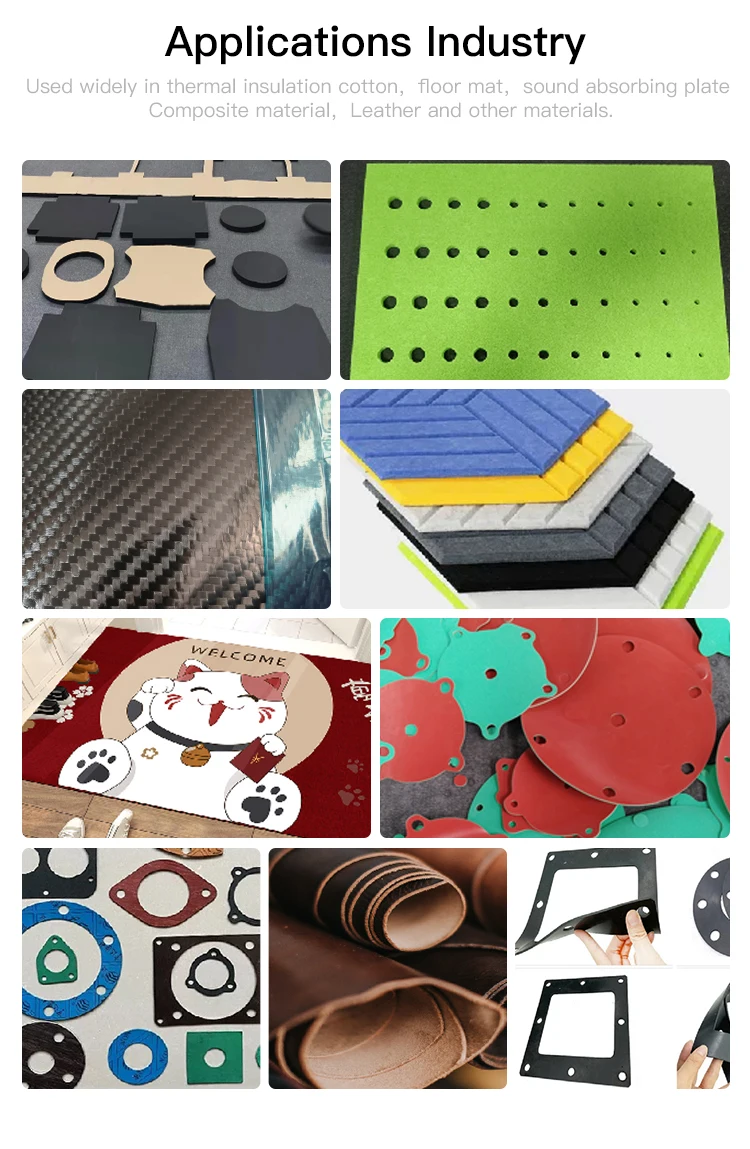
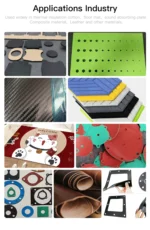
| Industrial gasket and seal fabrication | PTFE, rubber, cork-rubber, compressed fiber sheet |
| Aerospace composite panel trimming | Carbon fiber prepreg, aramid honeycomb, thermal insulation foam |
| Automotive interior component cutting | Headliners, floor carpets, damping pads, sealing strips |
| Wind energy blade material processing | Fiberglass cloth, PET/PVC foam core, vacuum infusion mesh |
| Sporting goods composite layup | Helmet liners, surfboard blanks, bicycle frame prepreg |
Why the Wrong Oscillating Knife Specification Ruins the Cut
Cold cutting only preserves material integrity when every specification matches the stock.
I once watched a gasket shop owner run PTFE sheet on an oscillating knife table specified purely by working area. The machine held 1600 × 2500 mm sheets fine, but the tool head was configured for cardboard — the blade deflected on denser fluoropolymer stock and left ragged edges across every seal profile. The buyer had never been asked to send a material sample before ordering. [NEED_CITE: gasket material hardness and tool head compatibility]
This is the gap in most CNC oscillating knife cutting machine specifications sheets: they list working area and speed range but leave tool head selection to chance. When you evaluate how to choose an oscillating knife system for gasket or composite work, the first question should never be about table size. It should be about what material lands on that table every morning.
Tool Head Selection by Gasket Material
The 1625 platform supports seven interchangeable tool heads — oscillating knife, driven rotary knife, creasing wheel, kiss cutting, pneumatic knife, milling, and V-groove knife. For soft rubber and cork-rubber gasket stock, a high-frequency oscillating knife delivers clean sheared edges without compressing the material. Stiffer composite sheets like PTFE or G10 epoxy boards respond better to a driven rotary knife that slices through reinforcement layers without delamination.
Choosing the correct tool head is the single most consequential decision in the CNC oscillating knife cutting machine specifications you review. A misconfigured head produces frayed edges on aramid honeycomb or crushes acoustic insulation foam rather than cutting it cleanly. Each head mounts to the same carriage, so reconfiguration for mixed-material shops is straightforward.
Vacuum Hold-Down and Small Part Stability
The aluminum bellows vacuum table paired with a 9 kW pump secures sheet stock across the full 1600 × 2500 mm working area. For large gasket blanks and composite panels, full-area vacuum provides reliable hold-down without mechanical clamps that interfere with the cutting path. [NEED_CITE: vacuum table flatness standards for CNC cutting]
The challenge appears when cutting small gasket parts from a large sheet — once surrounding waste material is removed, small pieces can lift if vacuum zoning does not isolate the active cutting zone. Before committing to a configuration, verify that the table zoning matches your typical nest layout and smallest part dimensions.
Reading the Specification Sheet Beyond Working Area
The 1625 designation tells you the working envelope: 1600 × 2500 mm. Beyond that, cutting accuracy of ±0.1 mm depends on servo drive quality and frame rigidity under load — servo motor options include Panasonic, Delta, and Dorna, each with different torque characteristics at the gantry. The PLC control panel processes PLT, DXF, AI, and PDF profiles directly, which matters when your nesting software outputs one format and the machine expects another.
Cutting speed ranges from 0 to 2000 mm/s, but real throughput on dense gasket material sits well below that ceiling. A PTFE sheet at full 30 mm thickness (basis not stated in source) demands slower passes than 2 mm rubber. The software supports English, Russian, Italian, and Chinese interfaces with custom language options, reducing operator error in multilingual workshops. Voltage options span 110V, 220V, and 380V, though frequency must be confirmed against your destination market standard before the machine ships.
What Happens When Configuration Goes Wrong
A gasket producer specified a vacuum table without confirming zoning layout. Small O-ring profiles lifted during the final contour pass because the entire table was pulling vacuum uniformly — no isolated zone held just the finished part. The operator had to tape edges manually, which slowed production and introduced positioning errors. [NEED_CITE: vacuum zoning requirements for small CNC cut parts]
Another buyer received a machine wired for 380V / 50Hz to a facility running 60Hz. The vacuum pump motor overheated within the first shift. Neither scenario reflects a defective machine — both reflect specifications that were never confirmed against the buyer’s actual production environment.
Why Source the 1625 Through This Process
Our design team engineers both knife and laser cutting platforms in-house, so material testing determines the cutting method rather than defaulting to whichever technology sits on the showroom floor. Every 1625 configuration begins with sample cutting on your actual gasket material — edge quality and dimensional accuracy are documented before a specification sheet is signed.
Tool head and vacuum table configurations are specified per your material type, thickness, and daily volume, not pulled from a default package. Electrical schematics are confirmed against your facility voltage and frequency. Software licenses and file format compatibility are validated with your existing nesting workflow before the order enters production. The machine ships fully assembled with operation manuals, spare parts lists, and packing photographs for inspection before container loading. [NEED_CITE: CE machinery directive compliance documentation]
Documentation & Verification
- Machine specification sheet listing every configured tool head and table zone for your material
- Electrical schematic with voltage and frequency locked to your destination market standard
- Sample cutting report on your gasket stock documenting edge quality and dimensional tolerance
- Factory test record showing PLC panel and servo drive performance before crating
- Software license and file format compatibility note for PLT, DXF, AI, or PDF workflow
- Spare parts list with part numbers for blades, vacuum seals, and wear components
Installation, Commissioning & Support
- Floor space requires 3300 × 2100 mm footprint with clearance for sheet loading on the 1600 × 2500 mm table
- Dedicated circuit matching confirmed voltage — 110V, 220V, or 380V — with frequency verified before energizing
- Machine ships fully assembled; positioning and leveling on your workshop floor is the primary installation task
- PLC control panel calibrated to your selected language — English, Russian, Italian, Chinese, or custom — during commissioning
- First-run test cuts on your gasket material to validate tool head selection and vacuum hold-down behavior
- Blade and vacuum seal replacement intervals documented in the operation manual with part numbers
Before You Request a Quote
Send us your gasket material type, thickness range, and maximum sheet dimensions so we can match the correct tool head and vacuum configuration. Confirm your facility voltage and frequency — the 1625 supports 110V, 220V, and 380V options, but frequency must align with your local grid. If you already run nesting software, share a sample file so we verify PLT, DXF, AI, or PDF compatibility before building your CNC oscillating knife cutting machine specifications package.
Frequently Asked Questions
Q: How do I select the correct tool head for my gasket material?
A: Send a sample of your actual stock — PTFE, rubber, cork-rubber, or composite sheet — and we run test cuts with oscillating knife, driven rotary knife, and pneumatic knife heads. Edge quality and dimensional accuracy are documented in a sample cutting report. The correct head depends on material density, thickness, and reinforcement layers, not just the material name.
Q: How is ±0.1 mm cutting accuracy measured and verified?
A: Accuracy is measured on finished cut profiles using calibrated measurement tools against the original DXF or PLT file dimensions. Verification is performed on your specific material during the sample cutting phase and again during factory testing before shipment. The test record accompanies the machine documentation package.
Q: Will the vacuum table hold small gasket parts without lifting?
A: The aluminum bellows vacuum table with a 9 kW pump secures large sheets effectively. For small parts, vacuum zoning must isolate the active cutting area — this is confirmed during configuration based on your typical nest layout and smallest part size. We verify hold-down performance on your material before finalizing the table specification.
Q: What voltage and frequency do I need to confirm before shipment?
A: The 1625 supports 110V, 220V, and 380V options. You must confirm both voltage and frequency — 50 Hz or 60 Hz — matching your facility supply. Incorrect frequency causes motor overheating in the vacuum pump and servo drives. Electrical schematics are locked to your confirmed values before production begins.
Q: Can I import my existing nesting files and profiles?
A: The PLC control system accepts PLT, DXF, AI, and PDF formats. Before your order enters production, we validate compatibility with a sample file from your existing nesting software. If your workflow uses a proprietary format, we confirm conversion options or software adjustments during the specification phase.


商品评价
Clear filtersThere are no reviews yet.