



Fast Shipping
Carrier information

20k products
Payment methods

24/7 Support
Unlimited help desk

2-day Delivery
Track or off orders
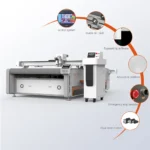
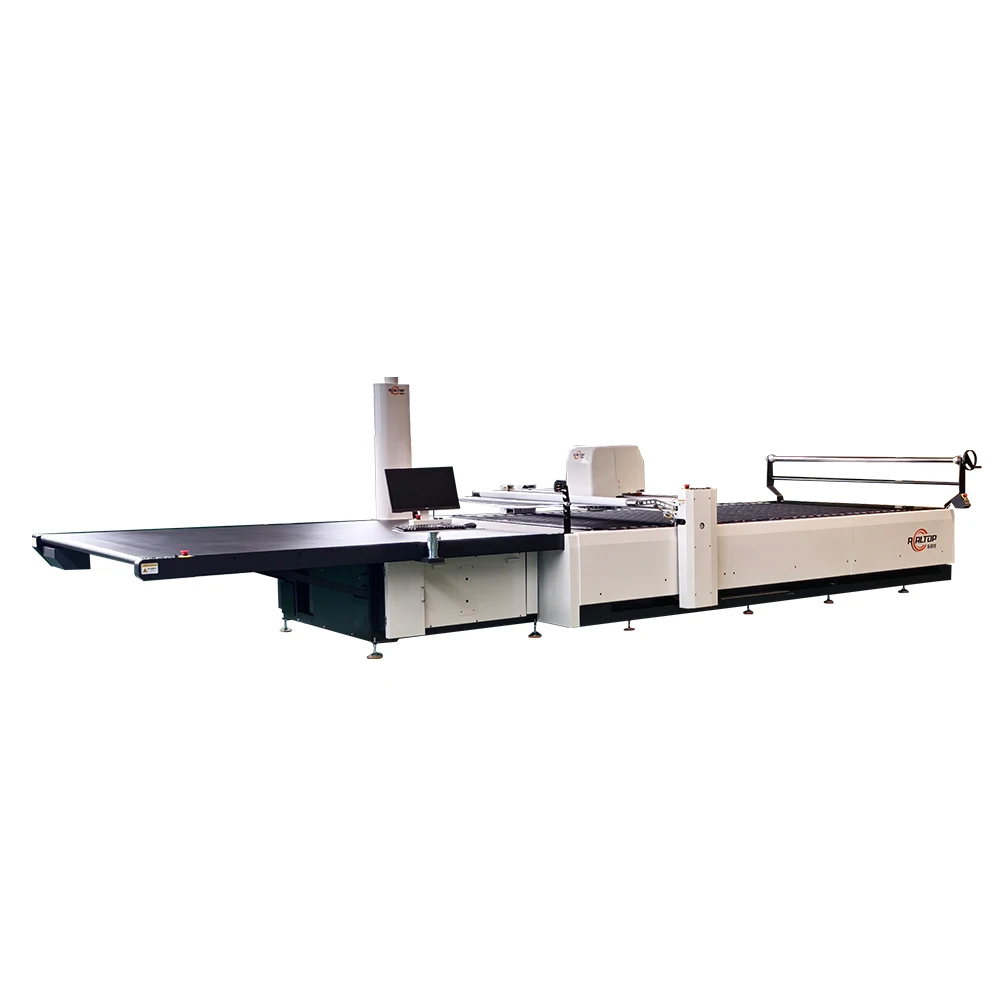
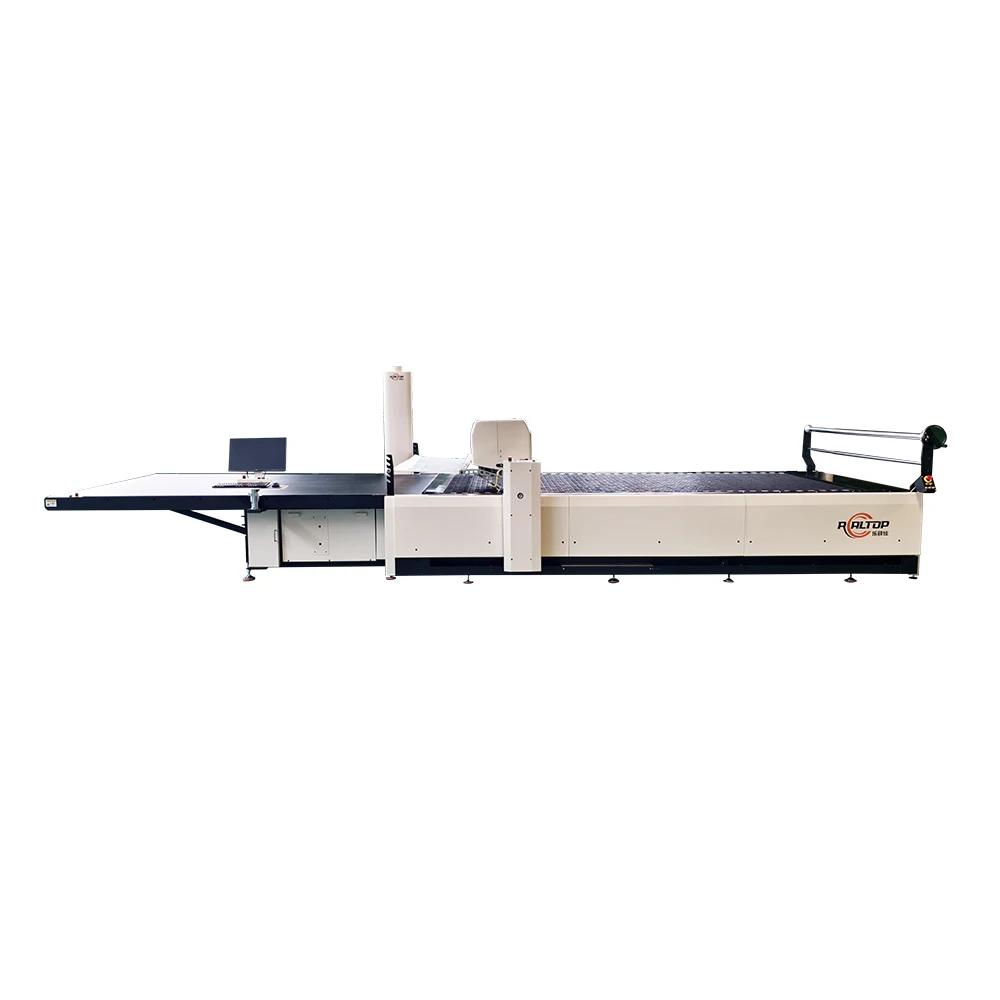
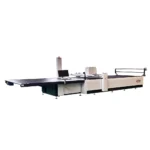
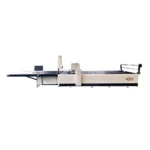
Knife-based cold cutting for multi-layer textile production — no scorching, no dark edges, no toxic fumes — with tool head, vacuum zoning and servo configuration matched to fabric type and daily volume.
Technical Specifications
| Parameter | Value |
|---|---|
| Product Type | CNC Oscillating Knife Cutting Machine |
| Working Area (Cutting Length) | 2000mm / 3300mm |
| Working Area (Cutting Width) | 1700mm / 1900mm / 2300mm |
| Max Operating Speed | 80m/MIN |
| Average Cutting Speed | 12m/MIN |
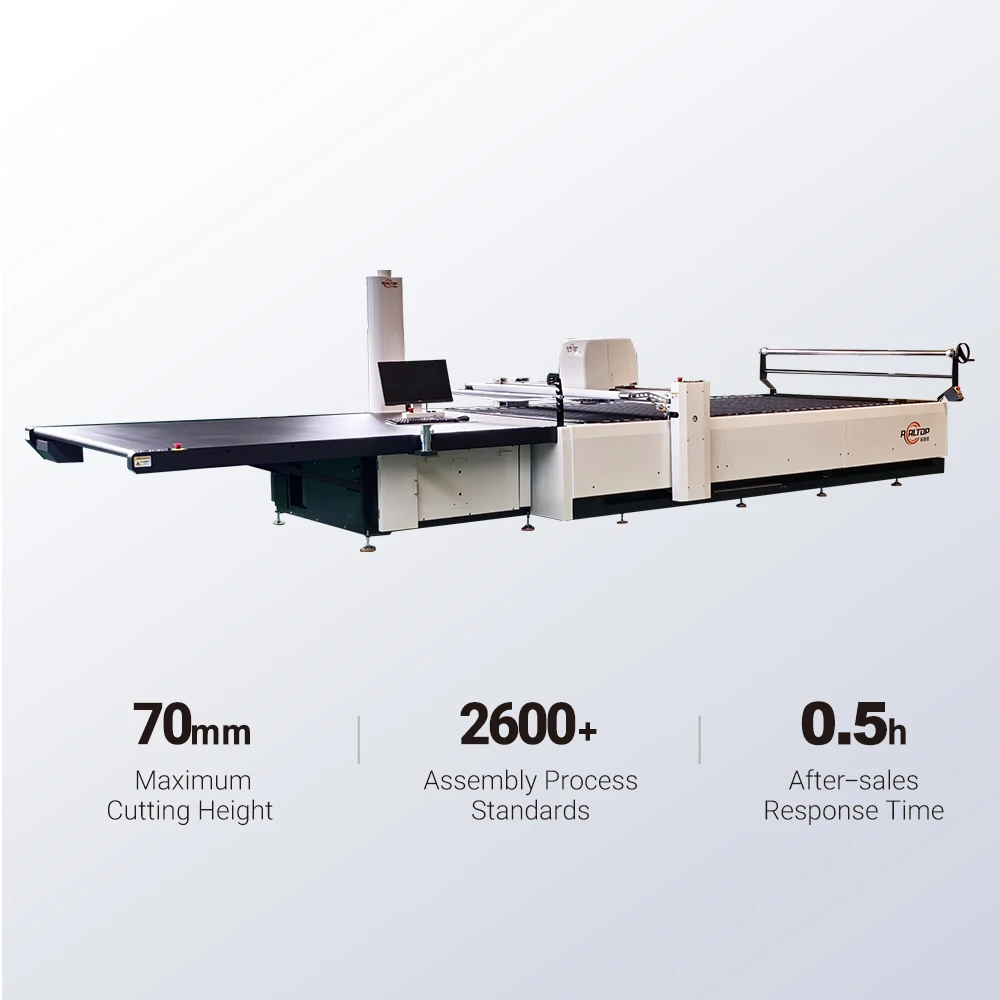
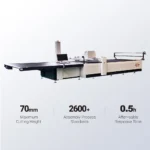
| Cutting Thickness | Up to 70mm (after adsorption) |
| Voltage | 380V/50Hz |
| Max Power | 26KW |
| Air Flow Volume | 160L/min |
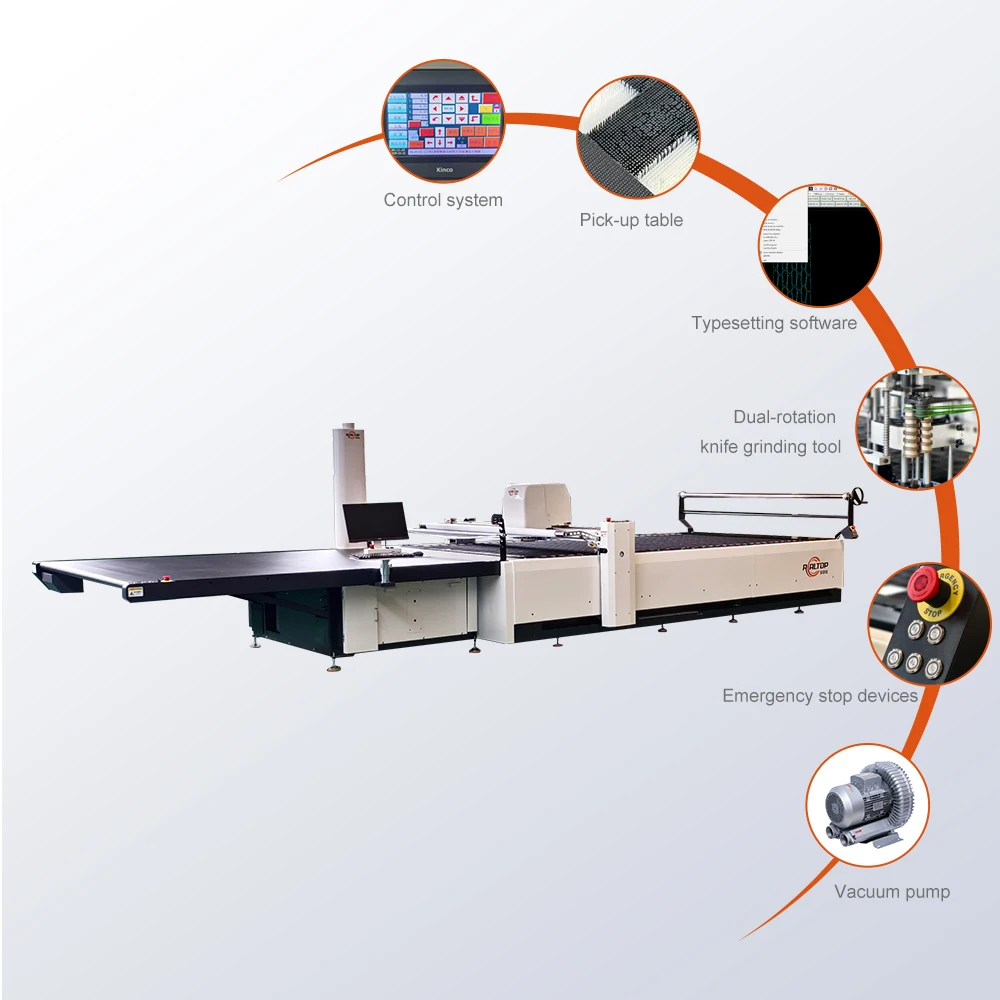
| Blade Grinding Method | Double rotary sharpener |
| Control System | PLC control panel with intuitive interface |
| Drive System | Servo motors (options include Panasonic, Delta, Dorna) |
| Vacuum Table | Aluminum bellows vacuum platform |
| Vacuum Pump | Custom high-efficiency, aerospace-grade aluminum casting |
| Machine Frame | Heavy-duty with precision-ground surface |
| Cutting Tool | Interchangeable cutting knife handle |
| Positioning Accuracy | ±0.1mm repeatability |
| Software | Supports DXF / PLT / AI / PDF file import |
| Language Options | English, Russian, Italian, Chinese, etc. (customizable) |
Application Suitability
| Application | Material or Output |
|---|---|
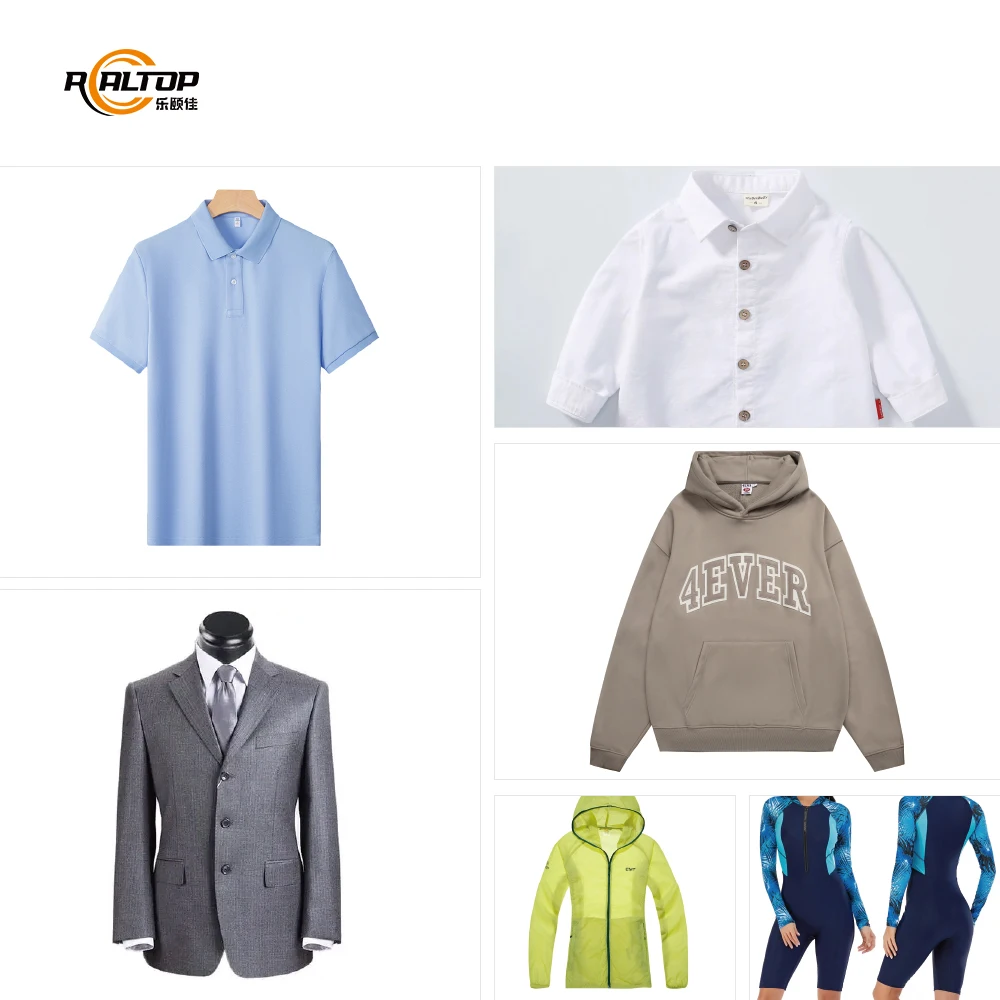
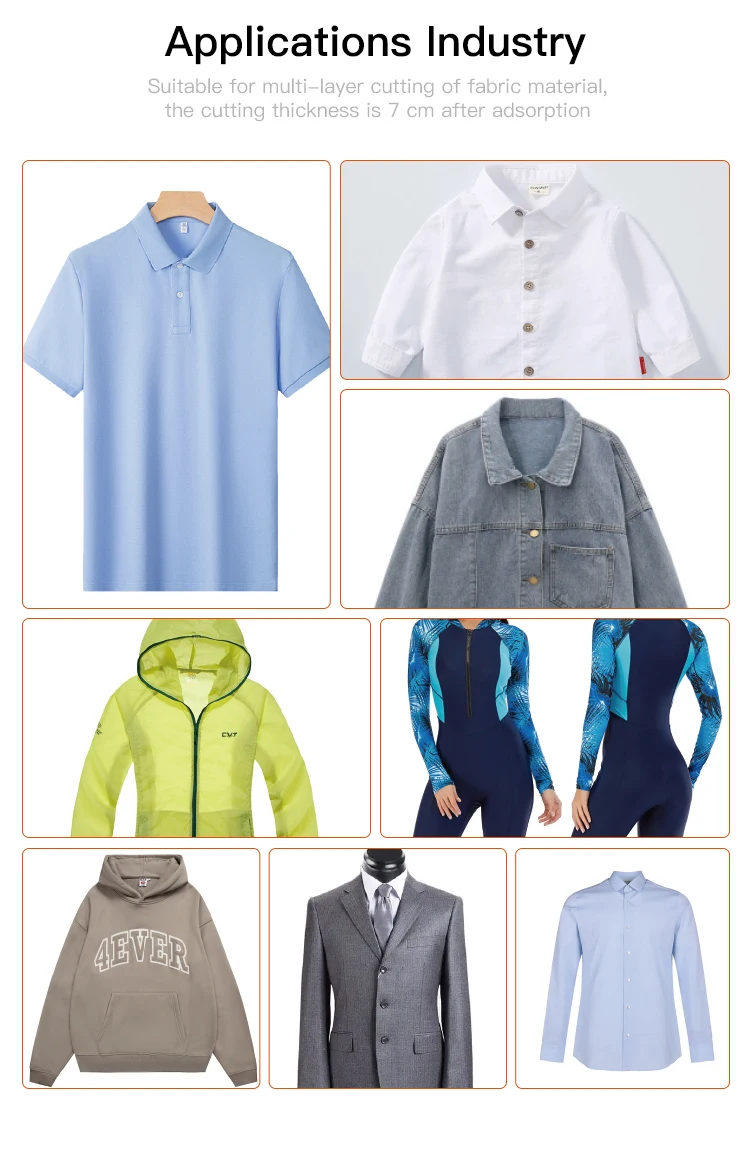
| Apparel manufacturing | Suits, knitwear, lace, complex fabrics, pattern-matching layouts |
| Home textiles | Sofa fabrics, curtains, rugs (multi-layer cutting with vacuum adsorption) |
| General flexible materials | Knits, wovens, plush, thicknesses 0.1–70mm |
Why the Material Specification Dictates the Configuration
Choosing the right tool head and vacuum zoning for your fabric ply count is more critical than the maximum speed listed on a brochure.
Many facilities purchase a machine based on a cutting area dimension, only to find the setup cannot handle the density of their material stack. When cutting 70mm of compressed denim or heavy upholstery fabric, the oscillating frequency and the vacuum hold-down must be balanced to prevent layer shifting. I have seen operations where the top layers were cut perfectly, but the bottom layers were dragged by the knife, ruining the entire bundle [NEED_CITE: vacuum adsorption physics in multi-ply textile cutting].
The Role of Vacuum Zoning in Multi-Ply Stability
The aluminum bellows vacuum platform is designed to maintain high flatness and seal across the entire cutting bed. For multi-layer textile production, this ensures that the fabric remains stationary during the high-speed reciprocating motion of the blade. Without adequate adsorption, the vibration of the oscillating knife would cause the bottom layers to shift, leading to mismatched patterns and wasted material.
Servo Drive Precision for Pattern Matching
The drive system options, including Panasonic, Delta, or Dorna servo motors, provide the necessary torque and responsiveness for intricate pattern-matching layouts. In garment manufacturing, where plaid or striped fabrics must align across multiple pieces, the repeatability of the motion system is vital. The ±0.1mm positioning accuracy allows for smooth edges that often require no secondary trimming, keeping the production line moving without manual intervention.
Interpreting the Engineering for Daily Output
The CNC oscillating knife cutting machine specifications reveal a system built for sustained industrial use. The double rotary sharpener is a crucial feature for long runs; it maintains the blade edge automatically, preventing the ragged edges that occur when a dull knife tears through synthetic fibers. The 26KW max power and 160L/min air flow volume support the continuous operation of the vacuum pump and the high-frequency oscillation of the cutting head. Furthermore, the PLC control panel simplifies the import of DXF and PLT files, ensuring that the digital nesting translates directly to physical cuts [NEED_CITE: PLC logic in automated textile cutting].
The Consequence of Ignoring Voltage and Language
Failing to confirm the local voltage and control language before shipment can lead to weeks of downtime. A machine wired for a different frequency may run the servo motors at the wrong speed, affecting the cut quality and potentially damaging the drive system. Similarly, if the PLC interface is not in a language the operators understand, the sophisticated nesting software and error diagnostics become inaccessible, turning a high-tech asset into a source of daily frustration [NEED_CITE: industrial equipment voltage standards by region].
Why Procurement Verification Matters Here
We focus on the specific configuration required for your material. The in-house design team allows for tool head selection matched to the fabric weight, rather than forcing a single setup for all materials. We provide a sample cutting report on your specific fabric at the target ply count before commitment, ensuring the 70mm cutting depth capability is realized on your shop floor. The software compatibility is verified to ensure your existing nesting workflow integrates without conversion errors.
Documentation & Verification
- Machine specification sheet detailing the selected servo brand and vacuum pump type.
- Sample cutting report on your specific fabric at the target ply count.
- Electrical schematic confirming the 380V/50Hz or customized voltage requirement.
- Software license and file format compatibility note for DXF/PLT/AI imports.
- Factory test record showing ±0.1mm repeatability on the selected working area.
Installation, Commissioning & Support
- Foundation must support the heavy-duty frame and precision-ground surface of the 2300mm width bed.
- Dedicated circuit required for the 26KW max power and 380V/50Hz voltage supply.
- First-run calibration of the double rotary sharpener to match the specific fabric density.
- Training on the PLC control panel and intelligent nesting software in the confirmed language.
- Provision of an initial spare parts kit including oscillating blades and knife handles.
- Verification of the 160L/min air flow volume from your shop’s compressor system.
Moving Forward with the Right Technical Data
To ensure the equipment matches your production needs, please provide the specific fabric type, the intended ply count or total thickness after adsorption, and the maximum sheet size you intend to process. We also need to confirm your local voltage and frequency standards to configure the electrical cabinet and the preferred language for the control interface.
Frequently Asked Questions
Q: How do I verify the cutting speed against my specific fabric weight?
A: The average cutting speed of 12m/MIN is a general benchmark. To verify the actual throughput for your production, we conduct a sample cutting test using your specific fabric at your target ply count. This report provides a realistic basis for calculating daily output and confirms the effectiveness of the vacuum adsorption and the oscillating knife frequency on your material.
Q: Which vacuum zone layout prevents small part lift?
A: The aluminum bellows vacuum platform is configured to maintain suction across the cutting area. For very small parts, the zoning can be adjusted to ensure adequate hold-down force prevents lift during the final cuts. This configuration is determined during the technical review based on the minimum part size in your nesting patterns and the air permeability of your fabric.
Q: How do I confirm software compatibility with my existing files?
A: We verify the software license and file format compatibility before the order is finalized. The system supports standard formats like DXF, PLT, AI, and PDF. If you use a specific nesting workflow, we request sample files to ensure the PLC control panel and the design software can import and process your data without conversion errors.
Q: What voltage and language options are available?
A: The standard configuration is 380V/50Hz, but we customize the voltage to match your local grid requirements. The control panel language is also customizable, with options including English, Russian, and Italian. These specifications are confirmed on the electrical schematic and the software configuration list before the machine is shipped to avoid installation delays.


商品评价
Clear filtersThere are no reviews yet.