



Fast Shipping
Carrier information

20k products
Payment methods

24/7 Support
Unlimited help desk

2-day Delivery
Track or off orders
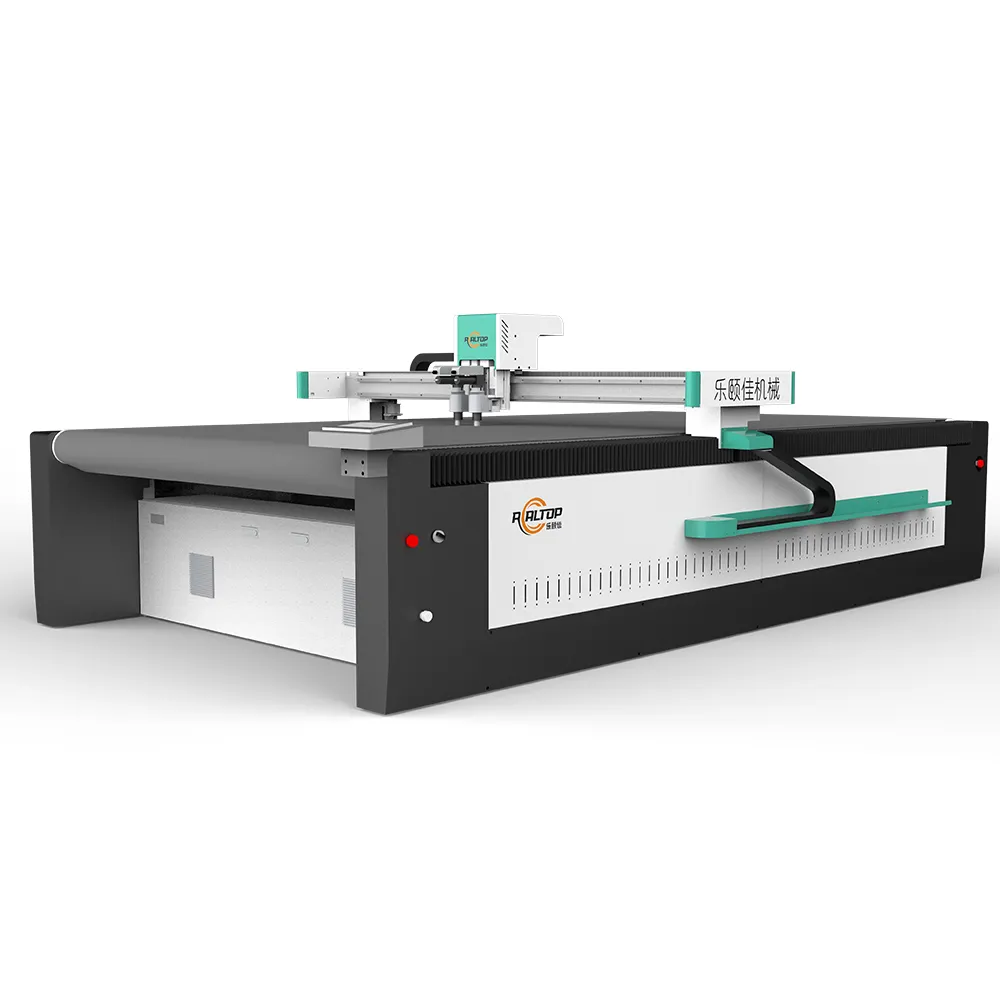
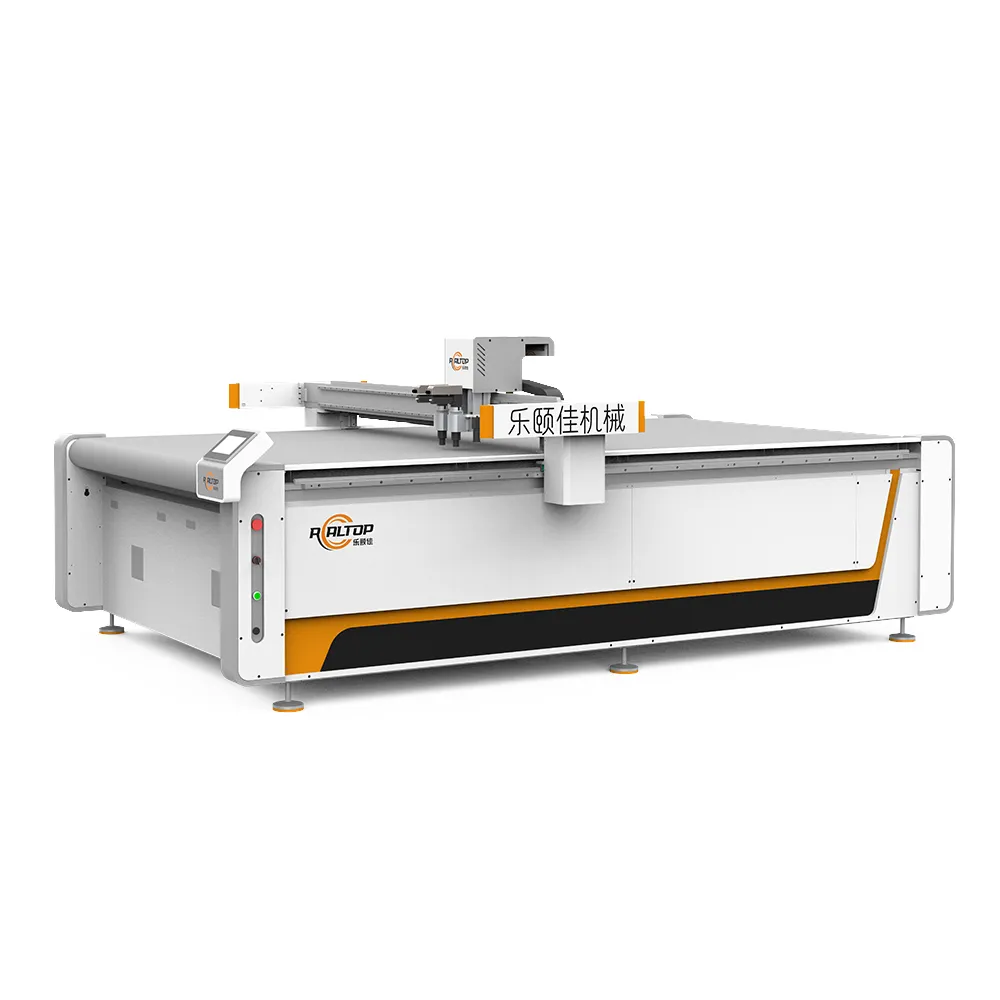
Configured tool heads per material — oscillating, servo, and pneumatic knife options matched to gasket density, verified on your own composite sheet before order confirmation.
Technical Specifications
| Parameter | Value |
|---|---|
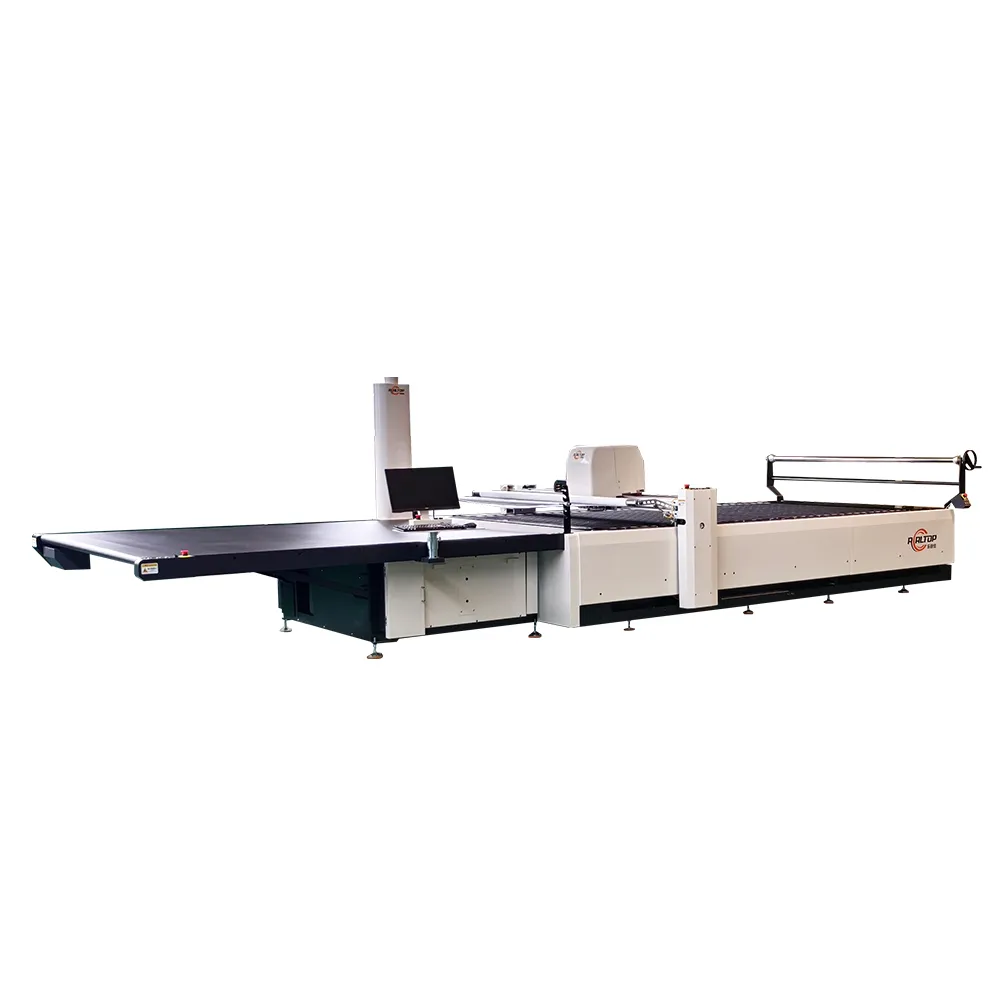
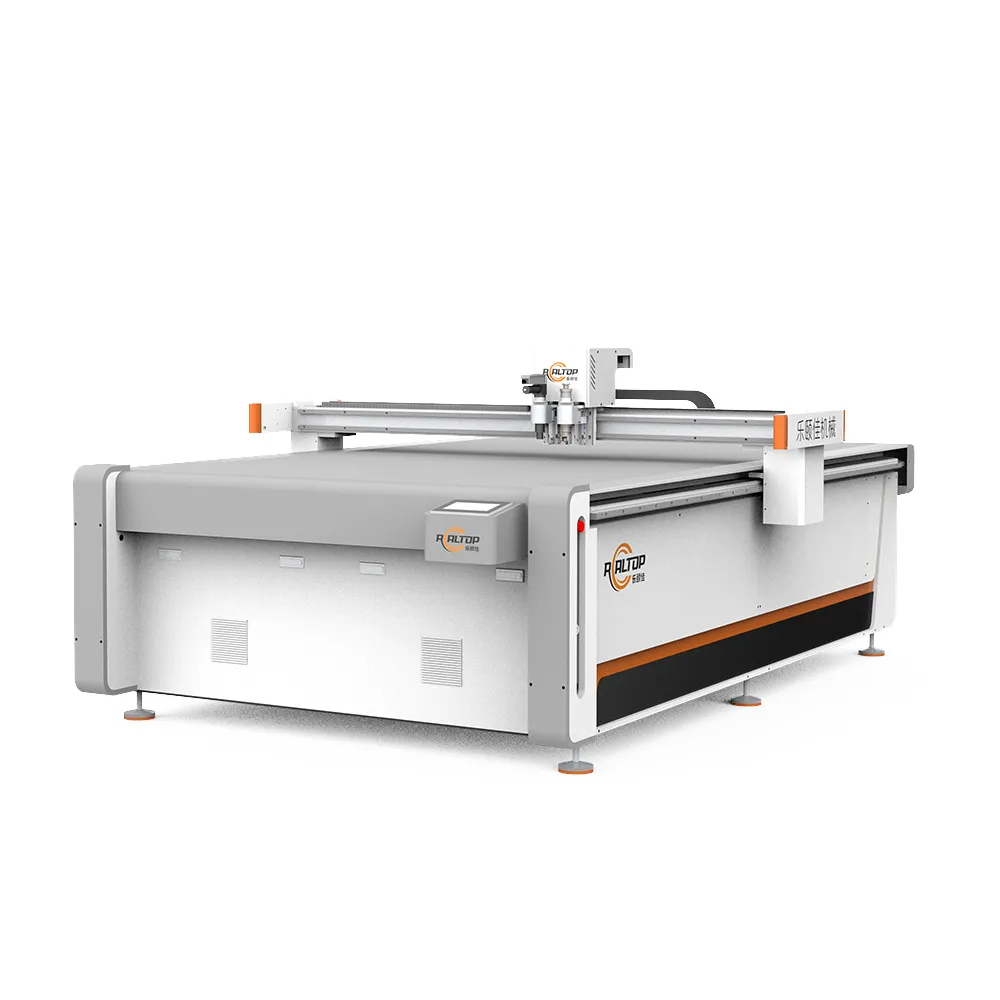
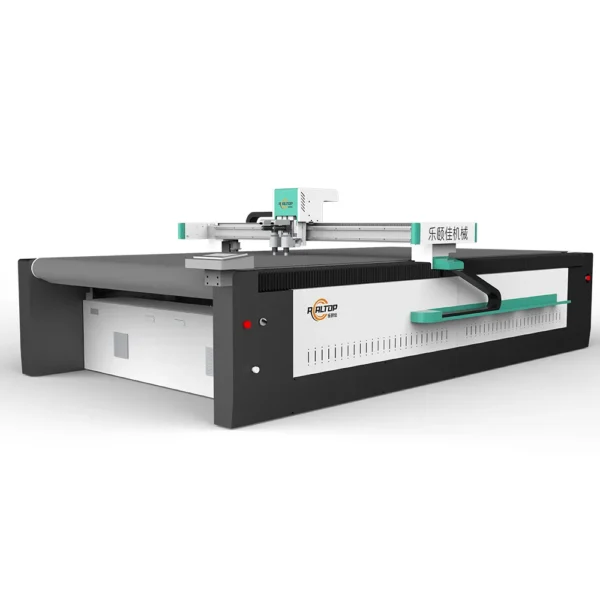
| Product Type | CNC Oscillating Knife Cutting Machine |
| Effective Cutting Area | 2500×1600mm / 2500×2200mm / 3000×2200mm |
| Maximum Speed | 2000mm/s (basis not stated in source — confirm material type and thickness) |
| Reset Accuracy | ±0.1mm |
| Cutting Thickness | ≤40mm (basis not stated in source — confirm material density) |
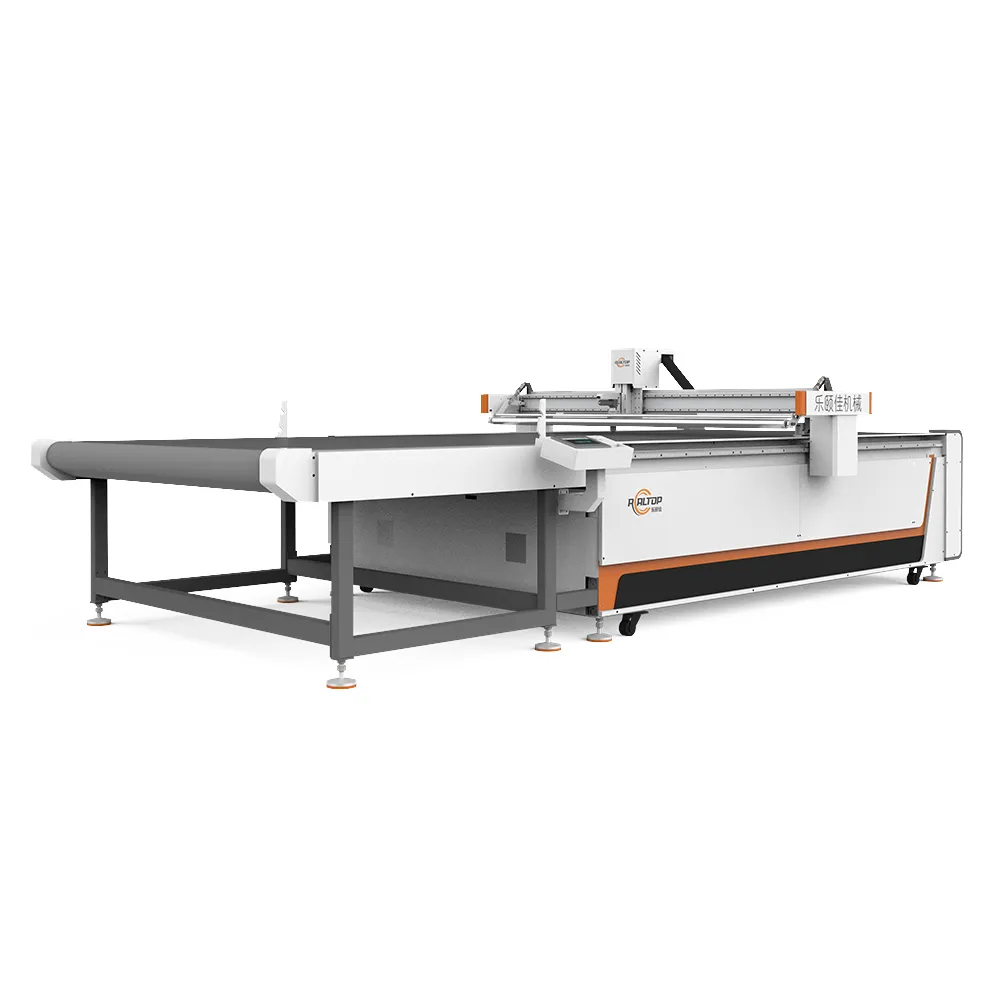
| Table Type | Automatic feeding with conveyor system |
| Positioning System | Panoramic visual positioning (CCD camera contour recognition) |
| Optional Tool Heads | Round knife, oscillating knife, marking pen, pneumatic knife, servo vibrating knife |
| Data Format | dxf, plt, ai, pdf |
| Control System | REALTOP customized high-speed control system |
| Voltage | 380V / 220V (frequency not stated in source) |
| Safety Device | Infrared blocking stop and anti-collision protection |
| Bed Treatment | Quenched to eliminate internal stress |
| Industrial Belt | Glass fiber tension cord, high temperature and corrosion resistant |
| Wiring | Oxygen-free copper shielded wire |
Application Suitability
| Application | Material or Output |
|---|---|
| Automotive gasket production | Rubber, cork, fiber, and composite sheet cutting with oscillating knife |
| Automotive interior trimming | Foam, fabric, and synthetic leather multi-layer cutting with servo vibrating knife |
| Packaging sample making | Corrugated board and carton template cutting from dxf/plt/ai/pdf files |
| Advertising and signage | Vinyl, PVC board, and printed contour cutting with CCD camera tracking |
| Footwear and leather goods | Leather and PU material cutting with drag or round knife |
Why Tool Head Selection Decides Your Edge Quality
A cutting machine rated for a working area can still produce ragged edges or crushed material when the wrong knife type meets your gasket stock. The CNC oscillating knife cutting machine for gasket and flex material solves this by offering interchangeable tool heads — but the configuration must be locked to your actual material before the machine ships.
The cutting edge is determined by the knife matched to your material density and thickness, not by the machine frame alone.
I once watched a customer try to cut wire-reinforced composite gasket material with a standard oscillating knife. The blade deflected off the steel mesh layer, leaving frayed edges that failed dimensional checks. We swapped to a pneumatic knife with higher down-force and adjusted the oscillation frequency, and the edge cleaned up — but it cost two days on the shop floor. That kind of trial-and-error belongs in the factory before shipment, not at your receiving dock [NEED_CITE: oscillating knife versus pneumatic knife cutting force comparison on reinforced composites].
Oscillating, Servo, and Pneumatic — What Each Knife Actually Does
The conventional oscillating knife works well on homogeneous rubber and cork gasket sheets up to moderate thickness, producing a clean sheared edge through high-frequency vertical vibration. When the material is layered — such as foam laminated to fabric for automotive interiors — the servo vibrating knife provides controlled depth per stroke, preventing delamination between plies. The circular knife handles thin vinyl and packaging substrates at higher traverse speeds where edge burnishing is not required.
CCD Contour Recognition and Vacuum Zoning for Small Gasket Parts
The panoramic visual positioning system reads printed registration marks to align cuts on pre-printed gasket layouts, which matters when you are nesting dozens of small seals on a single sheet. Small gasket parts tend to lift off the table under knife vibration, especially near the end of a cut path. Vacuum table zoning addresses this by holding localized suction under the part being cut, keeping flat registration without requiring mechanical clamps that would interfere with the tool head [NEED_CITE: vacuum table zoning effectiveness on small non-metallic parts].
Reading the Specs That Actually Matter for Gasket Output
The ±0.1mm reset accuracy governs how well the machine returns to a reference point after each tool change or sheet repositioning — critical when you are cutting multiple gasket profiles from a single file in sequence. The quenched bed treatment eliminates residual stress from welding, so the frame does not drift dimensionally after months of vibration from the oscillating knife. The glass fiber tension cord in the conveyor belt resists stretch under continuous feeding loads, maintaining sheet position accuracy over long production runs. Data format compatibility with dxf, plt, ai, and pdf means your existing nesting software can feed cutting paths directly without manual geometry reconstruction, which is where most file-related downtime originates.
The Cost of Skipping the Material Trial
Ordering a CNC oscillating knife cutting machine for gasket and flex material based on working area and maximum speed alone is how you end up with a machine that cannot hold tolerance on your specific stock. The cutting thickness figure of ≤40mm applies under conditions that may not match your material density or reinforcement content. A wire-inserted composite gasket at 15mm behaves entirely differently from a solid rubber sheet at the same depth. Without a sample cutting report on your actual material, the quoted specifications remain theoretical, and the production gap shows up as scrap and rework [NEED_CITE: material density impact on oscillating knife penetration depth].
What You Can Verify Before Committing
Tool head and table configuration is specified per your material sample, not pulled from a generic catalog page. The CCD camera positioning model and vacuum zone layout are documented in a configuration list you review before production begins. Software compatibility is confirmed against your existing dxf or plt nesting workflow so file import is functional on day one. Voltage, plug type, and control language are locked in the electrical schematic before the wiring loom is assembled — not guessed at during crating. Sample cutting on your own gasket stock is completed and reported before the quotation becomes a purchase order.
Documentation & Verification
- Sample cutting report on your gasket material confirming edge quality and depth at working speed
- Tool head and vacuum zone configuration list matched to your material density and part size
- Electrical schematic with voltage, frequency, and control language confirmed before assembly
- Software licence and dxf/plt/ai/pdf file format compatibility note for your nesting workflow
- Factory test record with dimensional check on your specified gasket profile before dispatch
Installation, Commissioning & Support
- Conveyor table requires level concrete floor to maintain vacuum seal across the full cutting area
- 380V or 220V dedicated circuit with confirmed frequency and breaker rating before power connection
- Panoramic CCD camera calibrated on-site using your printed registration marks for contour accuracy
- Oscillation frequency and knife depth tuned to your gasket stock during first-run commissioning
- Spare oscillating knife blades and glass fiber belt sections included for initial maintenance intervals
- Oxygen-free copper wiring rated for continuous high-frequency vibration from servo and pneumatic tool heads
What to Send With Your Inquiry
Provide the exact gasket material type, including any wire or fiber reinforcement, along with sheet dimensions and target daily cutting volume. Specify your local voltage and frequency so the control system and wiring are built to match. Confirm the CAD file format your nesting software exports so we verify import compatibility before the order is finalized.
Frequently Asked Questions
Q: How do I confirm the machine can cut my reinforced gasket material?
A: The ≤40mm cutting thickness depends on material density and reinforcement content. We run a sample test on your actual gasket stock — including any wire mesh or fiber insert — and provide a cutting report showing edge quality and achievable depth at production speed before you commit to the order.
Q: Which knife type works for multi-layer automotive interior material?
A: The servo vibrating knife suits layered foam and fabric because it controls depth per stroke, reducing delamination risk. The oscillating knife handles single-layer rubber gasket stock. We recommend the tool head after reviewing your material stack-up and confirm it with a sample cut.
Q: What does the panoramic CCD system need to track printed marks reliably?
A: The camera requires printed registration marks of sufficient size and contrast against the substrate. We specify the minimum mark dimensions and lighting conditions during configuration and verify tracking performance on your printed gasket layout before the machine leaves our workshop.
Q: How do small gasket parts stay flat during high-speed cutting?
A: Vacuum table zoning applies localized suction beneath the cutting zone, holding small parts without mechanical clamps. The zone layout is configured to match your typical gasket profile sizes and documented in your configuration list before production.
Q: Will my existing nesting files work with this control system?
A: The system accepts dxf, plt, ai, and pdf formats. We request a sample file from your nesting software before order confirmation and verify import, toolpath generation, and cutting output to ensure compatibility with your existing workflow.


商品评价
Clear filtersThere are no reviews yet.