








Fast Shipping
Carrier information

20k products
Payment methods

24/7 Support
Unlimited help desk

2-day Delivery
Track or off orders
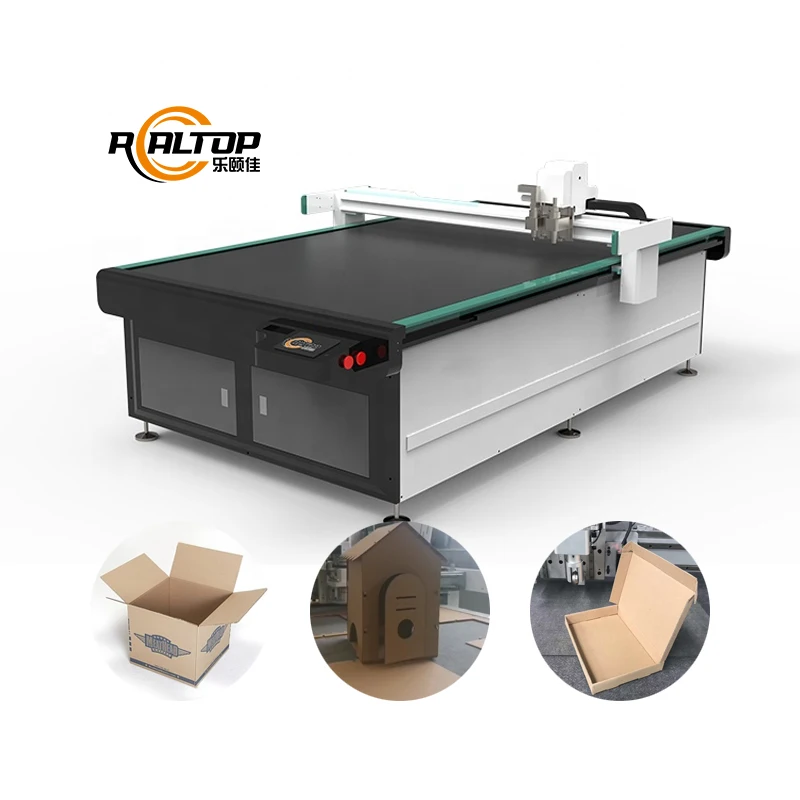
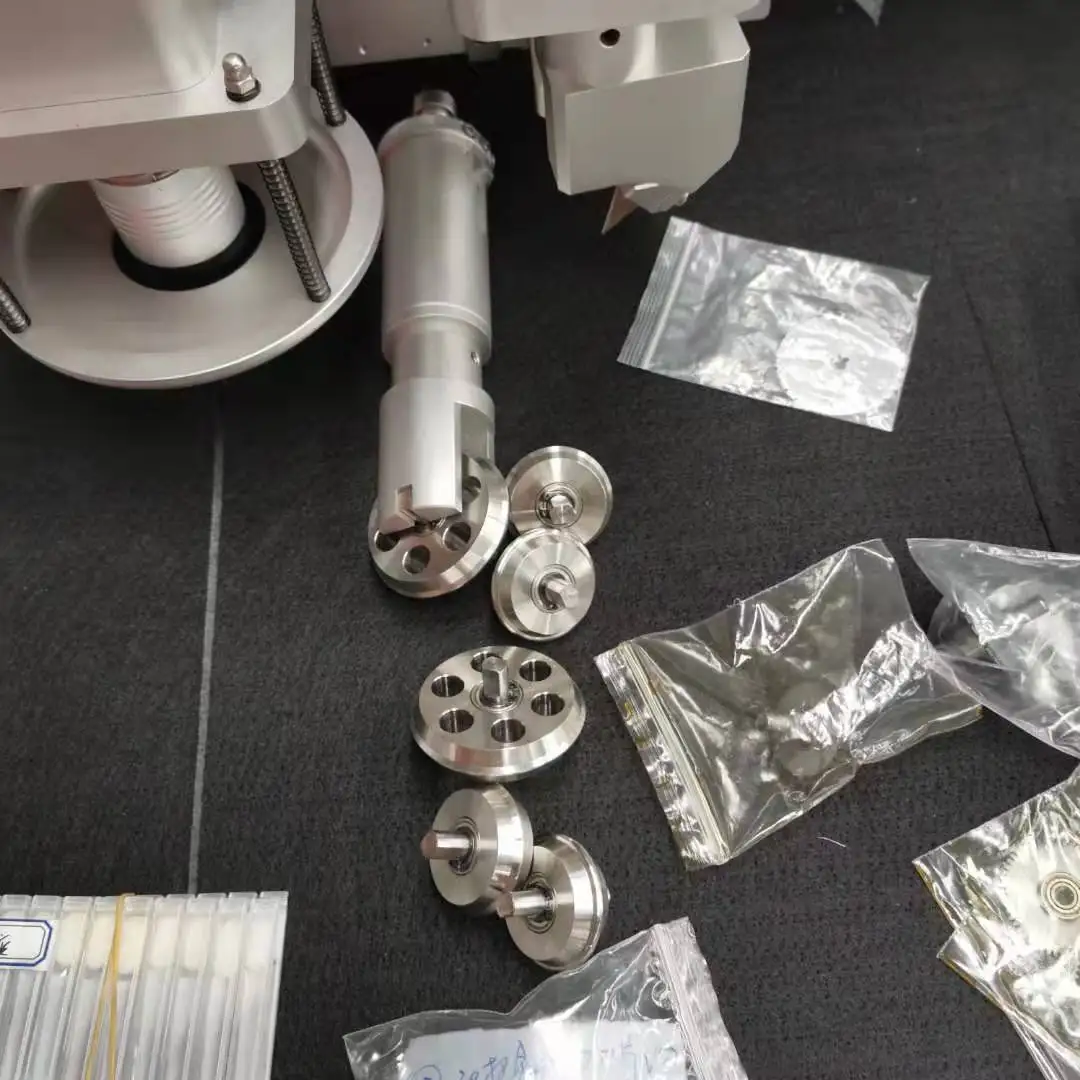
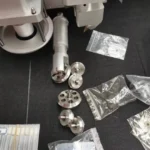
Tool Head Matched to Material — The RT-D2516/RT-S2516 platform is configured with oscillating knife, drag knife and creasing wheel options selected per substrate rather than shipped as a one-size-fits-all assembly.
Technical Specifications
| Parameter | Value |
|---|---|
| Model | RT-D2516/RT-S2516 |
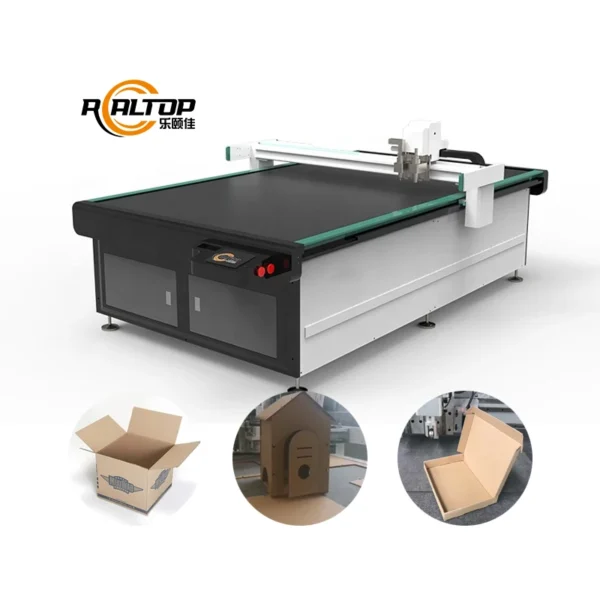
| Product Type | CNC Oscillating Knife Cutting Machine |
| Working Area | 1600 × 2500 mm |
| Overall Dimensions | 3450 × 2300 × 1250 mm |
| Rated Power | 9 kW |
| Voltage | 380V ±10% |
| Tool Head | Swiss imported knife with vibration full cutting, half cutting and cursor location |
| Translational Velocity | 800–1200 mm/s |
| Cutting Speed | 200–800 mm/s (varies by material) |
| Repeatability | ≤0.1 mm |
| Transmission | Digital servo motor, imported linear guide, synchronous belt, ball screw |
| Servo Motor & Drivers | Delta |
| Guide Rail | Taiwan Hiwin |
| Vacuum Pump | 7.5 kW |
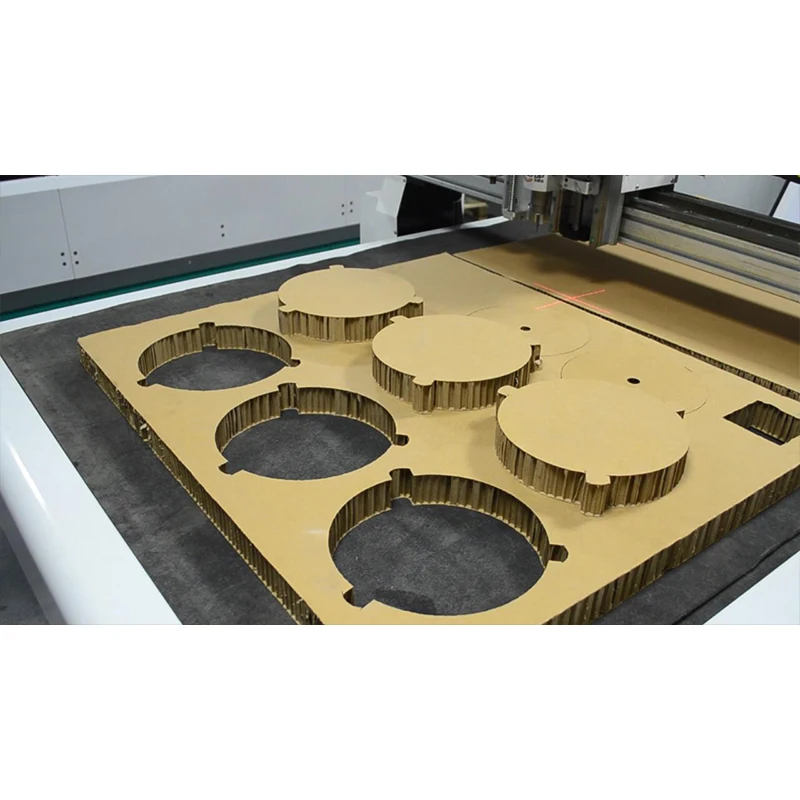
| Table Surface | Aluminum alloy honeycomb vacuum adsorption platform |
| Conveyor Belt | Germany imported |
| Control System | HP-GL compatible format |
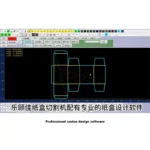
| Software | Professional carton nesting software (multi-format import, custom language) |
| Frame | Welded thick square seamless steel with high-temperature treatment |
| Safety | Infrared sensors and emergency stop devices |
| Language Options | English, Russian, Italian, Chinese (special languages available) |
| Cutting Thickness | ≤100 mm (basis to be confirmed per material) |
| Certification | CE (verify against documentation) |
| Warranty | 1 year free warranty, lifetime technical support |
Application Suitability
| Application | Material or Output |
|---|---|
| Packaging carton sample making | Corrugated board, greyboard, folding carton stock |
| Sticker and label contour cutting | Self-adhesive vinyl, printed label sheets |
| Advertising signage production | PVC foam board, acrylic sheet, magnetic vinyl |
| Garment pattern cutting | Woven fabric, knit fabric, non-woven interlining |
| Leather and footwear components | Split leather, PU synthetic, microfiber leather |
| Gasket and seal fabrication | Rubber sheet, silicon, sponge composite |
Why Working Area Alone Does Not Define a CNC Oscillating Knife Cutting Machine
A 1600 × 2500 mm table only tells you how much floor space the machine occupies — it says nothing about whether your material stays flat under the knife.
Buyers routinely shortlist machines by bed size and price, then discover during commissioning that small parts lift off the table at cutting speed. The vacuum holds the centre of a full sheet, but once the knife cuts through, the offcut loses suction and drifts into the blade path. The operator pauses the job, repositions the piece, and the cut contour is now offset from the print. On a short-run packaging sample, that is an annoyance. On a nesting job cutting hundreds of gasket blanks from a roll, it is a production stoppage [NEED_CITE: vacuum zoning requirements for small-part CNC knife cutting].
Tool Head Selection by Substrate
A single oscillating blade cannot handle corrugated board, silicone gasket and garment fabric at the same quality level. The RT-D2516/RT-S2516 is supplied with a Swiss imported knife assembly that performs full cutting, half cutting and cursor-located contour work. The CNC oscillating knife cutting machine specifications for each tool configuration are documented before shipment so the buyer knows which blade angle and stroke frequency apply to their material.
Vacuum Zoning and Small-Part Stability
The aluminum honeycomb table surface is divided into independent vacuum zones. When the cutting head moves to a corner of the sheet, only the zones under the active cutting path are powered. This keeps small blanks pinned without requiring the full 7.5 kW pump to run at maximum draw across the entire bed. Follow-cutting zoning reduces power consumption and prevents the lift that causes ragged edges on thin vinyl and paper stocks [NEED_CITE: vacuum hold-down behavior on CNC flatbed cutting tables].
What Repeatability and Drive Components Mean at Production Speed
A stated repeatability of ≤0.1 mm is measured under controlled conditions with a dial indicator on a stationary head. At 800 mm/s translational velocity, actual contour accuracy depends on the rigidity of the guide rail, the response time of the servo, and the mass of the tool head carriage. Taiwan Hiwin linear rails and Delta servo drivers keep the moving assembly tight through direction changes, which is where most CNC oscillating knife cutting machines lose registration on tight radii. The HP-GL compatible instruction format allows the controller to receive vector paths directly from nesting software without a proprietary translator in between.
The Cost of Skipping Material-Specific Configuration
When a machine is ordered without specifying the material stack — thickness, density, surface finish — the factory ships a default tool head and vacuum setting. The first day on the shop floor, the operator finds that the oscillation frequency tears through 3 mm foam cleanly but crushes 8 mm sponge composite leather at the same stroke rate. Rewriting parameters on the floor takes time, and the material wasted during dial-in is material the buyer already paid for. A sample cutting report on the buyer’s own stock before order confirmation eliminates most of this risk [NEED_CITE: material-specific tool head configuration for oscillating knife systems].
Why Procurement Starts with the Material, Not the Brochure
The in-house design team configures the RT-D2516/RT-S2516 tool head, vacuum zoning and conveyor option around the buyer’s actual substrate list, not a standard catalogue build. Software file format compatibility — DXF, PLT, AI — is confirmed against the buyer’s existing nesting workflow before the order is placed. Voltage, plug type and control language are documented on the specification sheet so the machine arrives ready to power on, not waiting for an electrician to sort out a three-phase mismatch. The welded steel frame undergoes high-temperature treatment to relieve welding stress, which prevents bed distortion after months of thermal cycling in the workshop. CE documentation is provided where applicable, and the factory test record covers the buyer’s specific material thickness range before dispatch.
Documentation & Verification
- Tool head and vacuum zone configuration list matched to buyer substrate
- Electrical schematic with confirmed voltage and plug type
- Sample cutting report on buyer material at specified thickness
- HP-GL software licence and file format compatibility note
- Factory test record covering buyer material range before dispatch
- Operation manual in confirmed control language
Installation, Commissioning & Support
- 3450 × 2300 mm footprint requires level concrete floor with clearance for conveyor infeed
- 9 kW rated power plus 7.5 kW vacuum pump need dedicated three-phase 380V circuit
- High-temperature-treated steel frame ships as single assembly; table levelling on arrival
- Delta servo calibration and Hiwin rail alignment verified during on-site commissioning
- Software training covers nesting import, zone vacuum control and tool head changeover
- Wear-resistant felt belt and oscillating blade listed in spare parts schedule
What to Include in Your Inquiry
Send the material type, thickness range and maximum sheet size you plan to cut. State your daily volume so the vacuum zoning and conveyor option can be matched to throughput. Confirm your local voltage and frequency, preferred control language, and whether your existing nesting software exports DXF or PLT. If the material is unfamiliar, request a sample cutting test on your own stock before the order is finalized.
Frequently Asked Questions
Q: How is cutting thickness verified for my specific material?
A: The ≤100 mm figure is a general range that varies with material density and structure. Before order confirmation, we run your actual stock through the RT-D2516/RT-S2516 and document blade type, oscillation frequency and cutting speed in a sample report. This removes guesswork when your material arrives at the workshop.
Q: Which tool head configuration suits my material?
A: The Swiss imported knife assembly supports full cut, half cut and cursor location modes. Corrugated board typically needs full cutting with a wider blade angle, while adhesive vinyl requires half cutting to score without penetrating the backing. The correct configuration is listed on your tool head sheet before shipment.
Q: How does vacuum zoning prevent small parts from lifting?
A: The honeycomb table is divided into zones that activate only under the active cutting path. This concentrates hold-down force on the area being cut, keeping small blanks flat without requiring the full 7.5 kW pump across the entire bed.
Q: What file formats does the nesting software accept?
A: The professional carton nesting software imports DXF, PLT and other common vector formats via the HP-GL compatible control system. Format compatibility is tested against your existing design files before order to confirm no conversion loss occurs.
Q: Which voltage and language options are available?
A: The standard electrical supply is 380V ±10%, configurable for target market requirements. Control language options include English, Russian, Italian and Chinese, with special languages available. Both are documented on the specification sheet before production.


商品评价
Clear filtersThere are no reviews yet.