






Fast Shipping
Carrier information

20k products
Payment methods

24/7 Support
Unlimited help desk

2-day Delivery
Track or off orders
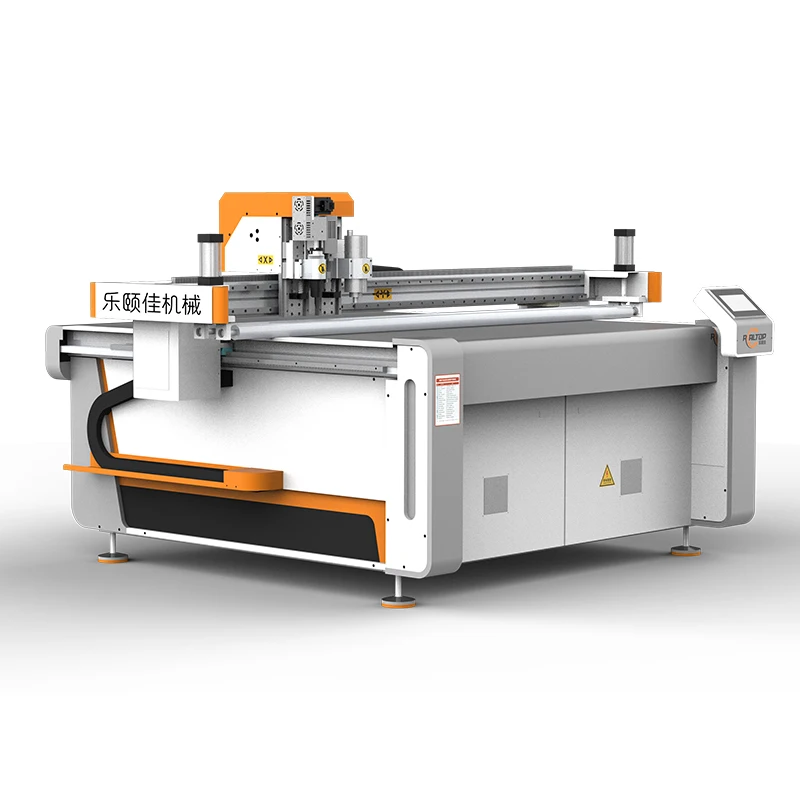
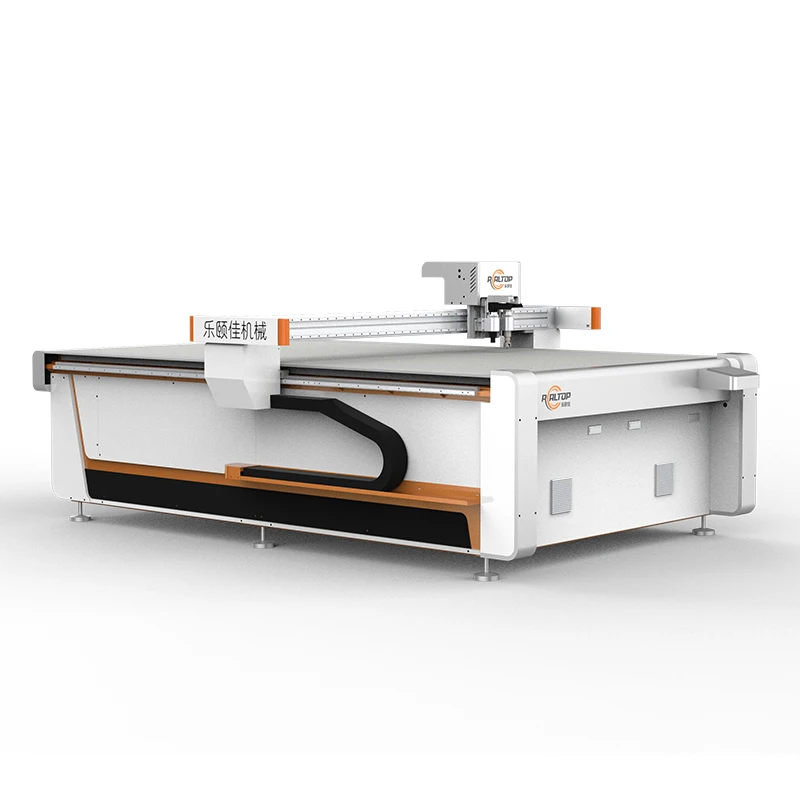
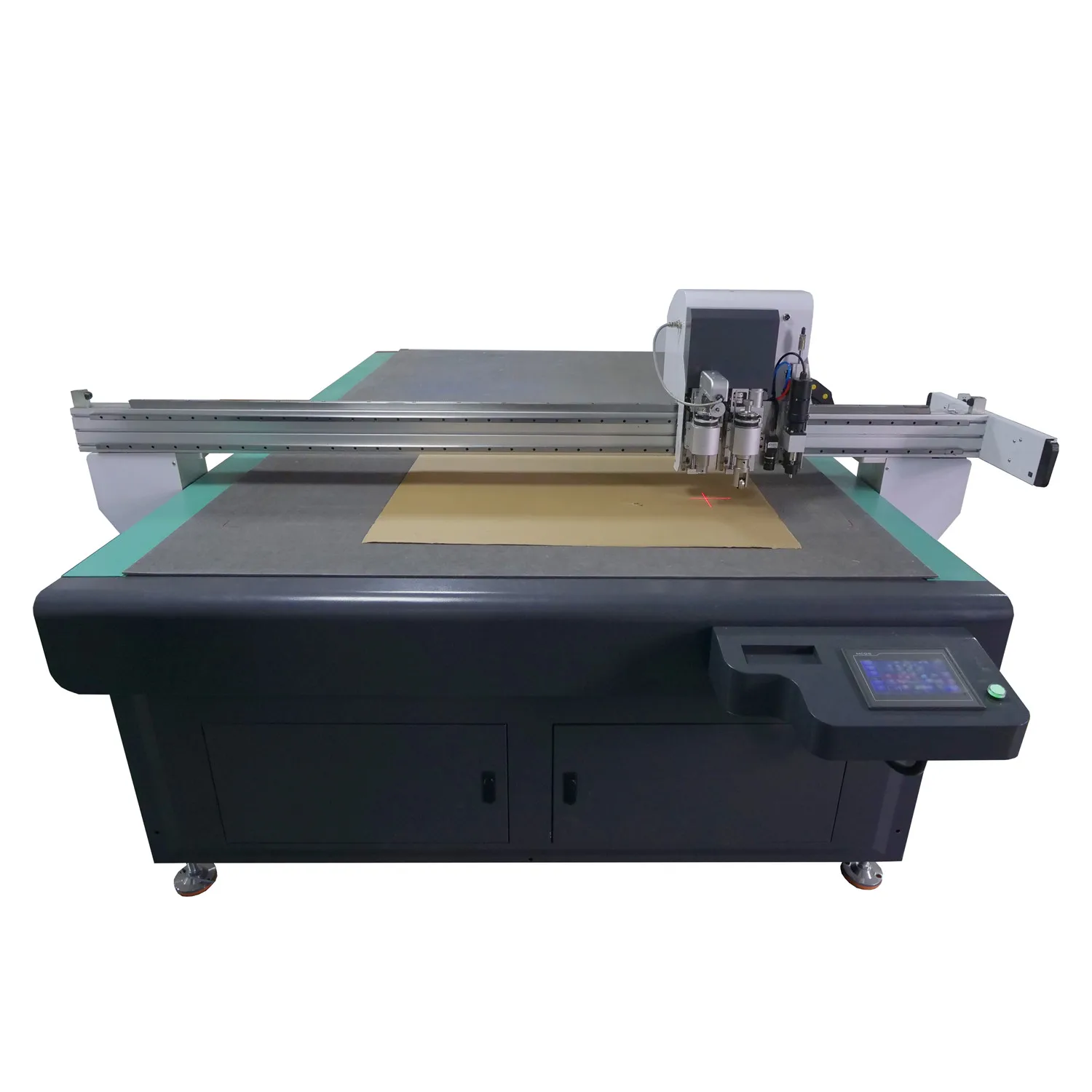
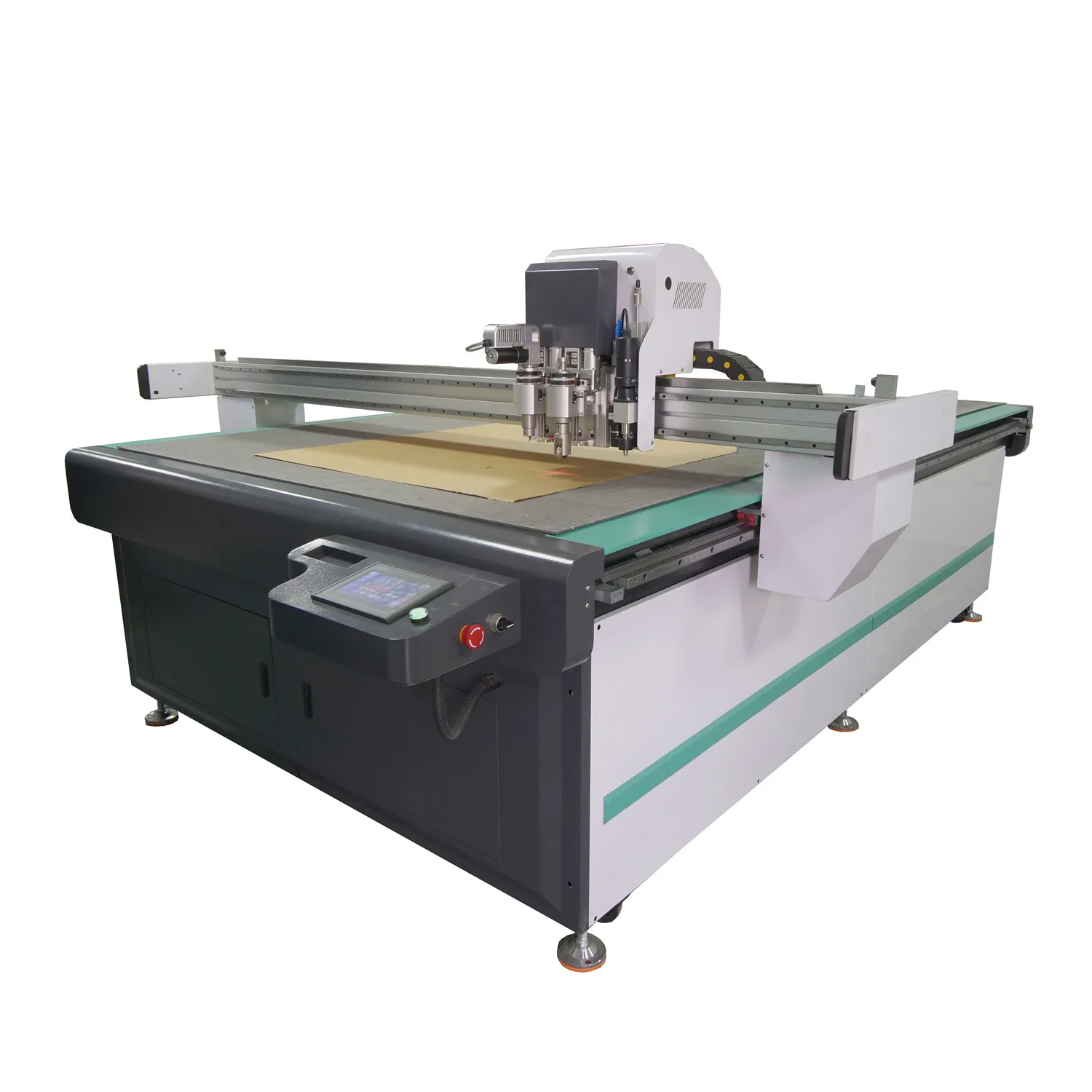
Matched tool heads — in-house design allows us to configure oscillating knife, creasing wheel, kiss-cut and punch tooling to your exact packaging substrate rather than ship a generic head assembly.
Technical Specifications
| Parameter | Value |
|---|---|
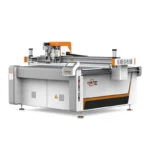
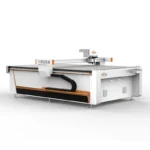
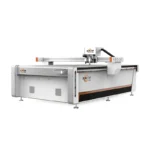
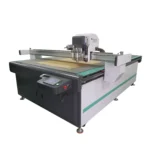
| Product Type | CNC Oscillating Knife Cutting Machine |
| Model | RT–R2513 / RT-D2516 / RT-S2516 |
| Working Area | 2500×1300 mm (RT–R2513) / 1600×2500 mm (RT-D2516 / RT-S2516) |
| Machine Size | 3550×1910×1400 mm (RT–R2513) / 3450×2300×1250 mm (RT-D2516 / RT-S2516) |
| Cutting Tools | Oscillating knife, creasing tool, kiss-cut knife tool, round punch |
| Cutting Thickness | ≤18 mm |
| Cutting Materials | Cardboard, corrugated board, paper, PP paper, stickers, labels, leather |
| Fixing Method | Vacuum system with 7.5 kW vacuum pump |
| Repeated Accuracy | <0.05 mm |
| Rated Power | 9 kW |
| Voltage | 380 V |
| Transmission Method | Ethernet port |
| Profile Format | DXF, OLT, PDF, AI |
| Safety Device | Infrared sensors |
| Linear Guide | Taiwan Hiwin rail |
| Servo System | Delta servo motor |
| Conveyor Belt | Germany imported |
| Blade Supply | 10 pieces oscillating blades included |
| Delivery Time | <30 working days |
| Warranty | 1 year (excluding felt and knife blades) |
| Standards | CE |
Application Suitability
| Application | Material or Output |
|---|---|
| Die-less carton sample making | Grey board, single and double-wall corrugated up to 18 mm |
| Sticker and label processing | Self-adhesive vinyl, coated paper, PP synthetic paper |
| Corrugated packaging short runs | E-flute and B-flute board with kiss-cut and crease in one pass |
| Cardboard display and POP structures | Honeycomb board and solid fibre sheet |
| Business card and tag production | Coated card stock and laminated paper |
| Leather patch and insole cutting | Split leather and bonded leather for packaging inserts |
Why Board Thickness Matters More Than Working Area
Buyers often specify a cutting table by its bed dimensions, then discover the oscillating head cannot push through their densest flute. The real question is whether the CNC oscillating knife cutting machine specifications match your heaviest substrate before anything else. I have watched corrugated plants receive machines rated for standard grey board only to find that their high-density double-wall stock comes out with crushed flutes and ragged score lines. The first batch of boxes looks torn, the creases crack on the fold, and the operator blames the blade. More often than not, the issue is oscillation frequency paired with downward stroke — a parameter rarely listed on a one-page spec sheet [NEED_CITE: typical corrugated flute density and crush resistance values].
Tool Head Selection Against Substrate
A packaging line rarely runs a single material. One shift cuts E-flute micro-corrugated for retail cartons, the next scores 3 mm grey board for premium boxes. The RT–R2513 family carries oscillating knife, creasing wheel, kiss-cut knife and round punch on the same gantry, so a job change means calling a new tool profile rather than swapping hardware. Oscillation frequency and stroke length set the edge quality on fibrous board, while the creasing wheel width must match the flap geometry your folder-gluer expects. Getting the CNC oscillating knife cutting machine specifications right at the tool head level prevents crushed flutes that show up only after the box hits the gluing line.
Vacuum Hold-Down and Small Part Behaviour
Carton sample work often nests dozens of small tuck-end boxes on a single sheet. Once the knife cuts through, those parts sit loose on the bed and any residual vacuum pull decides whether they stay flat or lift into the blade path. The 7.5 kW vacuum pump paired with the zoned aluminum table gives enough distributed suction to hold narrow offcuts down during the final traverse [NEED_CITE: vacuum zoning methods for flatbed digital cutting tables]. If your nesting software relies on micro-tabs to keep parts attached, the kiss-cut tool leaves the liner intact while the top layer is fully cut — a detail that matters when operators peel labels by hand at the packing bench.
Reading the Numbers That Actually Affect Output
The <0.05 mm repeated accuracy figure tells you how well the machine returns to the same coordinate after a full sheet cycle; in carton work, that tolerance shows up as register between the crease line and the printed graphic. The 9 kW rated power covers spindle oscillation, servo drive and vacuum simultaneously, so the electrical supply must sustain that draw without sag — a 380 V three-phase circuit with dedicated breaker is the baseline. Taiwan Hiwin rails carry the gantry at speed without the micro-vibration that causes score-line wander on long crease paths. Delta servo motors close the positioning loop fast enough that direction reversals at box corners stay sharp rather than rounding off.
What a Misconfigured Vacuum Table Costs on the Floor
When vacuum zoning is too coarse for the part size, small carton blanks lift mid-cut and the blade catches the edge, leaving a nick that runs through the print. Operators compensate by slowing the feed, which drags the shift output down. Others add double-sided tape to the spoil board, which then tears the bottom face of the stock and creates waste the estimator never budgeted for [NEED_CITE: material yield losses from inadequate vacuum fixation on flatbed cutters]. In sticker work, a lifting corner pulls the kiss-cut line off register, so the label tears instead of peeling cleanly. The fix is almost always a table re-zone or a higher-capacity pump — neither of which is simple once the machine is bolted to the floor.
Why Buyers Source This Configuration Here
In-house design and production span both knife and laser cutting, so a packaging house running corrugated board and acrylic display stands can match the cutting method to each material rather than forcing one head through everything. Tool head and table configuration are written against the buyer’s actual substrate samples before the order is locked. Sample cutting runs on the buyer’s own board stock produce a test report that confirms edge quality, crease depth and kiss-cut integrity before the machine leaves the factory. Voltage, plug type and control language are confirmed against the destination market so there is no transformer hunting on arrival [NEED_CITE: export voltage and frequency standards for industrial cutting equipment]. Software file format compatibility — DXF, OLT, PDF, AI — is verified against the buyer’s existing nesting workflow before production begins.
Documentation & Verification
- Machine specification sheet listing every tool head and table zone configured for your carton stock
- Sample cutting report run on your own corrugated and sticker materials before dispatch
- Electrical schematic confirming 380 V wiring, breaker sizing and phase rotation for your plant
- Software licence key with confirmed DXF, OLT, PDF and AI file import tested against your nesting files
- CE declaration documentation covering the complete assembled unit and safety circuit
- Spare parts list with oscillating blade counts and felt replacement intervals itemised
Installation, Commissioning & Support
- Floor must carry the RT–R2513 footprint of 3550×1910 mm plus operator clearance on three sides
- Dedicated 380 V three-phase circuit rated for the 9 kW continuous draw with isolator within reach
- Machine ships in single-piece frame; conveyor belt and vacuum table sections align on site
- First-run commissioning includes vacuum zone mapping and oscillation tuning against your board grade
- Operator training covers crease depth adjustment, kiss-cut pressure and blade change procedure
- Ten oscillating blades included at delivery; felt and blade wear excluded from the one-year warranty
Before You Request a Quote
Send the thickest and thinnest board grades you plan to run, along with typical sheet dimensions and daily volume, so the working area and tool head package can be sized accurately. Confirm the plant voltage, frequency and plug standard at your location, and let us know which CAD or nesting software generates your cut files so file import is verified ahead of time. If you are replacing an existing flatbed, note any upstream printers or downstream folder-gluers so the feed height and conveyor direction match the line.
Frequently Asked Questions
Q: Which tool head should I specify for corrugated board versus self-adhesive labels?
A: Oscillating knife handles corrugated flutes cleanly at the right frequency, while the kiss-cut tool scores the face stock without cutting the release liner. Creasing wheels add fold lines for carton assembly. The machine carries all three on one gantry, so your operator switches by calling the correct tool profile from the nesting software rather than changing physical hardware between jobs.
Q: Can the machine handle double-wall corrugated up to 18 mm?
A: Yes, the cutting depth specification covers substrates up to 18 mm, which includes double-wall and heavy B-flute corrugated board. Oscillation frequency and downward stroke must be tuned to the specific flute profile to avoid crushing. A sample cut on your exact board grade confirms the settings before the order is finalised.
Q: How does vacuum table zoning affect small carton blanks?
A: Small parts lose suction once the knife cuts through the sheet perimeter. Zoned vacuum channels keep negative pressure under each nesting area so blanks stay flat until the operator clears the bed. The 7.5 kW pump supplies enough draw to hold narrow offcuts, but the zone layout must match your typical nesting pattern for best results.
Q: Will my existing DXF and AI files import directly?
A: The control software reads DXF, OLT, PDF and AI formats. Before the order ships, your sample files are loaded and the import path is verified, including layer recognition for cut versus crease lines. If your nesting workflow uses a specific plugin, that compatibility is confirmed during the pre-order software check.
Q: What voltage and language options are available before shipment?
A: Standard configuration is 380 V three-phase, but voltage and plug type are confirmed against your local supply before production. Control interface language is set to your operator preference. The electrical schematic ships with the machine so your on-site electrician can verify phase rotation and breaker sizing on day one.


商品评价
Clear filtersThere are no reviews yet.