








Fast Shipping
Carrier information

20k products
Payment methods

24/7 Support
Unlimited help desk

2-day Delivery
Track or off orders
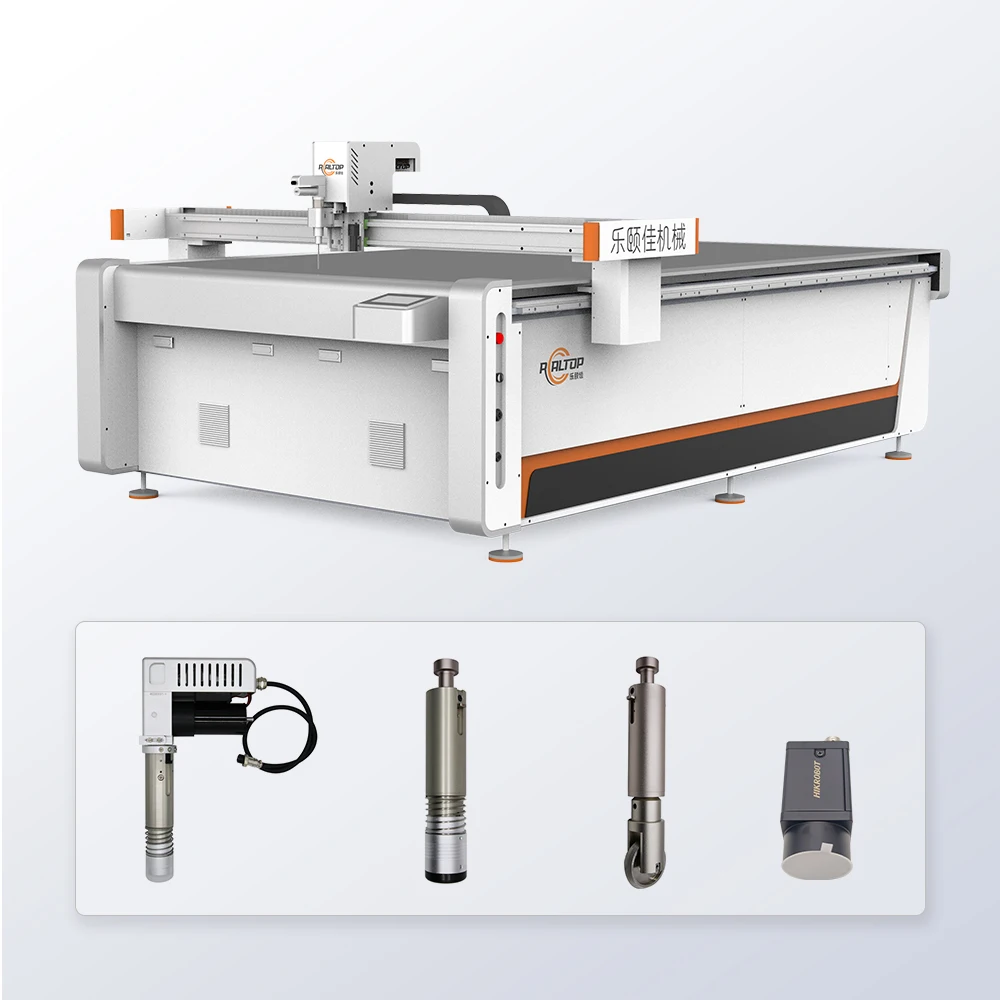
Configurable tool head systems — In-house design allows matching each oscillating knife, creasing wheel, and milling tool to the specific packaging substrate before the machine leaves the factory.
Technical Specifications
| Parameter | Value |
|---|---|
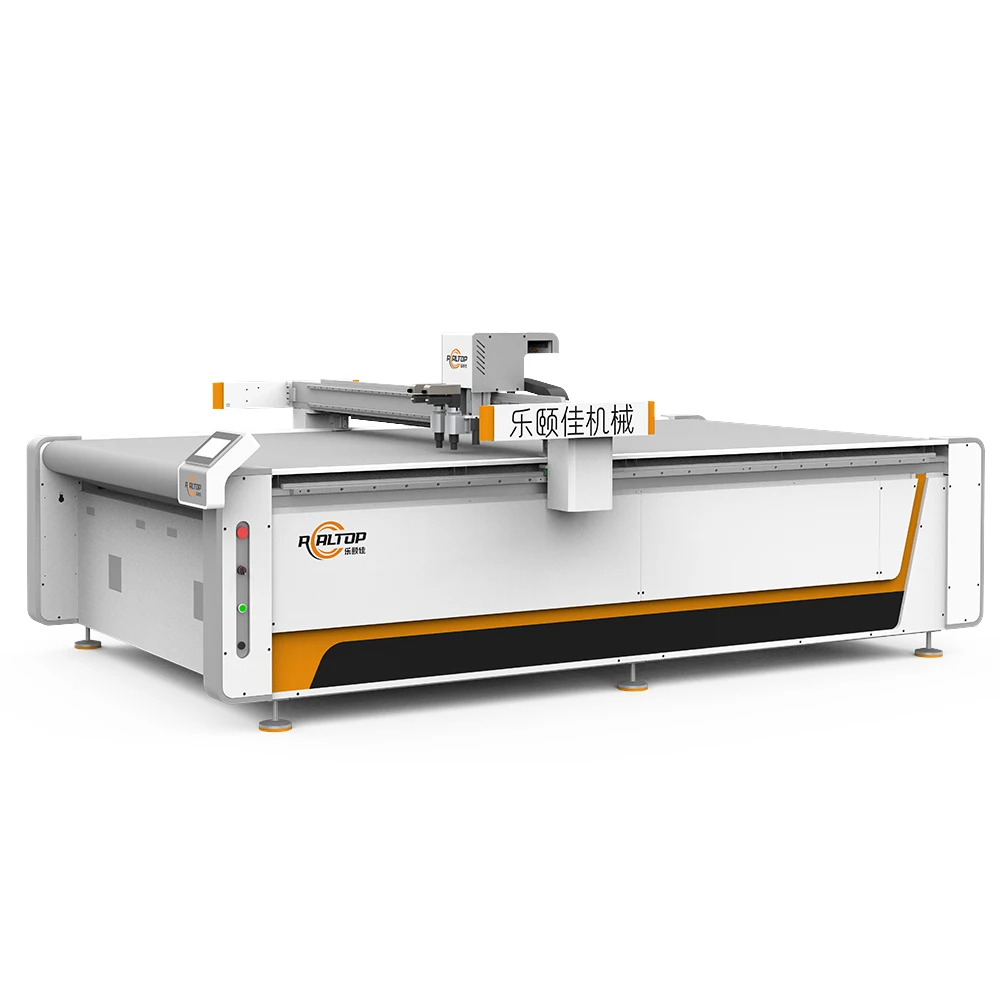
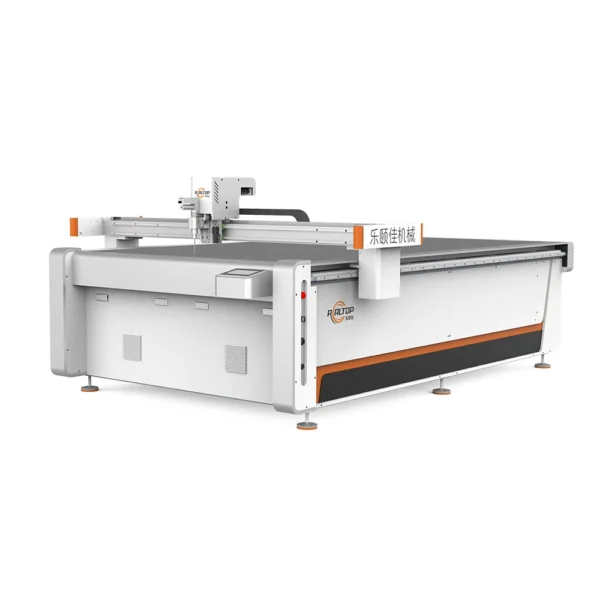
| Product Type | CNC Oscillating Knife Cutting Machine for Packaging |
| Working Area | 1600×2500 mm |
| Tool Head Options | Oscillating knife, Driven rotary knife, Creasing wheel, Kiss cutting tool, Pneumatic knife, Milling tool, V groove knife |
| Cutting Speed | 0–1500 mm/s |
| Cutting Thickness | ≤ 40 mm (basis not stated in source — depends on material density and structure) |
| Cutting Accuracy | ±0.1 mm |
| Vacuum Pump | 9 kW |
| Vacuum Table | Aluminum bellows vacuum table |
| Control System | PLC control panel |
| Servo Motors | Panasonic, Delta, or Dorna (rated or peak not specified in source) |
| Compatible File Formats | PLT, DXF, AI, PDF |
| Software | Dedicated packaging box structure design software |
| Voltage Options | 110V, 220V, 380V (frequency not specified in source) |
| Safety Devices | Infrared sensor device and emergency stop device |
| Overall Dimensions (L×W×H) | 3300×2100×1350 mm |
| Language Options | English, Russian, Italian, Chinese (special languages customizable) |
| Certification | CE |
Application Suitability
| Application | Material or Output |
|---|---|
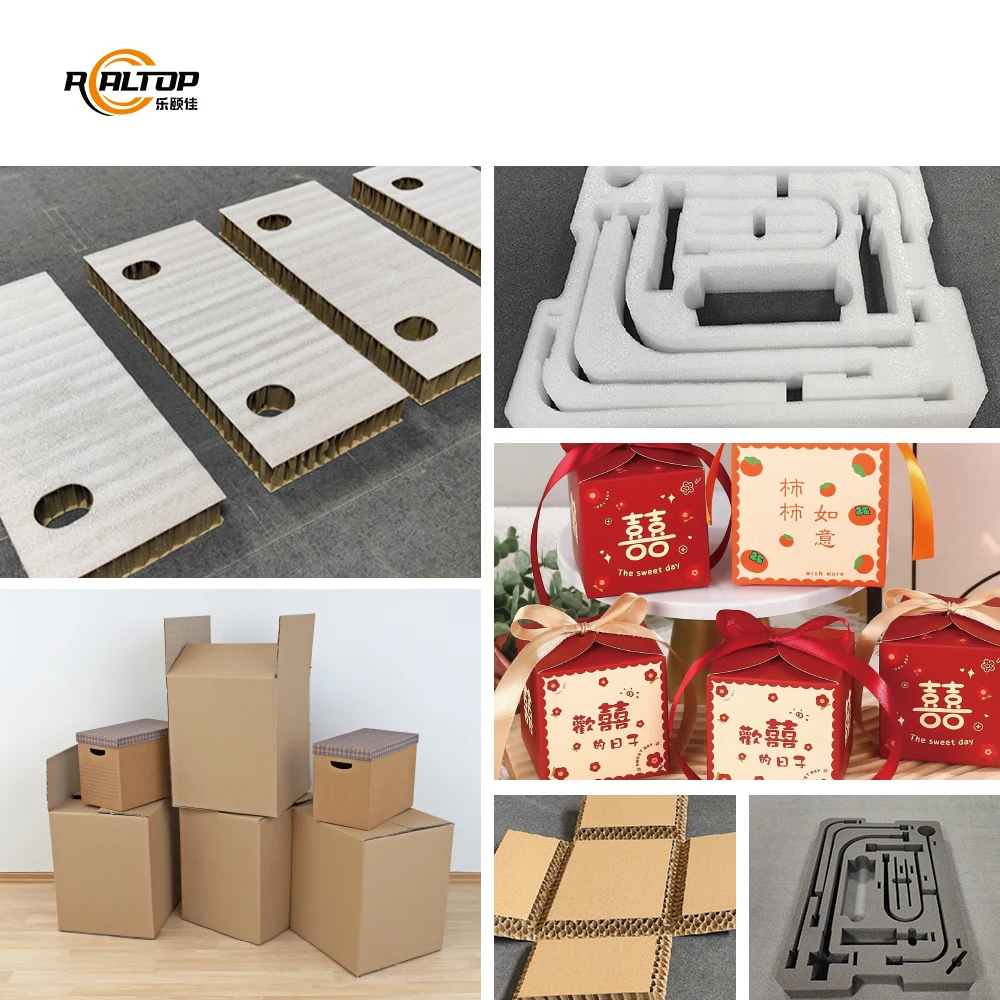
| Packaging sample making | Greyboard, cardstock, art paper, specialty paper without die-cut molds |
| Corrugated board conversion | E-flute, B-flute, BC-flute for custom box structures |
| Foam and insert packaging | EVA foam, EPE foam, PU foam for protective inner packaging |
| Soft packaging and lining | Velvet, fleece fabric, non-woven fabric for box interior lining |
| Rigid packaging components | Thin PVC, PET sheets, leather, synthetic leather for decorative covers |
| Gasket and composite cutting | Rubber mats and adhesive-backed composite materials |
Why "Working Area" Is the Wrong Starting Point for CNC Oscillating Knife Cutting Table Specifications
A 1600×2500 mm table only tells you what fits on the bed — not what the machine can actually cut.
I spent years on the procurement side before switching to equipment sales, and the most expensive mistakes I witnessed happened when buyers focused on table size first. One packaging shop ordered a flatbed cutter with the right footprint but a standard oscillating head. When they ran 1.5 mm greyboard for hardcover book cases, the edges came out frayed and fibrous. The material was technically within the thickness range, but the tool head had no rigidity for dense board stock. They had to retrofit a high-torque driven rotary knife and a V groove tool to get clean folds and cuts. The CNC oscillating knife cutting table specifications sheet must address material behavior, not just dimensional envelope [NEED_CITE: packaging substrate density and cutting force requirements].
Tool Head Selection Dictates Edge Quality on Packaging Substrates
The seven available tool heads on this CNC oscillating knife cutting table serve distinct purposes across the packaging workflow. The oscillating knife handles corrugated flutes and foam inserts where a vertical slicing action prevents crushing. The creasing wheel produces score lines on cardstock and greyboard without cutting through the face liner, preserving fold integrity for box assembly. The V groove knife removes a precise channel in rigid board, allowing sharp 90-degree folds for luxury packaging — a detail that separates a premium presentation box from one that looks hand-scored. Selecting the correct combination depends on the material stack and the structural demands of the finished package.
Vacuum Zoning and Hold-Down for Irregular Packaging Geometries
The aluminum bellows vacuum table paired with a 9 kW pump addresses a recurring issue in packaging cutting: small die-line segments lifting off the bed mid-cut. When a corrugated sheet is nested with dozens of small box blank profiles, unsealed vacuum zones let air bleed through unused areas, reducing suction where it matters. Proper zoning isolates the vacuum to the active cutting region so that thin art paper and heavy BC-flute board both stay flat under the knife. Without this, the cutting accuracy of ±0.1 mm degrades the moment a part shifts during the final pass [NEED_CITE: vacuum table zoning principles in flatbed digital cutting].
What the Specification Sheet Actually Means for Your Output
The 0–1500 mm/s cutting speed range is a mechanical envelope, not a production constant. On dense greyboard at 2 mm, the effective speed drops significantly to maintain edge quality, while single-face E-flute corrugated can run closer to the upper range. The PLC control panel manages acceleration curves so the knife does not deflect at direction changes — critical for tight radii on box lock tabs. File compatibility across PLT, DXF, AI, and PDF means most packaging CAD outputs import without conversion, though nesting efficiency depends on the dedicated packaging structure software’s ability to rotate and mirror profiles across the 1600×2500 mm working area. Servo drive selection — Panasonic, Delta, or Dorna — influences positional repeatability over long production runs.
The Cost of Skipping Material Trials Before Commitment
Buyers who approve a CNC oscillating knife cutting table without running their actual stock through the machine discover problems only after installation. A corrugated converter once specified a pneumatic knife for E-flute work based on catalogue descriptions. At their production speed, the blade chattered on double-wall sections, leaving a serrated edge that jammed their automated folder-gluer downstream. The tool swap took days; the scrap from the first week cost more than a pre-purchase sample test would have. Edge quality, crease depth, and vacuum hold-down all shift with material density and coating [NEED_CITE: substrate variability in packaging converting operations].
How This Machine Gets Built and Supported
The design team engineers both knife cutting and laser cutting platforms in-house, which means a packaging buyer can evaluate whether a CNC knife table or a CO2 laser better suits their substrate mix rather than being pushed toward a single technology. Tool head and vacuum table configurations are documented per material before production begins. Voltage, plug type, and control panel language are confirmed in writing so the machine matches the facility’s electrical infrastructure upon arrival. Every unit goes through a factory test on the buyer’s specified material, with a sample cutting report shipped alongside the machine. Documentation includes electrical schematics, software licence details, and a spare parts list matched to the configured tool heads.
Documentation & Verification
- Machine specification sheet listing configured tool heads and vacuum table zoning layout
- Electrical schematic with confirmed voltage and plug type for destination facility
- Sample cutting report produced on buyer’s own packaging board or foam stock
- Factory test record documenting cutting accuracy and edge quality before dispatch
- Software licence with confirmed file format compatibility for PLT, DXF, AI, and PDF workflows
- Spare parts list aligned to the specific oscillating knife, creasing wheel, or V groove tools shipped
Installation, Commissioning & Support
- Foundation must be level within tolerance to maintain ±0.1 mm cutting accuracy across the 1600×2500 mm bed
- Dedicated electrical circuit required matching confirmed 110V, 220V, or 380V supply and the 9 kW vacuum pump load
- Machine ships partially disassembled with overall 3300×2100×1350 mm dimensions guiding doorway and crane access
- First power-on includes PLC panel language verification and servo motor calibration per drive brand selected
- Operator training covers tool head changeover procedures and vacuum zone activation for different packaging substrates
- Wear parts schedule provided for oscillating knife blades, creasing wheels, and vacuum table bellows inspection
Preparing Your Inquiry
To evaluate whether this configuration fits your line, share the specific materials you run — board grade, flute type, foam density, or laminate construction — along with typical sheet dimensions and the daily volume of blanks or samples you produce. Note your facility’s voltage and frequency, the control language your operators require, and whether your design files originate from packaging CAD systems that export PLT, DXF, AI, or PDF. If your substrates include coated or adhesive-backed stocks, flag those so the sample cutting test covers the full range.
Frequently Asked Questions
Q: How is cutting thickness capability verified for my specific corrugated board or foam material?
A: The stated ≤ 40 mm capacity is a mechanical maximum, not a guarantee across all densities. We run your actual material — whether BC-flute corrugated, 2 mm greyboard, or 30 mm EVA foam — on the configured tool head and document edge quality, cutting force, and achievable speed in a sample cutting report before you commit to the order.
Q: Which tool head combination is correct for my packaging structure?
A: It depends on the structure. A rigid box with V-fold corners needs a V groove knife and oscillating knife; a corrugated shipping carton needs an oscillating knife and creasing wheel; foam inserts typically require only the oscillating knife. We specify the combination based on your actual die-line drawings and material stack before building the machine.
Q: How is vacuum table zoning configured to prevent small packaging parts from lifting?
A: The aluminum bellows table divides into zones that can be opened or closed based on the nesting layout. For small box blanks or gasket profiles, only the zones under the active cutting path remain open, concentrating the 9 kW pump’s suction where the knife is working and preventing air bleed through unused areas of the bed.
Q: Can the software import my existing packaging design files and nesting workflow?
A: The dedicated packaging structure design software imports PLT, DXF, AI, and PDF formats. Before order confirmation, we test your actual design files through the import and nesting process to verify that line weights, curve resolution, and layer assignments translate correctly to the cutting, creasing, and milling tool paths.
Q: What voltage, plug, and control language options are confirmed before shipment?
A: Voltage is configurable across 110V, 220V, and 380V options, and plug type is matched to your destination country standard. The PLC control panel language is set to English, Russian, Italian, or Chinese by default, with special language customization available. All three parameters are documented in the electrical schematic before the machine ships.


商品评价
Clear filtersThere are no reviews yet.