



Fast Shipping
Carrier information

20k products
Payment methods

24/7 Support
Unlimited help desk

2-day Delivery
Track or off orders
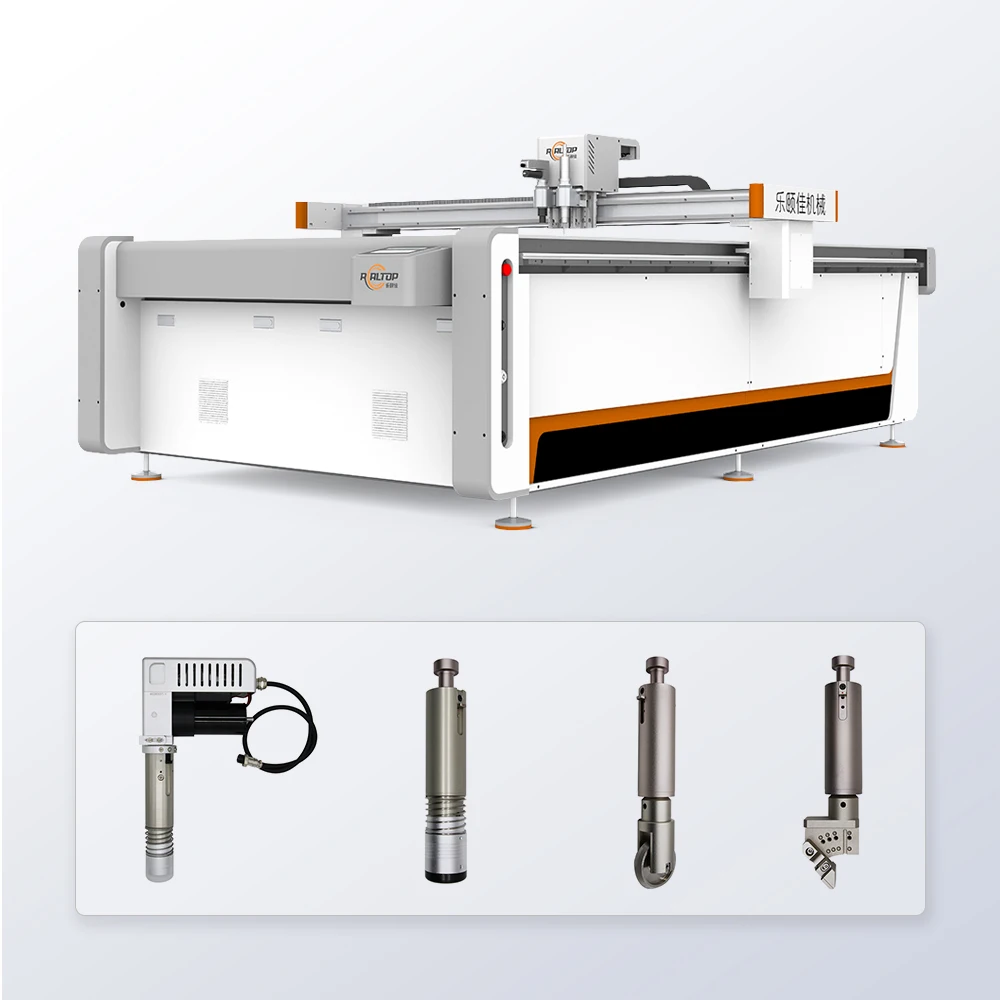
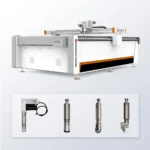
Custom tool head configuration — every oscillating knife, drag knife, creasing wheel and V-cutting setup is matched to your corrugated grade and flute profile before the order is confirmed, not guessed from a generic catalog page.
Technical Specifications
| Parameter | Value |
|---|---|
| Model | RT-D2516/RT-S2516 |
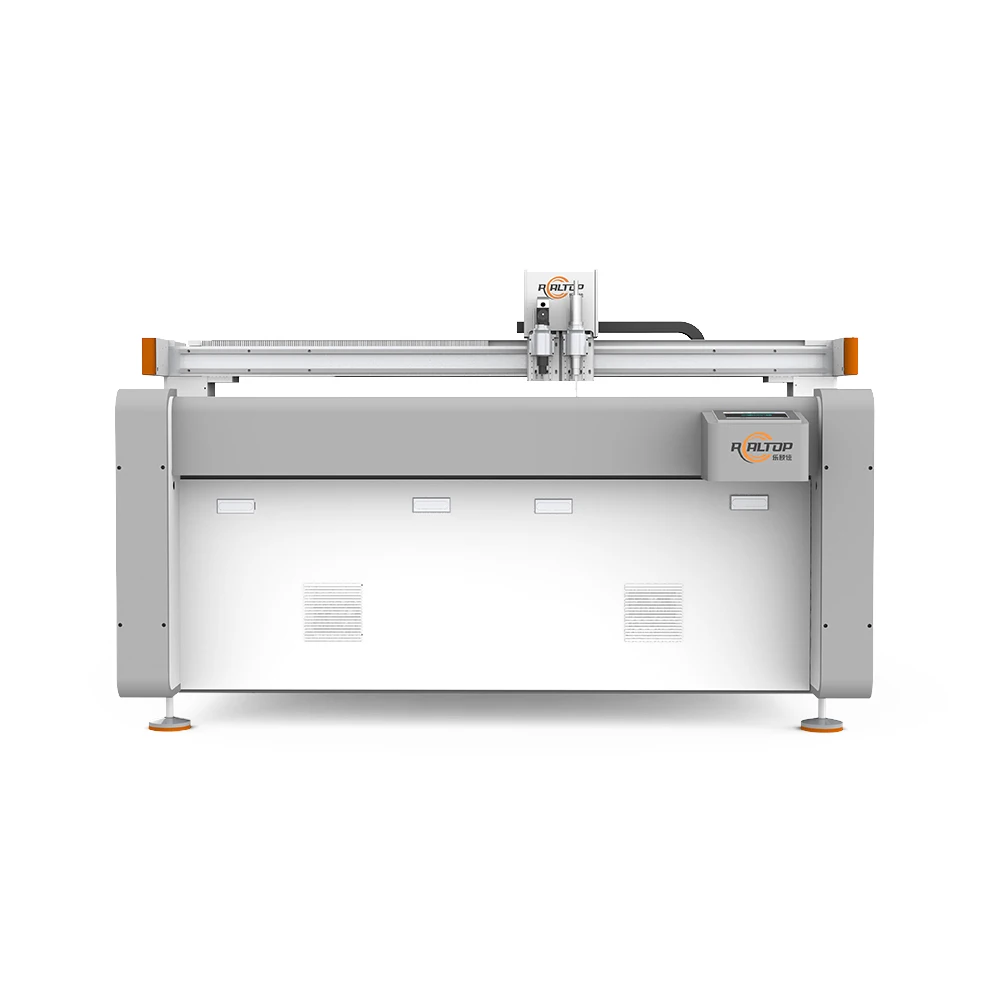
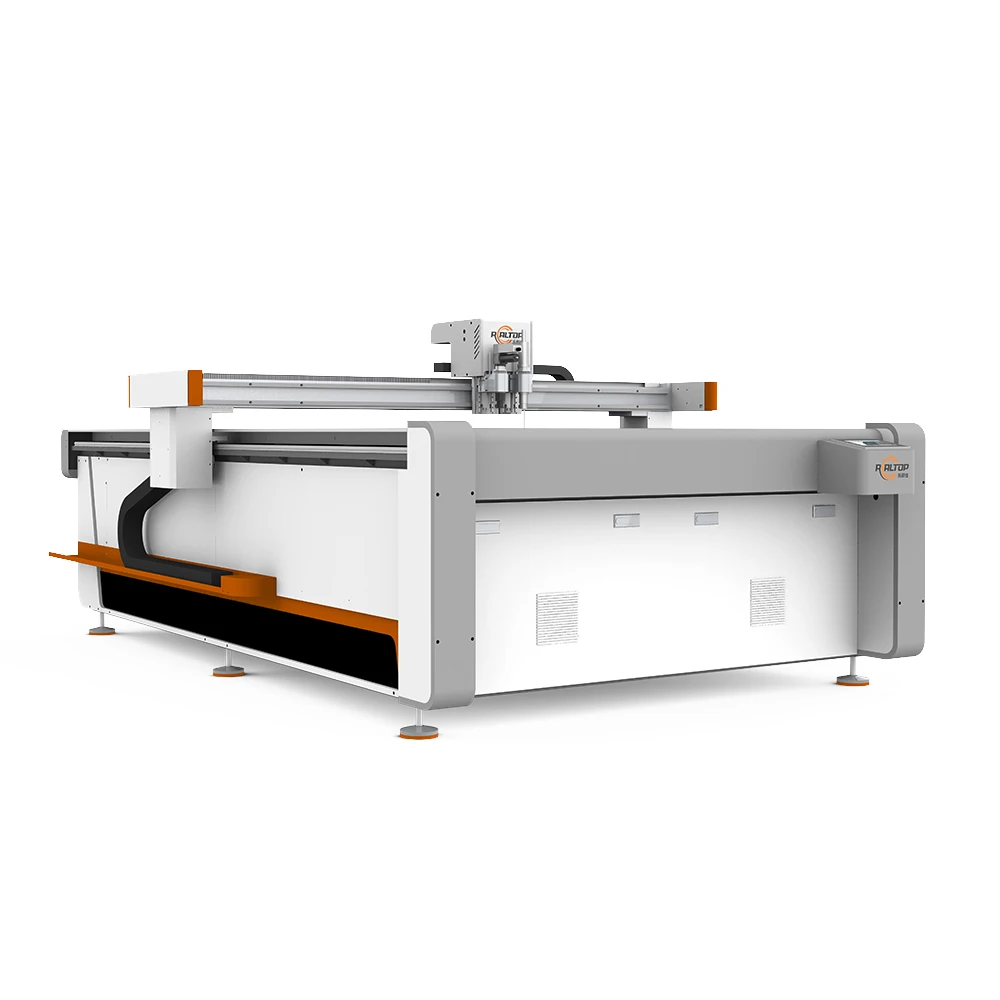
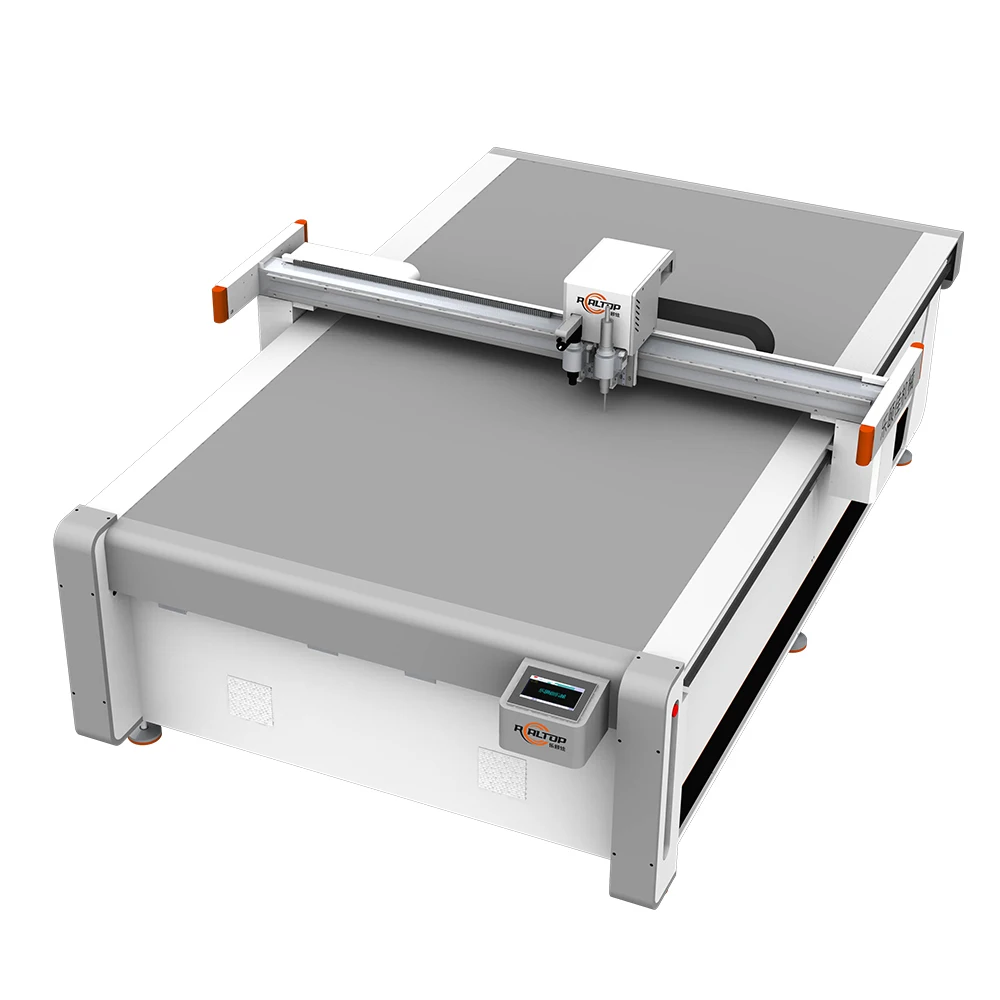
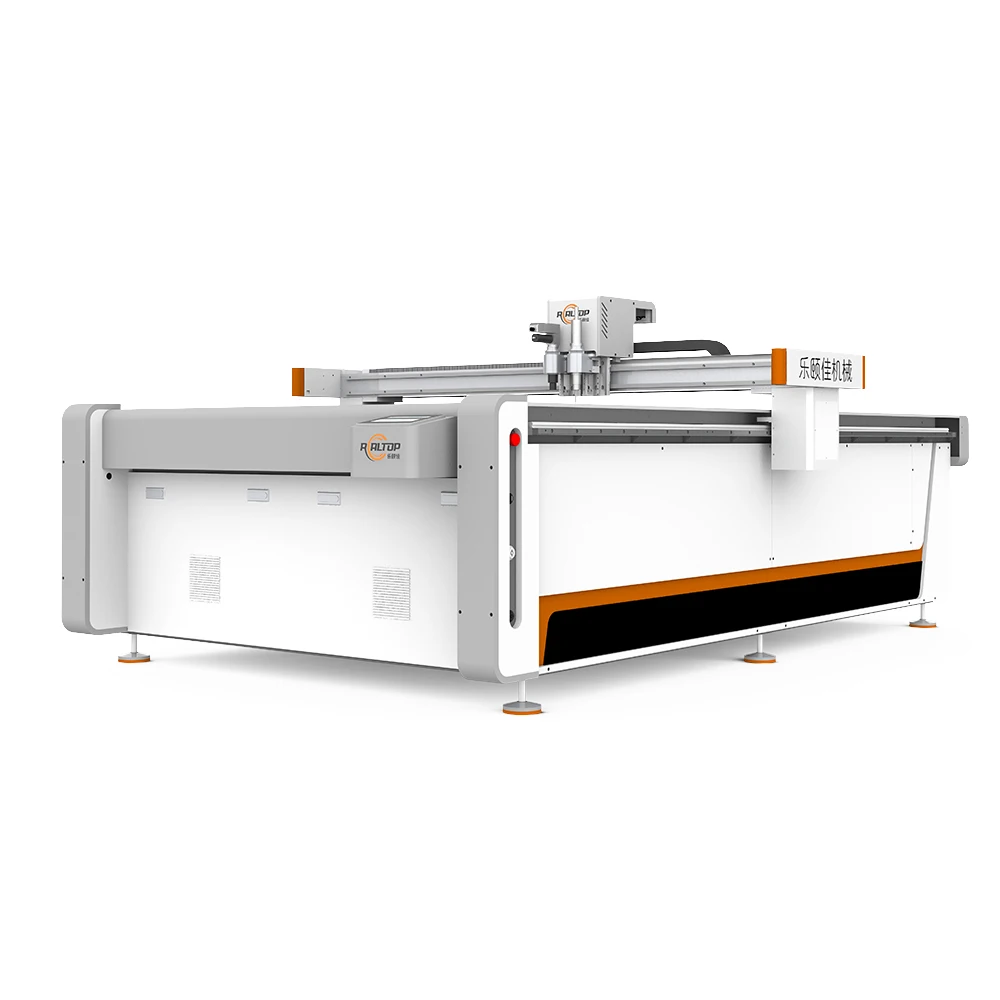
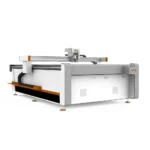
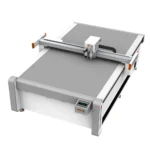
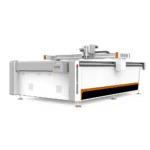
| Product Type | CNC Oscillating Knife Cutting Machine |
| Working Area | 1600 × 2500 mm |
| Machine Size | 3450 × 2300 × 1250 mm |
| Rated Power | 9 kW |
| Vacuum Pump | 7.5 kW |
| Translational Velocity | 800–2000 mm/s |
| Cutting Speed | 200–800 mm/s (varies with material type and thickness) |
| Cutting Thickness | Up to 100 mm (varies with material; basis to be confirmed) |
| Repeated Accuracy | ≤0.1 mm |
| Table Type | Flat working table; auto feeding table option |
| Vacuum Table Surface | Magnesium-aluminum alloy, PVDF powder spraying, anodic and hard oxidation |
| Servo Motor | Delta (Japan Panasonic optional) |
| Guide Rail | Taiwan Hiwin linear guide |
| Transmission | Digital servo motor, synchronous belt, ball screw |
| Conveyor Belt | Germany imported |
| Control Panel | Touch screen, multiple language supported |
| Software Compatibility | PLT, DXF, AI; auto typesetting |
| Voltage | 380V ± 10% |
| Safety Device | Infrared sensors |
| Tool Head Options | Oscillating knife, pneumatic knife, high-power vibrating knife, circular knife, V-cutting knife, drag knife, creasing wheel, dotted line knife, punching, brush |
| Visual Positioning Options | Small CCD camera mark point, panoramic camera recognition, projection positioning |
| Language Options | English, Russian, Italian, Chinese (special languages customizable) |
| Frame Construction | Thick-walled seamless steel, high-temperature tempering, CNC machining center finished |
| Instruction System | HP-GL compatible format |
Application Suitability
| Application | Material or Output |
|---|---|
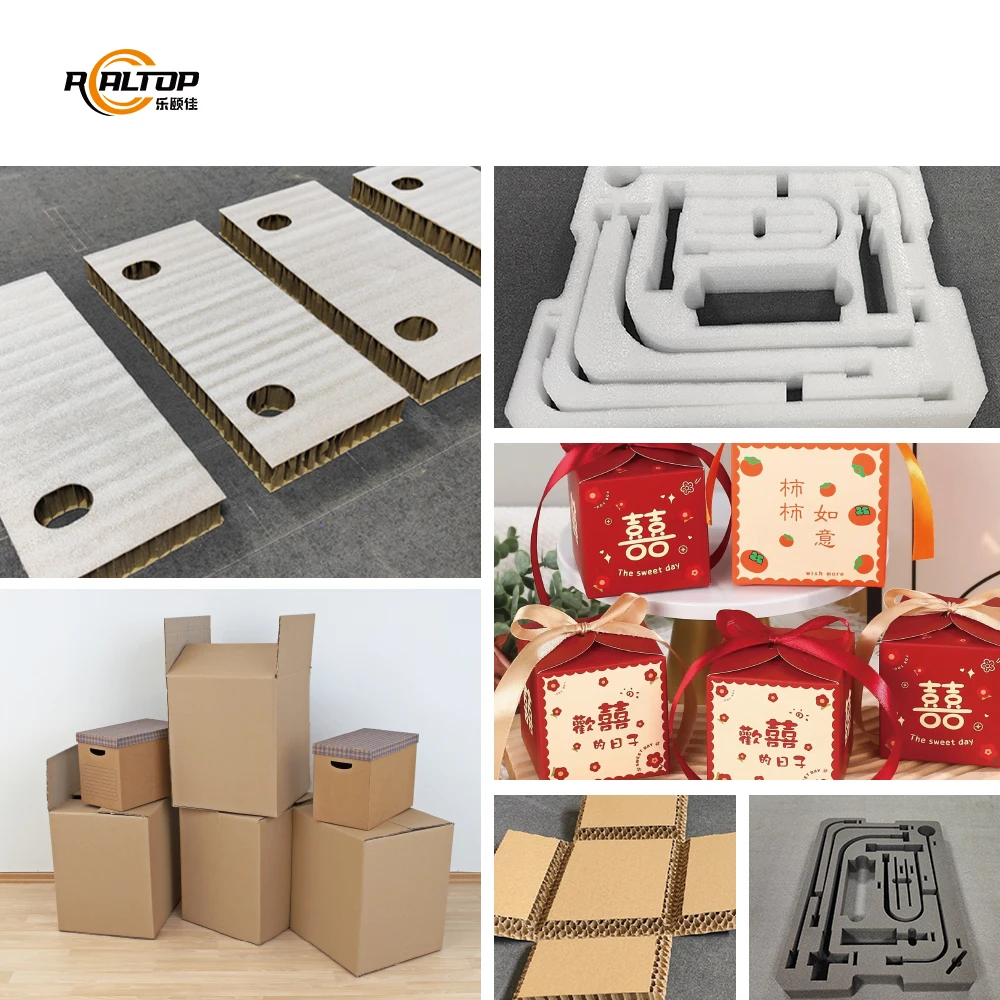
| Carton and packaging sample making | Corrugated cardboard, honeycomb cardboard, greyboard |
| Plastic packaging prototyping | PVC, PP, PE plastic box stock, sticker and film |
| Gasket and sealing fabrication | Rubber, PTFE, ETFE, fiberglass, composite sealing material |
| Foam and cushion converting | PU, EVA, XPE, sponge, foam board |
| Leather and footwear cutting | Natural leather, synthetic leather, PU, shoe material |
| Textile and soft furnishing | Fabric, cloth, non-woven fabric, carpet, luggage material |
| Graphic and signage finishing | Sticker, film, printed corrugated display boards |
Why Knife Selection Matters More Than Working Area on a CNC Oscillating Knife Cutting Machine
A 1600 × 2500 mm bed only tells you the sheet size — it says nothing about whether the knife will hold an edge through a double-wall flute at production speed.
I spent years on the assembly floor before moving into technical sales here in Jinan, and the most expensive mistake I have watched a buyer make was ordering purely on table dimensions. A carton sample shop running high-GSM corrugated found the standard oscillating head chattered through the flutes, leaving crushed edges that failed their client’s fold tests. The machine was large enough. The tool head was wrong for the density [NEED_CITE: cutting force requirements for different flute profiles and board grades]. Once we switched them to a high-power vibrating knife with adjusted stroke frequency, the edge quality came in line — but that swap cost them weeks of rework they could have avoided by sending sample sheets first.
Tool Head Selection by Board Grade and Flute Type
An oscillating knife handles single-wall and micro-flute corrugated cleanly at standard stroke rates, but double-wall and triple-wall grades demand a high-power vibrating knife with deeper stroke amplitude to shear through the liner-flute-liner sandwich without crushing the structure. Drag knives work well on thinner card stock and sticker films where a full oscillating stroke would over-penetrate. Creasing wheels score fold lines without cutting through, and V-cutting knives open slots for rigid box construction. The CNC oscillating knife cutting machine specifications you compare should list which heads are included and which are optional — a single head on paper becomes a bottleneck when your order mix shifts from E-flute to BC-flute in the same shift.
Vacuum Table Zoning and Small-Part Hold-Down
The magnesium-aluminum alloy table surface with PVDF coating provides flatness across the 1600 × 2500 mm area, but flatness alone does not keep a small gasket blank or a narrow carton flap from lifting when the knife exits a cut. Zoned vacuum channels let the operator pull suction only in the active cutting region, concentrating holding force under the sheet. For nested layouts mixing large panels and small offcuts, the zone layout determines whether the operator needs to tab parts manually or trust the vacuum to hold everything until the head finishes its path [NEED_CITE: vacuum hold-down principles for flatbed digital cutting].
Reading the Numbers That Actually Affect Your Floor
Repeated accuracy at ≤0.1 mm means registration marks printed on corrugated will align with cut paths across a full sheet — important when CCD contour recognition tracks those marks at translational speeds up to 2000 mm/s. The 7.5 kW vacuum pump must run on a dedicated circuit separate from the 9 kW cutting system to avoid voltage dips during compressor start-up, which would shift servo positioning mid-cut. The Taiwan Hiwin linear guide and ball screw transmission maintain path accuracy over long production runs where belt-only systems drift as tension changes with temperature.
The Cost of Skipping the Sample Cut
When a buyer confirms specs by brochure and skips the sample cut, the machine arrives configured for a generic material profile. If their actual stock is denser, harder, or has a coating that increases drag, the knife dulls faster than expected and edge quality degrades partway through the shift. The operator then slows feed rate to compensate, and daily output drops below the plan without any mechanical fault to report — just a mismatch between the tool head selected at order and the material on the table [NEED_CITE: material hardness and knife wear correlation in oscillating cutting].
What You Get When Configuration Comes Before the Invoice
In-house design covers both knife and laser cutting technology under one roof, so if your material stack includes items that need edge sealing rather than shearing, the conversation starts with the material, not with pushing one machine type. Every tool head and table zone layout is documented against your specific material list before the order is placed. CCD camera positioning is validated on your actual printed artwork, not on a standard test pattern. Voltage, plug type and control language are confirmed for your destination market so the machine powers on correctly the day it arrives. Software file format compatibility — PLT, DXF, AI — is verified against your existing nesting workflow, and a sample cutting report on your own material ships with the documentation.
Documentation & Verification
- Machine specification sheet listing confirmed tool heads for your material profile
- Electrical schematic with voltage and plug type matched to destination market
- Sample cutting report run on buyer-supplied corrugated and gasket stock
- Tool head and vacuum zone configuration list tied to sheet size and part geometry
- Software licence note confirming PLT, DXF, AI import compatibility
- Factory test record documenting repeated accuracy and cut edge quality before dispatch
Installation, Commissioning & Support
- 3450 × 2300 mm footprint requires level concrete floor with clearance for auto-feeding conveyor
- Dedicated 380V ± 10% circuit for the 9 kW system plus separate run for 7.5 kW vacuum pump
- Touch screen control panel configured in confirmed language before crating
- First-run calibration of CCD mark recognition on buyer’s printed layout at speed
- Oscillating knife and creasing wheel setup verified against buyer’s flute range
- Spare knife blades and wear parts list provided for first six months of operation
What to Include in Your Inquiry
Send the specific corrugated flute types and board grades you run most often, along with typical sheet dimensions and whether you need creasing, slotting or through-cutting on the same machine. Include your facility voltage and frequency, preferred control language, and the nesting or design software you currently use so we can confirm file import compatibility. If your artwork includes printed registration marks, send a sample print so we can validate CCD tracking at your target cutting speed before quoting the configuration.
Frequently Asked Questions
Q: How do I know which tool head fits my corrugated grade and flute type?
A: Send a sample of your most demanding board — double-wall, coated stock, or high-GSM honeycomb — and we run a test cut with oscillating, high-power vibrating and drag knife heads to compare edge quality and speed. The configuration that passes your fold and crush test is what goes into the build sheet.
Q: Will the software import files from my existing packaging design system?
A: The auto typesetting software accepts PLT, DXF and AI formats natively. Before order confirmation, we test your actual design files through the nesting workflow to verify compatibility, including layer recognition for separate cut and crease paths.
Q: How does vacuum zoning prevent small parts from lifting during cutting?
A: The magnesium-aluminum table is divided into selectable zones. The operator activates only the zones under the current cutting area, concentrating suction on smaller blanks and narrow flaps that would otherwise float on a full-table vacuum field.
Q: Can CCD contour recognition keep up on printed corrugated at production speed?
A: Both small CCD mark-point and panoramic camera options are available. We validate recognition on your actual printed sheet at the translational speed you plan to run, confirming the camera tracks registration marks without path drift or missed contours.
Q: What voltage and control language options are confirmed before shipment?
A: Standard configuration is 380V ± 10%, but plug type and frequency must match your local supply. Control panel language — English, Russian, Italian, Chinese or a custom option — is locked in before assembly so the machine arrives ready for your operators.


商品评价
Clear filtersThere are no reviews yet.