


Fast Shipping
Carrier information

20k products
Payment methods

24/7 Support
Unlimited help desk

2-day Delivery
Track or off orders
Knife and Tool Head Matching — Our in-house design team configures the oscillating knife, drag knife, or creasing wheel based on your actual corrugated grade and flute profile, not just generic board thickness.
Technical Specifications
| Parameter | Value |
|---|---|
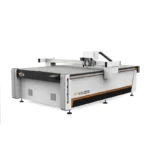
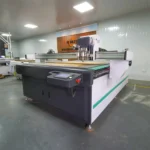
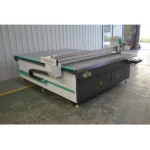
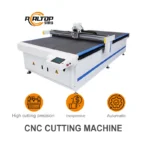
| Product Type | CNC Oscillating Knife Cutting Machine |
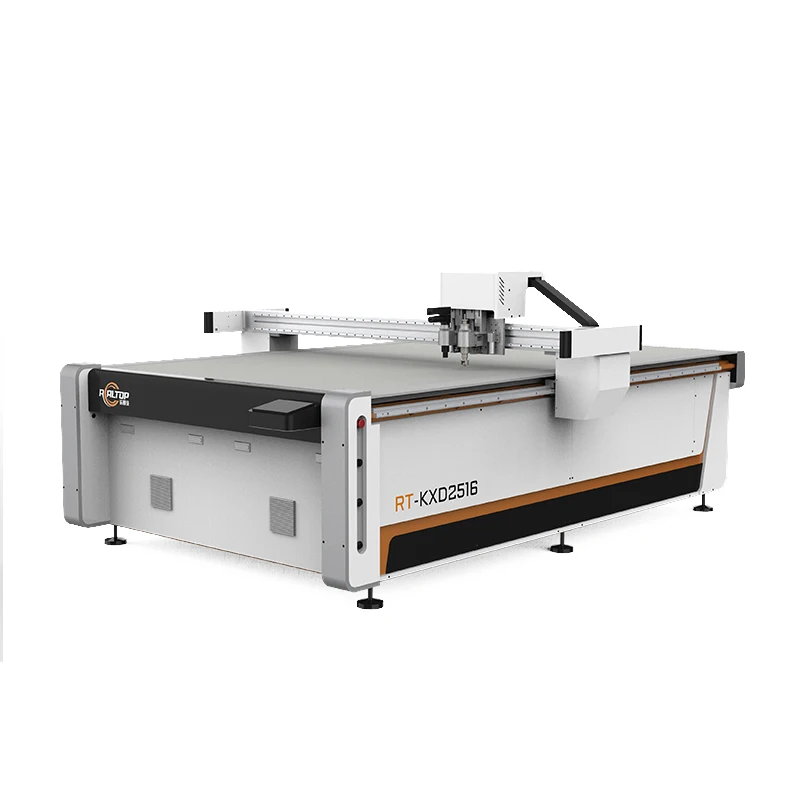
| Model | RT-D2516/RT-S2516 |
| Working Area | 1600×2500 mm |
| Machine Dimensions | 3450×2300×1250 mm |
| Rated Power | 9 kW |
| Voltage | 380V ±10% |
| Translational Velocity | 800–2000 mm/s |
| Repeated Positioning Accuracy | ≤0.1 mm |
| Vacuum Pump | 7.5 kW |
| Transmission System | Digital servo motor, linear guide, synchronous belt, ball screw |
| Guide Rail | Taiwan Hiwin linear rail |
| Servo Motor | Delta servo motor |
| Conveyor Belt | Germany-imported conveyor belt |
| Safety Device | Infrared sensors |
| Tool Head Options | Oscillating knife, drag knife, creasing wheel |
| Vision System | CCD camera contour recognition |
| Control System Language | English, Russian, Italian, Chinese (custom languages available) |
| Instruction Format | HP-GL compatible |
| Standards | CE compliant |
Application Suitability
| Application | Material or Output |
|---|---|
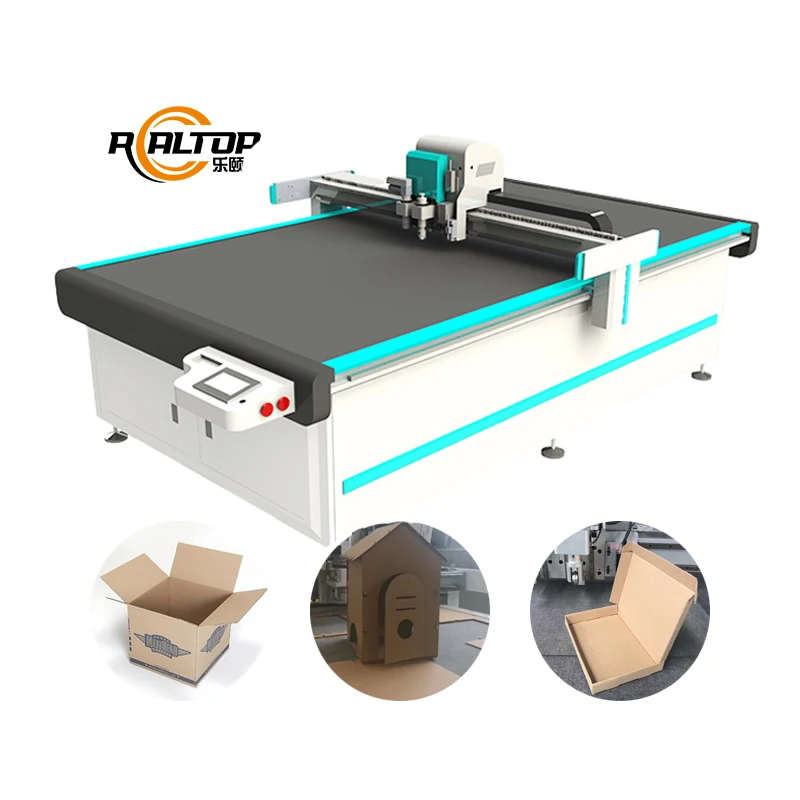
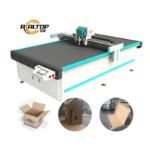
| Corrugated carton sample making | Single, double, and triple-wall corrugated board |
| Large electrical appliance packaging | Heavy-duty honeycomb cardboard and thick greyboard |
| Express paper box and e-commerce packaging | Light to medium-weight cardboard and micro-flute |
| Snack food and retail packaging | Coated board, kraft paper, and laminated sheets |
| High-end gift box production | Rigid box board, greyboard with creasing operations |
| Sticker and label contour cutting | Self-adhesive vinyl, paper labels, and printed decals |
| Billboard and signage cutting | Foam board, KT board, and corrugated plastic |
| Automotive gasket fabrication | Rubber, silicone, and composite gasket materials |
Why Tool Head Selection Dictates Edge Quality on Corrugated Board
The wrong tool head on corrugated cardboard produces crushed flutes and ragged edges, regardless of machine speed.
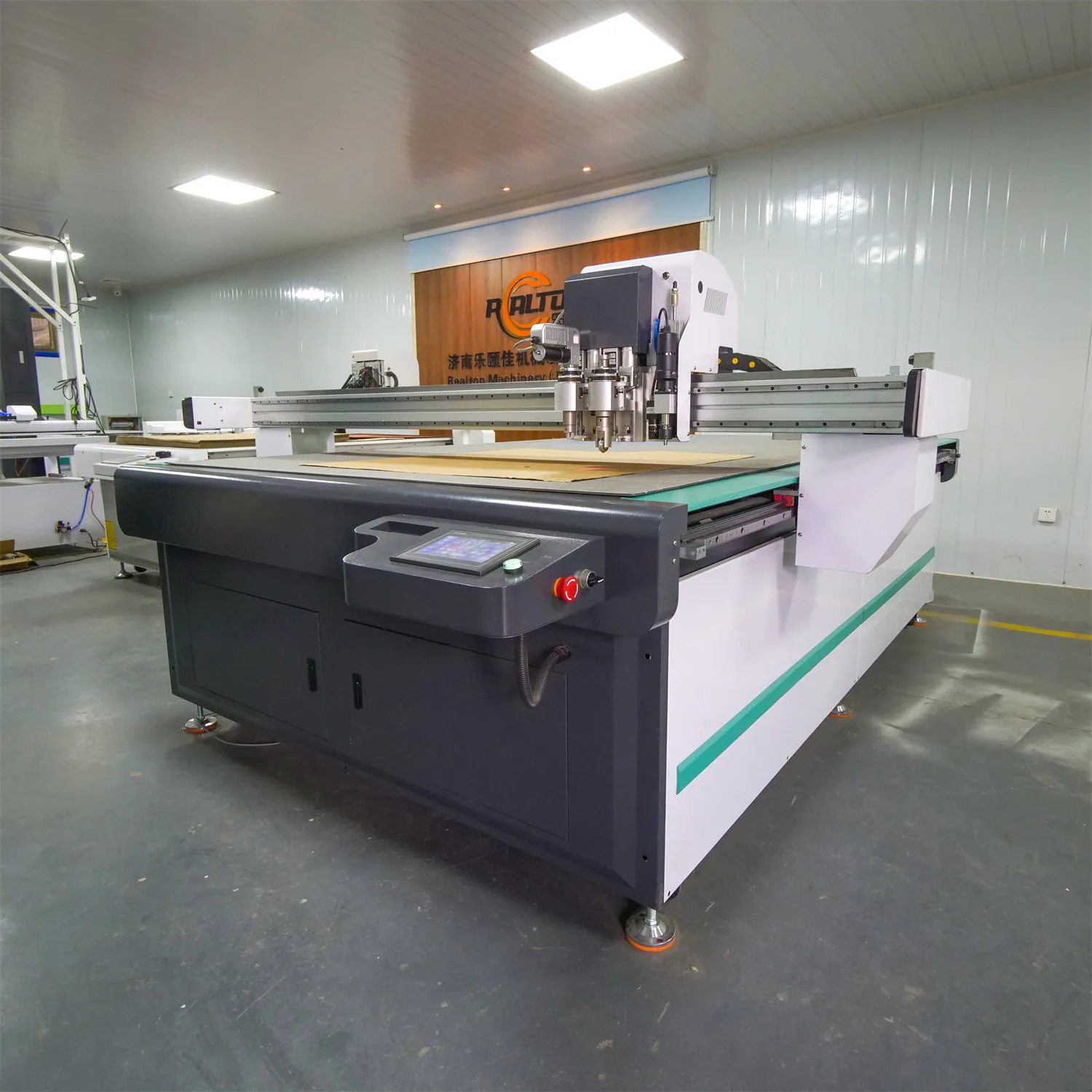
I once walked into a packaging workshop where a CNC Oscillating Knife Cutting Machine specifications sheet promised clean cuts on B-flute board, but the shop floor told a different story. Every sheet showed compressed edges and torn liners because the drag knife was doing the work an oscillating knife should have handled. The operator kept slowing the feed rate to compensate, which only deepened the crush marks [NEED_CITE: oscillating knife mechanics on fibrous composite board structures]. When the tool head is mismatched to the flute profile, no amount of parameter tuning fixes the edge.
Matching Blade Frequency to Flute Profile
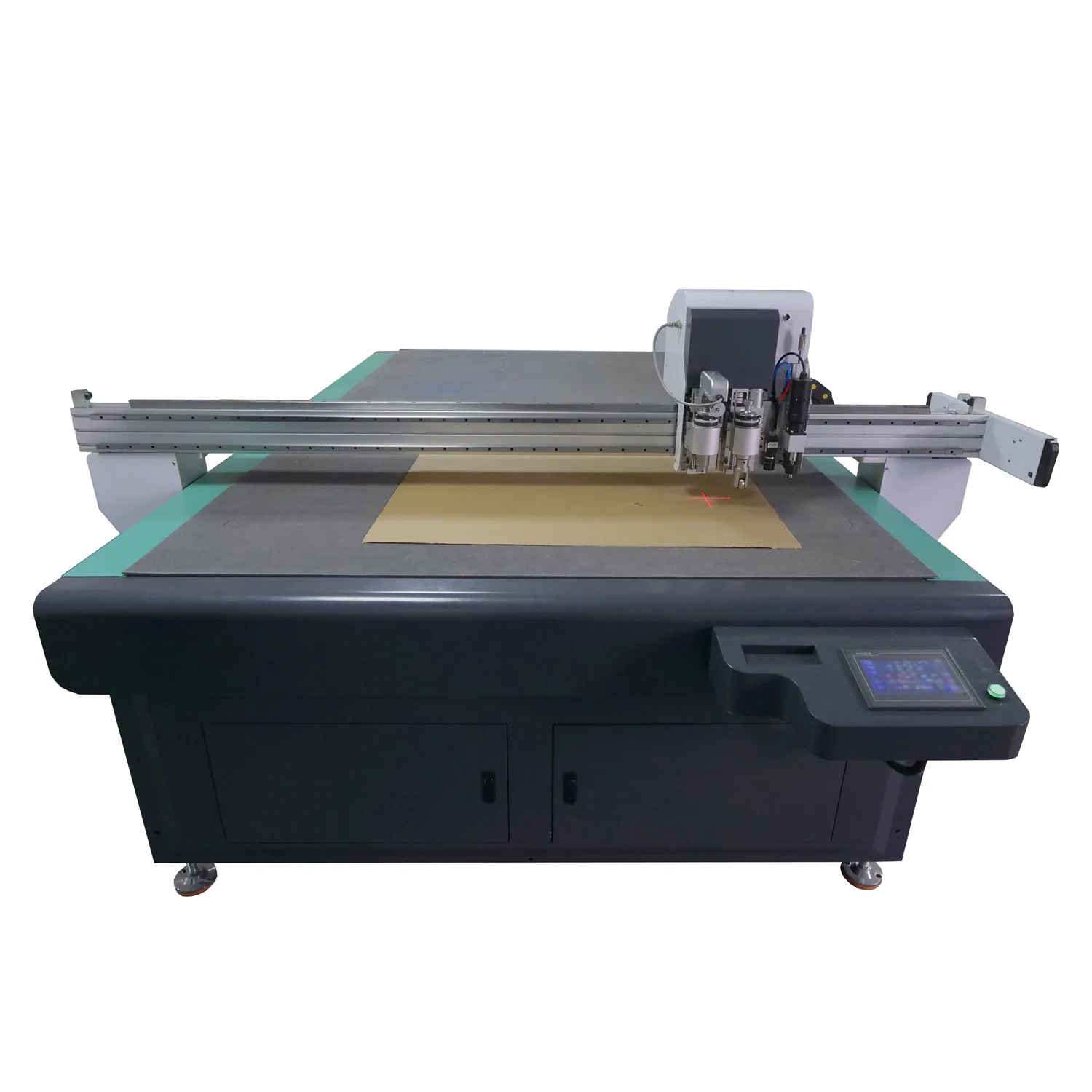
The Swiss-imported oscillating knife on this CNC Oscillating Knife Cutting Machine delivers vibration full cutting and half cutting, allowing the blade to slice through corrugated flutes rather than compress them. On single-wall and double-wall board, the high-frequency vibration separates fibers cleanly at the cut line. For thinner materials like stickers and labels, switching to the drag knife eliminates vibration entirely, producing sharp contour turns on intricate die-cut shapes without tearing the release liner.
CCD Camera Contour Recognition on Printed Sheets
When cutting pre-printed stickers or registered carton artwork, the CCD camera scans printed marks and adjusts the cut path in real time. This matters at production speed, where sheet feed variation and print registration drift would otherwise push cut lines outside the design boundary. The system tracks fiducial marks across the 1600×2500 mm working area, correcting for material stretch and skew that occur during printing and lamination [NEED_CITE: print-to-cut registration tolerance in digital finishing workflows].
Reading the Drive and Motion Specifications
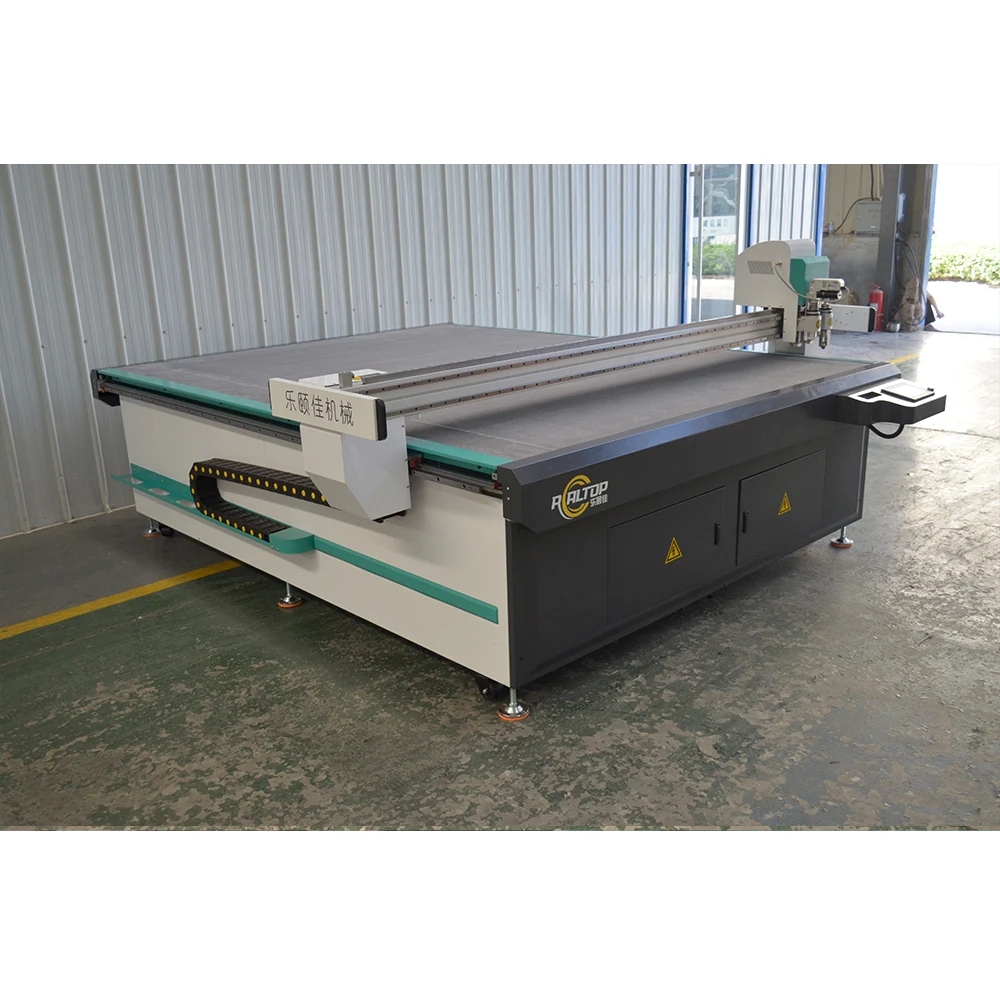
The Delta servo motor paired with Taiwan Hiwin linear rails delivers ≤0.1 mm repeated positioning accuracy, which is critical when cutting nested carton patterns where a half-millimeter drift accumulates across a full sheet. The synchronous belt and ball screw transmission converts servo pulses into linear motion without the backlash common in rack-and-pinion setups of this class. Translational velocity between 800–2000 mm/s gives operators a usable range — slower for intricate crease-and-cut combinations on gift boxes, faster for straight-line carton blanking on standard corrugated sheets. The 7.5 kW vacuum pump holds board flat against the aluminum honeycomb table surface, preventing the lift that causes blade drag and dimensional error on thin or warped stock.
The Hidden Cost of Skipping the Sample Cut
Some buyers specify a working area and assume the tool head is standard. On this machine, the multifunctional head supports oscillating knife, drag knife, and creasing wheel — but each serves a different packaging material. Running creasing operations on coated gift box board with an oscillating knife instead of the creasing wheel scores the surface rather than folding it cleanly, weakening the hinge line. Similarly, using full-cut oscillation on self-adhesive sticker sheets cuts through the backing paper, destroying the matrix stripping process downstream [NEED_CITE: matrix stripping failure causes in label converting]. These mismatches rarely show up in the quotation stage; they surface only when the first production run yields scrap.
Why Buyers Source This Configuration Here
Realtop operates an in-house design and production facility covering both knife and laser cutting technologies, which means the cutting method is matched to the packaging material rather than forced into a single platform. Tool head and table configurations are specified per material type and daily volume before the order is confirmed. Sample cutting on the buyer’s own corrugated board or sticker stock is completed before commitment, with a written report detailing edge quality, cut depth, and cycle parameters. Voltage, plug type, and control language are locked in during the specification confirmation stage, avoiding the arrival-day surprises that delay commissioning. The professional carton nesting software supports multiple file format imports, reducing the gap between the buyer’s existing design workflow and the machine’s input requirements [NEED_CITE: CNC cutting software file format compatibility standards].
Documentation & Verification
- Machine specification sheet listing selected tool heads and vacuum table zoning for your board thickness range
- Electrical schematic with 380V ±10% circuit diagram and dedicated breaker requirements
- Sample cutting report on your specific corrugated grade, including edge quality photographs
- Software licence documentation with confirmed file format compatibility for your design software
- Factory test record documenting positioning accuracy and vacuum hold-down performance before dispatch
- Packing photographs showing crating, blocking, and tool head protection for ocean or air freight
Installation, Commissioning & Support
- Requires a level concrete floor supporting the 3450×2300×1250 mm footprint with clearance for sheet loading on all sides
- 380V ±10% three-phase supply with dedicated circuit for the 9 kW rated power and 7.5 kW vacuum pump combined load
- Assembled frame arrives with conveyor belt and vacuum table pre-mounted; tool heads calibrated during on-site commissioning
- Delta servo parameters and CCD camera registration tuned to your specific corrugated board and printed stock during first run
- Operator training covers tool head changeover between oscillating knife, drag knife, and creasing wheel for mixed-material production
- Spare oscillating knife blades and drag knife tips included; vacuum pump filter and conveyor belt tension checked at first service interval
Preparing Your Inquiry
Share the specific corrugated flute profile, board thickness, and daily sheet volume so the tool head and vacuum zoning can be configured before quotation. Confirm your local voltage and frequency, preferred control language, and whether your design files originate from CAD or vector illustration software. If you produce both carton blanks and printed stickers, let us know so the CCD camera and creasing wheel are included in the initial configuration rather than added as a field retrofit.
Frequently Asked Questions
Q: Which tool head should I use for B-flute corrugated versus rigid gift box board?
A: B-flute corrugated requires the oscillating knife to slice through flutes without crushing. Rigid greyboard used for gift boxes typically uses the creasing wheel for fold lines and the oscillating knife for outer contours. The RT-D2516/RT-S2516 multifunctional head switches between these tools within the same job file, so one machine handles both packaging types without manual tool changes between sheets.
Q: Can the CCD camera track printed marks at full production speed?
A: The CCD camera reads fiducial marks and adjusts the cut path dynamically as the material advances across the conveyor. Registration accuracy depends on print mark contrast and consistent lighting, not just camera resolution. Before ordering, we run your printed sticker or carton sheet through a sample cut to confirm the camera tracks your specific print registration marks at the target feed rate.
Q: How does vacuum table zoning prevent small packaging parts from lifting?
A: The 7.5 kW vacuum pump feeds zoned sections of the aluminum honeycomb table. For large carton blanks, the full table area activates. For small die-cut shapes or narrow stickers, only the zones directly under the material engage, maintaining sufficient hold-down force without wasting pump capacity. Incorrect zoning allows thin material to lift at the cut edge, causing blade deflection and dimensional inaccuracy.
Q: Will the nesting software accept my existing carton design files?
A: The professional carton nested software supports multiple file import formats and generates HP-GL compatible output. Before order confirmation, we verify compatibility with your specific design software version and file export settings. If your workflow uses proprietary nesting logic, the software licence and file format compatibility note documents exactly which import paths are supported and any required file preparation steps.
Q: What electrical and language preparations are needed before shipment?
A: The machine operates on 380V ±10% three-phase power with a combined load covering both the 9 kW machine system and the 7.5 kW vacuum pump. Voltage, plug type, and control system language — available in English, Russian, Italian, Chinese, or custom languages — are confirmed in writing before production begins. This prevents the common situation where a machine arrives with the wrong plug or an interface the operator cannot read.


商品评价
Clear filtersThere are no reviews yet.