




Fast Shipping
Carrier information

20k products
Payment methods

24/7 Support
Unlimited help desk

2-day Delivery
Track or off orders
Specified Per Material Profile — the tool head, vacuum zoning and feed system are matched to your composite rubber thickness and density before the order is locked, not assumed from a catalogue working area.
Technical Specifications
| Parameter | Value |
|---|---|
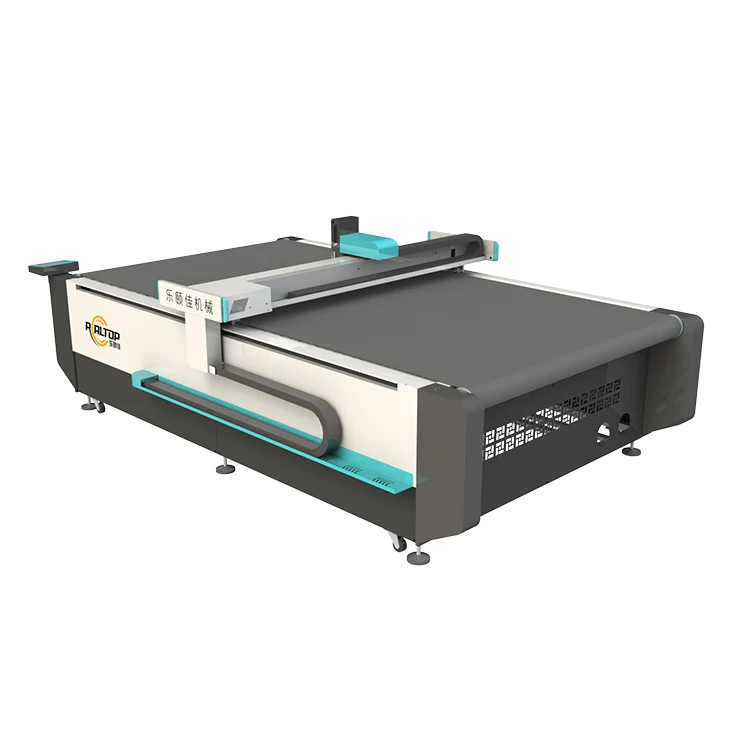
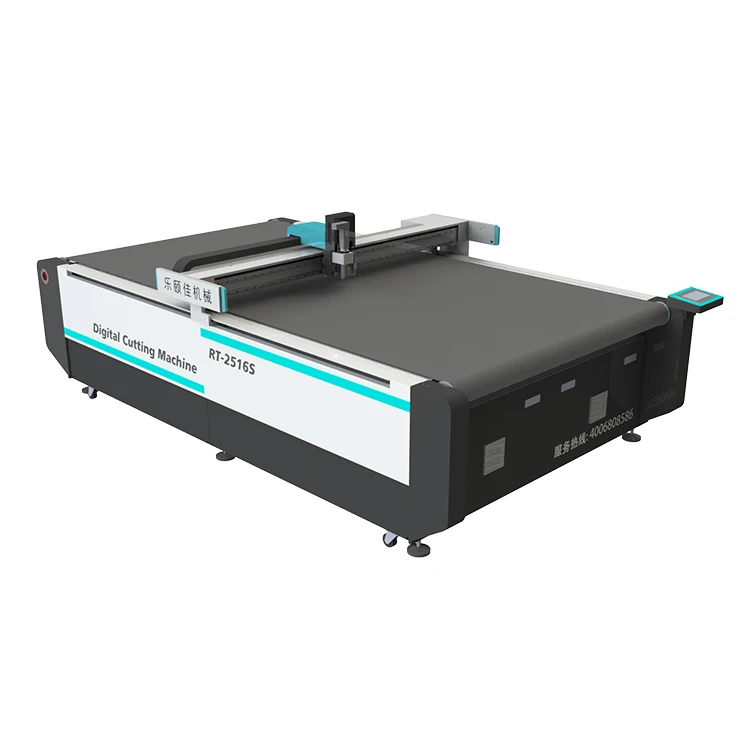
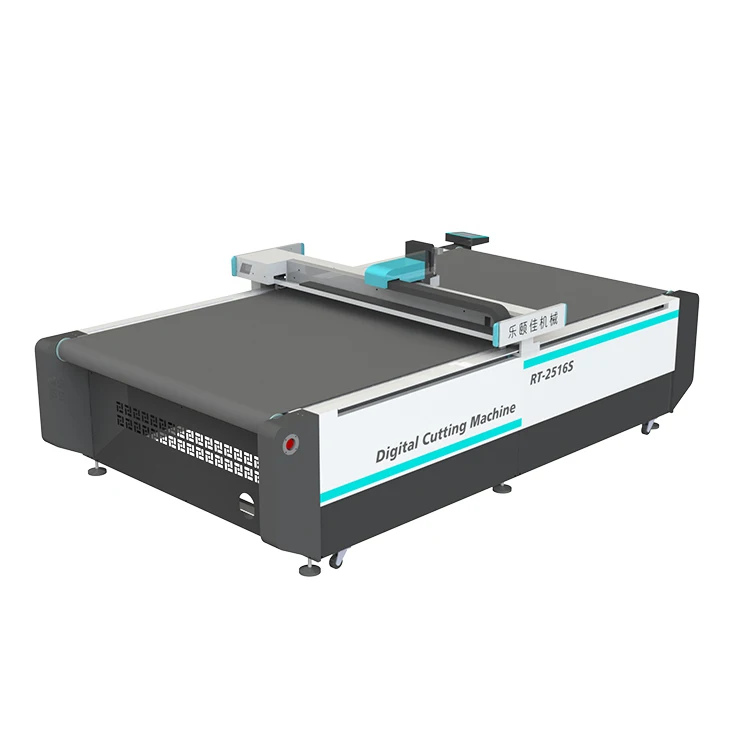
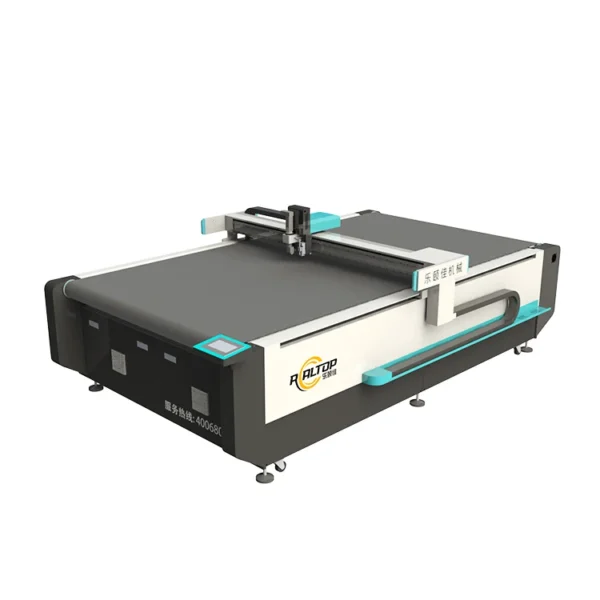
| Product Type | CNC Oscillating Knife Cutting Machine |
| Model | RT-D2516/RT-S2516 |
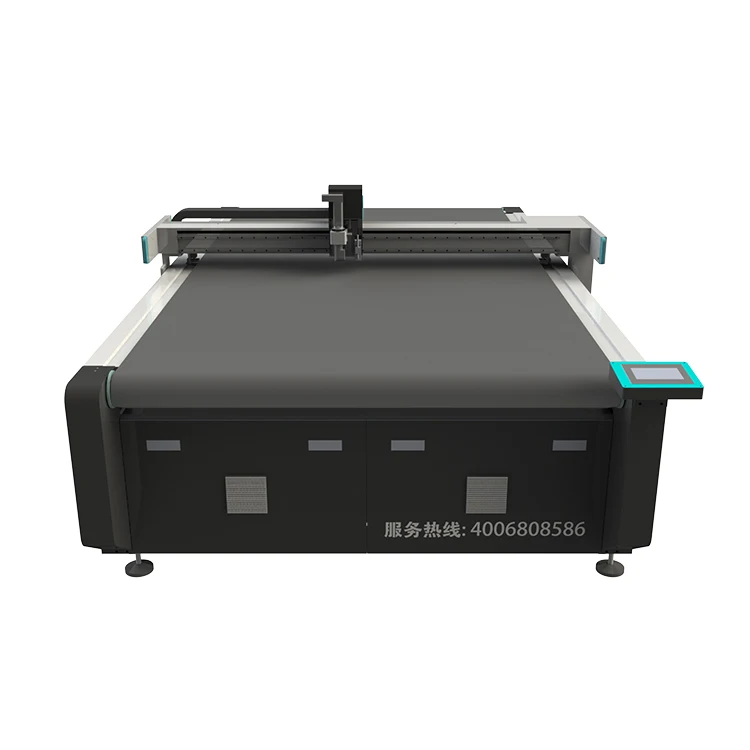
| Working Area | 1600 × 2500 mm |
| Overall Dimensions (L × W × H) | 3450 × 2300 × 1250 mm |
| Rated Power | 9 kW |
| Vacuum Pump | 7.5 kW |
| Table Type | Flat working table with auto-feeding conveyor |
| Tool Head | Swiss-imported oscillating knife — full cut, half cut and cursor location |
| Translational Velocity | 800–1200 mm/s |
| Cutting Speed | 200–800 mm/s (basis not stated in source — confirm material and thickness) |
| Repeated Accuracy | ≤ 0.1 mm |
| Transmission System | Digital servo motor, linear guide, synchronous belt, imported ball screw |
| Servo Motor | Japanese Yaskawa |
| Guide Rail | Taiwan Hiwin |
| Conveyor Belt | Germany-imported |
| Instruction System | HP-GL compatible format |
| Voltage | 380 V ± 10 % |
| Safety Device | Infrared sensors |
Application Suitability
| Application | Material or Output |
|---|---|
| Automotive gasket and seal fabrication | Composite rubber sheets, silicon, sponge composite leather |
| Footwear and leather goods cutting | Flexible leather, PVC, soft glass, layered composite panels |
| Industrial soft material processing | Rubber, silicon, sponge composite leather, flexible clothing material |
| General composite fabrication | Multi-layer soft sheets requiring oscillating knife edge quality |
Why Cutting Speed Claims Fail on Composite Rubber
A stated cutting speed only matters when the material, density and ply count behind it are named. I have stood in workshops across the Gulf where a machine ran perfectly on single-ply leather but tore through composite rubber containing glass fibre reinforcement, ruining both the edge and the blade within hours. The RT-D2516/RT-S2516 cutting speed range is published without a material basis, which is exactly why we send your sample back to the factory for a controlled test before any configuration is finalised. [NEED_CITE: material density and fibre content effects on oscillating knife wear]
Choosing a CNC Oscillating Knife Cutting Machine on working area alone is the most common specification error in composite and rubber cutting. A 1600 × 2500 mm table tells you nothing about whether the vacuum hold-down can keep a small gasket profile flat at 1200 mm/s travel, or whether the oscillating knife frequency is sufficient for your material’s shear resistance.
Oscillating Knife Selection for Layered Composites
The Swiss-imported oscillating knife head on this CNC Oscillating Knife Cutting Machine supports both full-cut and half-cut vibration modes. For composite rubber sheets with embedded reinforcement layers, full-cut vibration delivers the downward stroke force needed to shear through the fibre without delaminating the surrounding rubber matrix. Half-cut mode suits scoring and creasing operations on thinner flexible sheets where through-cutting would damage the conveyor belt beneath.
Vacuum Table Zoning and Material Hold-Down
A 7.5 kW vacuum pump paired with a flat working table provides the suction needed to secure composite rubber during high-speed contour cutting. The auto-feeding conveyor system, built on a Germany-imported belt, allows continuous sheet feeding for roll-based composite workflows. [NEED_CITE: vacuum hold-down requirements for composite rubber at production cutting speeds] Small gasket profiles tend to lift at the edges when vacuum zoning is not matched to part geometry — a problem that surfaces only after the machine is installed and running.
Reading the Specs That Actually Matter
The Yaskawa servo motor and Taiwan Hiwin linear guide combination delivers ≤ 0.1 mm repeatability, which is critical when cutting gasket profiles that must seal under compression. The HP-GL compatible instruction system accepts standard vector file formats used in gasket and seal design workflows. Rated power of 9 kW covers both the cutting head drive and the conveyor feed motor, while the 7.5 kW vacuum pump runs on a separate circuit — buyers should confirm their workshop’s available amperage before installation. The 380 V ± 10 % supply must be verified against local grid standards, particularly in regions where industrial voltage fluctuates outside this band.
The Cost of Skipping Material-Specific Configuration
When a machine arrives configured for generic soft materials but the actual production involves glass-fibre-reinforced rubber, the knife edge degrades rapidly and the cut quality deteriorates within the first shift. Ragged edges on composite gaskets mean failed seal tests downstream, and blade changes every few hours destroy any throughput advantage the machine was supposed to deliver. [NEED_CITE: oscillating knife blade wear rates on glass-fibre composite materials] This is why we run your material through a cutting test before locking the tool head and vacuum configuration.
Why Source This Machine Through Our Process
In-house design covering both knife and laser platforms means the cutting method is chosen to match your material, not forced into whichever technology happens to be in stock. The tool head and table configuration are specified per material type and production volume, documented before the order is confirmed. Sample cutting on your own composite rubber at your target thickness happens before commitment, not after delivery. Voltage, control language and plug type are confirmed against your workshop’s electrical supply before shipment. The software licence and file format compatibility note is verified against your existing nesting workflow so there are no surprises on day one.
Documentation & Verification
- Machine specification sheet listing confirmed tool head and vacuum pump configuration
- Electrical schematic with voltage and frequency matched to your workshop supply
- Sample cutting report on your composite rubber at target thickness and layer count
- Tool head and table configuration list matched to material type and daily volume
- Software licence and file format compatibility note covering your nesting workflow
- Factory test record documenting repeatability and edge quality before dispatch
Installation, Commissioning & Support
- 3450 × 2300 mm footprint requires level concrete floor with anchor provisions
- 380 V ± 10 % supply with dedicated circuit for 9 kW machine and 7.5 kW vacuum pump
- Auto-feeding conveyor arrives pre-assembled; guide rails calibrated at factory
- First-run parameter setting on your composite rubber material with operator present
- Spare blade inventory and oscillating knife maintenance schedule provided at handover
What We Need to Configure Your Machine
Provide the specific composite material type, including any glass fibre or fabric reinforcement layers, along with sheet thickness and maximum sheet or roll dimensions. Confirm your daily cutting volume and the mix of part geometries — small gaskets and large panels have different vacuum zoning requirements. Share your workshop voltage, frequency and preferred control language so the electrical cabinet and interface are configured before the RT-D2516/RT-S2516 ships.
Frequently Asked Questions
Q: How is cutting thickness verified before I commit to the order?
A: Your composite rubber sample is sent to our factory for a controlled cutting test at your target thickness and layer count. The sample cutting report documents edge quality, blade wear rate and achievable speed. Only after you approve the results do we lock the tool head and vacuum configuration for your order.
Q: Which tool head suits my composite rubber sheet?
A: The Swiss-imported oscillating knife handles full-cut and half-cut modes for layered composites and rubber. For sheets with glass fibre reinforcement, full-cut vibration is typically required. We confirm the recommendation during the sample cutting test on your actual material before finalising the configuration.
Q: Does the vacuum table hold small gasket parts at high travel speeds?
A: The 7.5 kW vacuum pump on the flat table secures composite rubber during cutting at translational speeds up to 1200 mm/s. Vacuum zoning effectiveness depends on part geometry and material porosity, which we verify during the sample test to confirm that small profiles do not lift during contour cuts.
Q: Will the software accept my existing DXF and PLT files?
A: The HP-GL compatible instruction system handles standard vector formats. We provide a software licence and file format compatibility note before order confirmation, and we test your actual nesting files during the sample cutting phase to confirm import and toolpath generation work correctly.
Q: What voltage and language settings are configured before shipment?
A: The standard 380 V ± 10 % supply is confirmed against your workshop electrical specification, and voltage adjustments are made if required. Control language and plug type are set before dispatch, with the electrical schematic documenting the final configuration for your maintenance records.


商品评价
Clear filtersThere are no reviews yet.