







Fast Shipping
Carrier information

20k products
Payment methods

24/7 Support
Unlimited help desk

2-day Delivery
Track or off orders
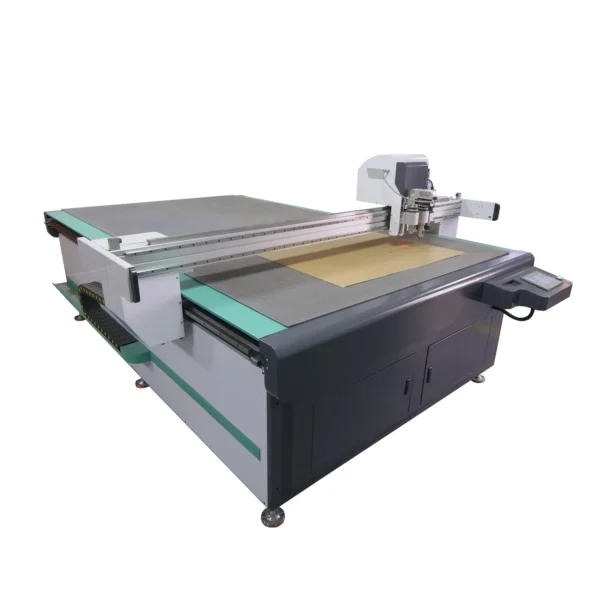
Sample-Proven Tooling Match — Every RT-D2516/RT-S2516 configuration is validated against the buyer’s actual board grade and flute profile before the order is confirmed, eliminating edge-quality surprises on the shop floor.
Technical Specifications
| Parameter | Value |
|---|---|
| Model | RT-D2516/RT-S2516 |
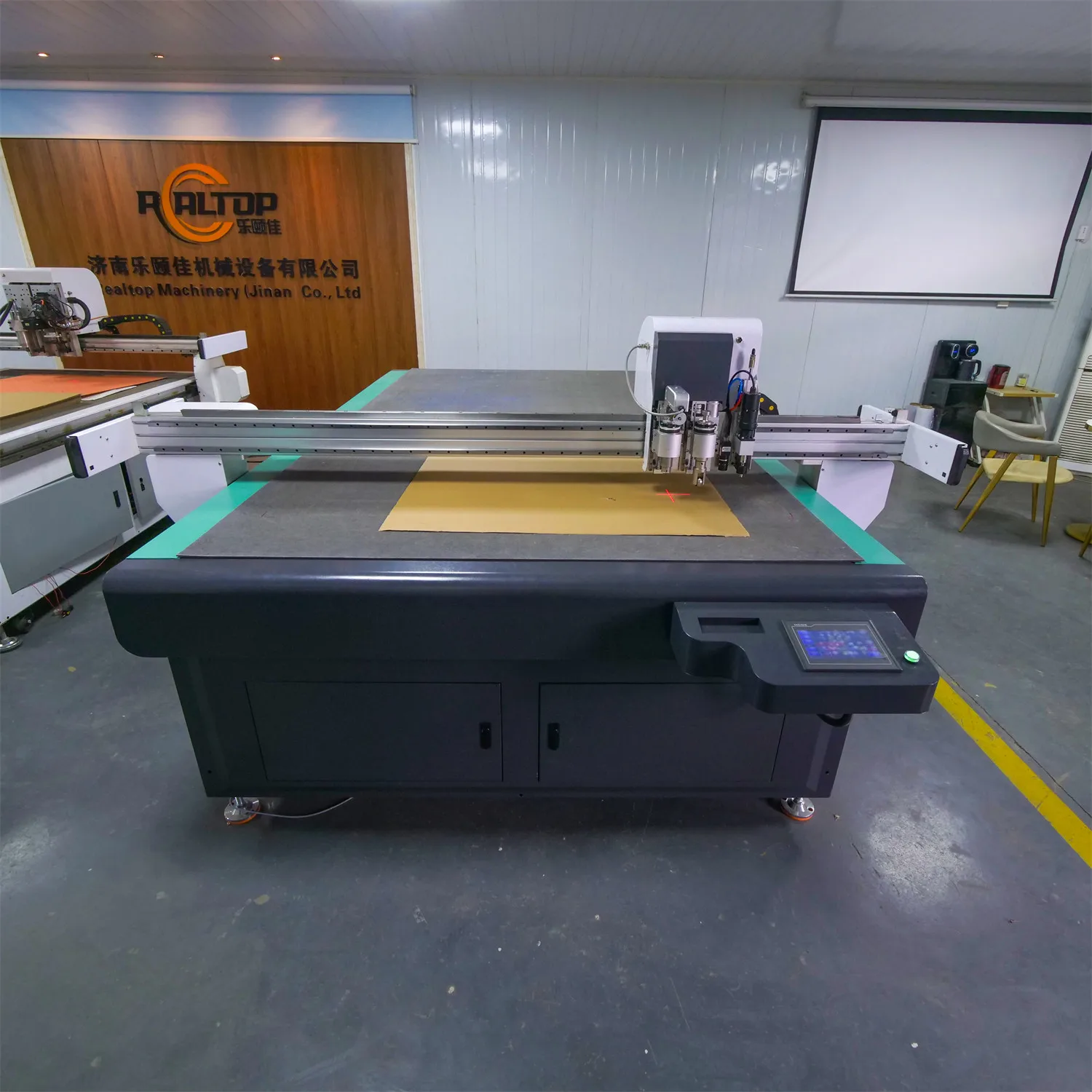
| Product Type | CNC Oscillating Knife Flatbed Cutter |
| Working Area | 1600 × 2500 mm |
| Machine Size (L × W × H) | 3450 × 2300 × 1250 mm |
| Rated Power | 9 kW |
| Voltage | 380V ±10% (frequency to be confirmed: 50/60 Hz) |
| Tool Head | Swiss imported oscillating knife — vibration full cutting, vibration half cutting, cursor location |
| Table Surface | Flat aluminum alloy honeycomb vacuum adsorption platform |
| Vacuum Pump | 7.5 kW |
| Transmission | Taiwan Delta digital servo motor, Taiwan Hiwin linear guide, synchronous belt, ball screw, rack transmission |
| Translational Velocity | 800–2000 mm/s |
| Cutting Speed | 200–800 mm/s (varies by material type and thickness) |
| Repeatability | ≤0.1 mm |
| Instruction Format | HP-GL compatible |
| Software | Professional carton nesting software; multi-format import; customizable control language |
| Safety | Infrared sensors and emergency stop |
| Feeding System | Germany imported conveyor belt with auto feeding |
| Cutting Thickness Capacity | Up to 100 mm (varies with material density and tooling) |
| Certification | CE declaration (current validity to be verified) |
| Language Options | English, Russian, Italian, Chinese; special languages customizable |
| Key Features | Full-cut and half-cut creasing in single setup, auto feeding conveyor, vacuum hold-down, nesting software included |
Application Suitability
| Application | Material or Output |
|---|---|
| Carton and packaging sample making | Corrugated board, card stock, grey board with crease-and-cut workflows |
| Sticker and label contour cutting | Self-adhesive vinyl, printed label stock with mark recognition |
| Signage and billboard production | Foam board, PVC sheet, corrugated plastic |
| Business card and tag cutting | Coated card stock, laminated paper board |
| Flexible material fabrication | Leather, garment fabric, sponge composite leather, PVC, soft glass, silicone, rubber |
Why Cutting Speed Claims Fail on Corrugated Board
Real throughput depends on flute profile and moisture content, not a single headline number.
I learned this the hard way after a carton plant in the Middle East reported that their new oscillating knife table was producing ragged edges and losing nearly half its expected output. The sample tests had passed cleanly, but the production corrugated board carried a higher moisture content that softened the liner and caused the blade to drag. The 200–800 mm/s cutting speed range listed for a CNC oscillating knife cutting table only holds when the tool head, stroke length, and oscillation frequency are tuned to the exact board grade running through the machine [NEED_CITE: material moisture effects on knife cutting edge quality]. Without that validation step, buyers end up comparing specifications that were measured under completely different conditions.
Oscillating Knife Selection by Board Grade
The Swiss imported oscillating knife head on this machine handles both full-cut and half-cut creasing in a single setup, which matters when a packaging sample maker switches between E-flute and B-flute within the same shift. Stroke length and oscillation frequency determine whether the blade slices cleanly through the liner or crushes the flute structure. Matching those parameters to the actual board grade is the core task during sample testing.
Vacuum Zoning and Small-Part Hold-Down
The 7.5 kW vacuum pump feeds an aluminum alloy honeycomb platform across the full 1600 × 2500 mm working area. Uniform suction is essential when cutting small carton inserts or label contours where a single lift can ruin the edge and damage the blade. Proper zone configuration ensures that even narrow offcuts stay flat against the table surface throughout the cut cycle [NEED_CITE: vacuum hold-down principles for flatbed digital cutting].
Drive Train Precision and Repeatability
Taiwan Delta servo motors running on Taiwan Hiwin linear guides with rack transmission deliver ≤0.1 mm repeatability across the entire bed. For packaging sample makers producing fold-line creases that must align with printed graphics, this tolerance keeps crease positions consistent from the first sheet to the last. The translational velocity range of 800–2000 mm/s allows rapid positioning between cut paths without sacrificing placement accuracy on intricate carton geometries.
The Hidden Cost of Skipping Material Trials
A buyer who specifies a CNC knife cutting table based solely on working area dimensions often discovers that the tool head configuration cannot handle their actual material thickness or density. Ragged edges force secondary trimming, crushed flutes weaken carton stacking strength, and incorrect crease depth causes folding cracks during assembly. Each of these defects compounds across a production run, turning a machine that looked capable on paper into a bottleneck that drags down the entire packaging line [NEED_CITE: carton sample making defect causes and downstream impact].
Why Source From This Build Line
In-house design covers both knife and laser cutting platforms, so the cutting method is matched to the substrate rather than forced into a single technology. Tool head and table configurations are specified per material and production volume, not pulled from a default catalog page. CCD camera positioning is available for printed contour work where mark tracking must keep pace with cutting speed. Software compatibility is confirmed before the order so that nesting workflows and file formats integrate without conversion bottlenecks. Voltage, control language, and documentation are customized to the destination facility. Every unit ships after a sample cutting test on the buyer’s own material, with results recorded in a formal report.
Documentation & Verification
- Machine specification sheet listing confirmed tool head type and vacuum zone layout
- Electrical schematic with voltage and frequency matched to your facility supply
- Sample cutting report on your actual corrugated board or card stock grade
- Factory test record covering repeatability and cutting speed on agreed material
- Software license and file format compatibility note for your nesting workflow
- Spare parts list matched to your selected oscillating knife configuration
Installation, Commissioning & Support
- Foundation must support 3450 × 2300 mm footprint with level tolerance for the honeycomb vacuum platform
- Dedicated 380V circuit sized for 9 kW machine load plus 7.5 kW vacuum pump
- Machine ships fully assembled; confirm doorway and overhead clearance at destination
- First-run parameter tuning covers oscillation frequency, vacuum zone mapping, and crease depth
- Operator training on nesting software import, HP-GL file handling, and tool change procedures
- Wear parts kit includes oscillating knife blades and conveyor belt sections for initial spares
Before You Request a Quote
Send the exact corrugated board grades, flute profiles, and sheet dimensions you run in production, along with your daily sample volume. Confirm your facility voltage and frequency, the control language your operators need, and whether your current nesting software exports HP-GL or another format. If you can ship a roll or stack of your actual material, a sample cutting test will lock in the tool head and vacuum configuration before the order goes to production.
Frequently Asked Questions
Q: How is the 200–800 mm/s cutting speed verified for my material?
A: The speed range depends on board grade, flute profile, and thickness. We run your actual material through a sample cutting test, record the achievable speed with acceptable edge quality, and include those results in the cutting report before you commit to the order.
Q: Which oscillating knife setup matches my corrugated board thickness?
A: Blade type, stroke length, and oscillation frequency are selected based on your specific flute profile and liner weight. The Swiss imported head supports both full-cut and half-cut creasing modes, and the correct combination is confirmed during material trials.
Q: Is the vacuum table zoned for small carton parts?
A: The aluminum honeycomb platform is divided into zones fed by the 7.5 kW pump. Zone layout is configured to match your typical part sizes so that narrow inserts and label contours remain flat without material lift during cutting.
Q: What file formats does the nesting software accept?
A: The included carton nesting software supports HP-GL compatible output and multiple import formats. We confirm compatibility with your existing design files and nesting workflow before the order is finalized, and control language is set to your preference.
Q: Can I send my own material for testing before ordering?
A: Yes. Shipping your actual corrugated board or flexible material allows us to validate edge quality, crease depth, and cutting speed under real conditions. The sample cutting report becomes part of the order documentation.


商品评价
Clear filtersThere are no reviews yet.