

Fast Shipping
Carrier information

20k products
Payment methods

24/7 Support
Unlimited help desk

2-day Delivery
Track or off orders
Precision knife-tool matching — interchangeable Swiss oscillating, drag and circular knife heads let fabric, foam and leather producers select the exact blade geometry for each material before the first cut is made.
Technical Specifications
| Parameter | Value |
|---|---|
| Model | RT-D2516 / RT-S2516 |
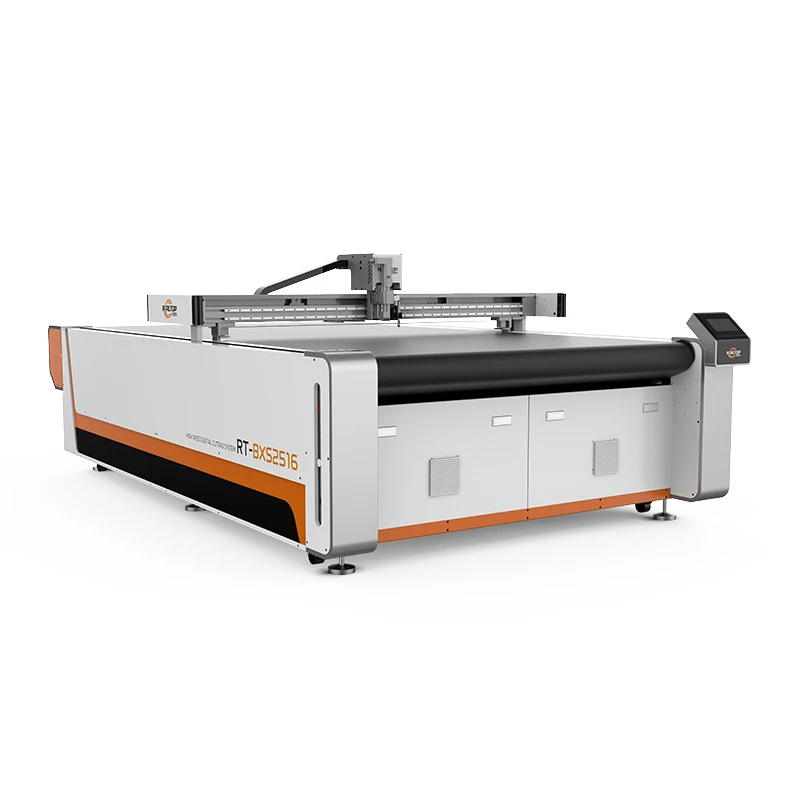
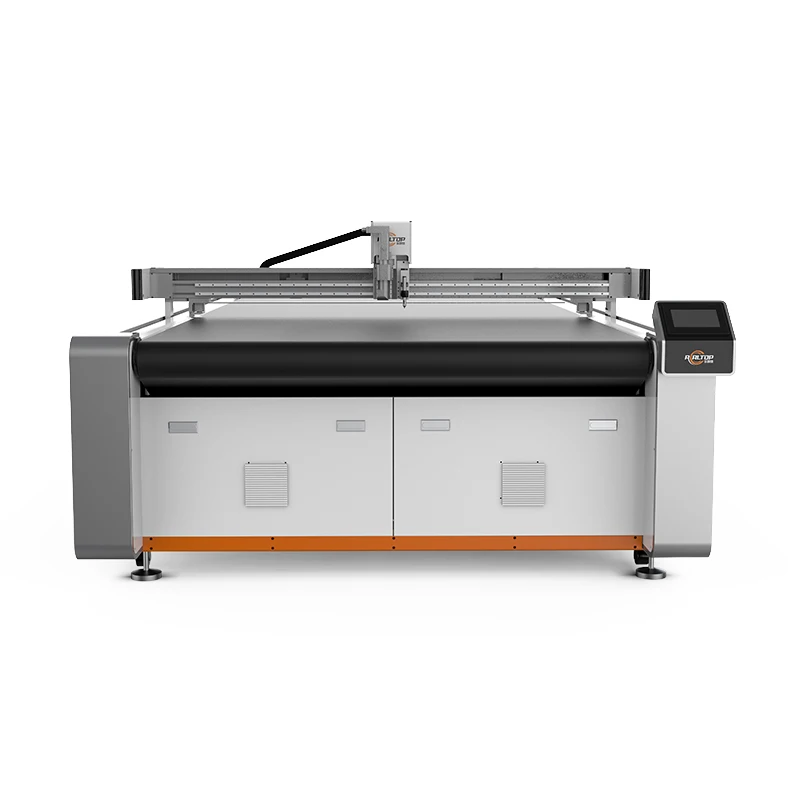
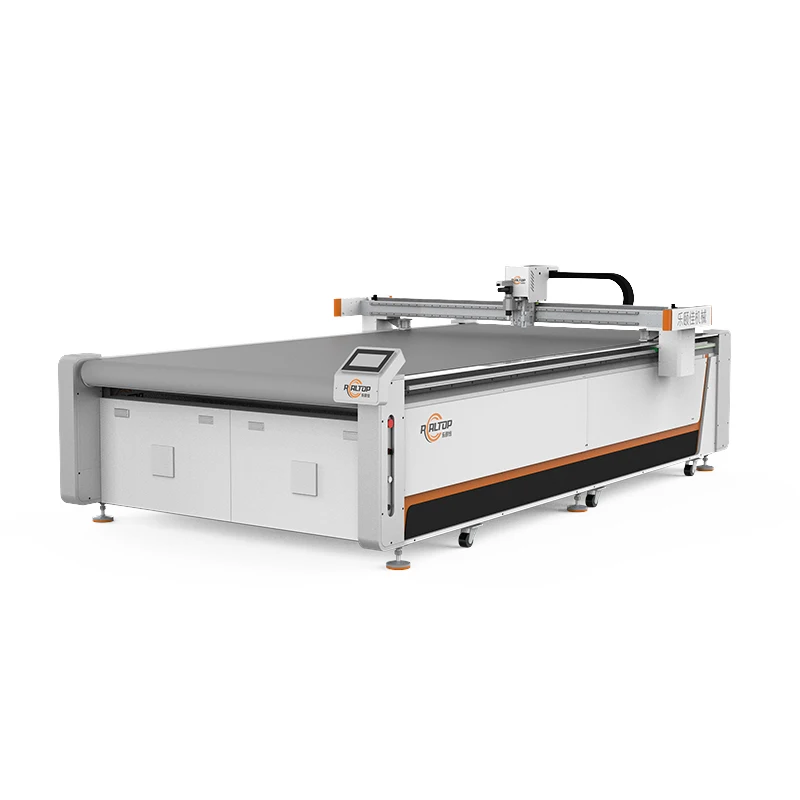
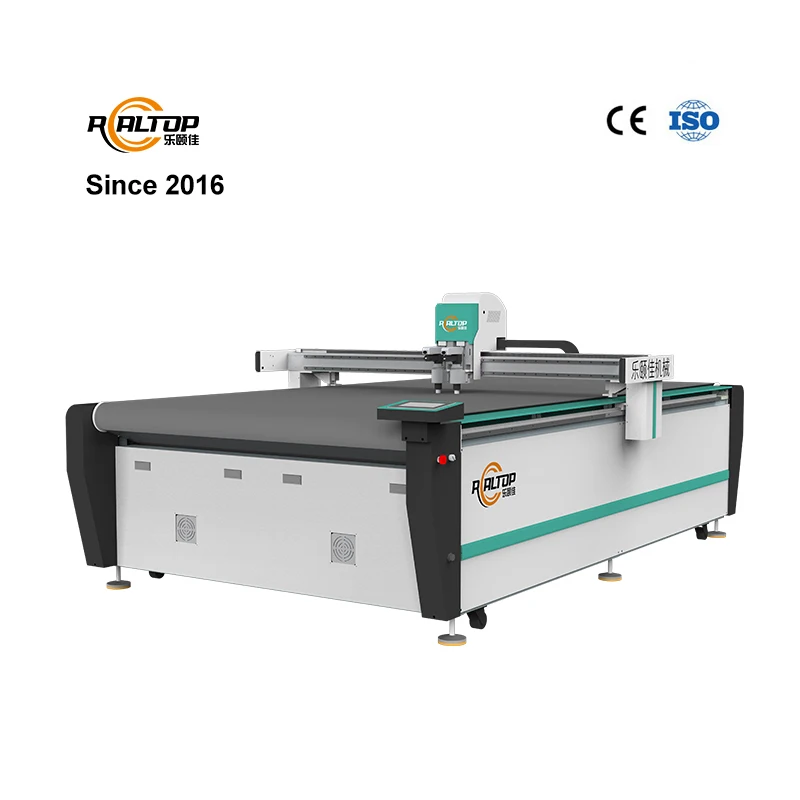
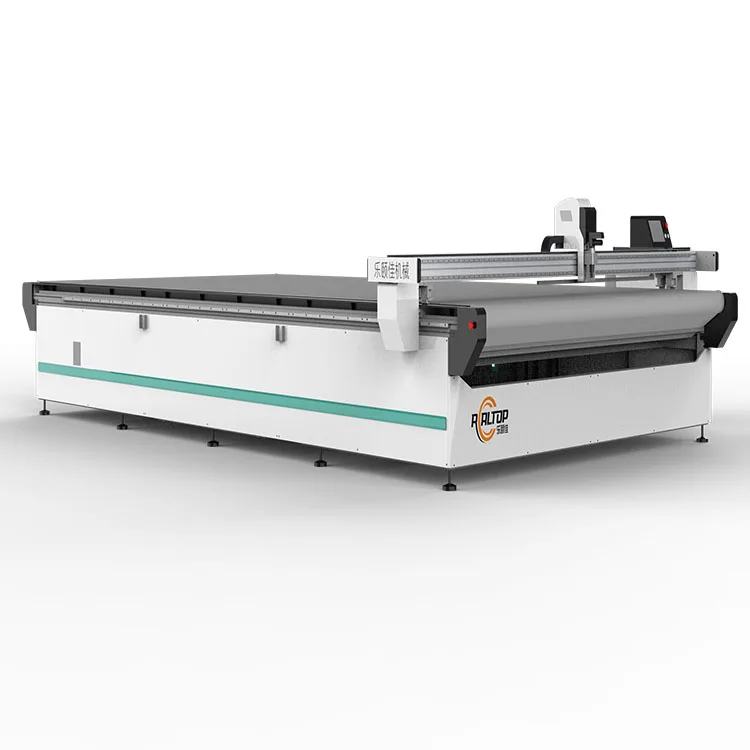
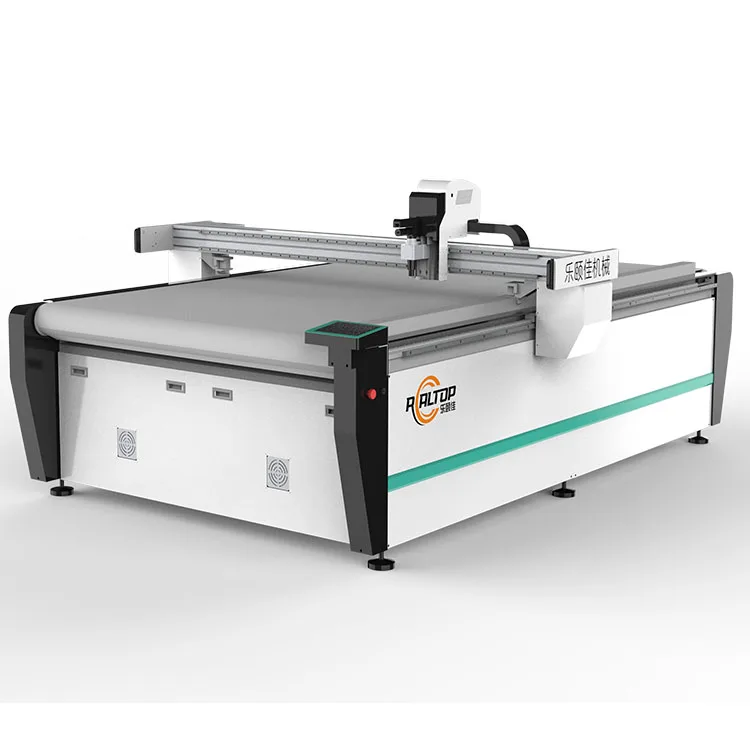
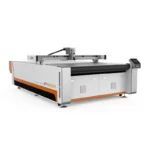
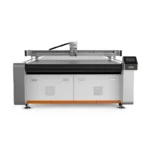
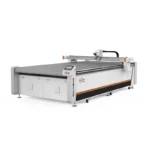
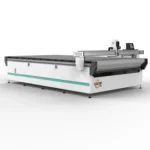
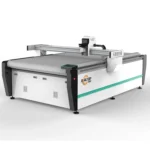
| Product Type | CNC Oscillating Knife Cutting Machine |
| Working Area | 1600 × 2500 mm |
| Machine Size (L × W × H) | 3450 × 2300 × 1250 mm |
| Rated Power | 9 kW |
| Voltage | 380V ±10% |
| Table Type | Flat working table or auto-feeding conveyor table |
| Vacuum Pump | 7.5 kW, aviation aluminum shell, built-in silencer sponge |
| Vacuum Table Material | Magnesium-aluminum alloy, PVDF powder coated, anodized, hard oxidized |
| Tool Head Options | Swiss imported oscillating knife (full cut / half cut / cursor location), pneumatic knife, high-power vibrating knife, circular knife, V-cutting knife, drag knife, creasing wheel, dotted line knife, punching tool, brush |
| Visual Positioning | Small CCD camera mark-point positioning, panoramic camera recognition, projection positioning |
| Servo Motor | Delta or Panasonic, IP67 waterproof |
| Transmission System | Digital servo motor, linear guide, synchronous belt, ball screw (Taiwan Hiwin rail) |
| Translational Velocity | 800 – 2000 mm/s |
| Cutting Speed | 200 – 800 mm/s (basis not stated in source — confirm material type and thickness) |
| Cutting Thickness | ≤ 100 mm (varies with material) |
| Repeatability | ≤ 0.1 mm |
| Instruction System | HP-GL compatible format |
| Software File Support | PLT, DXF, AI, automatic nesting / typesetting |
| Safety Devices | Infrared induction blocking, anti-collision beam sensors, emergency stop with in-situ resume |
| Control Panel | Touch screen, multi-language support |
| Language Options | English, Russian, Italian, Chinese (other languages customizable) |
| Assembly State | Fully assembled |
| Warranty | 1 year (free parts; buyer covers shipping) |
Application Suitability
| Application | Material or Output |
|---|---|
| Garment and footwear cutting | Single-ply and multi-ply fabric, shoe material, non-woven fabric, fur |
| Automotive interior and gasket production | PU, EVA, XPE foam, PVC, composite sheets, sealing pads |
| Leather goods and bag manufacturing | Natural leather, synthetic leather, luggage material |
| Carpet and floor mat fabrication | Carpet, sponge, sofa fabric, soft home furnishing textiles |
| Packaging and carton sample making | Cardboard, corrugated cardboard, plastic box, sticker, film |
| Composite and technical textile processing | PTFE, ETFE, carbon fiber, soft glass, silicon, rubber |
Why Tool Head Selection Determines Edge Quality More Than Machine Size
A clean edge on XPE foam and a frayed edge on the same foam usually come down to which knife is mounted, not how large the table is.
Many buyers specify a CNC flatbed cutter by working area alone and discover after delivery that the oscillating knife cannot handle their actual material density. When the blade frequency and stroke are mismatched to foam hardness, the knife either compresses the material instead of shearing it or leaves a ragged burr that requires secondary trimming. This is exactly the failure pattern I have watched repeat itself across fabric and composite workshops [NEED_CITE: oscillating knife stroke frequency versus material density in flatbed digital cutting]. The RT-D2516 / RT-S2516 CNC oscillating knife cutting machine tool head configuration addresses this by offering a Swiss imported oscillating knife alongside a pneumatic knife, high-power vibrating knife, drag knife, circular knife, V-cutting knife and creasing wheel — each selected according to the material being processed rather than bundled as a one-size option.
Matching Blade Geometry to Material Behavior
The Swiss imported oscillating knife on this CNC oscillating knife cutting machine tool head configuration supports full cutting, half cutting and cursor location modes, giving operators control over both single-ply garment fabrics and multi-layer stacks. For softer materials like sponge and non-woven fabric, the high-frequency stroke shears fibers cleanly without pulling. When the job shifts to denser composites such as EVA or XPE, the high-power vibrating knife takes*hing the cell structure.
Vacuum Zoning and Small-Part Holding
The magnesium-aluminum alloy table is finished with PVDF powder coating and hard anodizing to resist adhesive buildup from sticker and film cutting. More importantly, the 7.5 kW vacuum pump with its aviation aluminum shell distributes suction across zones that can be configured for the smallest nested parts. Without adequate zoning, narrow gasket strips and thin leather pieces lift off the table mid-cut, shifting position and ruining the entire nest [NEED_CITE: vacuum table zoning requirements for small-part digital cutting].
Drive System Tolerance and Contour Accuracy
Delta or Panasonic IP67-rated servo motors paired with Taiwan Hiwin linear guides and ball screws deliver repeatability within 0.1 mm across the full 1600 × 2500 mm working area. At translational speeds between 800 and 2000 mm/s, the drive system maintains positional accuracy that matters most when the CCD camera or panoramic camera is tracking printed registration marks for contour cutting. Any backlash in the rail or belt would show up immediately as a mismatch between the printed graphic and the cut outline.
Reading the Specs Beyond the Headline Numbers
The rated cutting speed of 200 – 800 mm/s and maximum cutting thickness of 100 mm are starting references, not guarantees. Actual throughput depends on material density, ply count and the tool head in use — a single layer of garment cloth cuts far faster than a 40 mm stack of XPE foam. The 9 kW rated power covers the servo drives, spindle and vacuum system together, so buyers should confirm that their local 380V ±10% supply can sustain continuous draw without voltage sag that trips the servo alarms. Software accepts PLT, DXF and AI files with automatic nesting, which matters when a packaging sample maker needs to import an existing structural design without converting file formats mid-workflow.
What Happens When the Wrong Head Stays Mounted
I once watched a line operator spend an entire shift cutting automotive floor mats on a vibrating knife that was set up for garment cloth. The blade frequency was too high for the dense rubber compound, generating heat that melted the edges instead of shearing them. Every mat needed hand trimming before it could leave the station. Had the machine been fitted with the correct pneumatic knife from the start, the same parts would have cleared the table with finished edges and no secondary operation [NEED_CITE: tool head mismatch consequences in automotive interior material cutting]. This kind of mismatch rarely shows up during a factory demo where the sample material is pre-selected.
Why Sourcing the Cutting Method Here Reduces Specification Risk
The design team covers both knife and laser cutting technologies in-house, so a buyer can compare methods side by side rather than being steered toward whichever machine is in stock. Tool head and table configuration are specified per material sample before an order is confirmed — if the buyer ships a roll of their actual composite, the sample cutting report documents which knife, speed and vacuum setting produced acceptable edges. Voltage, plug type and control panel language are locked in during the specification stage, eliminating the shipment-day surprise of a control interface in an unreadable language. The machine arrives fully assembled, reducing on-site commissioning to power connection, vacuum hose attachment and a first-article test cut.
Documentation & Verification
- Machine specification sheet listing every confirmed tool head and table zone
- Electrical schematic with voltage and frequency matched to buyer’s facility
- Tool head and table configuration list signed off before production begins
- Sample cutting report produced on the buyer’s own material and thickness
- Factory test record documenting repeatability and edge quality results
- Software license and file format compatibility note for PLT, DXF, AI workflows
Installation, Commissioning & Support
- Verify 380V ±10% dedicated circuit with adequate breaker rating for 9 kW continuous draw
- Confirm floor leveling across the 3450 × 2300 mm footprint before uncrating
- Machine arrives fully assembled — commissioning covers vacuum hose and power connection only
- First-article test cut run on buyer’s material to validate tool head and speed settings
- Touch screen control panel configured in buyer’s language before or during installation
- Spare parts list provided covering blades, vacuum cups and wear items for the first year
Preparing Your Inquiry
Send a sample of the material you actually cut — including type, thickness and whether it is single-ply or stacked — along with your typical sheet size and daily part volume. Specify the voltage and frequency at your facility and the control language your operators need. If your existing workflow uses a particular nesting software or file format, include a sample file so compatibility can be checked before quotation.
Frequently Asked Questions
Q: Which tool head should I specify for my material type and thickness?
A: The RT-D2516 / RT-S2516 offers Swiss oscillating, pneumatic, high-power vibrating, circular, drag and V-cutting knives plus a creasing wheel. Selection depends on material density, thickness and whether you need full cutting, scoring or half cutting. We run a sample cut on your actual material to confirm the correct head before the order is finalized.
Q: How is the vacuum table zoned to hold small nested parts?
A: The magnesium-aluminum alloy table is divided into independently controlled suction zones. The zone layout is configured based on the smallest part dimension in your typical nest so that narrow gasket strips and thin leather pieces stay flat during cutting without lifting or shifting.
Q: Can the CCD camera track printed marks at full production speed?
A: The machine offers small CCD mark-point positioning, panoramic camera recognition and projection positioning as options. Tracking accuracy at higher traverse speeds depends on print contrast, mark size and lighting conditions. We test contour recognition on your printed material during the sample cutting stage to verify performance.
Q: What file formats does the nesting software accept?
A: The control system imports PLT, DXF and AI files and includes automatic nesting functionality. If your current production uses a different CAD output or a third-party nesting package, share a sample file during the inquiry stage so we can confirm import compatibility and workflow integration.
Q: How do I verify cutting quality before placing an order?
A: Ship us a roll or sheet of your actual production material. We run test cuts with different tool heads, speeds and vacuum settings, then send you a sample cutting report showing edge quality, dimensional accuracy and the configuration that produced the best result.


商品评价
Clear filtersThere are no reviews yet.