






Fast Shipping
Carrier information

20k products
Payment methods

24/7 Support
Unlimited help desk

2-day Delivery
Track or off orders
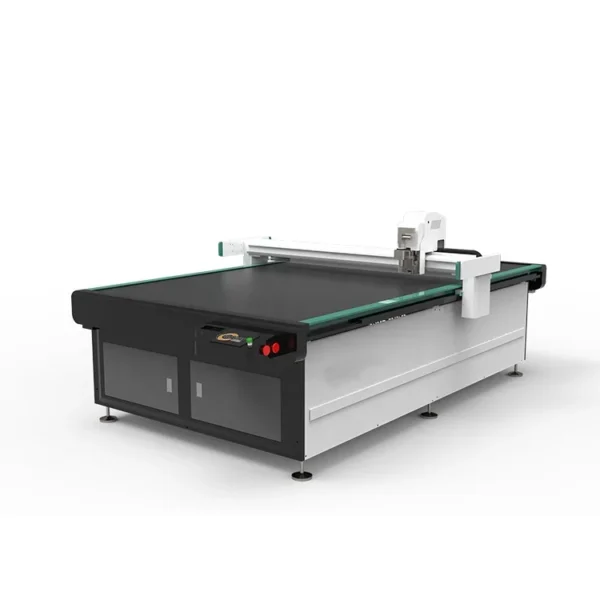
Tool head matched to substrate — the oscillating knife, creasing wheel and pneumatic cutter are specified against your actual board grade and flute profile rather than sold as a universal head.
Technical Specifications
| Parameter | Value |
|---|---|
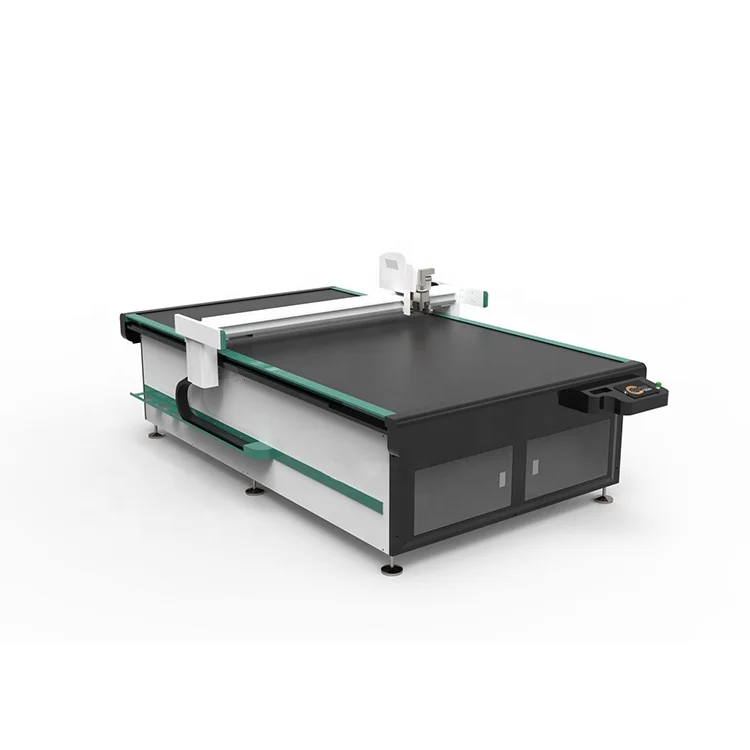
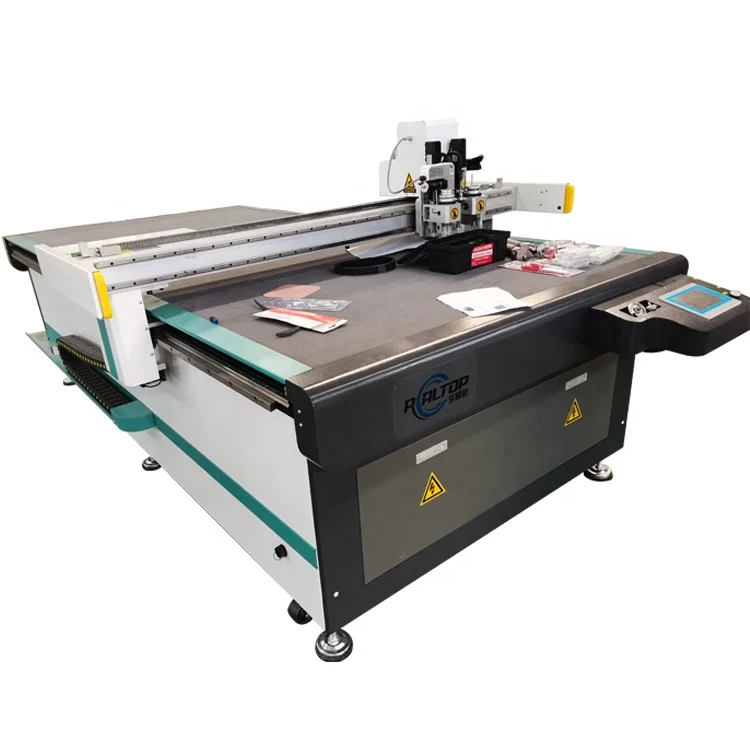
| Product Type | CNC Oscillating Knife Cutting Machine for Packaging and Carton Sample Making |
| Working Area | 1600 × 2500 mm |
| Machine Size (L × W × H) | 3450 × 2300 × 1250 mm |
| Rated Power | 9 kW |
| Working Table | Flat vacuum table with auto-feeding conveyor belt |
| Multifunctional Tool Head | Swiss imported knife with vibration full-cut, half-cut and cursor location; creasing and marking capability; pneumatic cutting tool option available |
| Cutting Speed | 200–800 mm/s (basis not stated in source — confirm material type and thickness) |
| Translational Velocity | 800–1200 mm/s |
| Repeated Accuracy | ≤0.1 mm |
| Transmission System | Japanese Yaskawa digital servo motor, Taiwan Hiwin linear guide, synchronous belt, ball screw |
| Safety Device | Infrared sensors |
| Instruction System / File Format | HP-GL compatible format |
| Voltage | 380V ±10% |
| Vacuum Pump | 7.5 kW |
| Conveyor Belt | Germany imported |
| Software Delivery | Manual, CD software and video provided |
| CCD Camera | Not stated in source — confirm availability |
| Vacuum Zones | Not stated in source — confirm zoning configuration |
| Standards | CE, ISO (specific ISO standard number not stated — verify) |
Application Suitability
| Application | Material or Output |
|---|---|
| Carton and packaging sample making | Corrugated stock, grey board for sneaker boxes, candle boxes and gift boxes |
| Sticker and label die-cutting | Flexible adhesive materials in kiss-cut and through-cut formats |
| Non-packaging flexible material cutting | Leather, clothing fabric, sponge composite leather, PVC, soft glass, silicone, rubber |
Why Board Thickness Matters More Than Working Area When Choosing a CNC Oscillating Knife Cutting Machine
A cutting table specified only by footprint will fail the moment the corrugated flute crushes under the wrong blade angle.
I have watched packaging sample rooms invest in large-format tables that handled 2500 mm sheets beautifully but left double-wall corrugated edges ragged and compressed. The problem was never the machine size. The oscillating knife frequency and blade geometry were mismatched to the flute structure, and the vacuum hold-down lacked enough zoning to keep smaller blanking pieces flat during the final cut pass [NEED_CITE: CNC knife cutting edge quality factors on corrugated substrates]. Buyers who lead with working area and skip the substrate conversation end up re-sending board samples weeks after delivery, trying to dial in tool parameters that should have been locked before the machine left the factory.
Tool Head Selection Dictates Edge Quality on Every Board Grade
The Swiss imported oscillating knife on the RT-D2516/RT-S2516 delivers full-cut and half-cut modes plus cursor location, which matters when creasing lines must register precisely against printed graphics on carton stock. A packaging CNC oscillating knife cutting machine that only offers a single fixed blade forces the operator to compromise between clean through-cuts on grey board and scoring accuracy on thinner card. The creasing and marking capability built into this tool head eliminates the need for a separate creasing station on sample runs.
Vacuum Hold-Down and Conveyor Feed for Real Production Rhythm
The flat vacuum table paired with a 7.5 kW vacuum pump and Germany-imported conveyor belt supports continuous sheet feeding, which is where sample rooms either gain or lose their daily throughput. Small carton parts — think cosmetic box inserts or candle dividers — tend to lift off the table once the knife exits the cut path if vacuum zoning is not matched to the part geometry. Confirming the vacuum zone layout against your typical nesting pattern before order prevents that lift-and-tear problem on the first day of production [NEED_CITE: vacuum table zoning for small-part CNC knife cutting].
Drive Train Precision and What ≤0.1 mm Repeatability Actually Means
The combination of Japanese Yaskawa digital servo motors and Taiwan Hiwin linear rails holds repeated accuracy at ≤0.1 mm across the full 1600 × 2500 mm working envelope. For packaging sample making, this repeatability determines whether a crease line lands exactly on the registered print mark or drifts half a millimeter off — visible on a premium gift box and grounds for rejection from brand clients. The synchronous belt and ball screw transmission ensures that this tolerance holds across long production runs without thermal drift common in rack-and-pinion setups.
What Happens When the Wrong Configuration Ships
Choosing a tool head without sample cutting the buyer’s actual board grade is the fastest route to crushed flutes and delaminated liner on double-wall stock. If the vacuum table zoning is left generic, small nesting parts shift mid-cut and the entire sheet becomes scrap. And if the software only accepts HP-GL while the design studio works in DXF or AI files, the sample room spends hours converting geometry that should import directly [NEED_CITE: file format compatibility in packaging CAD workflows]. These are all configuration decisions, not machine defects, which is why they must be resolved during the quotation stage.
Why Source This CNC Knife Cutting Table from Realtop
In-house design covers both knife and laser cutting technologies, so the cutting method is matched to the substrate rather than forcing every material through one process. The RT-D2516/RT-S2516 tool head and table configuration is specified per the buyer’s actual packaging board grade, flute type and daily sample volume. CCD camera positioning can be confirmed as available or excluded before the order is placed, avoiding post-delivery surprises. Software compatibility with the buyer’s existing file formats is validated during the inquiry stage. Voltage, control language and plug type are documented in writing before shipment. Sample cutting on the buyer’s own corrugated or grey board stock is completed and reported before any commitment is made.
Documentation & Verification
- Machine specification sheet listing confirmed tool head and vacuum table configuration for your board grade
- Electrical schematic with 380V ±10% wiring diagram and voltage confirmation record signed before production
- Sample cutting report on your own corrugated stock, grey board or sticker material with measured edge quality
- Factory test record documenting repeatability across the full 1600 × 2500 mm working area before dispatch
- Software licence and file format compatibility note confirming HP-GL and any additional format support
- Spare parts list covering Swiss knife blades, conveyor belt segments and vacuum pump consumables
Installation, Commissioning & Support
- 3450 × 2300 × 1250 mm footprint requires level concrete floor with clearance for conveyor infeed and outfeed
- Dedicated 380V ±10% circuit rated for 9 kW machine load plus 7.5 kW vacuum pump on separate breaker
- Machine ships with conveyor belt pre-mounted; vacuum table sections require on-site leveling and zone calibration
- First-run parameter setting includes oscillation frequency tuning and vacuum zone mapping to your typical nesting layout
- Operator training covers tool head changeover between oscillating knife, creasing wheel and pneumatic cutter options
- Infrared sensor safety circuit tested during commissioning with documented response-time verification
What to Include in Your Inquiry
Share the specific board grades you run — single-wall flute type, double-wall thickness, grey board GSM — along with typical sheet sizes and daily sample volume. If your design workflow uses DXF, AI or PLT files beyond HP-GL, confirm the formats so software compatibility is validated before quotation. State your local voltage and frequency, preferred control language, and whether you need printed contour recognition via CCD camera. Sending a few sheets of your actual corrugated or grey board stock allows sample cutting on your material before any order decision.
Frequently Asked Questions
Q: What board thickness and flute type can the oscillating knife handle, and what is the verified cutting speed?
A: The Swiss imported knife handles corrugated stock, grey board and flexible packaging materials with full-cut and half-cut modes. Cutting speed is listed at 200–800 mm/s, but the verified speed depends on your specific board grade and flute profile. We run sample cuts on your actual material to confirm achievable speed and edge quality before you commit.
Q: Is CCD camera positioning available for printed contour cutting on packaging samples?
A: CCD camera availability is not stated in the standard specification. If your packaging samples require printed contour recognition, request confirmation during the inquiry stage so the system can be included and tested against your print registration marks before shipment.
Q: How is vacuum table zoning configured for small carton parts to prevent material lift?
A: Vacuum zone layout should match your typical nesting pattern, especially for small inserts and dividers that tend to lift after the knife exits the cut path. The 7.5 kW vacuum pump provides the holding force, but zoning configuration must be confirmed against your part geometry before order to prevent mid-cut shifting.
Q: Which file formats does the software support beyond HP-GL?
A: The standard instruction system is HP-GL compatible, with software delivered on CD along with a manual and video guide. If your design studio works in DXF, AI or PLT, confirm file format compatibility during the inquiry stage so that any additional format support is documented before production begins.
Q: Can I send my packaging board for sample cutting before placing the order?
A: Yes. Sending your own corrugated stock, grey board or sticker material allows us to run sample cuts and produce a report covering edge quality, crease registration and achievable cutting parameters. This sample cutting report is provided before any order commitment is required.


商品评价
Clear filtersThere are no reviews yet.