





Fast Shipping
Carrier information

20k products
Payment methods

24/7 Support
Unlimited help desk

2-day Delivery
Track or off orders
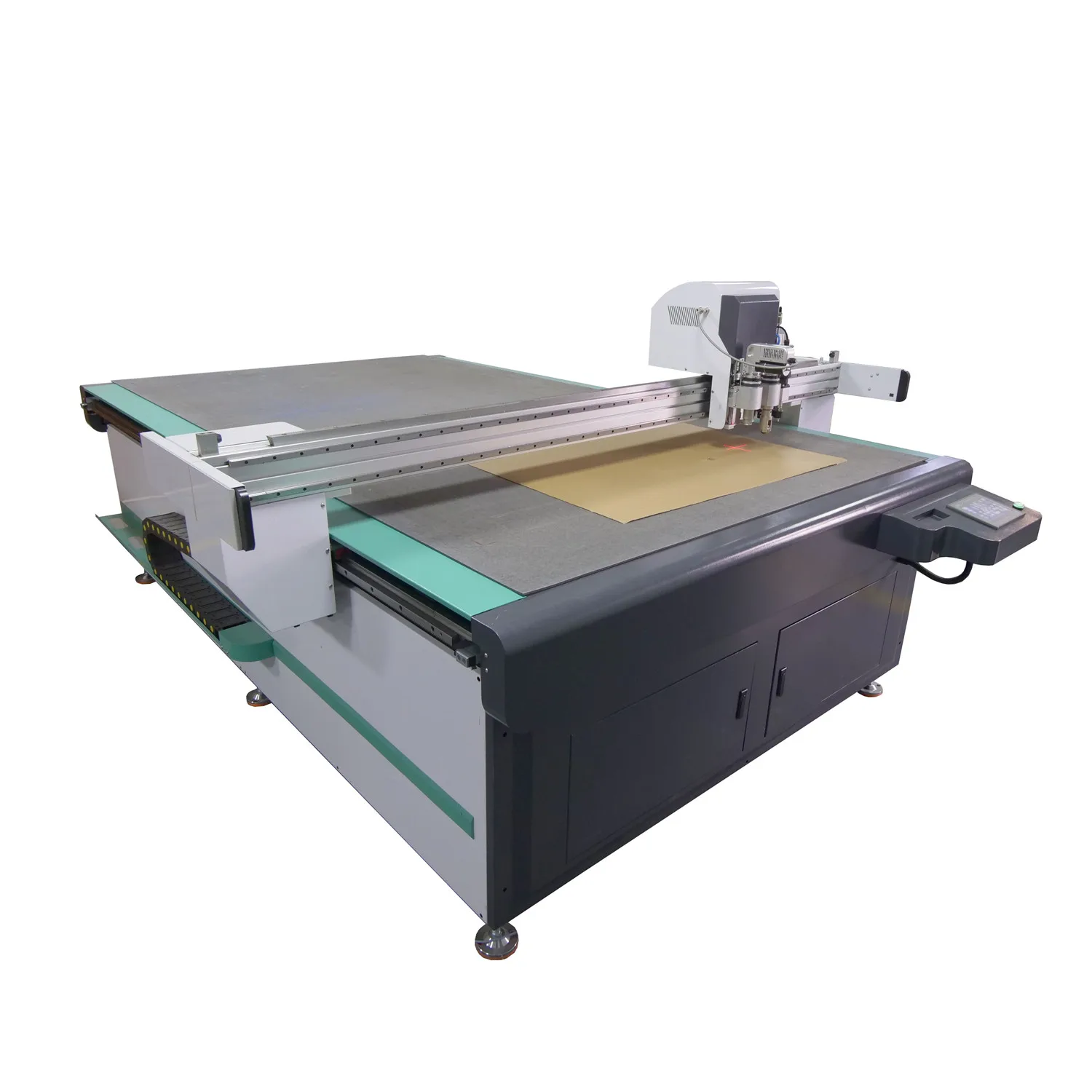
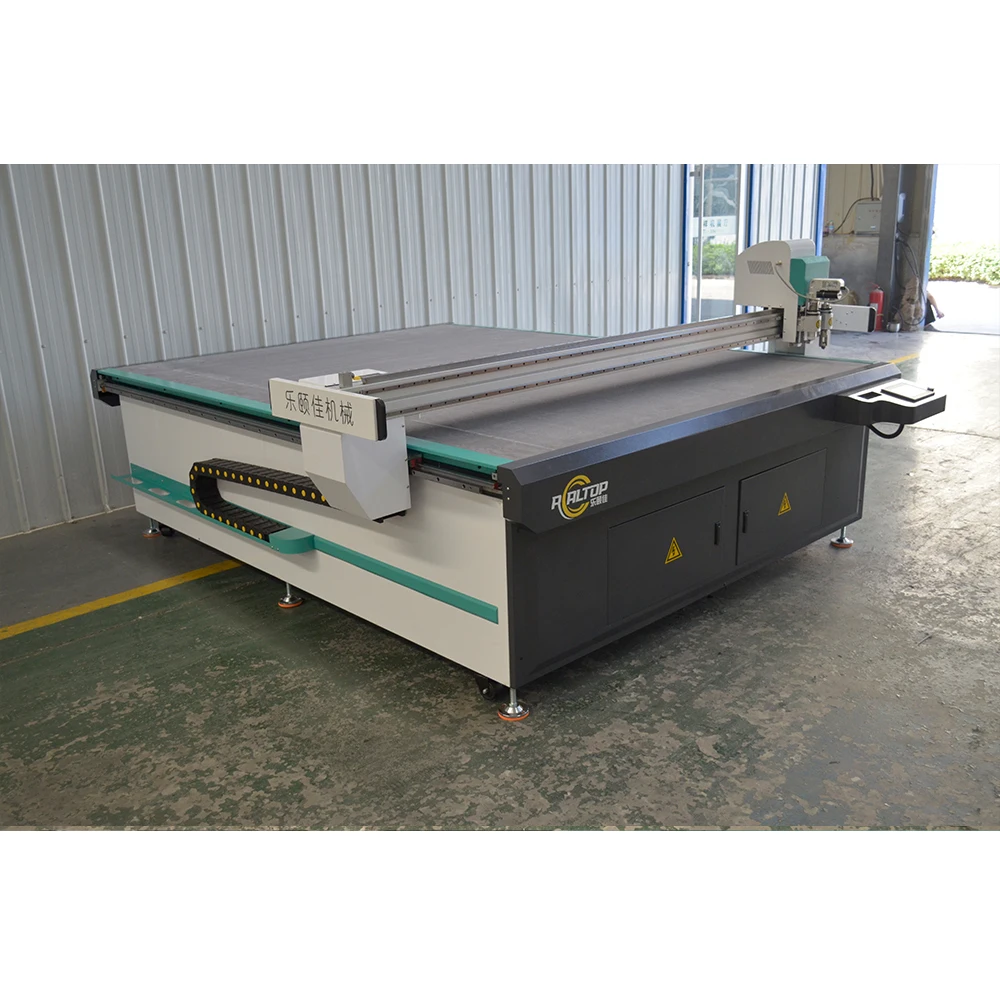
Tool Head Configuration Matched to Material — every oscillating knife, drag knife and creasing wheel option is selected after sample cutting on the buyer’s actual cardboard, foam or gasket stock, not guessed from a catalog chart.
Technical Specifications
| Parameter | Value |
|---|---|
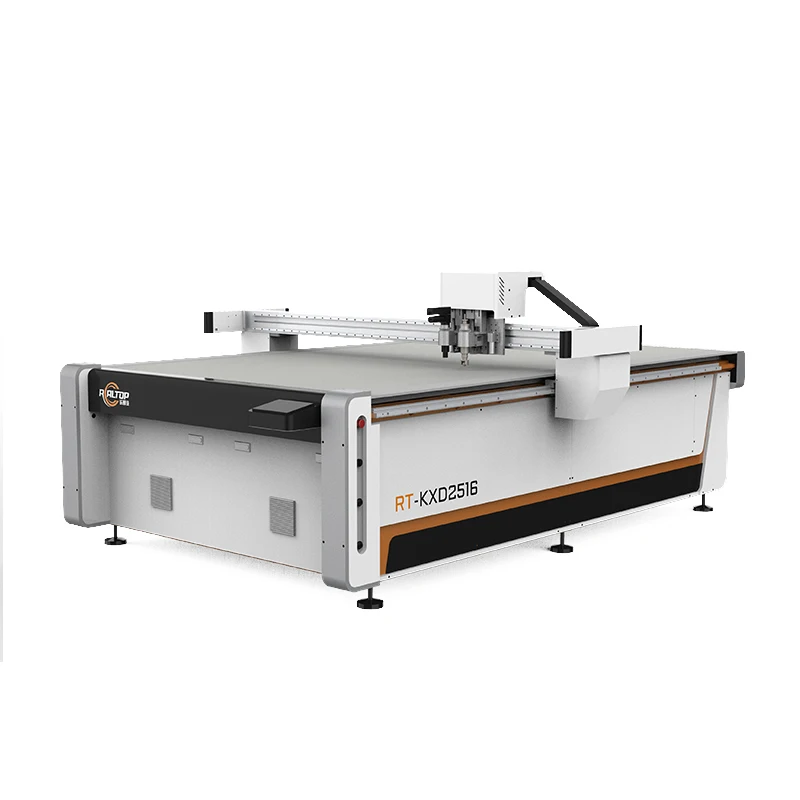
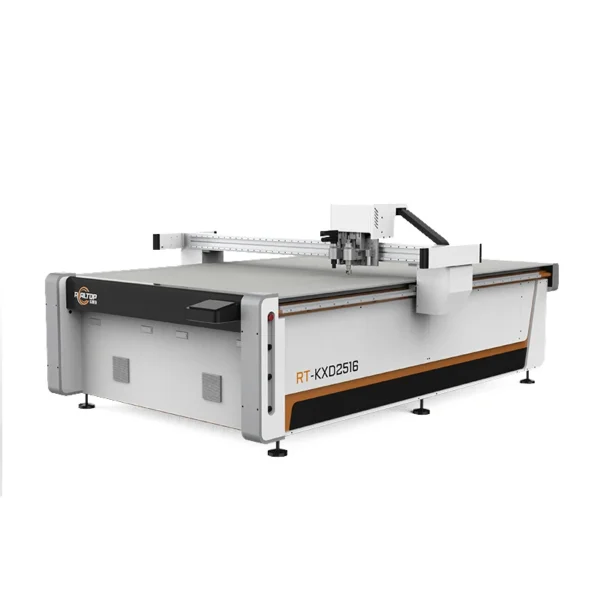
| Model | RT-D2516/RT-S2516 |
| Product Type | CNC Oscillating Knife Cutting Machine |
| Working Area | 1600 × 2500 mm |
| Machine Size | 3450 × 2300 × 1250 mm |
| Rated Power | 9 kW |
| Voltage | 380V ±10% |
| Servo Motor | Delta (optional Panasonic) |
| Transmission System | Digital servo motor, linear guide, synchronous belt, ball screw |
| Linear Guide | Taiwan Hiwin rail |
| Repeated Accuracy | ≤0.1 mm |
| Translational Velocity | 800 – 2000 mm/s |
| Max Cutting Thickness | ≤100 mm (varies with material) |
| Working Table | Flat working table or auto feeding table |
| Vacuum Pump | 7.5 kW |
| Vacuum Table | Magnesium-aluminum alloy, fluorocarbon PVDF powder sprayed, anodic oxidation, hard oxidation |
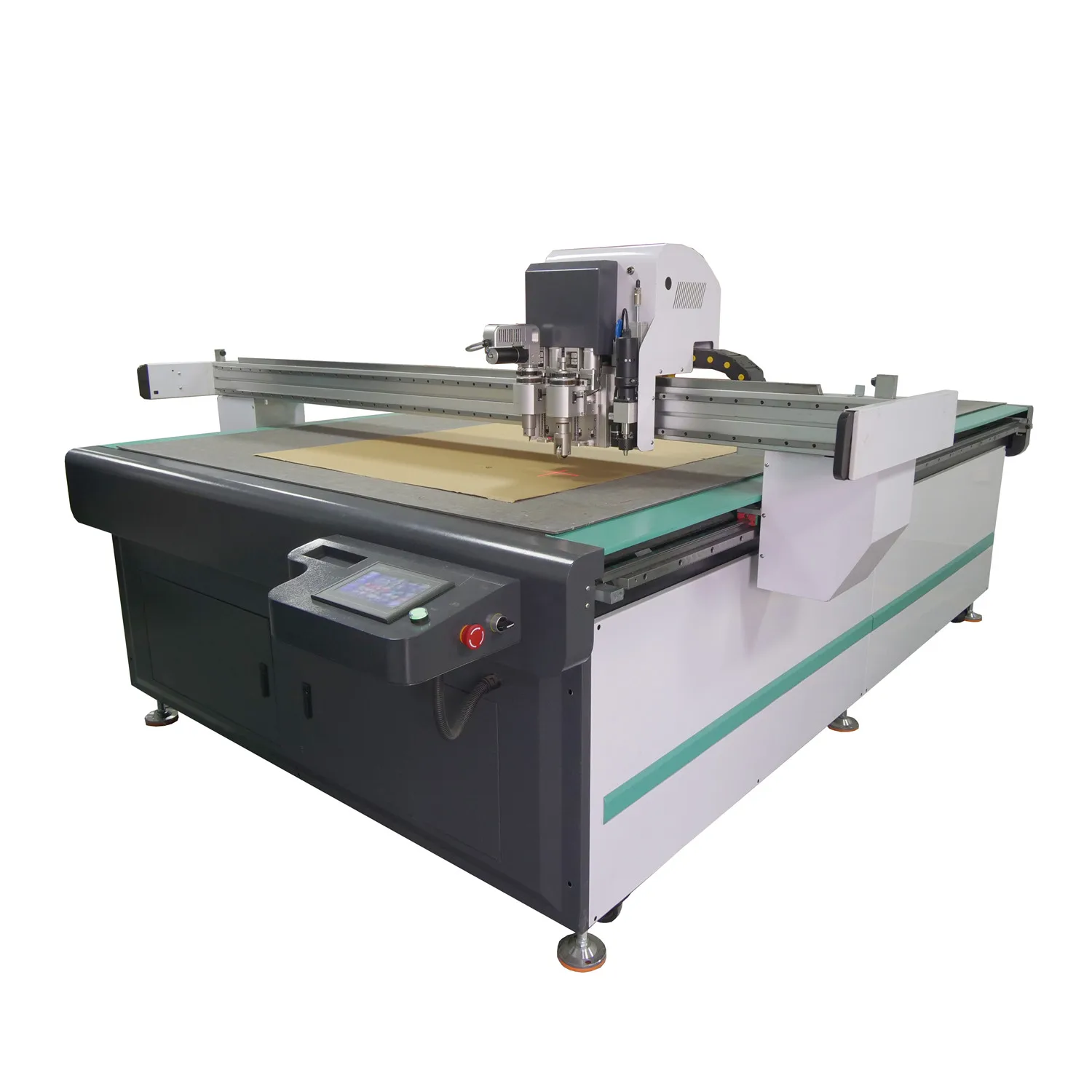
| Tool Head Options | Oscillating knife, pneumatic knife, high-power vibrating knife, circular knife, V-cutting knife, drag knife, creasing wheel, dotted line knife, punching, brush |
| Multifunctional Head | Swiss imported knife (vibration full cutting, vibration half cutting, cursor location) |
| Visual Positioning | Small CCD camera mark point positioning, panoramic camera recognition, projection positioning |
| Safety Device | Infrared sensors, anti-collision on both sides of beam, emergency stop |
| Control System | Touch screen control panel |
| Software | Auto typesetting software, supports PLT, DXF, AI and other formats |
| Instruction System | HP-GL compatible format |
| Language Options | English, Russian, Italian, Chinese (other languages customizable) |
| Frame | Thick-walled seamless steel structure, high-temperature tempering, CNC machining center finished |
| Conveyor Belt | Germany imported |
| Noise Reduction | Built-in silencer sponge in vacuum tube |
| CE Declaration | Noted in company profile |
Application Suitability
| Application | Material or Output |
|---|---|
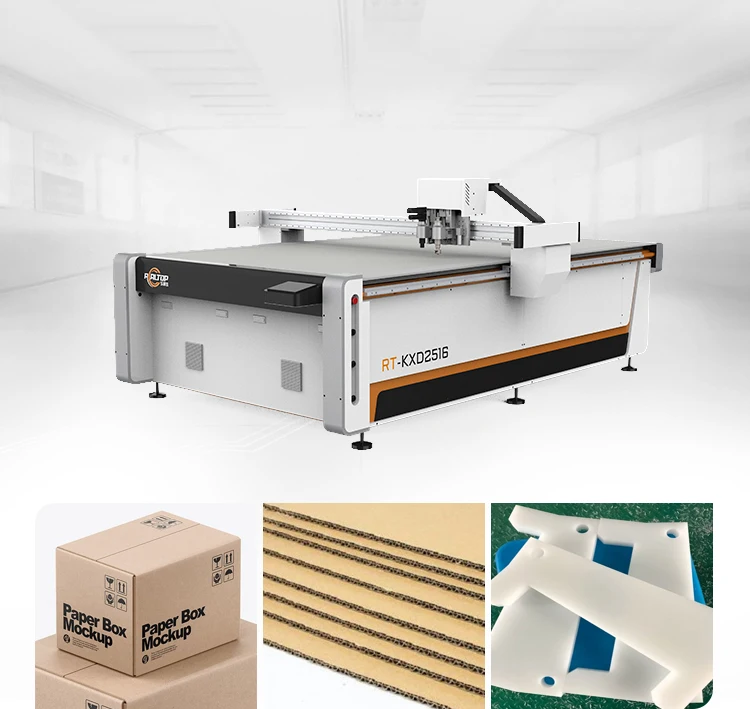
| Carton and packaging sample making | Corrugated cardboard, honeycomb cardboard, grey board up to 100 mm |
| Gasket and sealing pad fabrication | Rubber, PTFE, ETFE, composite gasket sheet |
| Foam and composite processing | PU, EVA, XPE, sponge, foam board, fiberglass |
| Automotive interior trimming | Leather, textile, non-woven fabric, carpet |
| Soft furnishings and floor mats | Cloth, carpet, PVC, PP, PE, PU |
| Graphic advertising and printing | Sticker, film, plastic box, corrugated board |
Why the Wrong Tool Head Ruins More Material Than a Dull Blade
Blade type and oscillation frequency must match the substrate density, not just the thickness number on a data sheet.
I have watched packaging sample makers feed high-density grey board through a standard oscillating knife set up for single-wall corrugated and end up with crushed fibers and ragged fold edges across an entire batch. The machine was not at fault. The tool head was. When the cutting resistance exceeds what the blade geometry is designed to handle, the knife pushes rather than slices, and the damage only shows after the sample is assembled and the crease splits [NEED_CITE: CNC oscillating knife cutting machine specifications and tool head selection by material density]. This is why a CNC oscillating knife cutting machine specifications sheet must list which blade, oscillation rate and downforce setting each material demands, not just a blanket thickness range.
Matching Tool Head Geometry to Substrate Density
The RT-D2516/RT-S2516 carries up to ten tool head options on a single multifunctional carriage. For single-wall and double-wall corrugated, a standard oscillating knife with a pointed tip slices through flutes cleanly. When the job shifts to honeycomb board or high-density grey board used in luxury packaging, a high-power vibrating knife with a wider blade profile and greater downforce maintains edge integrity. A creasing wheel then scores fold lines without cutting through the face liner, and a V-cutting knife slots internal corners for rigid box construction. Choosing the correct tool head before production starts is what separates a CNC oscillating knife cutting machine from a flatbed plotter that happens to hold a blade.
Vacuum Table Zoning and Small Part Retention
Packaging sample runs often nest dozens of small inserts, dividers and closure tabs on a single sheet. The magnesium-aluminum alloy vacuum table on this cutter uses a fluorocarbon PVDF-coated surface with hard oxidation for flatness, and the 7.5 kW vacuum pump pulls suction through zoned channels. If the zones are too large relative to the part footprint, air leaks around the edges and small pieces lift during the final cuts [NEED_CITE: vacuum table zoning requirements for nested small-part cutting]. Specifying zone layout around the buyer’s typical nesting pattern prevents the lift-and-tear failures that scrap the last piece in every nest.
Reading the Specs That Actually Matter
A 9 kW rated power figure covers the servo drives, vacuum pump and control system combined, not cutting force alone. The repeated accuracy of ≤0.1 mm across a 1600 × 2500 mm working area is what allows crease lines and cut paths to register within the tolerance needed for folding carton assembly. Delta or optional Panasonic servo motors driving Taiwan Hiwin linear guides keep the carriage on track at translational velocities up to 2000 mm/s without introducing the micro-stutter that leaves chatter marks on coated board. The HP-GL compatible instruction system and auto typesetting software accept PLT, DXF and AI files directly, so a packaging designer’s existing artwork flows into the nesting workflow without manual re-drawing [NEED_CITE: HP-GL and DXF compatibility in packaging CAD-to-cut workflows].
The Hidden Cost of Skipping the Sample Cut
Ordering a machine on working area and price alone, then discovering the standard oscillating knife cannot penetrate the buyer’s 8 mm EVA foam or that the CCD camera loses printed registration marks at full production speed, turns a capital investment into a negotiation over return freight. Ragged edges on gasket material cause sealing failures downstream. Insufficient vacuum zoning on small carton inserts causes lift and blade deflection. Every one of these problems is avoidable with a sample cutting report on the buyer’s own material before the purchase order is signed [NEED_CITE: material sample testing before CNC cutting equipment purchase].
Why This Configuration Approach Works
In-house design and production cover both knife and laser cutting technologies, so the cutting method is matched to the material rather than forced through one process. Tool head and table configurations are specified per material type and daily production volume, not pulled from a generic options list. CCD camera positioning is tested against the buyer’s actual printed substrates for contour tracking. Software compatibility with PLT, DXF, AI and existing nesting workflows is confirmed before the order is finalized. Voltage, plug type and control panel language are verified against the buyer’s facility before shipment, so the machine runs on day one without an electrician on standby.
Documentation & Verification
- Machine specification sheet listing each included tool head and its material range
- Electrical schematic confirming 380V ±10% wiring and circuit breaker sizing
- Tool head and vacuum zone configuration list matched to your part nesting layout
- Sample cutting report on your cardboard, foam or gasket material with edge quality photographs
- Software licence and file format compatibility note for PLT, DXF, AI and nesting export
- Factory test record with repeated accuracy measurement across the full 1600 × 2500 mm working area
Installation, Commissioning & Support
- Floor space of approximately 3450 × 2300 mm plus operator clearance required for the RT-D2516/RT-S2516 frame
- Dedicated 380V ±10% circuit with adequate breaker rating for the combined 9 kW rated power draw
- Machine arrives assembled; vacuum pump and conveyor belt connected on-site during commissioning
- First-run parameter setting for oscillation frequency, downforce and cutting speed on your material
- Operator training on tool head changeover, CCD mark registration and nesting software workflow
- Spare blade and consumable list provided with recommended replacement intervals per material
Before You Request a Quote
Send the material type, thickness, sheet size and the daily volume you plan to cut. Include a printed sample if CCD contour recognition is needed, along with your facility voltage, frequency and preferred control panel language. If you already run nesting software, share the file format so compatibility is verified before the quotation stage.
Frequently Asked Questions
Q: How do I select the correct tool head for my cardboard or foam thickness?
A: Tool head selection depends on material density, not just thickness. Standard oscillating knives handle single-wall corrugated and thin foam, while high-power vibrating knives and pneumatic knives are specified for dense grey board, honeycomb core and sponge up to 100 mm. A sample cut on your actual material confirms the correct blade geometry and oscillation setting before the machine is built.
Q: Can the CCD camera track printed marks on corrugated packaging at production speed?
A: The system offers small CCD mark point positioning, panoramic camera recognition and projection positioning. Tracking reliability depends on mark contrast, print quality and surface texture. We test the CCD against your printed samples at target cutting speed and document the result in a sample cutting report before you commit to the order.
Q: Is vacuum suction sufficient for small carton parts in a nested layout?
A: The magnesium-aluminum alloy table with zoned channels and a 7.5 kW vacuum pump provides strong hold-down, but small parts need zones sized to their footprint. We configure vacuum zoning around your typical nesting pattern and verify retention during the sample cutting stage to prevent part lift on the final cuts.
Q: Will my existing PLT, DXF or AI design files work with the included software?
A: The auto typesetting software supports PLT, DXF, AI and other common formats through an HP-GL compatible instruction system. We confirm file import and nesting workflow compatibility with your existing design tools before the order is placed, and include a written compatibility note in the documentation package.
Q: What voltage and control language options are available before shipment?
A: The standard configuration runs on 380V ±10%, with control panel language options including English, Russian, Italian and Chinese. Other languages and voltage configurations are customizable. We confirm plug type, voltage and language in writing before production starts so the machine matches your facility on arrival.


商品评价
Clear filtersThere are no reviews yet.