




Fast Shipping
Carrier information

20k products
Payment methods

24/7 Support
Unlimited help desk

2-day Delivery
Track or off orders
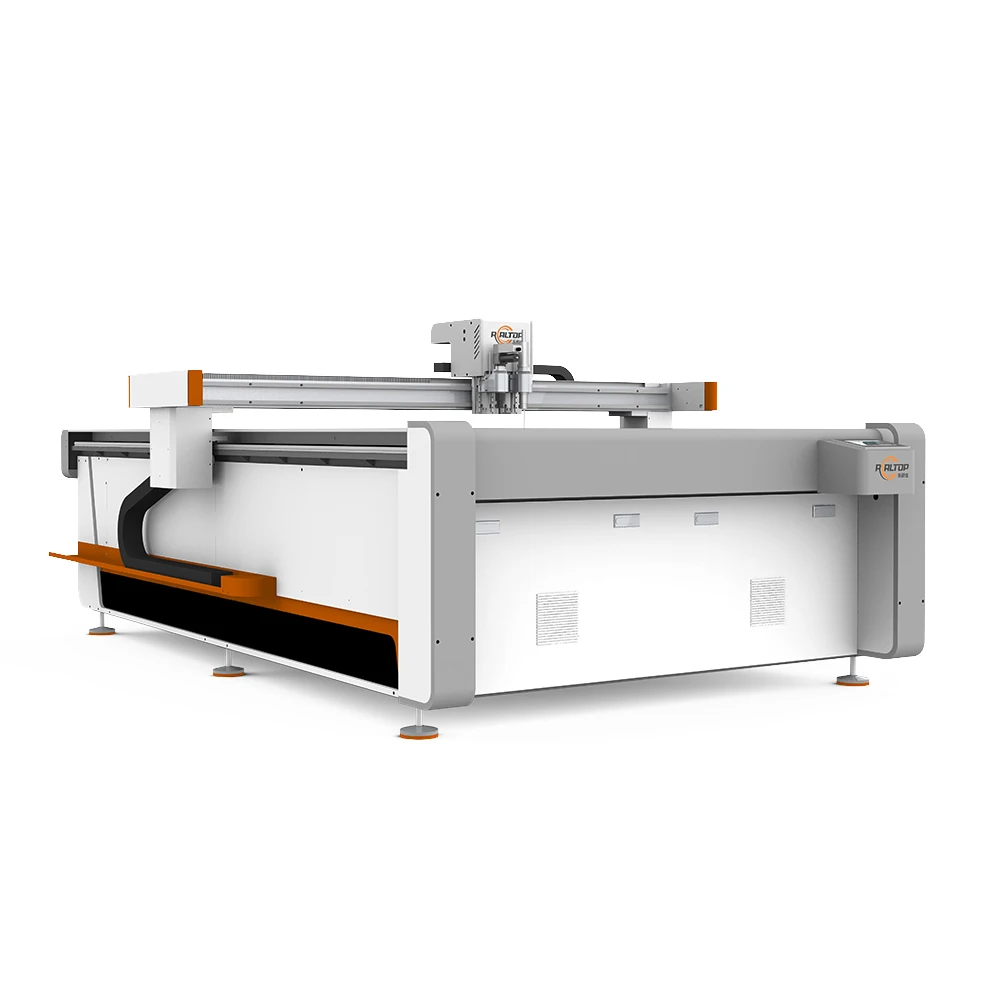
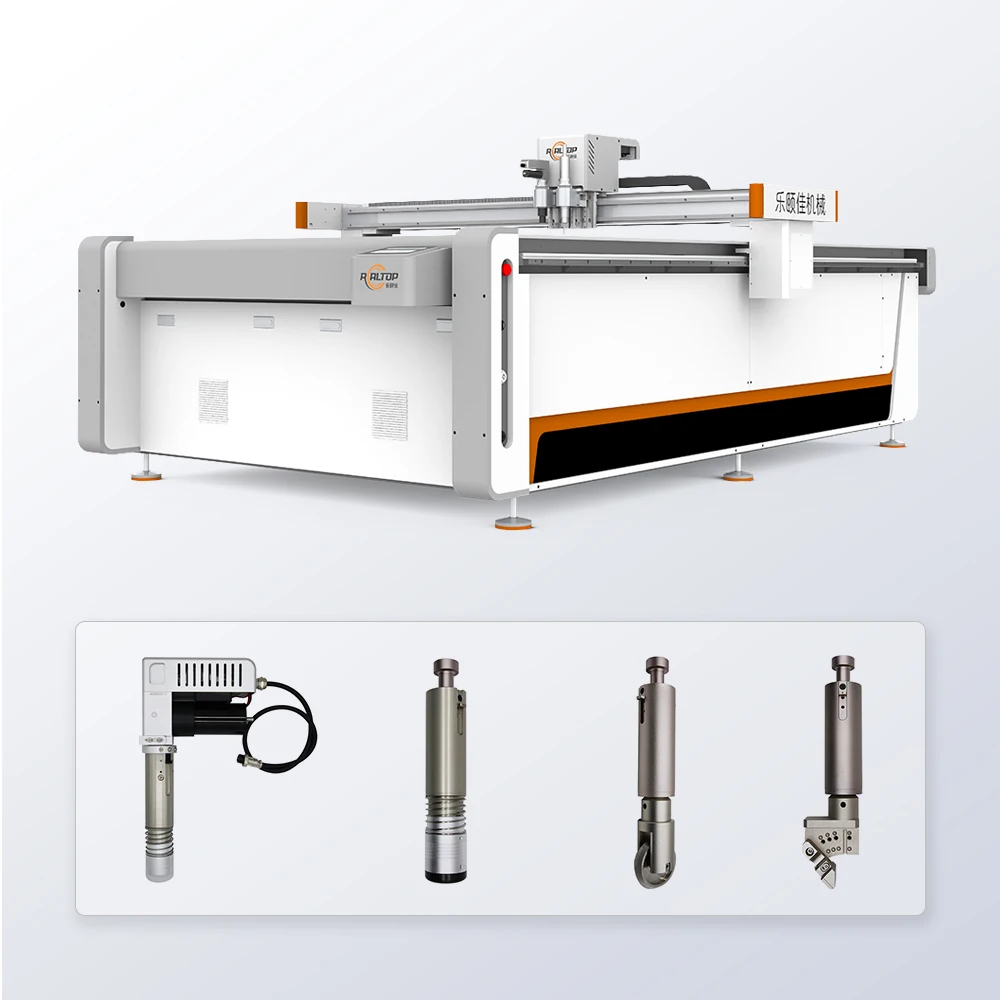
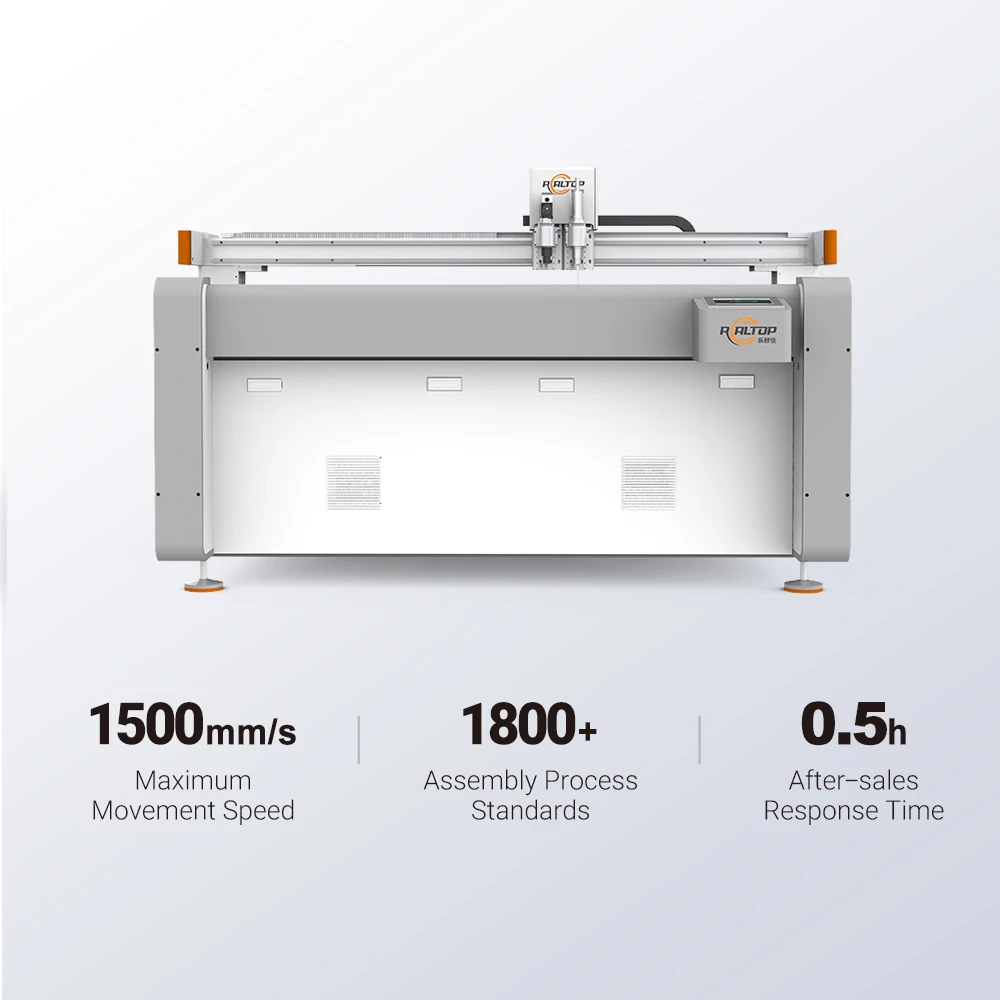
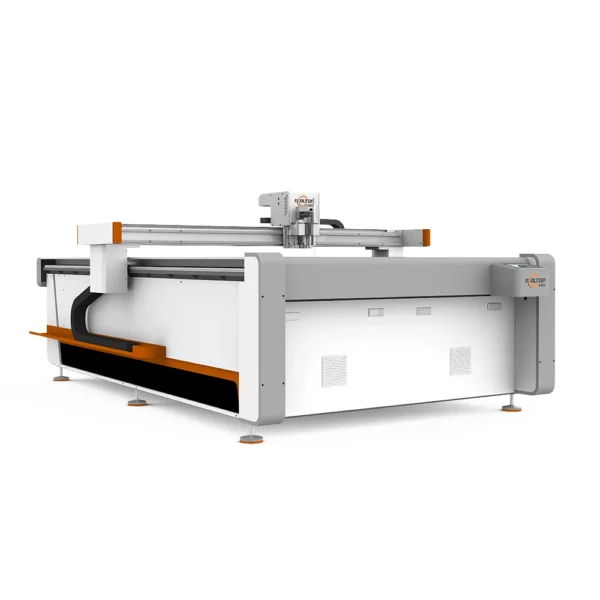
Multi-Tool Versatility — The 1625 CNC oscillating knife cutting machine offers seven interchangeable tool heads configured per flute type, board weight, and production volume so packaging producers can match the cutting method to the material rather than force one method.
Technical Specifications
| Parameter | Value |
|---|---|
| Model | 1625 |
| Product Type | CNC Oscillating Knife Cutting Machine |
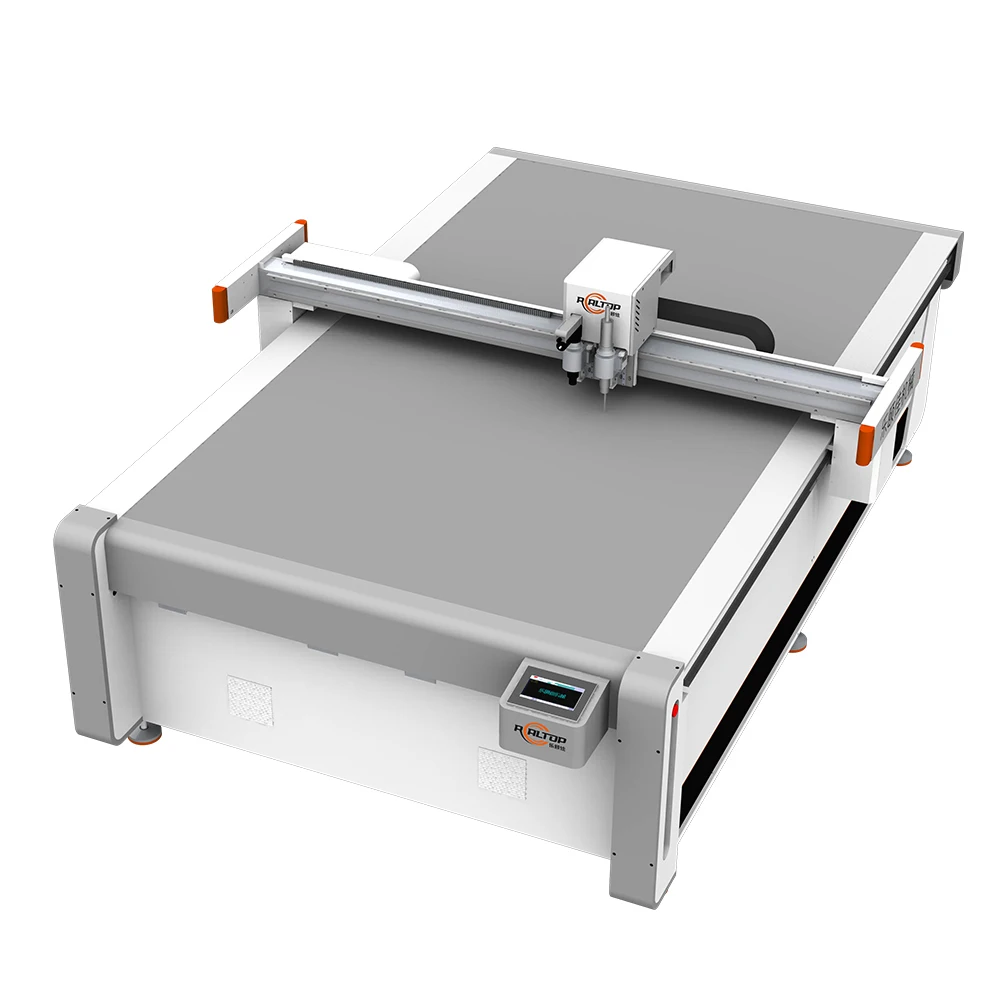
| Working Area | 1600×2500 mm |
| Tool Head Options | Oscillating knife, Driven rotary knife, Creasing wheel, Kiss cutting tool, Pneumatic knife, Milling tool, V-groove knife |
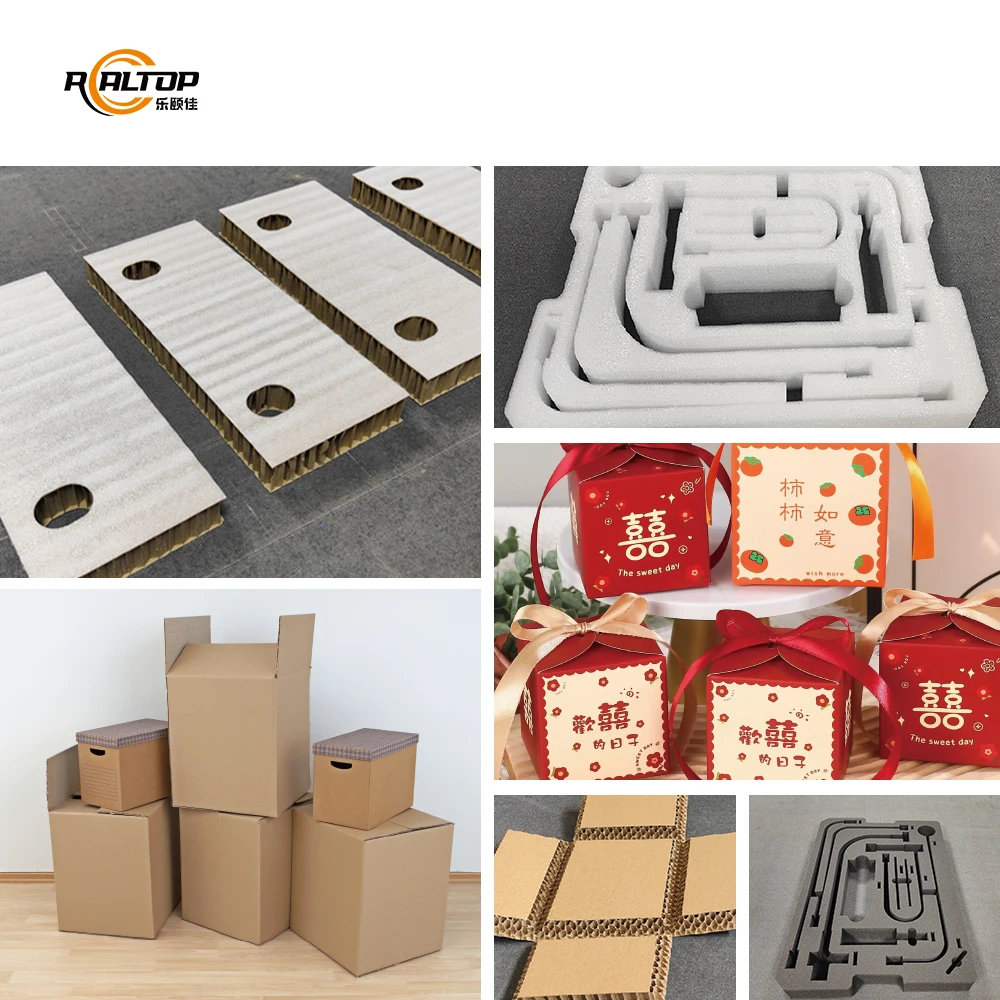
| Applicable Materials | Fabric, Cardboard, Carton, Mats, PVC, EVA, Leather, Acrylic, Foam, PTFE, Rubber |
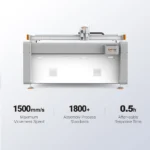
| Cutting Speed | 0–1500 mm/s |
| Cutting Thickness | ≤ 40mm (basis not stated in source — confirm material type / density) |
| Cutting Accuracy | ±0.1 mm |
| Vacuum Pump Power | 9 kW |
| Voltage | 110V, 220V, 380V |
| Profile Format | PLT, DXF, AI, PDF |
| Safety Device | Infrared sensor device and emergency stop device |
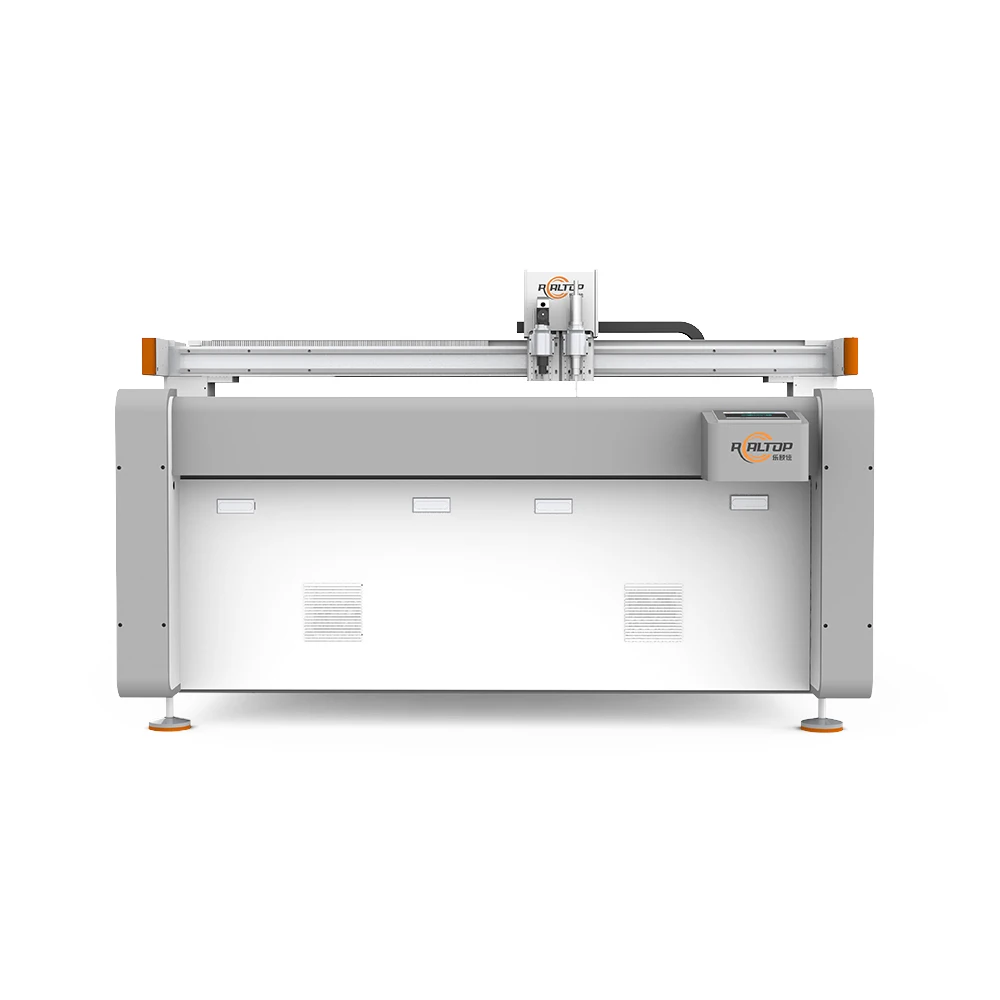
| Machine Size | 3300×2100×1350 mm |
| Control System | PLC control panel with dedicated packaging box structure design software |
| Vacuum Table | Aluminum bellows vacuum table |
| Servo Motor Options | Panasonic, Delta, Dorna (rated or peak not specified in source) |
| Language Options | English, Russian, Italian, Chinese (custom languages available) |
| Standards | CE |
Application Suitability
| Application | Material or Output |
|---|---|
| Packaging sample making and carton prototyping | Corrugated cardboard (E-flute, B-flute, BC-flute), greyboard, cardstock, art paper, specialty paper |
| Short-run die-cut replacement and custom packaging | EVA foam, EPE foam, PU foam, rubber mats, velvet/fleece fabric, non-woven fabric |
| Multi-material converter operations | Thin plastic sheets (PVC, PET), leather, synthetic leather, composite materials, adhesive-backed materials |
Why Material Density Matters More Than Working Area for CNC Oscillating Knife Cutting Machine Specifications
A machine specified on working area alone often fails when the material thickness or density exceeds what the configured tool head can handle.
I have walked through packaging plants where a machine was bought because the table was large enough, only to discover that five-layer B-flute corrugated board crushed at the edges because the oscillating frequency was too low for that weight. The vacuum zones were also too broad, so smaller carton blanks lifted mid-cut. These are the failures that don’t show up on a spec sheet but cost weeks of rework [NEED_CITE: typical corrugated board density and flute weight classifications].
Tool Head Selection by Flute Type and Board Weight
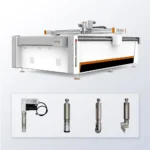
The 1625 supports seven tool heads on a single gantry: oscillating knife, driven rotary knife, creasing wheel, kiss cutting, pneumatic knife, milling, and V-groove knife. For E-flute and micro-flute boards, the oscillating knife handles clean through-cuts, while the creasing wheel scores fold lines without fracturing the top liner. Heavier B-flute and BC-flute stock demands the V-groove knife for precise fold channels. The driven rotary knife suits continuous contour work on thinner cardstock where edge sealing matters. Specifying the correct head per flute type avoids ragged edges and delamination that plague packaging prototypes cut with a generic blade.
Vacuum Table Zoning for Small Packaging Blanks
The aluminum bellows vacuum table on the 1625 delivers full-surface adsorption with high flatness. For packaging converters cutting multiple small carton blanks or foam inserts from a single sheet, zoning becomes critical. Without adequate partitioning, vacuum pull concentrates under larger pieces, leaving smaller blanks free to shift at high cutting speeds. When requesting a CNC oscillating knife cutting machine for packaging work, confirm how many independent vacuum zones the table supports and whether they align with your typical nesting layout. A zone map matched to your blank sizes prevents lift and the scrap that follows [NEED_CITE: vacuum zoning best practices for CNC flatbed cutting].
Reading the Specifications Beyond the Numbers
The cutting speed range of 0–1500 mm/s describes maximum travel, not sustained cutting throughput. Actual speed depends on material hardness, flute count per meter, and the number of direction changes in the cut path. The ±0.1 mm accuracy figure reflects positioning repeatability under controlled conditions — thermal expansion in a non-climate-controlled shop can shift that tolerance over a long production run. The 9 kW vacuum pump provides sufficient suction for most corrugated and foam stock, but highly porous or textured materials may leak vacuum at the edges, requiring a sacrificial spoilboard or custom gasket. Servo motor selection across Panasonic, Delta, and Dorna affects acceleration profiles and positional holding torque, which directly influence edge quality on tight-radius packaging contours. The PLC control panel integrates dedicated packaging box structure design software, reducing the translation step between your CAD file and the machine’s tool path.
The Hidden Cost of Skipping the Sample Cut
Buyers who commit to an order based on a spec sheet alone often discover problems only when production begins. A German packaging plant once sourced an oscillating knife cutter for corrugated board, selecting purely by working area. When they ran five-layer B-flute, the blade frequency could not keep up, and every edge came out frayed. The fix required a high-frequency oscillating head and a re-zoned vacuum table — a retrofit that cost more than getting the configuration right from the start. Requesting a sample cutting report on your own material before order commitment eliminates this risk entirely [NEED_CITE: common causes of edge quality failure in digital knife cutting].
Why Source the 1625 From This Production Line
In-house design covers both the knife tooling and the vacuum table engineering, so tool head and table configuration are specified together rather than sourced from separate suppliers. The dedicated packaging box structure design software integrated into the PLC eliminates the need for a separate CAM license. Sample cutting on the buyer’s own corrugated, foam, or specialty material happens before the order is finalized, so edge quality and vacuum hold-down are verified on the actual stock. Voltage, plug type, and control language — English, Russian, Italian, Chinese, or custom — are confirmed in writing before the machine enters production. The aluminum bellows vacuum table is built and tested in-house, so flatness and zone partitioning are documented in the factory test record.
Documentation & Verification
- Machine specification sheet listing all configured tool heads and their matched applications
- Electrical schematic with voltage and frequency confirmation for your local supply standard
- Tool head and table configuration list matched to your flute type, board weight, and daily volume
- Sample cutting report on your own corrugated or specialty material showing edge quality and accuracy
- Software licence and file format compatibility note covering PLT, DXF, AI, and PDF workflows
- Factory test record documenting vacuum flatness, positioning accuracy, and cutting speed verification
Installation, Commissioning & Support
- The 3300×2100×1350 mm footprint requires clear floor space with level concrete and anchor bolt provisions
- The 9 kW vacuum pump and machine servo drives need a dedicated circuit matching your confirmed voltage (110V, 220V, or 380V)
- Machine ships partially assembled; gantry and control panel are mounted and wired on-site during commissioning
- First-run parameter setting includes vacuum zone calibration, tool head offset entry, and cutting speed tuning for your material
- Operator training covers PLC interface navigation, packaging structure software workflow, and tool change procedures
- Spare parts list includes oscillating blades, creasing wheels, vacuum seals, and drive belt specifications
Requesting a Configuration That Fits Your Line
Before sending an inquiry, have your material samples ready — specify flute type, board weight, and any adhesive or coating on the stock. Confirm your local voltage and frequency standard, the control panel language your operators need, and the file format your design team currently uses. If you are cutting mixed materials such as foam inserts alongside corrugated blanks, note the full material range so the tool head package covers every substrate on your line.
Frequently Asked Questions
Q: Which tool head is correct for my flute type and board thickness?
A: For E-flute and micro-flute, the oscillating knife with creasing wheel handles through-cuts and fold scores. B-flute and BC-flute typically require the V-groove knife for clean fold channels. The driven rotary knife suits thin cardstock contours. Your exact flute weight and board density determine the final configuration, verified during sample cutting before order.
Q: How is the cutting thickness of ≤ 40mm verified?
A: The maximum cutting depth depends on material density, flute structure, and tool head selection. A 40mm EVA foam block cuts differently from a 40mm BC-flute corrugated stack. Request a sample cutting report on your specific material to confirm achievable depth, edge quality, and cycle time before committing to an order.
Q: Does the packaging design software import my existing file formats?
A: The integrated PLC software accepts PLT, DXF, AI, and PDF profiles. Before shipment, a file format compatibility note confirms that your current nesting workflow and design files open correctly. If you use a proprietary packaging CAD system, share sample files during the inquiry stage so compatibility is tested in advance.
Q: Is vacuum table zoning sufficient for small packaging parts?
A: The aluminum bellows table provides full-surface adsorption, but small carton blanks or foam inserts can lift if zones are not partitioned to match your nesting layout. Confirm your typical blank sizes and sheet utilization during the specification stage so the zone map is configured to hold the smallest piece in your production mix.
Q: What voltage, plug, and language are confirmed before shipping?
A: Voltage options include 110V, 220V, and 380V. The plug type and control panel language — English, Russian, Italian, Chinese, or a custom language — are confirmed in writing before production begins. The electrical schematic shipped with the machine matches your confirmed local supply standard.


商品评价
Clear filtersThere are no reviews yet.