


Fast Shipping
Carrier information

20k products
Payment methods

24/7 Support
Unlimited help desk

2-day Delivery
Track or off orders
Customized knife and vacuum configuration — tool head frequency, blade profile and table suction zones are specified after reviewing the buyer’s actual fabric, leather or foam sample rather than quoted from a standard catalog line.
Technical Specifications
| Parameter | Value |
|---|---|
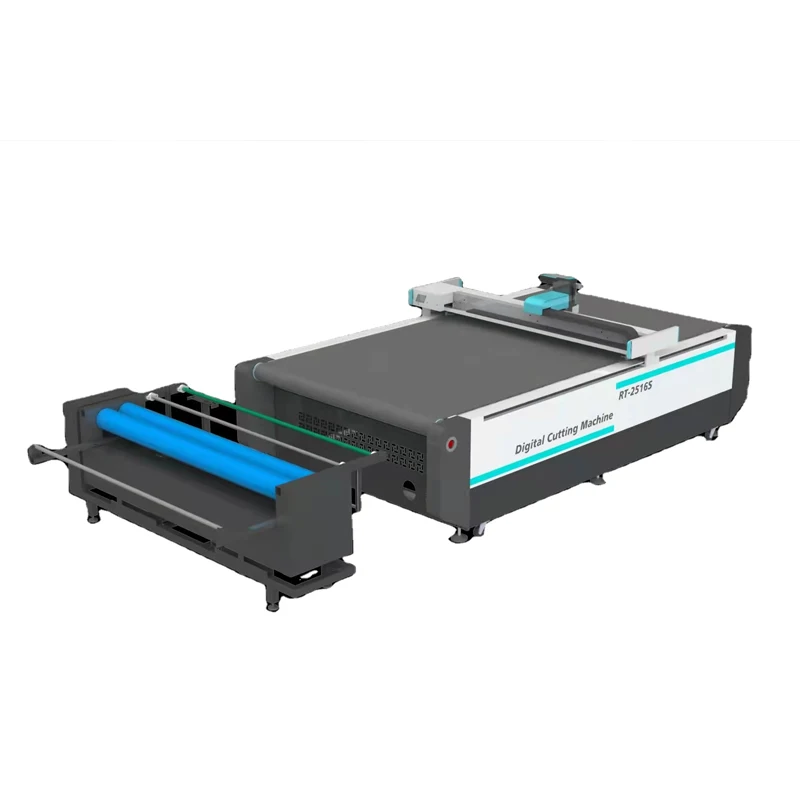
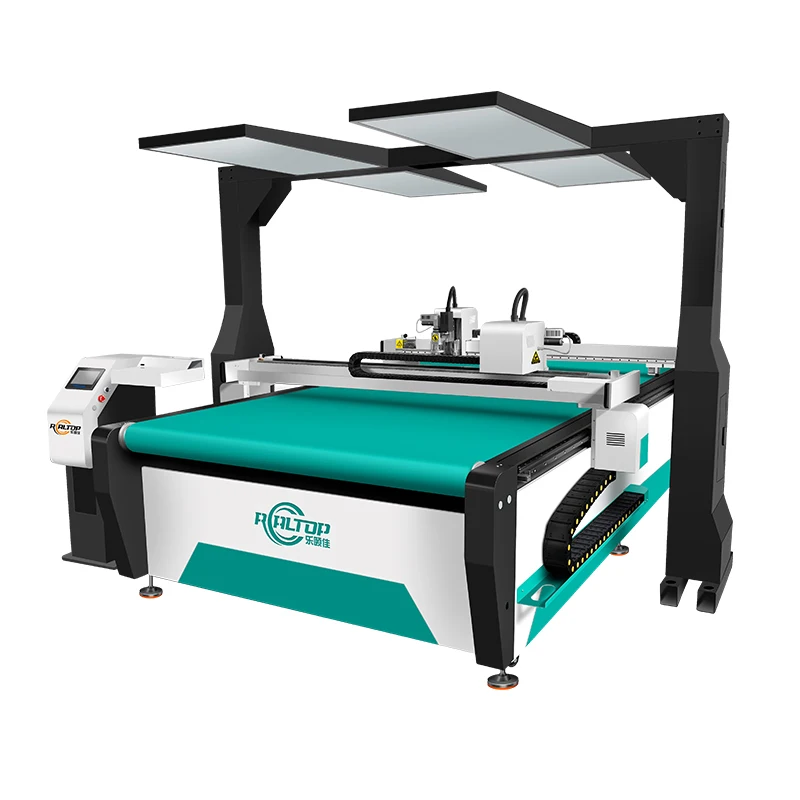
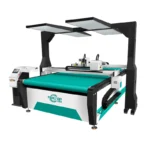
| Product Type | CNC Oscillating Knife Cutting Machine |
| Model | RT-D2516 / RT-S2516 |
| Working Area | 1600 × 2500 mm |
| Machine Size | 3450 × 2300 × 1250 mm |
| Rated Power | 9 kW |
| Vacuum Pump | 7.5 kW |
| Cutting Thickness | ≤ 50 mm (depending on material density and structure) |
| Translational Velocity | 800 – 1200 mm/s |
| Repeated Accuracy | ≤ 0.1 mm |
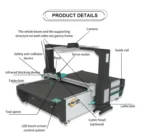
| Table Type | Flat working table with vacuum and auto feeding |
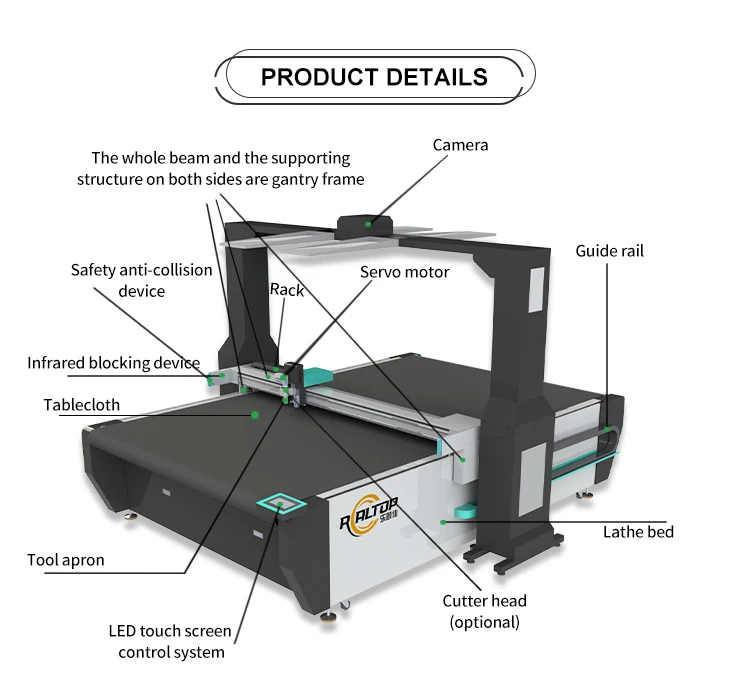
| Countertop | Aviation aluminum with inner wind-channel structure |
| Table Cloth | High-density felt |
| Tool Head | Swiss imported knife — full cut, half cut, cursor location |
| Transmission System | Digital servo motor, linear guide, synchronous belt, ball screw |
| Transmission Mechanism | Pinion and rack |
| Guide Rail | Taiwan Hiwin rail |
| Servo Motor | Panasonic |
| Conveyor Belt | Germany imported |
| Lathe Bed | Overall welding, imported milling machine processing |
| Control Electrical Box | Fixed on fuselage, high-flexibility cables |
| Safety Device | Infrared sensors |
| Voltage | 380 V ± 10 % |
| Instruction System | HP-GL compatible format |
| Software Language Options | English, Russian, Italian, Chinese (customizable) |
| Certification | CE |
Application Suitability
| Application | Material or Output |
|---|---|
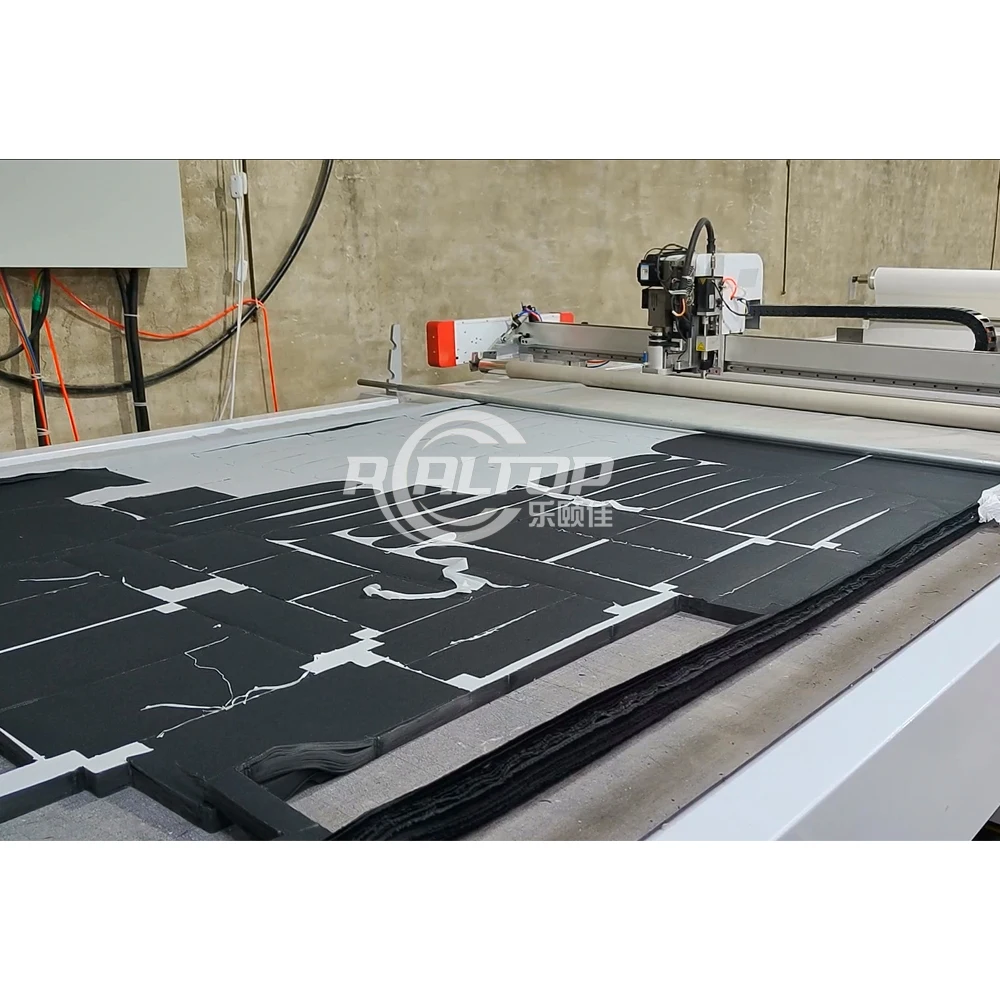
| Garment and footwear fabric cutting | Single and multi-layer textile with nesting for yield optimization |
| Leather goods production | Natural and synthetic leather hides for bags, shoes and belts |
| Automotive interior trimming | Sponge composite leather, PVC and soft trim panels |
| Composite and foam fabrication | Closed-cell and open-cell foam up to 50 mm thickness |
| Signage and soft material processing | Flexible banner, vinyl and soft display substrates |
Why Material Thickness Decides the CNC Oscillating Knife Cutting Machine Specifications You Actually Need
A working area of 1600 × 2500 mm tells you nothing about whether the knife will penetrate your stock at production speed.
I once watched a fabric shop accept delivery of a flatbed cutter spec’d only by table size. The machine arrived, the operator loaded six layers of automotive composite leather, and the oscillating blade stalled mid-cut — leaving ragged, torn edges across an entire lay. The buyer had assumed any machine with a large enough bed could handle the job. That assumption cost them weeks of rework while the tool head was swapped and the vacuum zones were re-mapped for smaller nested parts. [NEED_CITE: common causes of cutting edge defects in multi-layer fabric processing]
The lesson repeats across workshops in Shandong and beyond: the tool head frequency, the blade geometry, the vacuum hold-down pattern and the drive rigidity all have to match what is actually sitting on the felt. Choosing a CNC oscillating knife cutting machine without first confirming these variables against your material is the single most expensive mistake in the procurement cycle.
Oscillating Knife Behavior Across Fabric, Foam and Leather
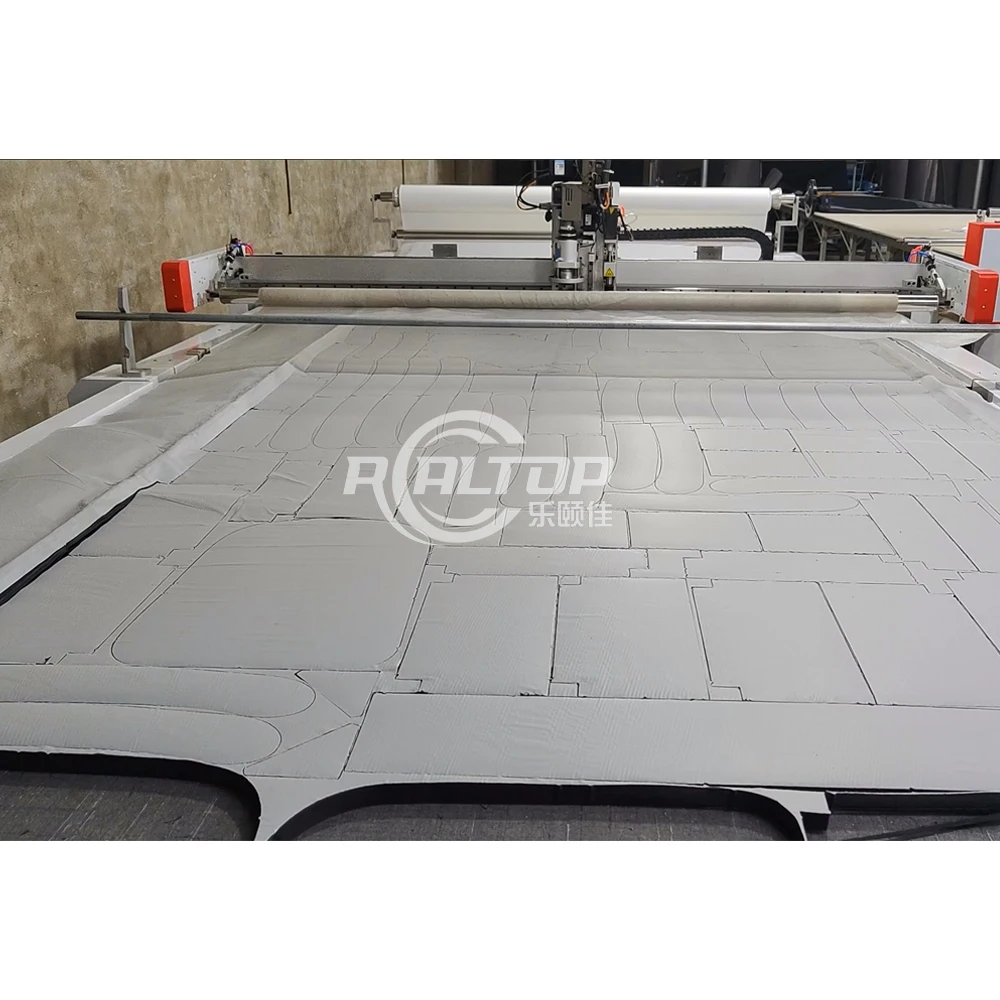
The Swiss imported tool head on the RT-D2516/RT-S2516 runs full cut, half cut and cursor location modes. Full cut drives the blade completely through the lay, which is what garment manufacturers need when separating nested pattern pieces from multi-layer textile. Half cut scores the surface without penetrating, useful for creasing carton samples or marking fold lines on leather hides before manual separation. Cursor location lets the operator set a reference point for repeat jobs, reducing set-up time when switching between short production runs.
The vibration frequency of the oscillating blade determines how cleanly it separates fibrous materials. Dense sponge composite leather used in automotive interiors demands a different stroke profile than lightweight woven polyester. Swapping the blade and adjusting the oscillation parameters is straightforward on this platform because the modular tool holder also accepts round knives, marking pens and an auto feeder attachment, so the same chassis covers process changes without a second machine purchase.
Vacuum Table Zoning and Small-Part Hold-Down
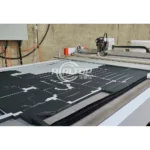
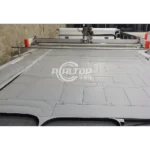
The countertop is machined from aviation aluminum with an internal wind-channel structure designed to distribute suction evenly. A 7.5 kW vacuum pump pulls air through the high-density felt table cloth. For large single sheets — a full hide of synthetic leather, for example — uniform suction across the entire bed prevents the material from shifting during high-speed traversal.
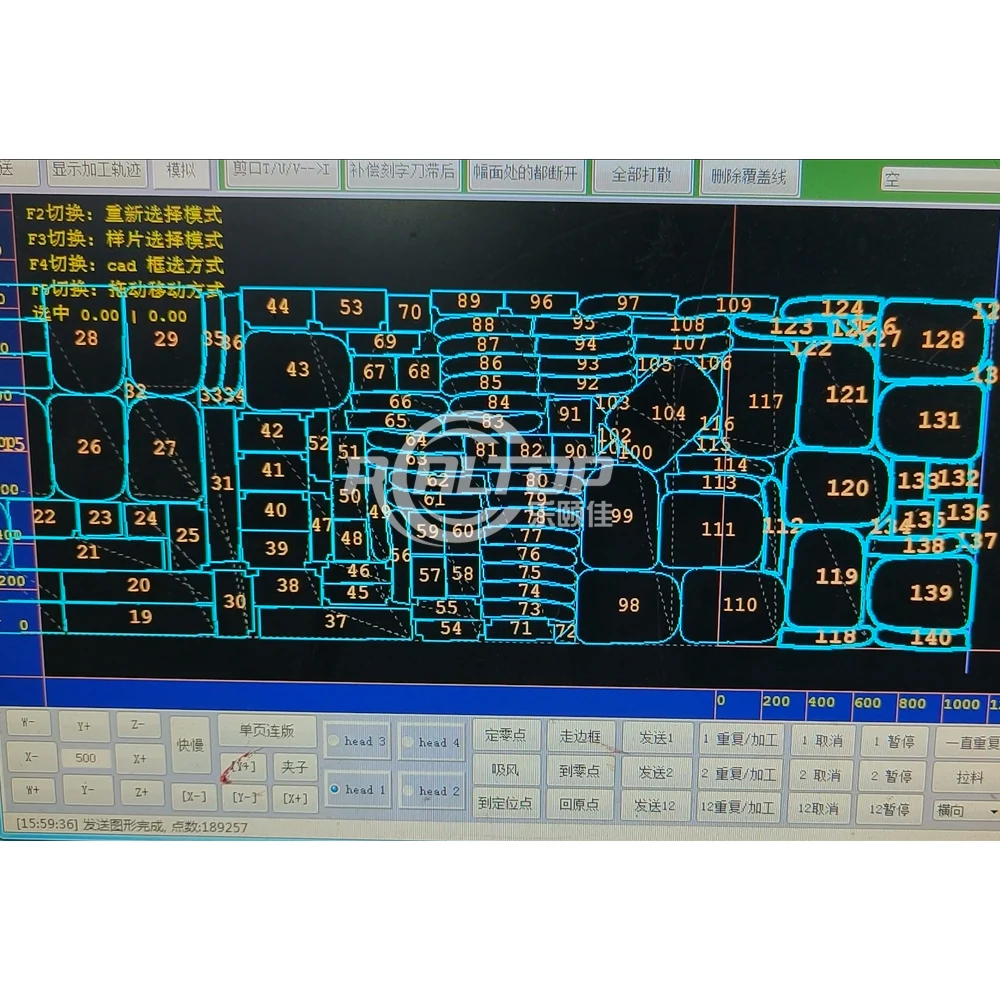
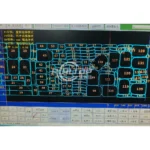
The real challenge appears when the nesting software arranges dozens of small pattern pieces with narrow gaps between them. Once the blade cuts through, individual parts can lift if the vacuum zoning does not maintain localized suction on pieces smaller than a shoe insole. Buyers cutting intricate garment panels or automotive gasket profiles should confirm the table’s zone segmentation against their typical nesting layout before signing the purchase order. [NEED_CITE: vacuum hold-down requirements for small nested parts on flatbed cutting tables]
Reading the Specs That Directly Affect Cut Quality
Pinion-and-rack transmission paired with Taiwan Hiwin linear guides and Panasonic digital servo motors delivers repeated positioning accuracy of ≤ 0.1 mm. In garment cutting, this tolerance governs whether collar pieces from different lays align during sewing. In automotive interior work, it determines if a dashboard trim panel fits its mating surface without manual trimming.
The 9 kW rated power covers the spindle oscillation, the servo drives and the conveyor feed simultaneously. Combined with the 7.5 kW vacuum pump, total connected load requires a dedicated three-phase circuit at 380 V ± 10 %. Facilities running older wiring or shared bus bars should verify voltage stability before installation — fluctuating supply degrades servo response and produces inconsistent cut depth across the bed. The translational velocity range of 800 – 1200 mm/s is the traverse speed; actual cutting speed depends on material density, number of layers and the complexity of the contour path.
What Happens When the Configuration Does Not Match the Stock
When a buyer selects a drag knife instead of an oscillating knife for thick foam, the blade drags and tears rather than slices, leaving crushed edges that fail visual inspection. When the vacuum zoning covers only broad areas, small nested pieces lift mid-cut and the blade catches the lifted edge, ruining both the part and the felt. When the conveyor belt tension is set for thin fabric but the operator feeds heavy composite leather, the material creeps during feeding and the first cut line lands off-register.
These failures are not machine defects — they are configuration mismatches. Each one can be prevented by running a sample cut on the buyer’s own material at the intended production speed before the configuration is locked in. [NEED_CITE: material-specific tooling selection for CNC flatbed cutting systems]
Why Source the RT-D2516/RT-S2516 From REALTOP
In-house design covers both knife and laser cutting technology, so the cutting method is matched to the material instead of forcing every job onto one platform. The tool head and vacuum table configuration is specified per material type and production volume, not sold as a fixed catalog package.
CCD camera positioning is available for printed contour work when the application requires it, and software compatibility with the buyer’s existing HP-GL workflow is confirmed before the order is placed. Voltage, plug standard, control language and documentation are all adjusted to the target market. Sample cutting on the buyer’s own material is completed before commitment, so the configuration is validated against real stock rather than generic test media.
Documentation & Verification
- Machine specification sheet listing confirmed tool head and vacuum zone layout
- Electrical schematic showing 380 V wiring and servo circuit protection details
- Sample cutting report produced on buyer’s own fabric or foam at target speed
- CE declaration file matching the exported configuration
- Software licence and HP-GL file format compatibility note for buyer’s nesting workflow
- Packing photographs documenting crate condition before container loading
Installation, Commissioning & Support
- Dedicated 380 V three-phase circuit required for the combined 9 kW machine and 7.5 kW vacuum pump load
- Level concrete floor with anchor points matching the 3450 × 2300 × 1250 mm machine footprint
- Machine ships as a single assembled unit; the control electrical box is fixed on the fuselage with high-flexibility cables
- First-run calibration covers pinion-and-rack backlash, servo tuning and vacuum zone balance across the aviation aluminum countertop
- Operator training includes tool head changeover between oscillating knife, round knife and marking pen modules
- Spare parts list covers Swiss knife blades, high-density felt table cloth and vacuum pump consumables
Before You Request a Quotation
Share the exact material type, thickness range and whether you cut single-ply or multi-layer lays. Specify your local voltage and frequency, the control language your operators need, and whether your nesting software outputs HP-GL or a proprietary format. If your production includes printed contour work, state the mark type and minimum registration tolerance so the CCD option can be evaluated.
Frequently Asked Questions
Q: How do I match the oscillating knife type to different material thicknesses?
A: Blade profile and oscillation frequency change with material density. Thin woven fabric needs a fine-point blade at high frequency for clean separation, while 50 mm foam requires a longer, stiffer blade at lower frequency to avoid deflection. The Swiss imported tool head on the RT-D2516/RT-S2516 supports full cut and half cut modes, and the blade is swapped in the modular holder to suit each job.
Q: What vacuum coverage is needed for small nested parts versus large sheets?
A: Large hides need broad, uniform suction across the 1600 × 2500 mm bed. Small nested pieces require zoned vacuum that maintains localized hold-down after the surrounding waste is cut away. The aviation aluminum countertop with internal wind-channel structure distributes suction through the high-density felt, and zone configuration should be confirmed against your nesting pattern before order.
Q: Is CCD camera contour recognition included, and can it track marks at production speed?
A: CCD positioning is available as a configurable option for printed contour cutting. Tracking performance depends on mark contrast, size and the translational speed setting. Request a sample cut on your printed material so registration accuracy can be verified at your intended cutting speed before the configuration is finalized.
Q: What voltage, plug and language options are confirmed before shipment?
A: The standard supply is 380 V ± 10 %, but voltage and plug type are adjusted to the destination market before production. Control software is available in English, Russian, Italian and Chinese, with other languages configurable. The electrical schematic is reviewed with the buyer to ensure the workshop circuit matches the combined machine and vacuum pump load.
Q: Which spare parts should I stock for continuous production?
A: High-wear items include Swiss oscillating knife blades, the high-density felt table cloth and vacuum pump filters. The Germany imported conveyor belt and Taiwan Hiwin guide rails have longer service intervals. A recommended spare parts list is provided with the machine, and consumables are available through the after-sales channel for ongoing supply.


商品评价
Clear filtersThere are no reviews yet.