








Fast Shipping
Carrier information

20k products
Payment methods

24/7 Support
Unlimited help desk

2-day Delivery
Track or off orders
Tool Head Matched to Material — Every oscillating knife, creasing wheel and kiss-cut tool is selected against the buyer’s actual cardboard grade and flute profile before the machine is built, eliminating the crushed-edge failures common when a single head is forced across mixed packaging stocks.
Technical Specifications
| Parameter | Value |
|---|---|
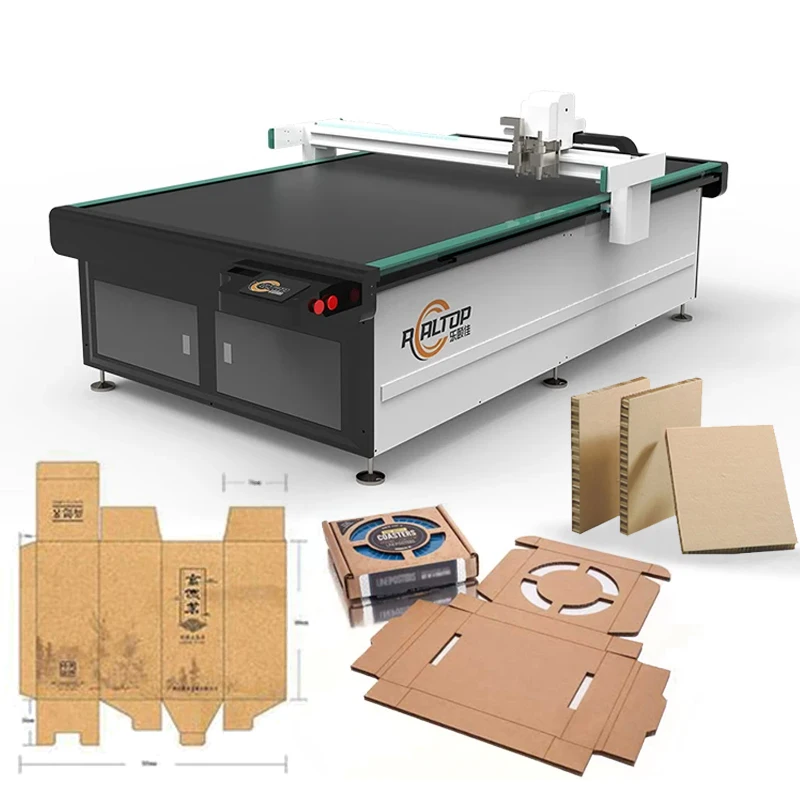
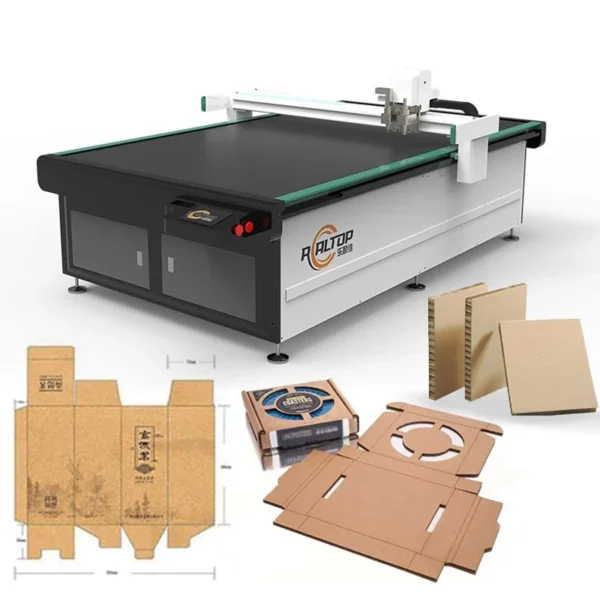
| Product Type | CNC Oscillating Knife Cutting Machine for Packaging and Cardboard |
| Working Area | 2500×1300mm / 1600×2500mm |
| Machine Size | 3550×1910×1400mm (RT–R2513) / 3450×2300×1250mm (RT-D2516 / RT-S2516) |
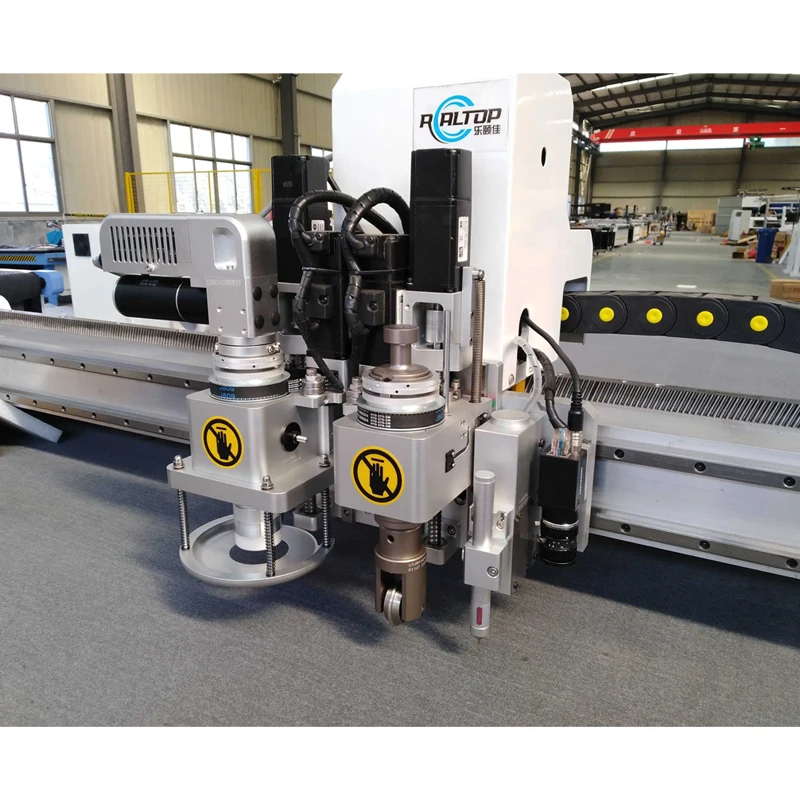
| Cutting Tools | Oscillating knife, creasing tool, kiss-cut knife, round punch |
| Cutting Thickness | ≤18mm (basis not stated in source — confirm material type and density) |
| Fixing Method | Vacuum system with zoned adsorption |
| Vacuum Table | Aluminum alloy honeycomb structure |
| Rated Power | 9 kW |
| Voltage | 380V (frequency not specified in source) |
| Servo Motor | Dongling servo (Delta servo available in alternative configuration) |
| Transmission | Rack transmission with imported linear square guide |
| Data Transmission | Ethernet port |
| Profile Formats | DXF, OLT, PDF, AI |
| Repeated Accuracy | <0.05mm |
| Safety Device | Infrared sensors, emergency stop |
| Software | Professional carton nesting software, language customization supported |
| Blade Supply | 10 pieces of oscillating blades included |
| Vacuum Pump | 7.5 kW (listed in alternative configuration) |
| Linear Rail | Taiwan Hiwin (listed in alternative configuration) |
| Auto Feeding | Available (listed in alternative configuration) |
| Frame | Welded thick square seamless steel structure, high temperature treated |
| Warranty | 1 year (excludes felt and knife blades) |
| Delivery Time | <30 working days |
| Language Options | English, Russian, Italian, Chinese, custom languages available |
Application Suitability
| Application | Material or Output |
|---|---|
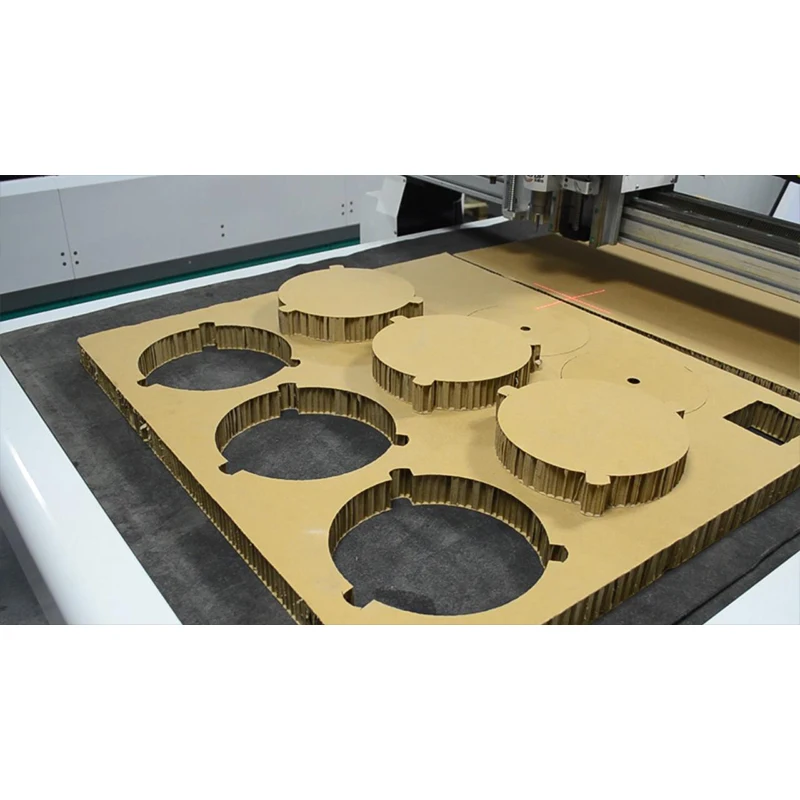
| Packaging carton sample making | Corrugated board, folding carton stock, grey board up to 18mm |
| Sticker and label contour cutting | Self-adhesive vinyl, PP paper, coated label stock |
| Cardboard box short-run production | Single-wall and double-wall corrugated, E-flute and B-flute |
| Gift box and display packaging | Laminated paperboard, foam board, composite sheet |
| Express and logistics carton processing | Kraft liner, test liner, recycled corrugated medium |
| Large electrical appliance carton packaging | Heavy-duty triple-wall corrugated, honeycomb paperboard |
Why the Wrong Tool Head Ruins More Cardboard Than the Wrong Machine
A CNC oscillating knife cutting machine specified on working area alone will still fail if the tool head does not match the flute profile you are actually running. The crease depth, blade frequency and punch diameter must be set against the corrugated grade before the head is assembled, not adjusted on the shop floor after delivery.
I have watched packaging sample shops struggle for weeks with ragged edges on B-flute while the same machine cut E-flute cleanly — the oscillating amplitude was right for thin stock but too aggressive for heavier flutes. Switching to a kiss-cut knife for sticker contour work or a dedicated creasing wheel for fold lines removes the guesswork, but only if the configuration is locked down during the build. [NEED_CITE: oscillating knife frequency matching to corrugated flute profiles]
How the Multi-Tool Head Handles Mixed Packaging Jobs
A single cutting head unit on this CNC oscillating knife cutting machine carries the oscillating knife, creasing tool, kiss-cut knife and round punch simultaneously. That means a folding carton job can be scored, cut and marked for glue tabs in one pass without the operator changing tools mid-sheet. For sample makers running short batches of different box styles, the time saved on tool changeovers matters more than raw cutting speed, because each changeover risks a registration shift that shows up as a misaligned crease line on the finished prototype.
Vacuum Zoning That Actually Holds Small Parts Down
The aluminum alloy honeycomb vacuum table is divided into adsorption zones that follow the cutting path. When a sticker sheet is being kiss-cut into dozens of small labels, the zones under the active cutting area engage while the rest stay dormant, concentrating suction where the blade is working. This prevents the trailing edge of a thin vinyl label from lifting just as the oscillating knife completes its contour — a failure mode that produces a diagonal slash across what would have been a clean part. [NEED_CITE: vacuum table zoning principles for CNC flatbed cutting]
Reading the Specs That Actually Matter for Packaging
The <0.05mm repeated accuracy, achieved through the imported linear square guide and rack transmission, is what keeps a printed die-line registered to its cut path across a full 2500×1300mm sheet of corrugated board. The 7.5 kW vacuum pump paired with the honeycomb table provides the airflow volume needed for porous corrugated stock, which bleeds air far more than solid sheet materials. The 9 kW rated power figure covers the servo drives, spindle oscillation and vacuum pump together, so buyers planning their workshop electrical supply should size the dedicated circuit for the full rated draw plus startup surge. Ethernet data transfer means the nesting software can sit on a networked design workstation while the machine receives jobs directly, avoiding the USB stick workflow that introduces file version errors on busy shop floors.
What Happens When You Skip the Sample Cutting Step
Sending a sheet of your actual corrugated stock to the factory before the machine ships costs a few days and a courier fee. Skipping that step means the oscillating knife frequency, the creasing wheel pressure and the vacuum zone map are all set against a generic cardboard assumption. When the machine arrives and the first B-flute sheet tears at the crease line instead of folding cleanly, the fix requires on-site parameter tuning that delays your production schedule and erodes operator confidence in the equipment from day one. [NEED_CITE: corrugated board creasing failures from incorrect wheel pressure]
Why Buyers Come Back After Testing the Factory
The in-house design team covers both the knife cutting mechanics and the software nesting workflow, so a request to adjust the creasing tool pressure curve is handled by the same engineers who wrote the carton nesting software. Every machine ships with a factory test record run on the buyer’s own material, not on a generic demonstration board. Voltage, plug type and control language are confirmed on the specification sheet before production starts, which eliminates the Friday-afternoon surprise of a 220V machine arriving in a 380V workshop. The documentation package includes a software licence note that confirms exactly which file formats — DXF, AI, PDF, OLT — are natively supported, so there is no post-delivery discovery that your preferred design software exports a format the nesting program cannot read. [NEED_CITE: CE machinery directive documentation requirements for export]
Documentation & Verification
- Factory test record cut on your corrugated grade and sticker stock before dispatch
- Electrical schematic confirming 380V wiring, servo circuit and vacuum pump load
- Tool head configuration list mapping each knife and creasing wheel to your material spec
- Software licence note confirming DXF, AI, PDF and OLT file format compatibility
- Professional carton nesting software manual with language customization record
Installation, Commissioning & Support
- Dedicated 380V circuit sized for the full 9 kW rated power plus startup surge of the servo drives
- Level floor with adequate clearance around the 3550×1910×1400mm machine envelope for sheet loading
- Vacuum pump exhaust routed to workshop extraction to manage cardboard dust accumulation
- First-run parameter tuning on your corrugated flute profile and sticker stock during commissioning
- Operator training on nesting software job setup, tool head selection and blade change procedures
- Spare oscillating blade inventory and creasing wheel replacement schedule provided at handover
What to Send With Your Inquiry
Tell us the corrugated flute types you run — E, B, C or double-wall — along with the maximum sheet size and the daily volume of sample cuts versus short-run production. Confirm your workshop voltage and frequency, the control language your operators need, and whether your existing design workflow uses DXF, AI or another vector format so we can verify software compatibility before the quotation is issued.
Frequently Asked Questions
Q: How is the cutting thickness verified for different cardboard grades?
A: The ≤18mm rating assumes a specific material density that varies between solid grey board, single-wall corrugated and triple-wall stock. We run a sample cutting test on your actual material and record the clean-cut depth, edge quality and required oscillation frequency in a test report before confirming the configuration.
Q: Which tool head handles my mix of corrugated board and sticker labels?
A: The multi-tool head carries the oscillating knife for full-depth corrugated cuts, the creasing wheel for fold lines and the kiss-cut knife for sticker contours in one unit. The tool selection for each job is set in the nesting software, so the operator loads the sheet and runs the file without manual tool changes.
Q: How does vacuum zoning prevent small sticker parts from lifting?
A: The honeycomb table divides into independent adsorption zones activated only under the active cutting path. This concentrates holding force on the area being cut, keeping thin vinyl and PP paper labels flat against the table surface even as the blade completes tight contour curves near the sheet edge.
Q: What file formats does the nesting software accept from my design workflow?
A: The carton nesting software natively imports DXF, OLT, PDF and AI files. We confirm compatibility with your specific design software version before the order is placed and include a file format compatibility note in the documentation package so there are no import errors on day one.
Q: How are voltage and control language confirmed before the machine ships?
A: The electrical schematic and specification sheet list the exact voltage, frequency, plug type and control interface language for your destination. These are signed off before production begins, and the factory test record verifies that all safety circuits and servo drives operate correctly at the specified electrical standard.


商品评价
Clear filtersThere are no reviews yet.