






Fast Shipping
Carrier information

20k products
Payment methods

24/7 Support
Unlimited help desk

2-day Delivery
Track or off orders
Tool Head & Table Configured to the Job — every oscillating knife, creasing wheel, and vacuum zone on the RT-D2516/RT-S2516 is selected after a sample cutting run on your actual board stock.
Technical Specifications
| Parameter | Value |
|---|---|
| Model | RT-D2516/RT-S2516 |
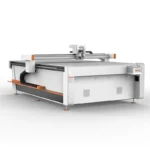
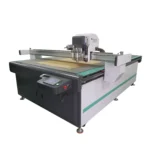
| Product Type | CNC Oscillating Knife Cutting Machine |
| Working Area | 1600 × 2500 mm |
| Machine Dimensions | 3450 × 2300 × 1250 mm |
| Rated Power | 9 kW |
| Vacuum Pump | 7.5 kW |
| Cutting Thickness Capacity | ≤100 mm (varies with the material) |
| Cutting Speed | 200–800 mm/s (according to different cutting materials) |
| Translational Velocity | 800–2000 mm/s |
| Repeated Accuracy | ≤0.1 mm |
| Table Type | Flat working table / auto feeding table |
| Vacuum Table Surface | Magnesium-aluminum alloy with PVDF coating and hard oxidation |
| Transmission System | Digital servo motor, linear guide, synchronous belt, ball screw |
| Servo Motor Option | Delta (China) or Panasonic (Japan) |
| Linear Rail | Taiwan Hiwin |
| Conveyor Belt | Germany imported |
| Instruction System | HP-GL compatible format |
| Software File Formats | PLT, DXF, AI |
| Voltage | 380V ±10% |
| Control Panel | Touch screen, multiple language supported |
| Language Options | English, Russian, Italian, Chinese (special languages customizable) |
| Tool Head Options | Oscillating knife, pneumatic knife, high-power vibrating knife, circular knife, V cutting knife, drag knife, creasing wheel, dotted line knife, punching, brush |
| Visual Positioning Options | Small CCD camera mark point positioning, panoramic camera recognition positioning, projection positioning |
| Safety Device | Infrared sensors, anti-collision on both sides of beam, emergency stop button |
| Assembly State | Fully assembled |
Application Suitability
| Application | Material or Output |
|---|---|
| Carton and packaging sample making | Corrugated board, honeycomb cardboard, plastic box, greyboard |
| Gasket and sealing pad production | Rubber, PTFE, ETFE, composite sheet, non-asbestos fiber |
| Automotive interior and foam fabrication | PU, EVA, XPE, sponge composite, acoustic insulation panels |
| Signage and display board processing | Foam board, PVC sheet, acrylic (soft grades), PP hollow board |
| Leather and soft goods cutting | Natural leather, PU synthetic, shoe material, luggage material |
What a Cutting Speed of 800 mm/s Actually Means in Production
The headline speed is only reachable when tool head, vacuum hold-down, and material behavior align.
A machine specified on working area alone, then pushed to cut greyboard at maximum speed, will crush the top ply and leave a ragged edge that the packaging designer rejects. The RT-D2516/RT-S2516 CNC oscillating knife cutting machine specifications list a translational velocity of 800–2000 mm/s, but the usable cutting speed drops to 200–800 mm/s depending on the stock. I have watched a buyer run 3 mm corrugated beautifully at the upper range, then switch to 5 mm honeycomb without changing the knife stroke and destroy a full sheet. [NEED_CITE: material density and thickness effect on oscillating knife feed rate] The honest move is to send your actual material so the tool head and speed can be dialed in before the order is signed.
Matching Tool Heads to Board Grade and Edge Requirement
Choosing the right head is the single decision that determines whether you get a clean fold or a crushed edge. For standard B and E flute corrugated, an oscillating knife handles the through-cut while a creasing wheel scores the fold line without breaking the liner. When you move into greyboard or plastic PP boxes, a V-cutting knife removes a controlled channel so the board folds square. Drag knives work on thinner gasket sheets where a vibrating stroke would tear the fiber. The RT-D2516/RT-S2516 supports all of these heads on one multifunctional carriage, which means the configuration changes with the job rather than requiring a second machine.
Vacuum Zoning for Small Part Hold-Down
Packaging sample runs often mix a large carton blank with small insert pieces that lift off the bed the moment the knife exits the cut. The magnesium-aluminum alloy table on this unit carries a PVDF fluorocarbon coating and hard anodic oxidation for flatness, and the 7.5 kW vacuum pump feeds multiple zones. Closing the valves on unused zones concentrates suction under the small parts. I have seen buyers lose hours chasing parts across the bed before they realized the zoning manifold was left fully open. [NEED_CITE: vacuum zoning effect on small part retention in flatbed cutting]
Reading the Spec Sheet Against Your Daily Material Stack
The repeated accuracy of ≤0.1 mm depends on the Taiwan Hiwin linear rail and ball screw transmission staying clean, which in a packaging shop means regular blowing out of paper dust from the rail carriages. The 9 kW rated power covers the servo drive, vacuum pump, and oscillating head together, so verify that your shop circuit can supply 380V ±10% on a dedicated breaker rather than sharing a line with a corrugator. The Swiss imported knife in the multifunctional head handles full cut, half cut, and cursor location; half cut is what scores kiss-cut sticker sheets without penetrating the backing, and it demands a flat bed that the PVDF-coated surface provides. Panasonic servo motors are the option I recommend for shops running three shifts, because the encoder resolution holds the creasing wheel on its scored line even after thermal expansion in a warm workshop.
The Cost of Skipping a Sample Cut Before Order
When a buyer signs off on a machine based only on the 1600 × 2500 mm working area, the first week in production usually reveals a tool head mismatch. A pneumatic knife that slices PU foam cleanly will stall on 8 mm greyboard and leave a stepped edge. A circular knife that flies through thin PP sheet will melt the cut edge if the stroke is wrong for thicker stock. These problems are all fixable at the factory with a head swap and a parameter change, but fixing them after the machine has shipped across the ocean costs weeks of downtime. [NEED_CITE: typical lead time for replacement tool head shipment] Sending a stack of your actual board grades and getting a sample cutting report removes the guesswork.
Why Sourcing From the CNC Knife Cutting Specialist Matters
The design team at the Jinan facility builds both knife and laser platforms, so the recommendation starts with which cutting method suits your material rather than pushing one technology. Every RT-D2516/RT-S2516 leaves the factory with a configuration list that names the exact tool heads, vacuum zone map, and CCD option fitted to your sample run. Software file format compatibility with PLT, DXF, and AI is confirmed before production starts, not discovered on the shop floor. Voltage and control panel language are locked to your facility spec, whether that is 380V with Russian interface or a custom language on the touch screen. The CE documentation package travels with the machine, and the factory test record shows your specific material thickness cut at the agreed speed.
Documentation & Verification
- Machine specification sheet listing each fitted tool head and vacuum zone map
- Electrical schematic with 380V ±10% circuit requirements confirmed for your facility
- Sample cutting report on your corrugated or greyboard stock showing edge and crease quality
- Software licence with PLT, DXF, and AI file format compatibility verified
- Factory test record demonstrating repeated accuracy on your sheet size
- Packing photographs of the fully assembled unit before crate closure
Installation, Commissioning & Support
- 3450 × 2300 × 1250 mm footprint requires a level floor with clearance on three sides for sheet loading
- Dedicated 380V ±10% breaker sized for 9 kW rated power plus vacuum pump startup surge
- Fully assembled delivery means no gantry alignment needed on site, only leveling feet adjustment
- First-day commissioning includes vacuum zone mapping and oscillating knife stroke calibration on your board
- Touch screen control language set to your operator preference before power-on
- Hiwin linear rail and ball screw grease schedule documented for paper-dust environments
What to Share When Requesting a Quotation
Send the exact board grades you run daily, including flute profile and caliper thickness for corrugated, and the gram weight for greyboard. Confirm whether you need kiss-cut scoring for folding carton or full through-cut for sample blanks. State your facility voltage, frequency, and preferred control language so the electrical cabinet and touch screen are built to match. If you already use nesting software that exports DXF or AI, share a sample file so format compatibility is checked before production starts.
Frequently Asked Questions
Q: How do I match the right tool head to my corrugated versus greyboard stock?
A: Oscillating knives handle through-cuts on corrugated while creasing wheels score fold lines without breaking the liner. Greyboard above 2 mm usually needs a V-cutting knife for clean folding channels. The RT-D2516/RT-S2516 carries multiple heads on one carriage, so the configuration is set after a sample cut on your actual board grade and thickness.
Q: Will small packaging inserts stay flat during high-speed cutting?
A: The 7.5 kW vacuum pump feeds a zoned magnesium-aluminum table with PVDF coating. Closing unused zones concentrates suction under small parts that would otherwise lift when the knife exits the cut. We map the zones during the sample cutting run so the settings are documented before shipment.
Q: Can the CCD camera track printed marks on packaging at full production speed?
A: Small CCD mark point positioning and panoramic camera recognition are both available as options. Tracking reliability at cutting speed depends on print contrast and mark size, which is why we run your printed sheet through the vision system during the factory test and record the results in the sample report.
Q: Will my existing DXF and AI nesting files import without rework?
A: The control system accepts PLT, DXF, and AI formats under HP-GL compatible instruction. We verify your specific file against the software before the order enters production, so any layer naming or curve conversion issues are resolved at the factory rather than on your shop floor.
Q: How are voltage and control language confirmed before the machine ships?
A: We document your facility supply at 380V ±10% or the required alternative, along with plug type and touch screen language, on the specification confirmation sheet you sign before production. The electrical schematic and control panel are built to that locked configuration.


商品评价
Clear filtersThere are no reviews yet.