








Fast Shipping
Carrier information

20k products
Payment methods

24/7 Support
Unlimited help desk

2-day Delivery
Track or off orders
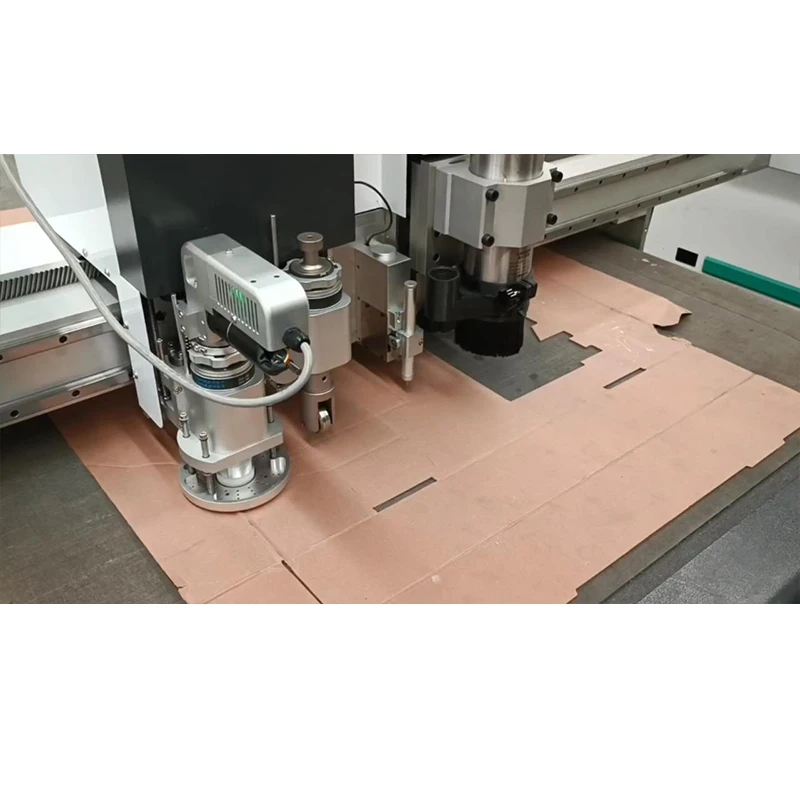
Precision tool head specification — Every vibration knife and creasing wheel is matched to the buyer’s actual flute profile and board thickness before the order is locked, not swapped from a default setup.
Technical Specifications
| Parameter | Value |
|---|---|
| Model | RT-D2516/RT-S2516 |
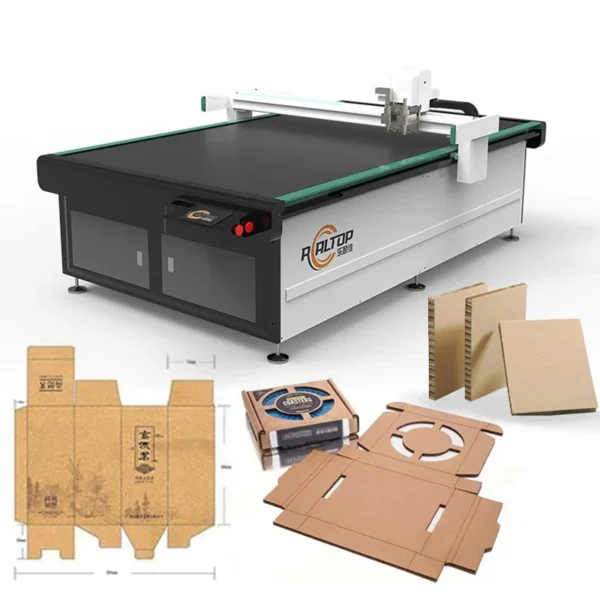
| Product Type | CNC Oscillating Knife Cutting Machine for Packaging |
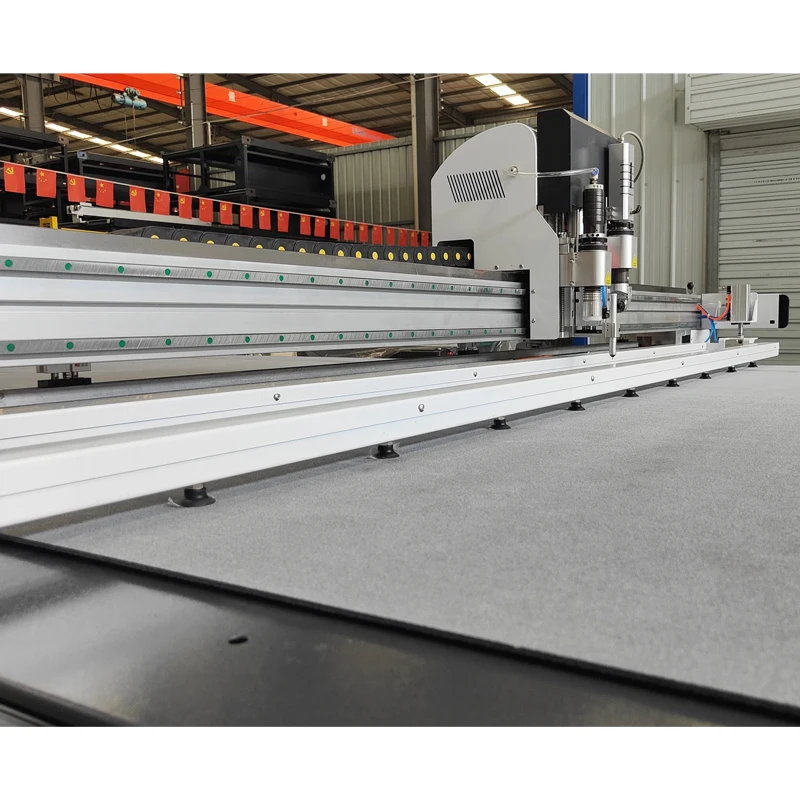
| Working Area | 1600 × 2500 mm |
| Machine Dimensions | 3450 × 2300 × 1250 mm |
| Rated Power | 9 kW |
| Vacuum Pump | 7.5 kW |
| Table Type | Flat working table with auto feeding |
| Tool Head | Swiss-imported vibration knife (full cut, half cut, cursor location) |
| Translational Velocity | 800–2000 mm/s |
| Cutting Speed | 200–800 mm/s (depends on material type and thickness) |
| Repeated Accuracy | ≤0.1 mm |
| Drive System | Delta digital servo motor, Taiwan Hiwin linear guide, synchronous belt, ball screw |
| Instruction Format | HP-GL compatible |
| Voltage | 380V ± 10% |
| Safety | Infrared sensors |
| Conveyor | Germany-imported belt |
| Software | Professional carton nesting, multi-format import, language customizable |
| Language Options | English, Russian, Italian, Chinese, custom languages available |
| Certification | CE declaration (where applicable) |
Application Suitability
| Application | Material or Output |
|---|---|
| Corrugated carton sample making | Single, double and triple-wall corrugated board up to working area limit |
| Pizza box and gift box prototyping | E-flute, F-flute and micro-flute corrugated, solid bleached sulphate board |
| Express paper box short runs | Kraft liner and test liner corrugated stock |
| Sticker and label contour cutting | Self-adhesive vinyl, coated paper, synthetic label stock |
| Billboard and business card cutting | Lightweight PVC foam board, card stock, laminated sheet |
| Snack food packaging samples | Coated carton board, metallised film laminates |
Why the Voltage Question Should Come Before the CNC Oscillating Knife Cutting Machine for Packaging Price
A 380V ± 10% machine arriving at a 480V or 208V workshop sits dead on the floor until a transformer is sourced and wired — a delay that can stretch past three weeks while the packing line waits for samples.
I have stood in a European packaging studio watching a brand-new flatbed cutter sit under plastic wrap because the local supply was 400V three-phase but the machine was shipped without the correct step-down transformer or plug [NEED_CITE: voltage and frequency standards by export market]. The servo drives and vacuum pump on this unit are rated for 380V ± 10%, and the 7.5 kW pump alone demands a dedicated circuit. Specifying frequency, plug type and control panel language before the deposit clears removes the most common post-delivery blocker for packaging producers.
Matching the Swiss Vibration Knife to Flute Profile
The RT-D2516/RT-S2516 uses a Swiss-imported vibration knife head that switches between full-cut, half-cut and cursor-location modes without a tool change. For double-wall corrugated, the high-frequency oscillation shears through the flutes cleanly, leaving an edge that does not crush or delaminate when the box is folded along the crease line. When the same machine runs a sticker contour job, the cursor location function follows the printed registration mark so the die-cut shape stays centred on the graphic, even at the upper translational velocity range.
Vacuum Zoning Holds Small Cartons Flat
A 1600 × 2500 mm honeycomb adsorption table is divided into switchable zones. When a pizza-box sample occupies only the front-left quadrant, the operator isolates that zone so vacuum flow concentrates under the part. Without this zoning, air pulls through the uncovered area and small gussets or glue flaps lift at cutting speed, producing a ragged edge or a missed crease [NEED_CITE: flatbed vacuum adsorption principles for thin rigid stock]. The Germany-imported conveyor belt and auto-feeding system then advance the next sheet without manual repositioning.
How Drive Components Dictate Crease-to-Cut Registration
A ≤0.1 mm repeatability figure only matters when the creasing wheel must land exactly on the printed fold line of a gift-box blank. The RT-D2516/RT-S2516 pairs Delta digital servo motors with Taiwan Hiwin linear guides and ball-screw transmission, keeping the carriage locked on the commanded path even during direction reversals at 200–800 mm/s cutting speed. If the linear guide deflects or the synchronous belt stretches, the crease shifts, and the assembled box shows a visible gap at the mitre corner — a defect the buyer’s customer will reject before the shipment leaves the dock.
The Cost of Skipping a Sample Cut
When a packaging buyer skips the sample-cut step, the first sign of trouble appears on day one of production: the vibration knife leaves a crushed flute on a triple-wall courier box, or the half-cut depth is too shallow to strip the waste matrix cleanly. Re-commissioning the tool head and re-tuning vacuum zoning after the machine is installed costs more in downtime than a single sample report [NEED_CITE: corrugated board edge quality and flute crush tolerance]. Asking for a cutting report on the buyer’s own corrugated or cardboard stock before commitment locks the configuration in writing.
What You Actually Get from the Factory
- In-house design covers both knife and laser, so a packaging buyer can match the cutting method to corrugated board rather than forcing one process across every substrate.
- Tool head and table configuration is written into the order by material thickness, not left as a generic default.
- HP-GL compatible instruction system and professional carton nesting software are tested against the buyer’s DXF, AI or PLT files before dispatch.
- Voltage, plug type, frequency and control language are confirmed on the electrical schematic, not guessed at packing.
- Sample cutting on the buyer’s own corrugated stock is completed and signed off before production starts.
Documentation & Verification
- Machine specification sheet locked to the buyer’s chosen tool head and table zone layout
- Electrical schematic confirming 380V ± 10%, plug type and frequency for the destination market
- Sample cutting report on the buyer’s corrugated or cardboard stock, signed before shipment
- Software licence note listing compatible DXF, AI, PLT imports and nesting workflow version
- Factory test record showing repeatability and cut-to-crease registration on the specified board grade
- Operation and maintenance manual with spare parts list in the buyer’s chosen control language
Installation, Commissioning & Support
- 3450 × 2300 × 1250 mm footprint requires a level concrete pad with clearance for the 1600 × 2500 mm conveyor feed
- 9 kW rated load plus 7.5 kW vacuum pump demand a dedicated 380V ± 10% three-phase circuit with correct plug
- Delta servo drives and Hiwin rails are pre-tensioned at factory; on-site alignment check before first power-up
- Crease depth, vibration frequency and vacuum zone map tuned on the buyer’s board stock during commissioning
- Spare vibration blades, creasing wheels and conveyor belt segments listed and shipped with the machine
What to Send with Your Inquiry
Specify the corrugated flute profile (E, B, C, BC or triple-wall), board thickness range and maximum sheet size you plan to run. Confirm your workshop voltage, frequency and the plug standard required by local code. List the design file formats your studio currently uses so software compatibility can be verified before the order is placed.
Frequently Asked Questions
Q: How is cutting speed verified on my specific corrugated flute and board thickness?
A: Cutting speed is listed as 200–800 mm/s depending on material. We run your actual board stock on the RT-D2516/RT-S2516 and record the speed that produces a clean edge without flute crush, then include that figure in the sample cutting report before you commit.
Q: Which tool head is recommended for my material?
A: Swiss-imported vibration knife handles full and half cuts on corrugated and cardboard. A creasing wheel is added for fold lines, and a drag knife suits thin sticker and label stock. The combination is specified by your material list before production.
Q: Does the vacuum table zoning hold small carton parts without lift?
A: The honeycomb table is divided into switchable zones. When only part of the bed is covered, the operator isolates that zone so vacuum concentrates under the blank, preventing small flaps and gussets from lifting at cutting speed.
Q: Can the software import my existing DXF, AI or PLT files?
A: The carton nesting software supports multiple format imports and is HP-GL compatible. We request a sample file from your current workflow before order and confirm import, nesting and output on the machine prior to shipment.
Q: What voltage, plug and language will be confirmed before shipment?
A: Standard is 380V ± 10%, 50 Hz. We confirm destination frequency, plug type and control panel language on the electrical schematic before production, so the machine connects directly to your workshop supply on arrival.


商品评价
Clear filtersThere are no reviews yet.