

Fast Shipping
Carrier information

20k products
Payment methods

24/7 Support
Unlimited help desk

2-day Delivery
Track or off orders
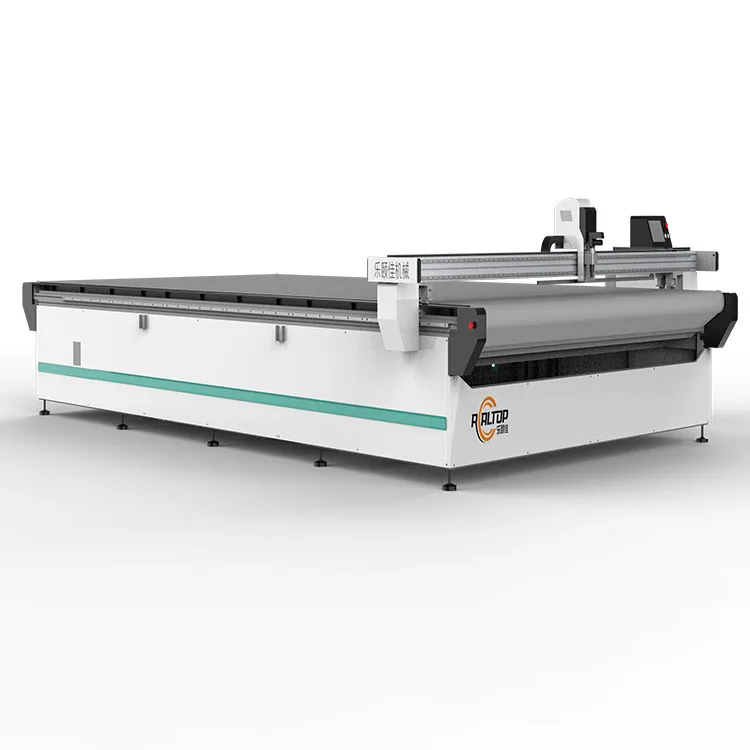
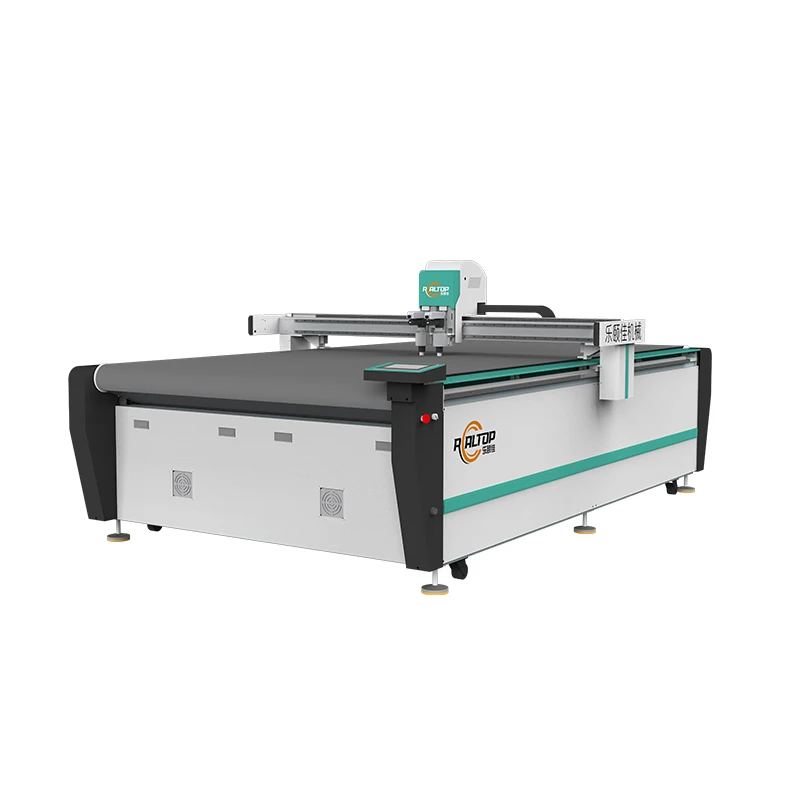
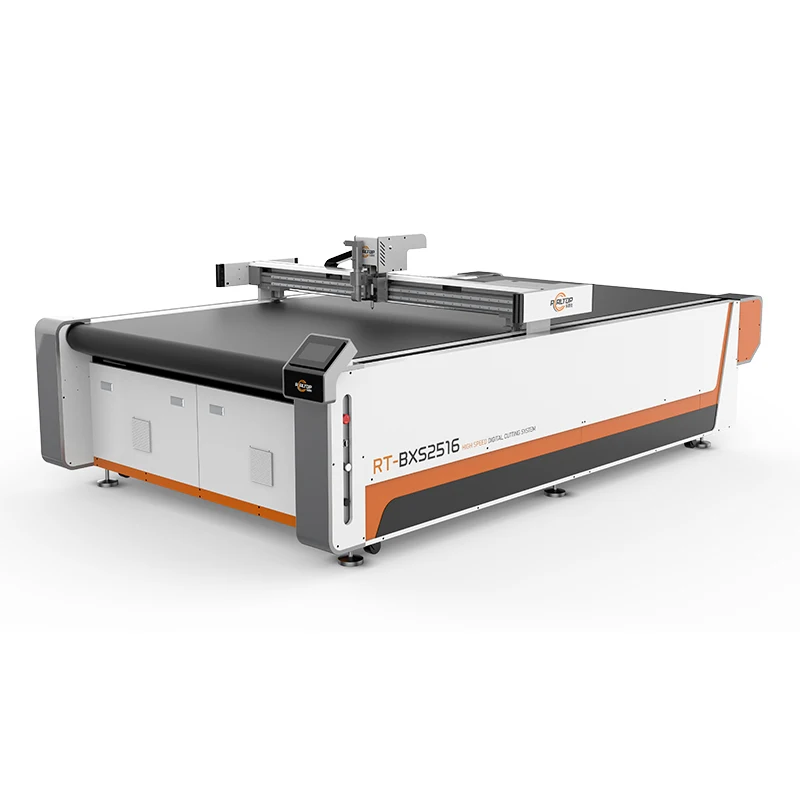
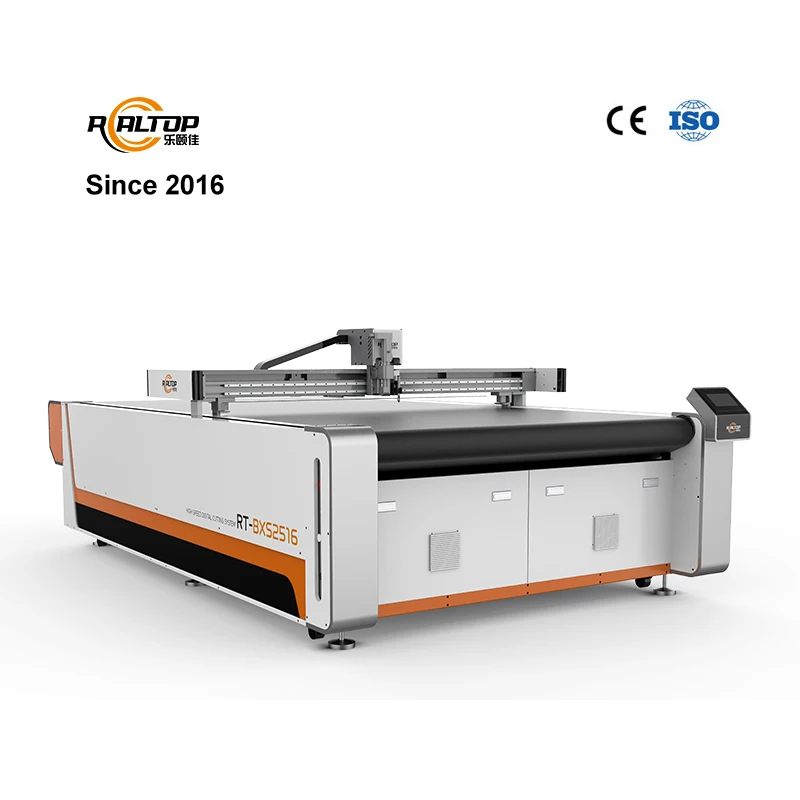
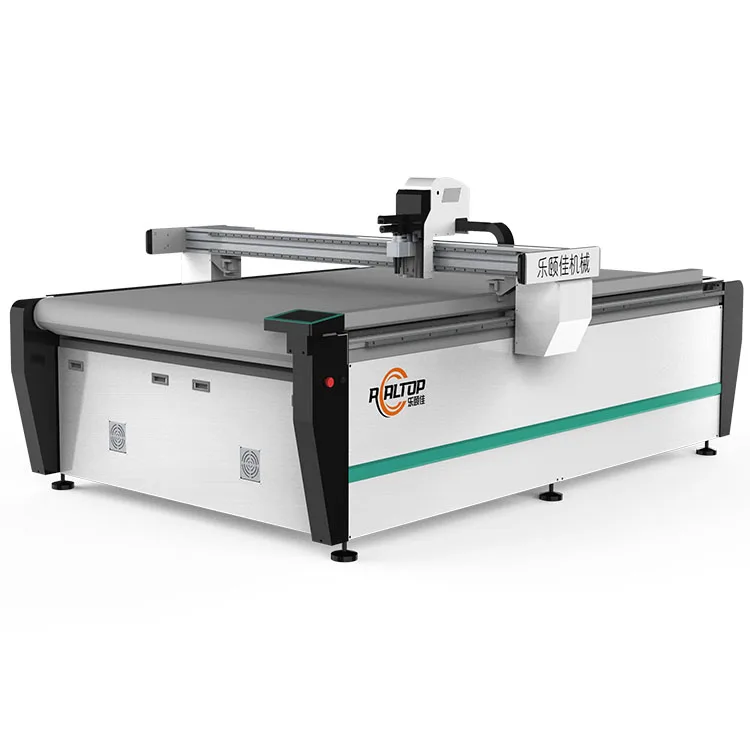
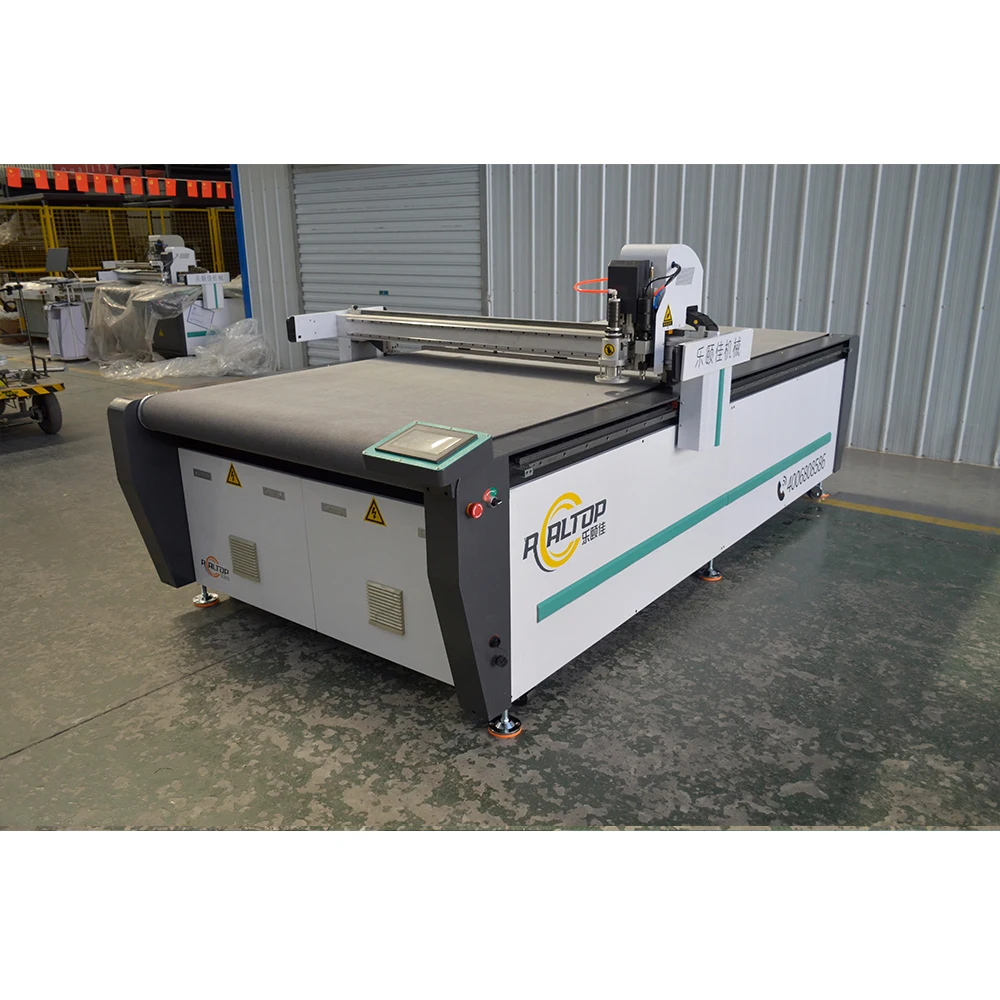
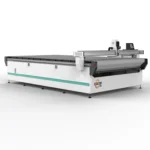
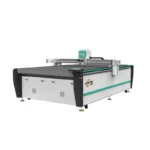
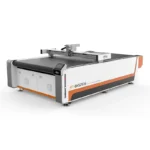
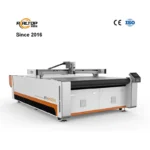
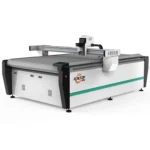
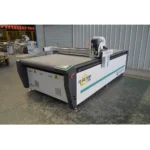
Tool Head Configuration — Swiss-imported oscillating knife assembly matched to material thickness rather than sold as a fixed setup on this CNC Oscillating Knife Cutting Machine.
Technical Specifications
| Parameter | Value |
|---|---|
| Product Type | CNC Oscillating Knife Cutting Machine |
| Model | RT-D2516/RT-S2516 |
| Working Area | 1600 × 2500 mm |
| Overall Dimensions | 3450 × 2300 × 1250 mm |
| Rated Power | 9 kW |
| Voltage | 380V ±10% |
| Table Type | Flat working table or auto-feeding table (configurable) |
| Tool Head | Swiss-imported knife with vibration full cutting, vibration half cutting, and cursor location |
| Safety Device | Infrared sensors with anti-collision and emergency stop |
| Translational Velocity | 800–2000 mm/s |
| Cutting Speed | 200–800 mm/s (varies by material) |
| Repeated Accuracy | ≤ 0.1 mm |
| Transmission System | Digital servo motor, linear guide, synchronous belt, ball screw |
| Instruction System | HP-GL compatible format |
| Vacuum Pump | 7.5 kW |
| Servo Motor Options | Delta or Japan-made (source value — verify against manufacturer catalog) |
| Guide Rail | Taiwan Hiwin rail |
| Conveyor Belt | Germany-imported conveyor belt |
| Control Panel | Touch screen with multiple language support |
| Software | Auto typesetting software; supports PLT, DXF, AI formats |
| Cutting Thickness | ≤ 100 mm (varies with material; basis not stated in source) |
| Language Options | English, Russian, Italian, Chinese (special languages customizable) |
| Standards | CE declaration (where applicable) |
Application Suitability
| Application | Material or Output |
|---|---|
| Roller blind and soft furnishing production | Polyester, blackout fabric, PVC-coated textile, non-woven cloth |
| Automotive interior trimming | Leather, sponge composite leather, PU/EVA foam, gasket material |
| Garment and footwear prototyping | Woven cloth, shoe material, luggage material, multi-layer textile |
| Packaging and signage sample making | Corrugated cardboard, sticker, film, PVC sheet, foam board |
| Sealing and gasket fabrication | Rubber, PTFE, ETFE, silicone, composite sealing stock |
Why Material Thickness Decides More Than Working Area on a CNC Oscillating Knife Cutting Machine
A 1600 × 2500 mm bed only tells you the sheet size it can hold — not whether the knife will actually cut your stock cleanly.
I once configured a cutting table for a roller blind manufacturer who sent a sample in standard polyester. The trial ran fine. Then their production batch arrived with a PVC coating, and the blade dragged through it, leaving melted edges and frayed hems across an entire shift’s output. The line stopped while we swapped tooling parameters and knife geometry. That incident reshaped how I approach every inquiry: the CNC Oscillating Knife Cutting Machine specifications matter less than knowing exactly what the buyer intends to slice, at what thickness, and in what daily volume [NEED_CITE: common causes of blade drag on coated textiles].
Knife Selection Determines Edge Quality Before Anything Else
The RT-D2516/RT-S2516 ships with a Swiss-imported oscillating knife head that handles full cutting, half cutting, and cursor location. Oscillating knives work well on woven cloth, sponge composites, and layered fabric because the rapid vibration shears through fibers without pulling them. For PVC-coated roller blind material, a drag knife or a specially angled oscillating blade may be necessary to prevent the coating from gumming up the edge. Matching the knife type to the actual material is the first step in any CNC Oscillating Knife Cutting Machine configuration, and it is the step most often skipped when a quote is generated from a working area figure alone.
Vacuum Zoning Holds Small Parts Where Single-Zone Tables Fail
A 7.5 kW vacuum pump on a flat table can generate strong suction, but if the table is a single undivided zone, small fabric pieces near the edges will lift during high-speed traverses. The RT-D2516/RT-S2516 platform uses a magnesium-aluminum alloy table with fluorocarbon PVDF coating and segmented vacuum zones, so suction concentrates under the active cutting area. This matters when a nesting layout produces dozens of small gasket or appliqué shapes — each one needs enough hold-down force to stay flat while the knife exits the cut [NEED_CITE: vacuum table zoning principles for CNC flatbed cutters].
Reading the Specs That Actually Affect Your Cut
The 800–2000 mm/s translational velocity governs how fast the head moves between cuts, while the 200–800 mm/s cutting speed determines actual blade engagement rate. On thick sponge composite leather, the lower end of that range prevents the knife from deflecting; on thin woven polyester for roller blinds, the upper end keeps throughput viable. Repeated accuracy of ≤ 0.1 mm is sustained by Taiwan Hiwin linear guides and ball-screw transmission, which resist the lateral load that an oscillating knife imposes during direction changes. The digital servo motor, available in Delta or Japan-made options, closes the loop on positional feedback so contour cuts on printed fabric stay within tolerance. Cutting thickness is rated up to 100 mm depending on material — that figure shifts considerably between a soft foam and a dense rubber gasket, so confirming the value on the buyer’s own stock is essential before the order goes into production.
What Happens When the Wrong Configuration Ships
If the vacuum zone layout does not match the nesting pattern, small fabric parts lift, the knife snags, and the operator spends the shift re-cutting scrapped pieces. A CCD camera promised for printed-contour work but specified at a resolution too low for production speed will miss registration marks, pushing the operator back to manual alignment. When the control panel language and voltage are not locked before shipment, the machine arrives with a Chinese-only interface in a Riyadh workshop, or a 380V unit plugs into a 220V line, tripping breakers on first power-up [NEED_CITE: electrical mismatch incidents in exported CNC machinery]. These are not edge cases — they are the most frequent complaints on installed flatbed cutters that were quoted on working area alone.
Why Source This Platform From Realtop
In-house design covers both knife and laser cutting technologies, so a buyer processing mixed materials can match the cutting method to each stock rather than forcing one method across the board. Tool head and table configuration are specified per material and production volume, not left as a default package. CCD camera positioning — small mark-point, panoramic, or projection — is confirmed against the buyer’s print register requirements before the order is placed. Software compatibility with existing PLT, DXF, and AI nesting workflows is verified on a test file exchange. Voltage, plug type, and control language are documented in the specification sheet and locked before production begins. Sample cutting on the buyer’s own material is standard procedure, so edge quality, depth, and speed are visible before commitment.
Documentation & Verification
- Machine specification sheet listing confirmed tool head, vacuum zone map, and CCD option for the RT-D2516/RT-S2516
- Electrical schematic with voltage and frequency locked to destination market before dispatch
- Sample cutting report produced on the buyer’s actual fabric or composite material
- Factory test record documenting cutting accuracy and speed on agreed stock before crating
- Software licence and file format compatibility note covering PLT, DXF, AI workflows
- Spare parts list with oscillating knife blades, vacuum seals, and belt segments itemized
Installation, Commissioning & Support
- 3450 × 2300 mm footprint requires a level concrete floor with clearance for material feed on both sides of the RT-D2516/RT-S2516
- 9 kW rated power plus 7.5 kW vacuum pump demands a dedicated 380V ±10% circuit with appropriate breaker rating
- Machine ships with table and gantry separated; reassembly and rail alignment completed on-site by service technician
- First-run calibration covers vacuum zone mapping, knife depth offset, and CCD mark registration for the buyer’s file format
- Operator training addresses touch-screen navigation, nesting software import, and tool head changeover procedure
- Preventive maintenance schedule covers Hiwin rail lubrication, synchronous belt tension check, and vacuum pump filter replacement
How to Start a Meaningful Inquiry
Send the material type, coating details, and thickness range you intend to process, along with the maximum sheet dimensions and the daily volume target. Specify your workshop voltage and frequency, the control language your operators need, and whether your current nesting workflow uses PLT, DXF, or AI files. If printed-contour cutting is part of the job, include a sample print with the registration mark layout so the CCD option can be matched correctly. A physical sample of the actual production fabric or composite — not a data-sheet substitute — allows a test cut that confirms edge quality before any purchase commitment.
Frequently Asked Questions
Q: How do I choose the right tool head for my roller blind fabric?
A: Oscillating knives handle most woven and non-woven textiles cleanly. PVC-coated or laminated fabrics may require a drag knife or a modified oscillating blade angle to prevent coating buildup on the edge. The correct choice depends on the material sample, and a test cut on the RT-D2516/RT-S2516 confirms edge quality before configuration is finalized.
Q: Can the CCD camera track printed marks at production speed on patterned blinds?
A: Small CCD mark-point positioning works for jobs with consistent, high-contrast registration marks. Panoramic camera recognition handles variable print layouts, while projection positioning overlays the cut path for manual alignment. The right option depends on print consistency and line speed, and each is validated against the buyer’s actual artwork before order.
Q: Is the vacuum table zoned for the small pieces in a nested blind layout?
A: The RT-D2516/RT-S2516 platform supports segmented vacuum zones on its magnesium-aluminum table so suction concentrates under active cutting areas. Zone layout is specified based on the buyer’s typical nesting pattern to prevent small fabric shapes from lifting during high-speed knife traverses.
Q: Will the nesting software import my existing DXF and PLT files?
A: The auto typesetting software supports PLT, DXF, and AI formats. Before order placement, a file exchange test confirms that the buyer’s current nesting layouts, layer conventions, and cut-line definitions import correctly without manual rework on the RT-D2516/RT-S2516 control system.
Q: What voltage and control language will the machine ship with?
A: The standard voltage is 380V ±10%, configurable to match the destination market. Control panel language options include English, Russian, Italian, and Chinese, with special languages available on request. All electrical and language specifications are locked in the written confirmation before production starts.


商品评价
Clear filtersThere are no reviews yet.