







Fast Shipping
Carrier information

20k products
Payment methods

24/7 Support
Unlimited help desk

2-day Delivery
Track or off orders
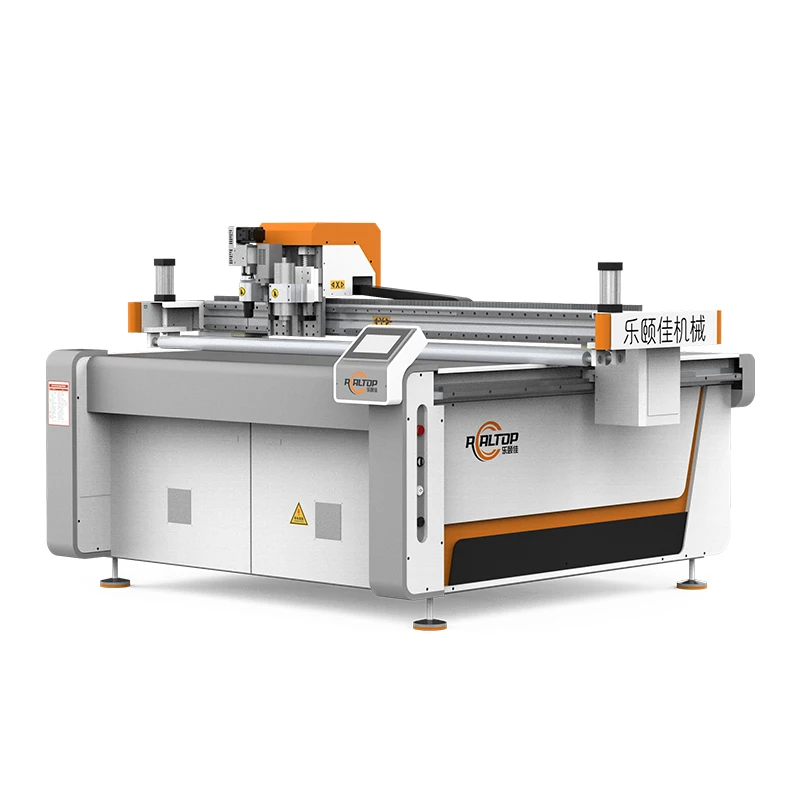
Material-Matched Tooling — Every oscillating knife, drag knife, creasing wheel and vacuum zone on the RT-D2516/RT-S2516 is specified against your actual substrate thickness and nesting layout, not just the working area.
Technical Specifications
| Parameter | Value |
|---|---|
| Model | RT-D2516 / RT-S2516 |
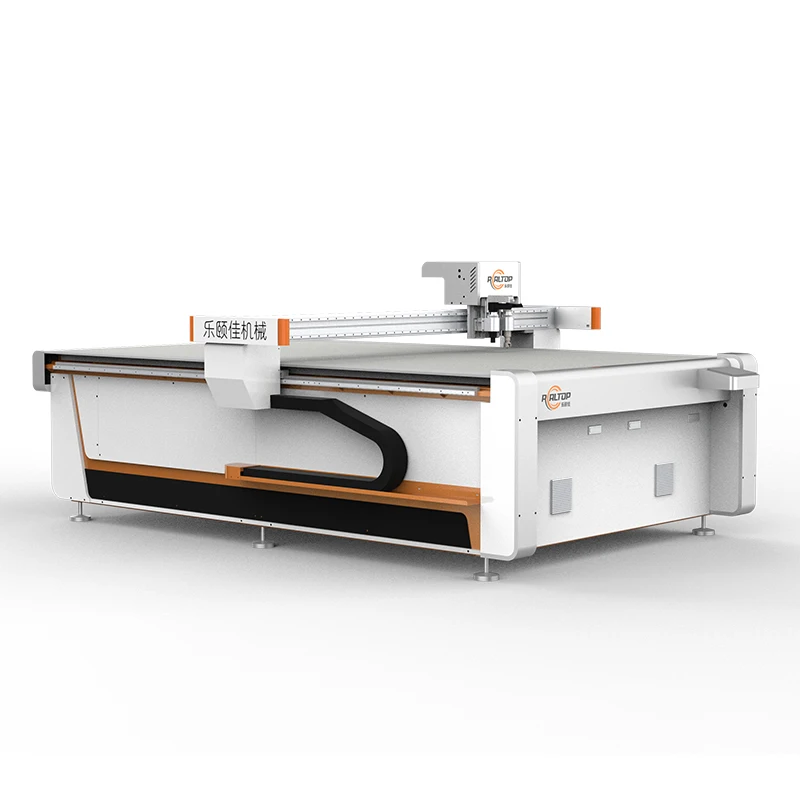
| Product Type | CNC Flatbed Oscillating Knife Cutting Machine |
| Working Area | 1600 × 2500 mm |
| Overall Dimensions (L×W×H) | 3450 × 2300 × 1250 mm |
| Rated Power | 9 kW |
| Voltage | 380V ±10% |
| Control System | Touch screen control panel, HP-GL compatible |
| Transmission System | Digital servo motor, linear guide, synchronous belt, ball screw |
| Translational Velocity | 800–2000 mm/s |
| Cutting Speed | 200–800 mm/s (varies by material) |
| Repeated Accuracy | ≤0.1 mm |
| Multifunctional Head | Swiss imported knife with vibration full/half cutting and cursor location |
| Tool Head Options | Oscillating knife, pneumatic knife, high-power vibrating knife, circular knife, V-cutting knife, drag knife, creasing wheel, dotted line knife, punching, brush |
| Visual Positioning Options | Small CCD camera mark point, panoramic camera recognition, projection positioning |
| Table Type | Flat working table / Auto feeding table (magnesium-aluminum alloy, fluorocarbon PVDF coating, anodic oxidation) |
| Vacuum Pump | 7.5 kW, integrated aviation aluminum shell |
| Safety Device | Infrared sensors, anti-collision beam sensors, emergency stop |
| Software | Auto typesetting, supports PLT, DXF, AI formats |
| Language Options | English, Russian, Italian, Chinese (customizable) |
| Warranty | One year (parts free, buyer pays shipping) |
| Cutting Thickness | ≤100 mm (varies with material) |
Application Suitability
| Application | Material or Output |
|---|---|
| Carton and Corrugated Packaging | Corrugated cardboard, honeycomb board, folding carton stock for sample making and short runs |
| Garment and Footwear | Natural leather, synthetic PU/PVC, woven and non-woven textiles |
| Automotive Interior and Gaskets | Composite panels, XPE/EVA/PU foam, rubber sealing pads |
| Signage and Graphics | Vinyl, sticker film, printed corrugated boards for contour cutting |
| Soft Furnishings | Carpet, upholstery fabric, acoustic insulation panels |
Why Working Area Alone Fails the Material Test
Choosing a CNC oscillating knife cutting machine based only on bed size leaves out the variables that actually determine edge quality and holding power. The cutting method, tool head and vacuum zoning must be matched to the substrate before the order is placed.
I have watched flatbed tables struggle on production day because the vacuum zones were too large for small nesting parts, or the oscillating frequency was wrong for dense corrugated flutes. When the specification stops at dimensions, the real compromises show up during the first shift [NEED_CITE: material holding requirements for small nested parts on vacuum tables].
Tool Head Selection by Substrate Density
Matching the tool head to the material is the first decision for any CNC oscillating knife cutting machine specifications review. An oscillating knife handles thick corrugated and foam cleanly, while a drag knife suits thin vinyl and sticker films. For folding cartons, a creasing wheel paired with a V-cutting knife produces the slot and fold line in one pass, eliminating secondary finishing steps.
Vacuum Zoning for Nested Small Parts
The 7.5 kW vacuum pump and magnesium-aluminum alloy table work together to hold stock flat, but zoning is what keeps small offcuts from lifting. When cutting intricate gasket profiles or short-run carton samples, the table must be divided so suction concentrates only under the active cutting area. Without this, the drag of the knife lifts the material, producing ragged edges or shifting the entire sheet [NEED_CITE: vacuum adsorption principles for flatbed digital cutting].
Reading the Specs Beyond the Bed Size
The RT-D2516/RT-S2516 runs a digital servo motor on linear guides with a repeated accuracy of ≤0.1 mm, which matters most when the CCD camera tracks printed registration marks. If the transmission system deflects under load, the panoramic recognition camera cannot align the cut path to the print. The 200–800 mm/s cutting speed range is material-dependent; dense honeycomb cardboard requires the lower end of the range to maintain edge integrity, while thin film can run at higher translational velocities. The touch screen control panel and HP-GL compatible format ensure the machine accepts standard vector files without requiring a proprietary CAD license.
The Cost of Skipping the Sample Cut
When a machine is specified without a trial on the buyer’s own stock, the first production run becomes the test. A knife specified for standard B-flute corrugated may crush E-flute or fail to penetrate double-wall board. Software that cannot import existing AI or DXF nesting files forces operators to redraw patterns, adding hours to setup time [NEED_CITE: file format compatibility in CAD/CAM cutting workflows].
Why Sourcing From the Builder Matters
Realtop Machinery designs and produces both the knife and table systems in-house, meaning the tool head configuration is adjusted to the material rather than forced into a single standard setup. The factory test record documents cutting performance on your specific substrate before the machine is crated. Voltage, plug type and control language are confirmed against your facility requirements, and the software license note ensures your existing file formats are supported from day one.
Documentation & Verification
- Machine specification sheet detailing the selected tool head and vacuum zone layout.
- Electrical schematic with 380V ±10% baseline and confirmed plug type.
- Factory test record on buyer-supplied corrugated or foam material.
- Software license and PLT/DXF/AI file format compatibility confirmation.
- Operation and maintenance manual in the confirmed control language.
- Spare parts list covering knives, creasing wheels and vacuum table seals.
Installation, Commissioning & Support
- Floor must support the 3450 × 2300 × 1250 mm footprint and dynamic cutting loads.
- Dedicated 380V ±10% circuit required to supply the 9 kW rated power draw.
- 7.5 kW vacuum pump requires independent exhaust routing away from the work area.
- First-run calibration includes servo tuning and ≤0.1 mm repeatability verification.
- Operator training covers CCD camera mark point setup and auto typesetting software.
- Wear parts inventory should include replacement oscillating knives and drag blades.
What We Need to Specify Your Machine
To configure the correct tool head and table setup, please provide the material type, maximum thickness and typical sheet dimensions. Let us know your local voltage and frequency, preferred control language, and the file formats your design team currently uses. If you are cutting printed contours, specify the mark type so we can select the appropriate CCD positioning option.
Frequently Asked Questions
Q: How do I choose the right tool head for my material?
A: The choice depends on substrate density and thickness. Oscillating knives cut thick corrugated and foam cleanly, drag knives handle thin vinyl and film, and creasing wheels paired with V-cutting knives are used for folding carton slotting. We specify the head based on a sample cutting test on your actual material.
Q: What CCD positioning option fits printed contour work?
A: Small CCD camera mark point positioning suits standard registration marks, while panoramic camera recognition handles larger printed graphics with multiple reference points. Projection positioning is used when physical marks are absent. The choice depends on your print workflow and mark visibility.
Q: How is the vacuum table configured for small parts?
A: The magnesium-aluminum alloy table is divided into zones so suction concentrates under the active cutting area. This prevents small nested parts from lifting during high-speed cutting. The zone layout is specified based on your typical nesting patterns and part sizes.
Q: What voltage and language options are confirmed before shipment?
A: The baseline is 380V ±10%, but voltage and plug type are confirmed against your facility before production. Control language options include English, Russian, Italian and Chinese, with special languages customizable. All electrical details are documented in the specification sheet before dispatch.


商品评价
Clear filtersThere are no reviews yet.