
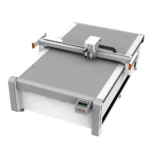

![4705,4+7+0+5=16,16%6=4 结构4:[品类词] with [核心配置] – [站点修饰词] 记录ID数字之和16,第一层技术选型类角色池:Specifications / Technical Guide / Model Selection,池长度3,16%3=1,取 Technical Guide 品类词:Folding Carton Box Sample Cutter Die Cutting Machine 核心配置:Oscillating Knife 站点修饰词:Technical Guide Folding Carton Box Sample Cutter with Oscillating Knife – Technical Guide - Image 1](https://rtcnccut.com/wp-content/uploads/2026/03/H5a6587c29d4d4fee87f73af834893e031.webp "H5a6587c29d4d4fee87f73af834893e031.webp")
![4705,4+7+0+5=16,16%6=4 结构4:[品类词] with [核心配置] – [站点修饰词] 记录ID数字之和16,第一层技术选型类角色池:Specifications / Technical Guide / Model Selection,池长度3,16%3=1,取 Technical Guide 品类词:Folding Carton Box Sample Cutter Die Cutting Machine 核心配置:Oscillating Knife 站点修饰词:Technical Guide Folding Carton Box Sample Cutter with Oscillating Knife – Technical Guide - Image 2](https://rtcnccut.com/wp-content/uploads/2026/03/H22f746c6b40a4af59c99d474a4e1e537n.webp "H22f746c6b40a4af59c99d474a4e1e537n.webp")
![4705,4+7+0+5=16,16%6=4 结构4:[品类词] with [核心配置] – [站点修饰词] 记录ID数字之和16,第一层技术选型类角色池:Specifications / Technical Guide / Model Selection,池长度3,16%3=1,取 Technical Guide 品类词:Folding Carton Box Sample Cutter Die Cutting Machine 核心配置:Oscillating Knife 站点修饰词:Technical Guide Folding Carton Box Sample Cutter with Oscillating Knife – Technical Guide - Image 3](https://rtcnccut.com/wp-content/uploads/2026/03/H79e215b617d0431aa0959ced68b469f90.webp "H79e215b617d0431aa0959ced68b469f90.webp")
![4705,4+7+0+5=16,16%6=4 结构4:[品类词] with [核心配置] – [站点修饰词] 记录ID数字之和16,第一层技术选型类角色池:Specifications / Technical Guide / Model Selection,池长度3,16%3=1,取 Technical Guide 品类词:Folding Carton Box Sample Cutter Die Cutting Machine 核心配置:Oscillating Knife 站点修饰词:Technical Guide Folding Carton Box Sample Cutter with Oscillating Knife – Technical Guide - Image 4](https://rtcnccut.com/wp-content/uploads/2026/03/H9e08b808288f4cf69745d84b51c00196v.webp "H9e08b808288f4cf69745d84b51c00196v.webp")
![4705,4+7+0+5=16,16%6=4 结构4:[品类词] with [核心配置] – [站点修饰词] 记录ID数字之和16,第一层技术选型类角色池:Specifications / Technical Guide / Model Selection,池长度3,16%3=1,取 Technical Guide 品类词:Folding Carton Box Sample Cutter Die Cutting Machine 核心配置:Oscillating Knife 站点修饰词:Technical Guide Folding Carton Box Sample Cutter with Oscillating Knife – Technical Guide - Image 5](https://rtcnccut.com/wp-content/uploads/2026/03/H47e1de9645bd4f408bb273ccf9275611X.webp "H47e1de9645bd4f408bb273ccf9275611X.webp")
![4705,4+7+0+5=16,16%6=4 结构4:[品类词] with [核心配置] – [站点修饰词] 记录ID数字之和16,第一层技术选型类角色池:Specifications / Technical Guide / Model Selection,池长度3,16%3=1,取 Technical Guide 品类词:Folding Carton Box Sample Cutter Die Cutting Machine 核心配置:Oscillating Knife 站点修饰词:Technical Guide Folding Carton Box Sample Cutter with Oscillating Knife – Technical Guide - Image 6](https://rtcnccut.com/wp-content/uploads/2026/03/H50ffc1bf27bf4b4386467a7ab32e7090e.webp "H50ffc1bf27bf4b4386467a7ab32e7090e.webp")
![4705,4+7+0+5=16,16%6=4 结构4:[品类词] with [核心配置] – [站点修饰词] 记录ID数字之和16,第一层技术选型类角色池:Specifications / Technical Guide / Model Selection,池长度3,16%3=1,取 Technical Guide 品类词:Folding Carton Box Sample Cutter Die Cutting Machine 核心配置:Oscillating Knife 站点修饰词:Technical Guide Folding Carton Box Sample Cutter with Oscillating Knife – Technical Guide](https://rtcnccut.com/wp-content/uploads/2026/03/H5a6587c29d4d4fee87f73af834893e031-150x150.webp)
![4705,4+7+0+5=16,16%6=4 结构4:[品类词] with [核心配置] – [站点修饰词] 记录ID数字之和16,第一层技术选型类角色池:Specifications / Technical Guide / Model Selection,池长度3,16%3=1,取 Technical Guide 品类词:Folding Carton Box Sample Cutter Die Cutting Machine 核心配置:Oscillating Knife 站点修饰词:Technical Guide Folding Carton Box Sample Cutter with Oscillating Knife – Technical Guide - Image 2](https://rtcnccut.com/wp-content/uploads/2026/03/H22f746c6b40a4af59c99d474a4e1e537n-150x150.webp)
![4705,4+7+0+5=16,16%6=4 结构4:[品类词] with [核心配置] – [站点修饰词] 记录ID数字之和16,第一层技术选型类角色池:Specifications / Technical Guide / Model Selection,池长度3,16%3=1,取 Technical Guide 品类词:Folding Carton Box Sample Cutter Die Cutting Machine 核心配置:Oscillating Knife 站点修饰词:Technical Guide Folding Carton Box Sample Cutter with Oscillating Knife – Technical Guide - Image 3](https://rtcnccut.com/wp-content/uploads/2026/03/H79e215b617d0431aa0959ced68b469f90-150x150.webp)
![4705,4+7+0+5=16,16%6=4 结构4:[品类词] with [核心配置] – [站点修饰词] 记录ID数字之和16,第一层技术选型类角色池:Specifications / Technical Guide / Model Selection,池长度3,16%3=1,取 Technical Guide 品类词:Folding Carton Box Sample Cutter Die Cutting Machine 核心配置:Oscillating Knife 站点修饰词:Technical Guide Folding Carton Box Sample Cutter with Oscillating Knife – Technical Guide - Image 4](https://rtcnccut.com/wp-content/uploads/2026/03/H9e08b808288f4cf69745d84b51c00196v-150x85.webp)
![4705,4+7+0+5=16,16%6=4 结构4:[品类词] with [核心配置] – [站点修饰词] 记录ID数字之和16,第一层技术选型类角色池:Specifications / Technical Guide / Model Selection,池长度3,16%3=1,取 Technical Guide 品类词:Folding Carton Box Sample Cutter Die Cutting Machine 核心配置:Oscillating Knife 站点修饰词:Technical Guide Folding Carton Box Sample Cutter with Oscillating Knife – Technical Guide - Image 5](https://rtcnccut.com/wp-content/uploads/2026/03/H47e1de9645bd4f408bb273ccf9275611X-150x150.webp)
![4705,4+7+0+5=16,16%6=4 结构4:[品类词] with [核心配置] – [站点修饰词] 记录ID数字之和16,第一层技术选型类角色池:Specifications / Technical Guide / Model Selection,池长度3,16%3=1,取 Technical Guide 品类词:Folding Carton Box Sample Cutter Die Cutting Machine 核心配置:Oscillating Knife 站点修饰词:Technical Guide Folding Carton Box Sample Cutter with Oscillating Knife – Technical Guide - Image 6](https://rtcnccut.com/wp-content/uploads/2026/03/H50ffc1bf27bf4b4386467a7ab32e7090e-150x150.webp)

Fast Shipping
Carrier information

20k products
Payment methods

24/7 Support
Unlimited help desk

2-day Delivery
Track or off orders
Matched Tooling — every knife head and vacuum zone is configured against your actual corrugated grade and flute profile, verified by sample cutting before the machine ships.
Technical Specifications
| Parameter | Value |
|---|---|
| Product Type | CNC Oscillating Knife Cutting Machine for Packaging |
| Model | RT-D2516/RT-S2516 |
| Working Area | 1600 × 2500 mm |
| Machine Dimensions | 3450 × 2300 × 1250 mm |
| Rated Power | 9 kW |
| Table Type | Flat vacuum working table with 7.5 kW vacuum pump |
| Tool Head | Swiss imported oscillating knife with vibration full cutting, half cutting and cursor location |
| Translational Velocity | 800–1200 mm/s |
| Cutting Speed | 200–800 mm/s (basis not stated in source — confirm board grade and flute profile) |
| Repeated Accuracy | ≤0.1 mm |
| Transmission System | Digital servo motor, linear guide, synchronous belt, ball screw |
| Servo Motor | Japanese Yaskawa |
| Linear Guide | Taiwan Hiwin rail |
| Instruction System | HP-GL compatible format |
| Voltage | 380V ± 10% |
| Safety Device | Infrared sensors |
| Additional Configuration | Germany imported conveyor belt, auto feeding option |
| Standards | CE declaration where applicable |
Application Suitability
| Application | Material or Output |
|---|---|
| Folding carton prototyping | Single and multi-layer corrugated board, honeycomb cardboard |
| Short-run carton production | Kraft liner, flute profiles from E-flute to double-wall |
| Gasket and insert cutting | Foam, sponge composite, PVC, silicon rubber sheets |
| Packaging sample making | Leather, flexible garment materials, soft glass for display packaging |
| Creasing and scoring | Corrugated and solid fibre board for fold-line definition |
Why Specifying Working Area Without Board Thickness Leads to Failed Deliveries
Cutting depth is a function of knife stroke, oscillation frequency and material density, not just table size.
Buyers often start an inquiry with sheet dimensions alone, assuming any machine that fits the board can cut it cleanly. When three-layer corrugated arrives at the customer’s facility and the knife cannot penetrate the C-flute core, production stops while a technician flies out to swap blade holders and adjust downward stroke. This scenario repeats across regions where flute profiles and liner weights vary widely from supplier to supplier [NEED_CITE: corrugated board flute standards by region]. Sending a physical sample of your most common board grade before order confirmation allows the oscillation amplitude and Z-axis travel to be set and documented against real stock.
Oscillation Mechanics for Corrugated Fibre
The Swiss imported knife head on the RT-D2516/RT-S2516 runs a high-frequency vibration that shears through flute walls rather than tearing them. Full cutting mode drives the blade through the entire board for blank outlines, while half cutting scores the top liner for fold lines without severing the bottom ply. Cursor location pins registration points for multi-up layouts. When evaluating a CNC oscillating knife cutting machine, the stroke length and frequency determine whether double-wall board separates cleanly or leaves hanging fibres on the cut edge.
Vacuum Zoning and Small Blank Stability
Corrugated blanks for cosmetic or pharmaceutical cartons can be smaller than a palm. A single-zone vacuum table pulls air uniformly, but the suction force on a small footprint may not overcome the lifting force generated by the oscillating knife at full travel speed. Zoned vacuum channels isolate suction to the cutting region so that small blanks stay pinned even at 800 mm/s translational velocity. The 7.5 kW vacuum pump paired with the flat working table generates sufficient hold-down force across the 1600 × 2500 mm surface for both large carton trays and nested small inserts [NEED_CITE: vacuum hold-down requirements for digital flatbed cutting].
Transmission Precision and Crease Alignment
Carton structural design relies on crease lines landing within a fraction of a millimetre of the printed graphic. The Yaskawa servo motors driving the gantry through Hiwin linear rails deliver ≤0.1 mm repeated accuracy, meaning a crease wheel pass will track the same path on the hundredth sheet as on the first. Ball screw drives on the Z-axis control knife penetration depth so that half-cut scores do not vary across the table. For packaging houses running tight-registration printed carton, this transmission package keeps fold lines inside the tolerance window that automatic carton erectors demand on the packing line.
The Real Cost of Skipping a Sample Cutting Test
When a machine arrives and fails to cut the buyer’s board cleanly, the consequences extend beyond a blade swap. Production schedules slip while waiting for replacement tooling. Operators lose confidence in the equipment and revert to manual die-cutting for time-sensitive orders. In some cases, the buyer purchases a secondary machine for thicker grades, duplicating floor space and maintenance overhead. All of this traces back to a quotation stage where material thickness was discussed in text messages rather than verified on a physical sample [NEED_CITE: hidden costs of incorrect CNC cutting machine specification].
What Sets This Configuration Apart
Both knife and laser cutting technologies are developed in-house, so the cutting method is matched to the substrate rather than forced into a single approach. The tool head and table layout are specified per material and production volume, with a written configuration list accompanying the order. CCD camera positioning is available for printed contour work on pre-printed carton stock. Software compatibility with HP-GL and common packaging design file formats is confirmed before the order enters production. Sample cutting on the buyer’s own corrugated board is standard, generating a report that documents blade type, speed and depth settings for future reference.
Documentation & Verification
- Factory test record on your corrugated board thickness and flute profile before dispatch
- Tool head and vacuum zone configuration list specifying knife type and zone layout
- Electrical schematic and voltage confirmation matching target market supply
- Software licence and file format compatibility note for HP-GL and nesting workflow
- Sample cutting report with measured cut quality and edge photographs on your material
- Operation and maintenance manual with spare parts list in agreed control language
Installation, Commissioning & Support
- 3450 × 2300 mm footprint requires level concrete floor with clearance for auto feeding conveyor
- 380V ± 10% three-phase supply with dedicated 9 kW circuit and correct phase rotation
- Machine ships as single unit; vacuum pump and conveyor belt connected on site
- First-run calibration sets Z-axis stroke and oscillation amplitude against your board samples
- Operator training covers crease wheel depth adjustment, knife blade replacement and nesting software
- Spare oscillating knife blades, creasing wheels and vacuum table seals included in initial parts kit
Before You Send an Inquiry
Provide your most common corrugated flute profile, liner weight and maximum board thickness along with the largest sheet size you plan to cut. Note your local voltage and frequency, the control interface language your operators prefer, and whether your design files originate from ArtiosCAD, Impact or another packaging CAD system. If you run printed carton with registration marks, state whether CCD contour recognition is required so the camera option can be included in the configuration.
Frequently Asked Questions
Q: How is cutting thickness verified across different corrugated flute profiles?
A: Before the machine ships, your actual board samples are cut using the specified Swiss oscillating knife head. The test records blade type, oscillation frequency and Z-axis stroke for each flute profile you supply, and a sample cutting report is issued so you can confirm clean separation and edge quality before commitment.
Q: Does the vacuum table hold small carton blanks flat without lift at full speed?
A: The flat vacuum table is divided into selectable zones linked to the 7.5 kW pump. For small blanks, only the active cutting zone is energised, concentrating suction force under the part. This prevents the lifting effect that oscillating knife vibration can create at translational speeds approaching 1200 mm/s.
Q: Can the CCD camera track printed registration marks on pre-printed carton stock?
A: CCD camera contour recognition is an available configuration on the RT-D2516/RT-S2516. It reads printed fiducial marks on corrugated and solid fibre stock, adjusting the cut path in real time to compensate for print-to-sheet distortion. Camera specifications and lighting requirements are confirmed during the sample cutting stage.
Q: What file formats does the system accept from existing packaging design software?
A: The instruction system is HP-GL compatible and imports standard vector formats used by major packaging CAD platforms. File format compatibility, nesting workflow and software licence terms are documented before the order is placed so your existing design-to-cut pipeline transfers without conversion issues.
Q: How are voltage, plug type and control language confirmed before production?
A: During the specification confirmation step, you provide your workshop voltage, frequency and plug standard. An electrical schematic is issued for approval. Control interface language is set to match your operators, and all three items are locked into the order documentation before the RT-D2516/RT-S2516 enters the build cycle.


![4705,4+7+0+5=16,16%6=4 结构4:[品类词] with [核心配置] – [站点修饰词] 记录ID数字之和16,第一层技术选型类角色池:Specifications / Technical Guide / Model Selection,池长度3,16%3=1,取 Technical Guide 品类词:Folding Carton Box Sample Cutter Die Cutting Machine 核心配置:Oscillating Knife 站点修饰词:Technical Guide Folding Carton Box Sample Cutter with Oscillating Knife – Technical Guide](https://rtcnccut.com/wp-content/uploads/2026/03/H5a6587c29d4d4fee87f73af834893e031-600x600.webp)
商品评价
Clear filtersThere are no reviews yet.