

Fast Shipping
Carrier information

20k products
Payment methods

24/7 Support
Unlimited help desk

2-day Delivery
Track or off orders
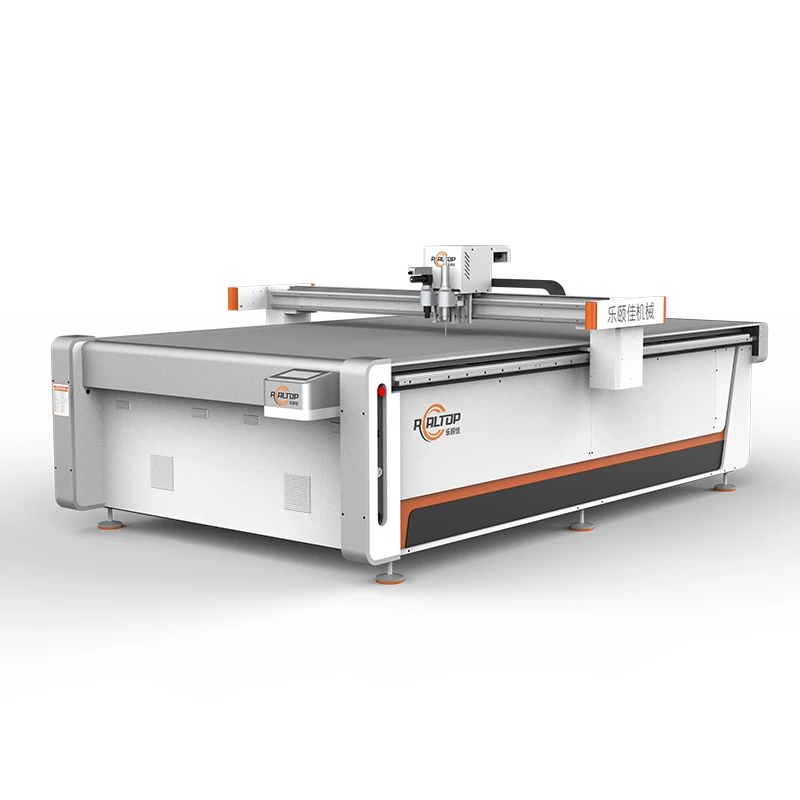
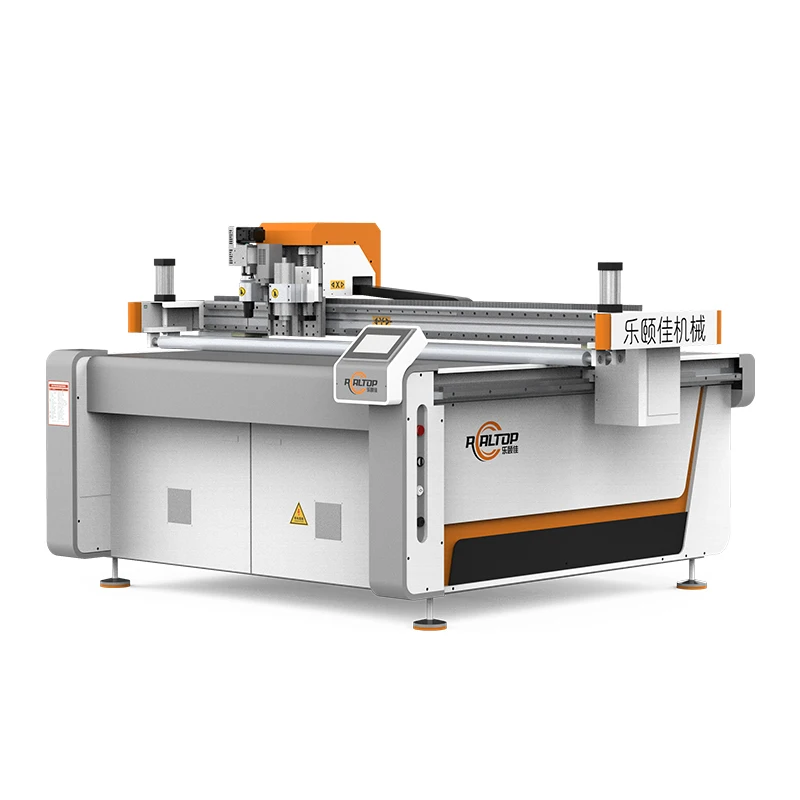
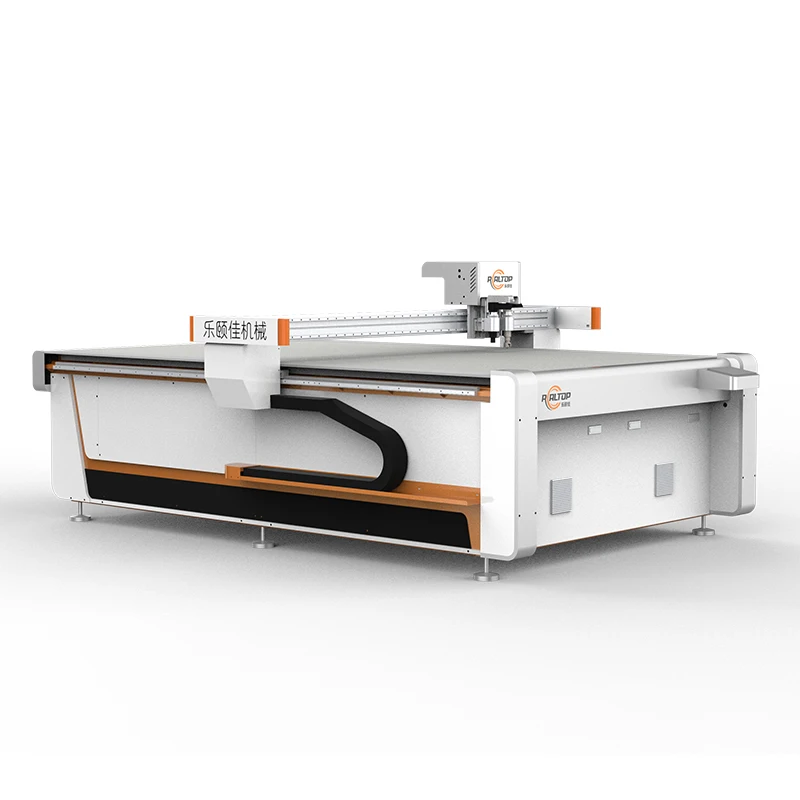
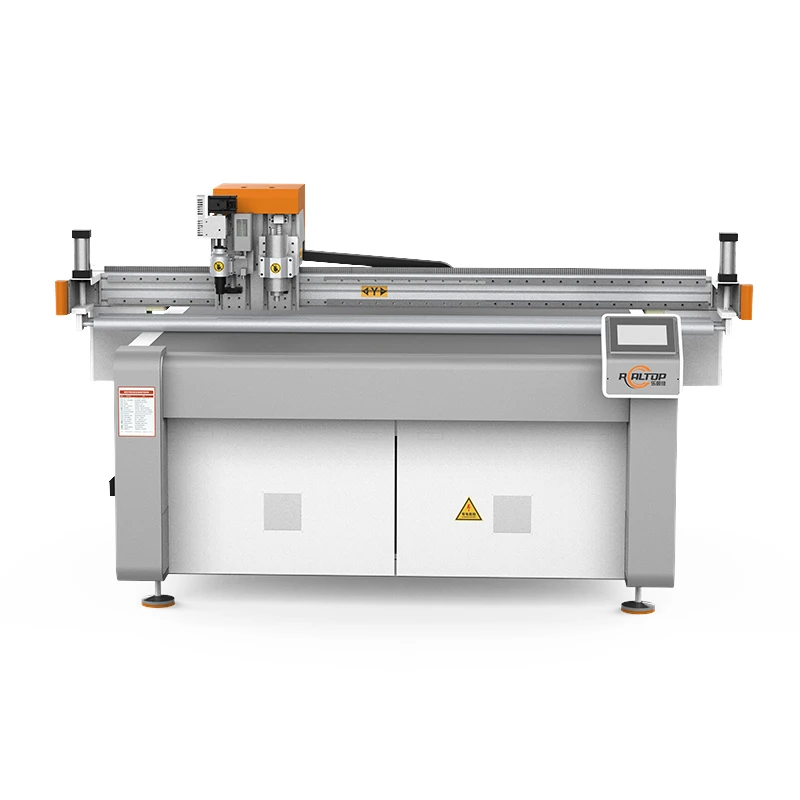
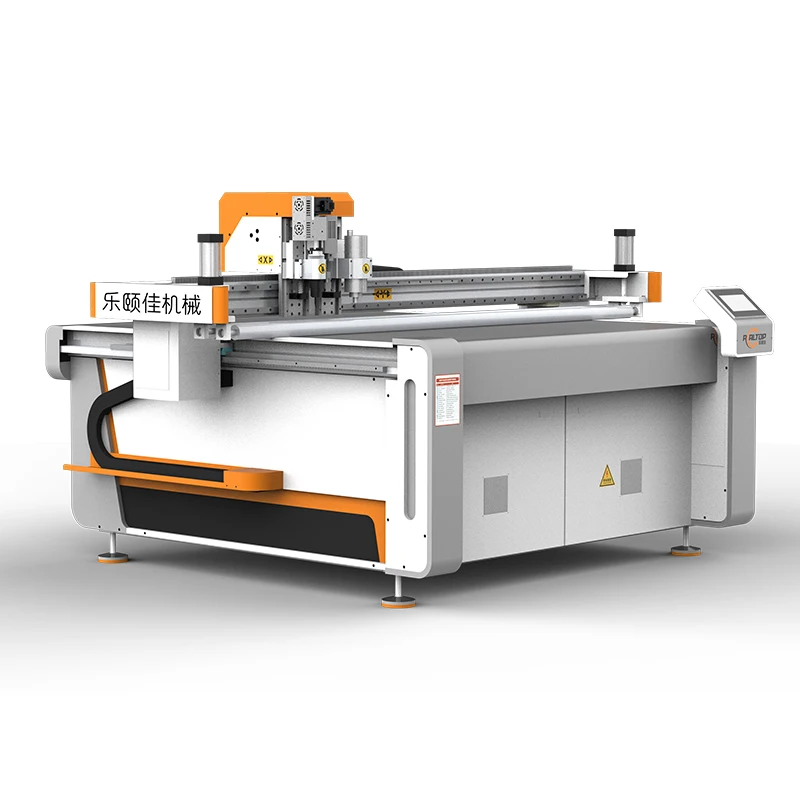
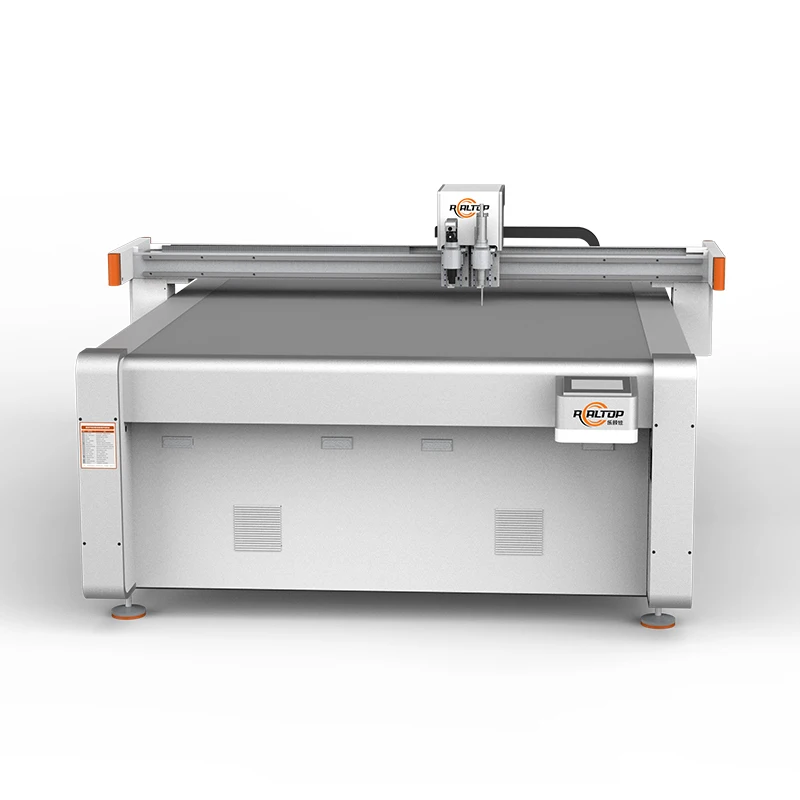
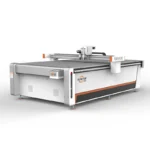
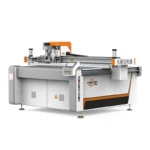
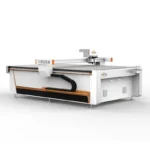
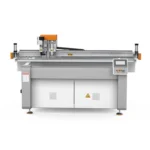
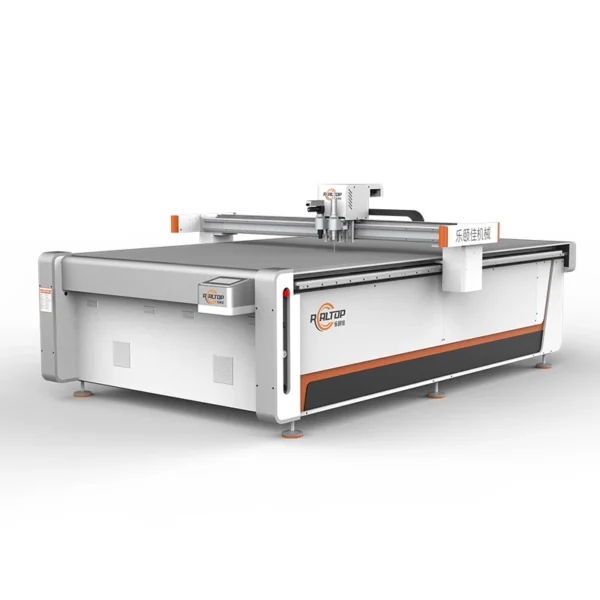
Configurable Tooling for Exact Material Match — the RT-D2516/RT-S2516 is specified by tool head, cutting depth and vacuum zoning rather than sold on working area alone.
Technical Specifications
| Parameter | Value |
|---|---|
| Model | RT-D2516/RT-S2516 |
| Working Area | 1600 × 2500 mm |
| Overall Dimensions (L×W×H) | 3450 × 2300 × 1250 mm |
| Rated Power | 9 kW |
| Voltage | 380V ±10% (50Hz/60Hz to be confirmed before shipment) |
| Tool Head Type | Swiss imported oscillating knife with full-cut, half-cut and cursor positioning |
| Translational Velocity | 800 – 2000 mm/s |
| Cutting Speed | 200 – 800 mm/s (basis to be confirmed per material) |
| Cutting Thickness | Up to 100 mm (varies with material density and tool configuration) |
| Repeatability | ≤ 0.1 mm |
| Transmission System | Digital servo motor, linear guide, synchronous belt, ball screw |
| Servo Motor | Taiwan Delta |
| Linear Guide | Taiwan Hiwin |
| Vacuum Table | Aluminum alloy honeycomb structure with zoned adsorption |
| Vacuum Pump | 7.5 kW |
| Conveyor Belt | Germany imported (verify against current build specification) |
| Control System | CNC (HP-GL compatible format) |
| Safety Device | Infrared sensors and emergency stop |
| Software | Professional carton nesting software, multiple file format import |
| Language Options | English, Russian, Italian, Chinese; custom languages supported |
| Warranty | 3 years (verify parts supply term against current contract) |
| Assembly State | Fully assembled flatbed table with auto-feeding option |
| Standards | CE (where applicable) |
Application Suitability
| Application | Material or Output |
|---|---|
| Packaging sample making | Corrugated board, cardboard, carton prototypes without die tooling |
| Sticker and label contour cutting | Vinyl, self-adhesive films, printed PVC sheets |
| Gasket and seal production | PVC, EVA, rubber, silicone sheets |
| Foam and composite processing | Sponge, EVA foam, soft glass, flexible composites |
| Leather goods preparation | Natural and synthetic leather, flexible composite material |
Why the Vacuum Zoning Question Decides Small-Part Yield
A flatbed cutter with undivided vacuum suction will lose hold on nested small gaskets the moment the blade exits the cut.
When a buyer specifies a CNC oscillating knife cutting machine based purely on table size, the vacuum system often receives the least scrutiny. Yet on jobs like EVA foam gaskets or small PVC seals, the parts can be lighter than the cutting force itself. If the table pulls air evenly across the entire 1600 × 2500 mm surface, suction at any single point drops below what is needed to resist the oscillating blade, and the part lifts or shifts mid-cut. [NEED_CITE: vacuum hold-down principles for CNC flatbed cutting tables] This is why zoning the honeycomb aluminum platform into independent sectors matters: only the zones under active cutting are engaged, concentrating suction exactly where the tool head is working.
Tool Head Selection by Material, Not by Guesswork
An oscillating knife cutting machine must be matched to the material stack it will process daily. The Swiss imported tool head on the RT-D2516/RT-S2516 performs full-cut, half-cut and cursor positioning within a single unit, which means the operator can score a crease line and then cut through the sheet without a manual tool change. For dense EVA foam, the oscillation frequency and blade angle are adjusted so the knife slices rather than compresses the cell structure, preventing the crushed edges that plague poorly configured setups.
Contour Tracking at Production Speed
The CCD camera positioning system is designed to read printed registration marks on PVC and vinyl at full translational velocity. During the factory test, recognition rate is verified against the buyer’s own print files rather than a generic test chart. [NEED_CITE: CCD mark recognition accuracy standards in digital cutting] This step eliminates the common scenario where a machine performs well on a clean sample but loses tracking once real production files with slight color variation enter the queue.
Reading the Specs That Actually Affect Cut Quality
The Delta servo motors paired with Hiwin linear guides deliver ≤ 0.1 mm repeatability, which directly governs how well the second pass of a half-cut crease aligns with the first. The 7.5 kW vacuum pump provides the differential pressure needed across the zoned honeycomb table; undersizing this component is a frequent cause of material lift on thin vinyl. The HP-GL compatible control system accepts nesting files from most carton design CAD packages, so a packaging sample maker does not need to rebuild their file workflow when switching machines. Cutting speed ranges from 200 to 800 mm/s, but the usable value within that range depends entirely on material density and thickness, which is confirmed during the sample cut before the order is finalized.
The Hidden Cost of Skipping the Material Test
Buyers who skip the sample cut often discover after installation that the blade they selected tears through layered foam instead of slicing it, or that the vacuum zones cannot hold a nested array of small silicone gaskets. [NEED_CITE: common causes of material shift during CNC knife cutting] These problems are not machine defects; they are specification gaps. The RT-D2516/RT-S2516 ships with a tool head and vacuum zone map that have already been validated against the buyer’s declared material, so the cost of reconfiguration is absorbed before the crate is sealed, not after the machine arrives on the shop floor.
Why Source This Oscillating Knife Cutter Here
In-house design covers both knife and laser cutting technologies, so the RT-D2516/RT-S2516 is recommended only when knife cutting is the correct process for the material, never when a laser would produce a better edge. Every configuration is specified per material thickness and daily volume rather than quoted from a fixed catalog page. The sample cutting report on the buyer’s own stock is issued before the purchase order is signed, giving the buyer a physical reference of edge quality and achievable thickness. Voltage, plug type and control language are confirmed against the destination market’s electrical standards before production begins. Software compatibility is verified so that the buyer’s existing nesting workflow and file formats import without conversion errors.
Documentation & Verification
- Machine specification sheet listing confirmed tool head and vacuum zone layout
- Electrical schematic with voltage and frequency matched to destination grid
- Sample cutting report on buyer’s own PVC, EVA or foam stock
- Factory test record documenting repeatability and contour accuracy
- Software licence with file format compatibility note for nesting workflow
- Spare parts list with oscillating blade and vacuum seal consumables
Installation, Commissioning & Support
- Floor space allocation for 3450 × 2300 mm footprint plus operator clearance
- Dedicated 380V circuit rated for 9 kW continuous plus 7.5 kW vacuum pump
- Machine arrives fully assembled; auto-feeding conveyor requires belt tensioning on site
- First-run calibration of oscillating knife depth and CCD mark recognition parameters
- Operator training on HP-GL file import and nesting software in confirmed language
- Oscillating blades, vacuum seals and conveyor belt spares supplied with initial shipment
Before You Send the Inquiry
Provide the material type, maximum sheet thickness and your typical nesting pattern so the tool head and vacuum zones can be matched to your actual production. Confirm your local voltage and frequency, preferred control language and whether your existing CAD files are DXF, PLT or AI format. If you are processing a composite with glass fiber or mineral filler, disclose the composition so blade wear can be estimated before the configuration is locked in.
Frequently Asked Questions
Q: How is cutting speed and thickness verified for my specific material before order?
A: We run a sample cut on your actual PVC, EVA or foam stock using the proposed tool head and oscillation settings. The resulting sample cutting report documents edge quality, achievable thickness and cycle time, giving you a physical benchmark before the order is confirmed.
Q: Which tool head suits my material and edge requirement?
A: The Swiss imported oscillating knife handles full-cut, half-cut and cursor positioning in one unit. For dense foam we adjust oscillation frequency and blade geometry; for vinyl and thin PVC a drag knife or creasing wheel may be specified instead, depending on the edge finish your product requires.
Q: Is the vacuum table zoned adequately for small parts?
A: The aluminum honeycomb table is divided into independent suction zones configured to your typical nesting layout. This concentrates the 7.5 kW pump’s hold-down force under the active cutting area, preventing small gaskets and seals from lifting during the cut.
Q: What voltage, plug type and control language are confirmed before shipment?
A: Voltage and frequency are matched to your facility’s electrical supply and documented in the electrical schematic. Plug type follows local standards, and the control interface language is set to your preference — English, Russian, Italian, Chinese or a custom option — before the machine leaves the factory.
Q: Can the software import my existing DXF, PLT or AI files?
A: The included nesting software supports multiple file format imports and is HP-GL compatible. We verify format compatibility with your current CAD system during the pre-order stage and document the result in a software licence and file format compatibility note.


商品评价
Clear filtersThere are no reviews yet.