


Fast Shipping
Carrier information

20k products
Payment methods

24/7 Support
Unlimited help desk

2-day Delivery
Track or off orders
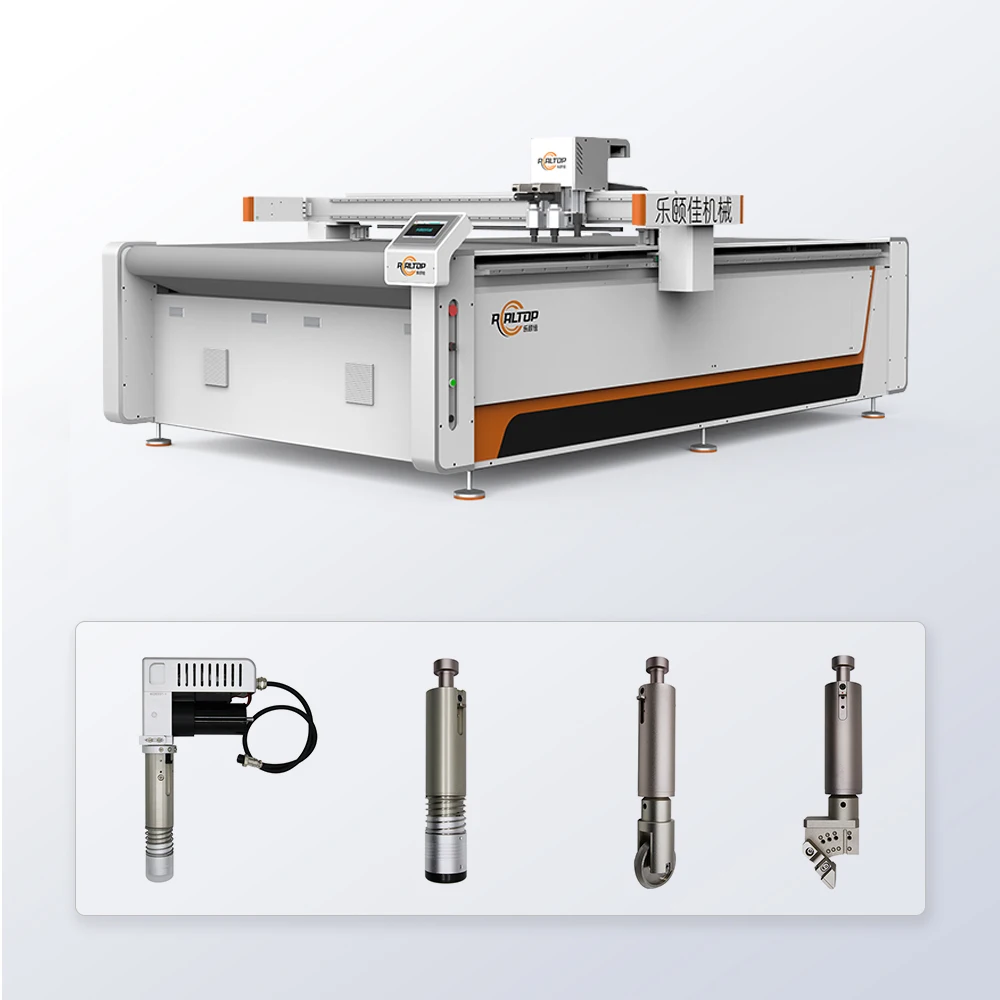
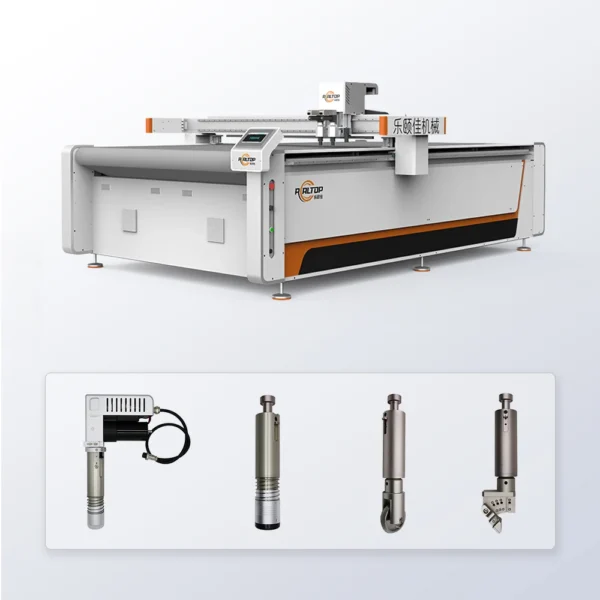
Tool Head Mapping — seven interchangeable heads are assigned to specific corrugated flutes, foams and composites, so the 1625 cuts each substrate with the correct geometry rather than a single compromise blade.
Technical Specifications
| Parameter | Value |
|---|---|
| Model | 1625(std.) |
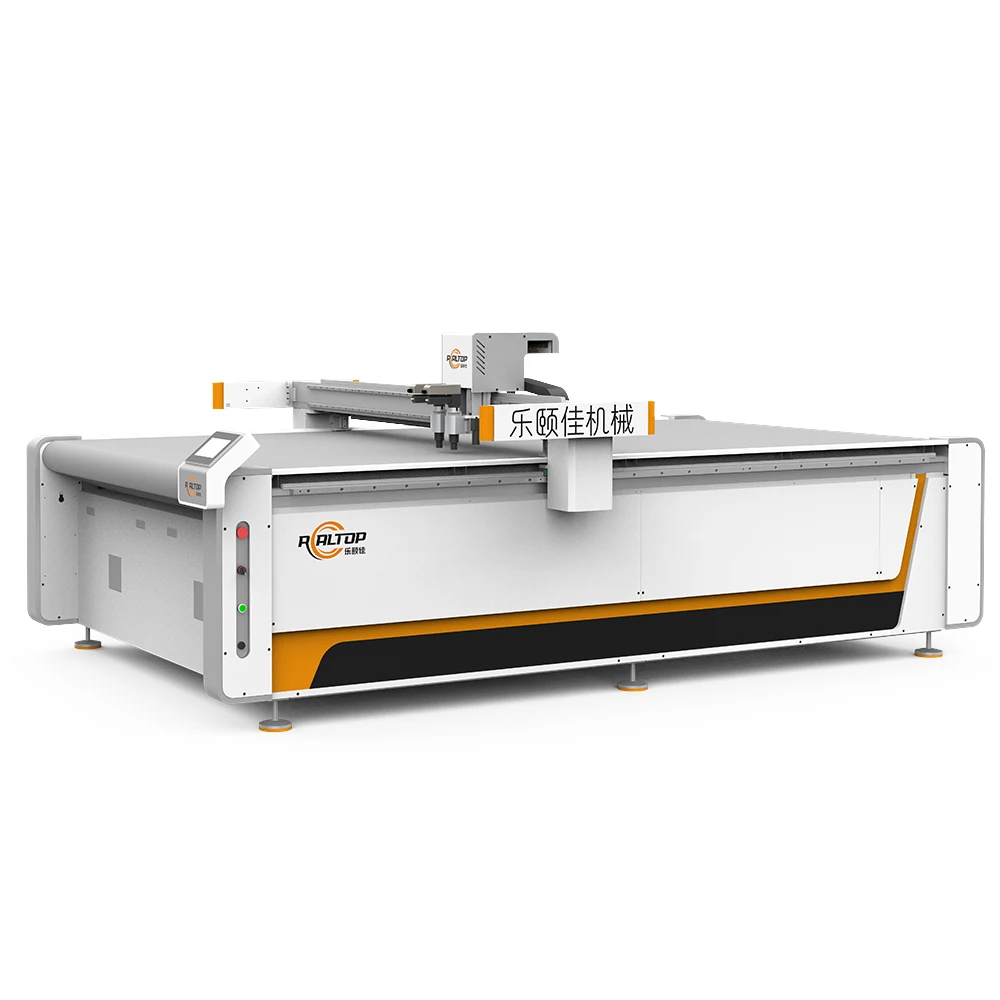
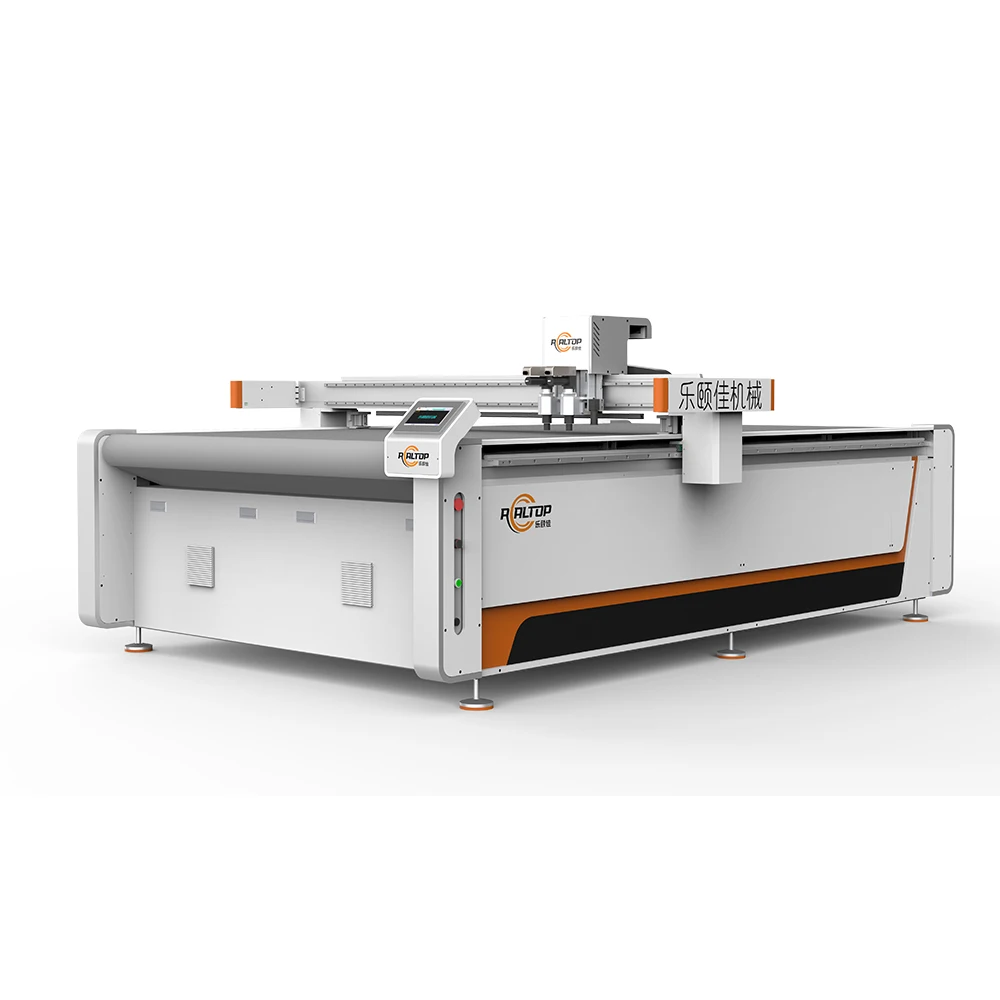
| Product Type | CNC Oscillating Knife Cutting Machine for Packaging |
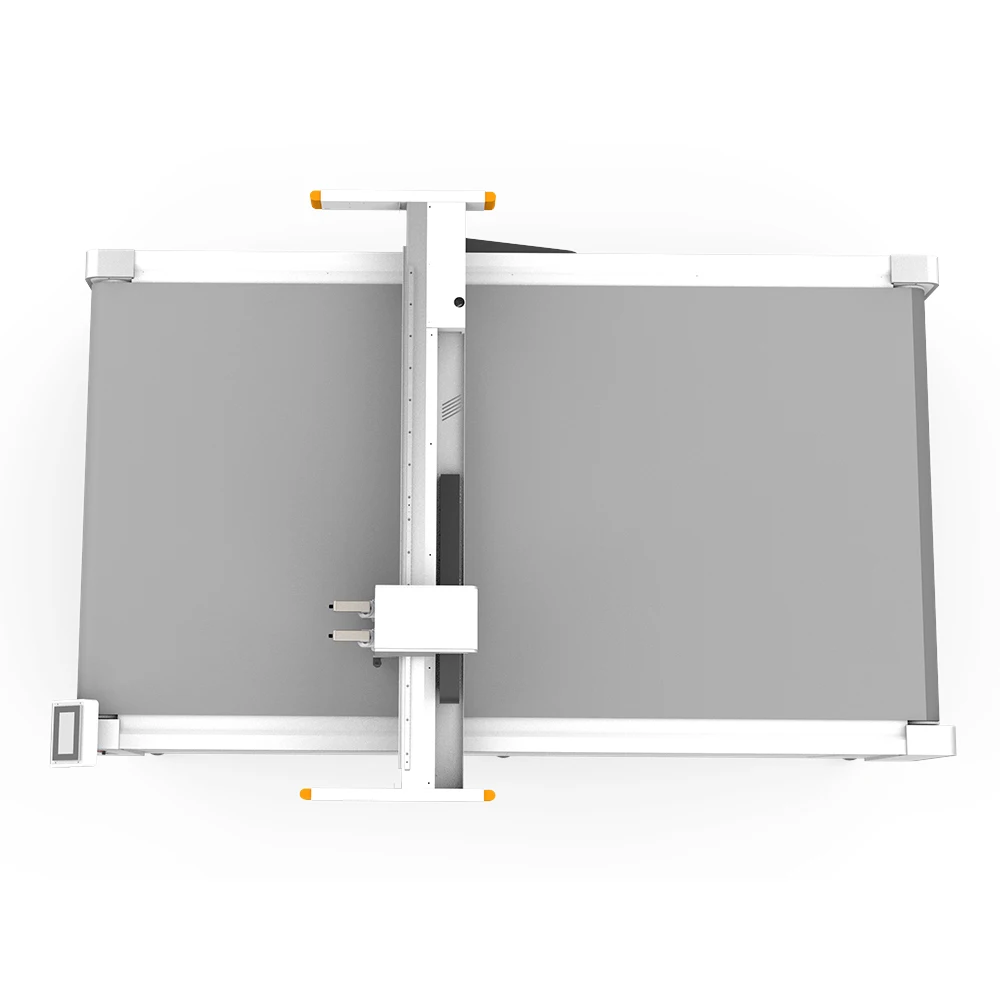
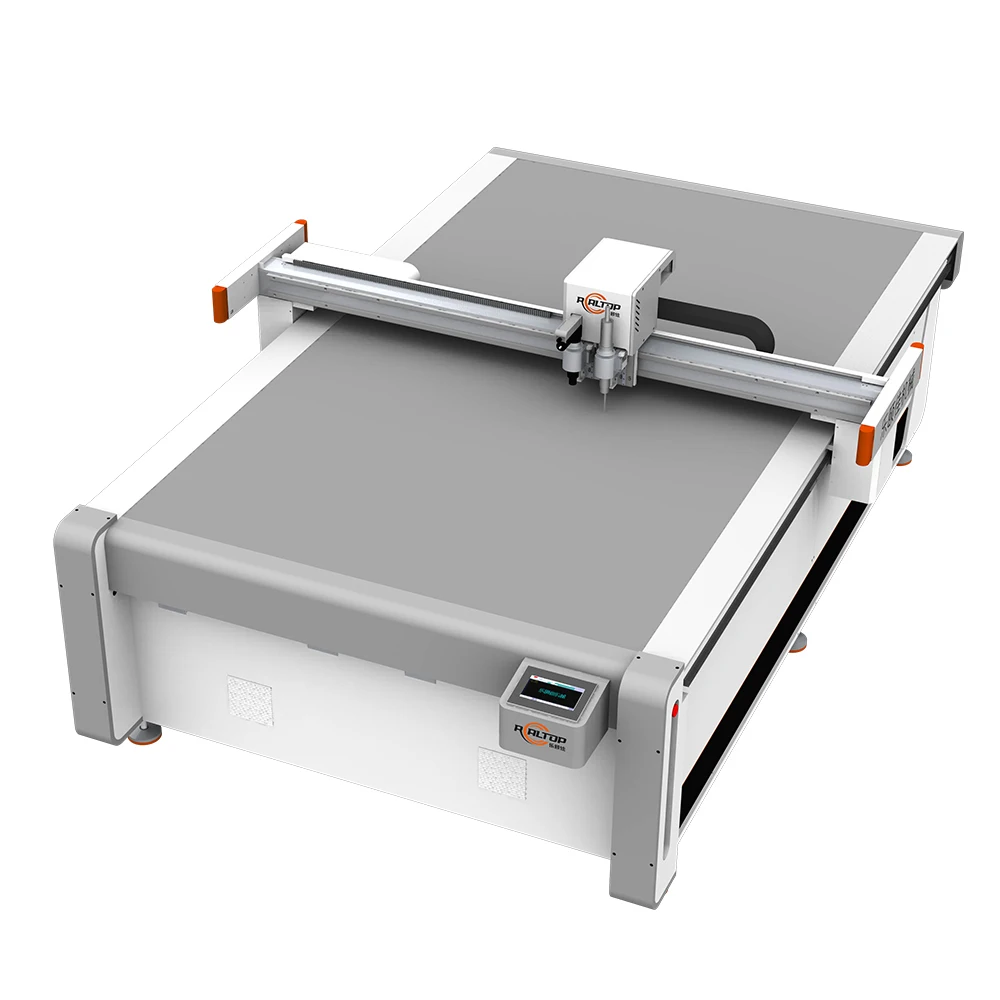
| Working Area | 1600×2500mm |
| Tool Head Options | Oscillating knife, Driven rotary knife, Creasing wheel, Kiss cutting tool, Pneumatic knife, Milling tool, V groove knife |
| Cutting Speed | 0-1500 mm/s |
| Cutting Thickness | ≤ 40mm |
| Cutting Accuracy | ±0.1 mm |
| Vacuum Pump | 9 kW |
| Vacuum Table | Aluminum bellows vacuum table |
| Control System | PLC control panel |
| Servo Motor Options | Panasonic, Delta, Dorna |
| Voltage Options | 110V, 220V, 380V |
| File Formats | PLT, DXF, AI, PDF |
| Software | Dedicated packaging box structure design software |
| Language Options | English, Russian, Italian, Chinese (customizable) |
| Safety Device | Infrared sensor device and emergency stop device |
| Machine Size | 3300×2100×1350 mm |
| Standards | CE (declaration where applicable) |
Application Suitability
| Application | Material or Output |
|---|---|
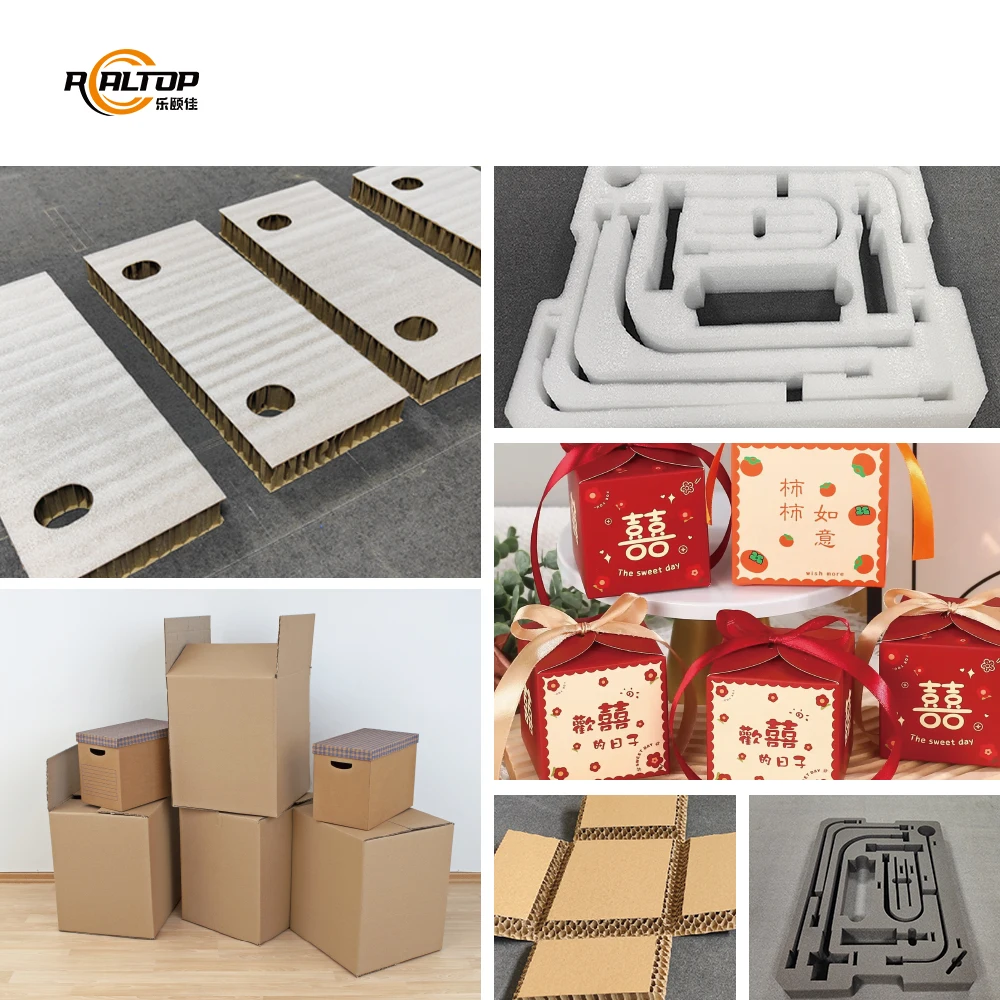
| Corrugated box short-run and custom production | E-flute, B-flute, BC-flute corrugated cardboard |
| Carton sample making and packaging prototyping | Greyboard, cardstock, art paper |
| Protective insert and cushion fabrication | EVA, EPE, PU foam |
| Gasket and seal production | Rubber mats, PTFE, adhesive-backed composites |
| Specialty packaging and display items | Thin plastic sheets (PVC, PET), velvet, fleece, non-woven fabric |
| Leather and synthetic leather packaging components | Leather, synthetic leather |
Why the Tool Head Decision Comes Before the Working Area
Most buyers specify a CNC oscillating knife cutting machine by bed size first and discover later that the standard oscillating blade tears five-layer BC-flute or crushes low-density EVA foam at production speed. The correct tool head for each substrate must be locked into the configuration before the order is placed.
A 1600×2500mm table handles most packaging sheets, but a driven rotary knife is required for clean cuts through thick corrugated stacks, while a kiss cutting tool is the only option that scores adhesive-backed labels without penetrating the liner. Choosing wrong means ragged edges, crushed flutes, or material that lifts off the table mid-cut [NEED_CITE: common cutting defects from incorrect tool head selection on corrugated substrates].
Seven Tool Heads for the Full Packaging Workflow
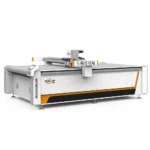
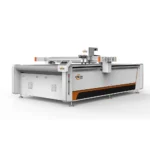
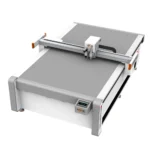
The 1625 carries seven interchangeable heads, each assigned to a specific material class and cut type. The oscillating knife handles standard single and double-wall corrugated up to the rated thickness. The creasing wheel scores fold lines on greyboard and cardstock without fracturing fibers. The V groove knife produces folding channels on thick foam inserts, and the pneumatic knife cuts through dense rubber gasket stock. Switching heads takes minutes on the tool mount, so a sample room running carton prototypes in the morning can cut EVA cushion inserts in the afternoon on the same CNC oscillating knife cutting machine specifications sheet.
Vacuum Table Zoning and Small-Part Hold-Down
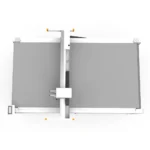
Packaging jobs frequently produce small die-cut shapes — tuck flaps, locking tabs, gasket rings — that standard vacuum zones fail to hold flat. The aluminum bellows vacuum table on this unit delivers full-surface adsorption across the 1600×2500mm working area. The 9 kW vacuum pump maintains suction even when the cutter head opens a slot through the sheet and airflow bleeds through the kerf. When cutting nested layouts of small carton parts at speeds approaching 1500 mm/s, consistent hold-down is the difference between registration accuracy and scrap [NEED_CITE: vacuum table hold-down requirements for high-speed digital cutting of small packaging components].
How Core Parameters Shape Packaging Output
The ±0.1 mm cutting accuracy keeps crease lines aligned with cut edges on multi-panel carton layouts, which matters when a scored fold misses the slot by even a fraction of a millimeter on a glued box. The PLC control panel paired with dedicated packaging box structure design software lets operators import structural drawings in PLT, DXF, AI, or PDF and run nesting routines to improve material yield from full sheets of corrugated or greyboard. Servo motor selection across Panasonic, Delta, and Dorna options allows buyers to match local service availability and parts supply. Cutting thickness up to 40 mm covers the range from single-face E-flute through dense foam cushion stock, though actual throughput per sheet depends on flute profile, blade geometry and path complexity.
The Cost of Skipping the Sample Cut
When a buyer orders a knife cutting table based on a brochure working area alone, the first production run often reveals edge quality problems that were not visible at the quoting stage. Five-layer BE-flute crushes under a standard oscillating blade. Adhesive-backed foam lifts when vacuum zoning is not matched to the part footprint. Software fails to import the nesting files the buyer already uses. Every one of these issues is fixable, but fixing them after shipment means retrofit cost and production downtime rather than a configuration adjustment at the factory [NEED_CITE: frequency of post-delivery configuration corrections in digital cutting equipment].
Why Source This Machine Here
The design team specifies each tool head and table configuration against the buyer’s actual material samples, not against a generic material chart. In-house production covers both knife and laser cutting technologies, so the cutting method is matched to the substrate rather than forced into one process. CCD camera positioning is available for printed contour work when the packaging job requires it. Software compatibility and file format import are verified before the order ships. Voltage, plug type, and control panel language are confirmed to match the destination facility. Sample cutting on the buyer’s own material is standard practice before commitment.
Documentation & Verification
- Machine specification sheet listing all seven tool head options and their material assignments
- Electrical schematic with voltage confirmation for 110V, 220V, or 380V supply
- Sample cutting report on buyer’s own corrugated, foam, or composite material
- Tool head and vacuum table configuration list matched to specified material range
- Software licence and file format compatibility note for PLT, DXF, AI, PDF workflow
- Factory test record documenting cutting accuracy and edge quality before dispatch
Installation, Commissioning & Support
- The 3300×2100×1350 mm machine footprint requires level floor space with clearance for sheet loading on all sides
- Dedicated electrical circuit matching confirmed voltage (110V/220V/380V) with appropriate breaker rating
- Machine ships partially assembled; table leveling and vacuum pump connection completed on site
- PLC control panel parameters set during commissioning for the buyer’s primary material and flute type
- Operator training covers tool head changeover, vacuum zoning adjustment, and software nesting workflow
- Spare parts list includes oscillating blades, creasing wheels, and vacuum table seals for initial stock
Preparing Your Inquiry
Before requesting a quote, confirm the material types and flute profiles you run most often, the maximum sheet thickness, and the daily sample or production volume. Specify your facility voltage and frequency, the control language your operators need, and whether your existing design files are in PLT, DXF, AI, or PDF format. If your workflow includes printed contour cutting, note that requirement so the correct positioning system is included in the configuration.
Frequently Asked Questions
Q: Which tool head should I use for E-flute versus BC-flute corrugated cardboard?
A: The oscillating knife handles E-flute and B-flute cleanly at standard speeds. For BC-flute or five-layer board, the driven rotary knife provides the blade geometry and cutting force needed to prevent edge crush. We confirm the correct head by running a sample cut on your actual board stock before finalizing the configuration.
Q: How does the vacuum table handle small packaging parts without lifting?
A: The aluminum bellows table provides full-surface adsorption across the 1600×2500mm area, backed by a 9 kW pump. This maintains hold-down even when the kerf opens airflow paths through the sheet. For very small nested parts, we review your typical layout and adjust zone configuration if needed.
Q: Will the packaging software import my existing design files?
A: The dedicated packaging box structure design software accepts PLT, DXF, AI, and PDF formats. Before order confirmation, we test import and nesting with your actual files to verify compatibility with your current workflow and confirm that crease lines, cut paths, and layer assignments translate correctly.
Q: Can I test the machine on my own material before ordering?
A: Sample cutting on your own corrugated board, foam, or composite material is standard. We produce a sample cutting report documenting edge quality, cutting depth, and hold-down performance. This report forms part of the configuration agreement so both sides have a verified baseline before production begins.
Q: How is voltage and language customization handled for export shipments?
A: Voltage is confirmed at 110V, 220V, or 380V to match your facility supply, and the electrical schematic reflects this before build. Control panel language options include English, Russian, Italian, and Chinese, with other languages available on request. Plug type is matched to the destination market standard.


商品评价
Clear filtersThere are no reviews yet.