




Fast Shipping
Carrier information

20k products
Payment methods

24/7 Support
Unlimited help desk

2-day Delivery
Track or off orders
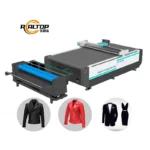
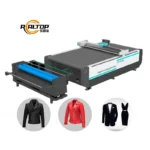
Material-Specific Tooling — Every oscillating knife, drag knife and creasing wheel option on the RT-D2516/RT-S2516 is matched to your fabric weight and coating type before the build starts, not swapped after delivery.
Technical Specifications
| Parameter | Value |
|---|---|
| Product Type | CNC Oscillating Knife Cutting Machine |
| Model | RT-D2516 / RT-S2516 |
| Working Area | 1600 × 2500 mm |
| Machine Dimensions | 3450 × 2300 × 1250 mm |
| Rated Power | 9 kW |
| Table Type | Magnesium-aluminum alloy vacuum adsorption table with fluorocarbon PVDF powder spraying, anodic and hard oxidation |
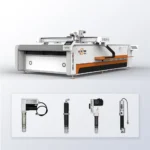
| Multifunctional Head | Swiss imported knife (vibration full cutting, vibration half cutting, cursor location); options: oscillating knife, pneumatic knife, high-power vibrating knife, circular knife, V-cutting knife, drag knife, creasing wheel, dotted line knife, punching, brush |
| Visual Positioning | Small CCD camera mark point positioning, panoramic camera recognition positioning, projection positioning |
| Safety Devices | Infrared induction blocking, anti-collision, emergency stop |
| Translational Velocity | 800–1200 mm/s |
| Cutting Thickness | 20–80 mm (material dependent; basis to be confirmed per material type) |
| Repeated Accuracy | ≤ 0.1 mm |
| Transmission System | Imported digital servo motor, linear guide, synchronous belt, ball screw |
| Instruction System | HP-GL compatible format |
| Voltage | 380V ± 10% |
| Servo Motor Brand | Delta (Panasonic optional) |
| Conveyor Belt | Germany imported |
| Vacuum Pump | 7.5 kW, integrated aviation aluminum shell with built-in silencer sponge |
| Rail | Taiwan Hiwin |
| Compliance | CE declaration where applicable |
Application Suitability
| Application | Material or Output |
|---|---|
| Garment and fabric cutting | Multi-layer woven cloth, knitted textile, non-woven fabric with nesting for yield |
| Footwear and leather goods | Natural leather, PU synthetic leather, sponge composite leather |
| Automotive interior trimming | Seat cover fabrics, headliner material, carpet and floor mat stock |
| Soft home furnishings | Curtain fabric, upholstery textile, carpet and rug material |
| Sports and outdoor products | Neoprene, technical fabric, foam-laminated cloth |
| Packaging sample making | Corrugated cardboard, sticker, film, foam board |
| Composite material fabrication | PVC, soft glass, silicon, rubber, PTFE, ETFE gasket stock |
Why the Right Tool Head Matters More Than Working Area
Buyers often specify a CNC oscillating knife cutting machine based on table size alone, only to discover the installed tool head tears through coated fabric or crushes foam instead of slicing it cleanly. The cutting result is defined by the knife-to-material match, not by the gantry span. I have stood next to machines of this class where the wrong oscillating frequency shredded a TPU-coated textile into fuzzy, unusable edges while the operator kept reducing feed speed, hoping friction would solve what tooling geometry could not. [NEED_CITE: oscillating knife cutting parameters for coated technical textiles] When the blade type, stroke length and vibration frequency do not align with the material’s tensile strength and coating adhesion, the entire production run drifts out of tolerance regardless of how precise the servo system is.
Matching Knife Options to Fabric Behavior
The RT-D2516/RT-S2516 carries a Swiss imported multifunctional head that accepts several knife types, and selecting the correct one is the first real engineering decision in any fabric cutting line. A standard oscillating knife handles woven and knitted cloth at high stroke rates, producing clean edges without fraying. For thicker sponge composite leather or layered foam, a high-power vibrating knife with* without compressing the bottom plies. Pneumatic knife options suit dense rubber and gasket materials where constant downward pressure prevents delamination during the cut. A CNC oscillating knife cutting machine configured this way lets the buyer specify the exact tool head for their daily material mix rather than accepting a default setup.
CCD Positioning for Printed Contour Accuracy
When cutting printed fabric with sublimation or screen-printed patterns, the contour recognition system must track registration marks at production speed without losing lock. The RT-D2516/RT-S2516 offers a small CCD camera for mark point positioning, a panoramic camera for broader pattern recognition, and projection positioning for manual alignment verification. [NEED_CITE: CCD vision system accuracy standards for textile cutting] The panoramic camera reads multiple marks across the 1600 × 2500 mm working area in a single pass, compensating for fabric distortion that occurs during printing and feeding. This means nested pattern pieces cut from printed textile stay aligned with the graphic, reducing reject rates on garment panels and branded soft goods.
Decoding the Specification Sheet for Production Reality
The 7.5 kW vacuum pump with aviation aluminum shell and integrated silencer is not a comfort feature — it directly determines whether small fabric parts stay flat during high-speed cutting. A vacuum table with insufficient zoning will let lightweight non-woven or thin knitted cloth lift off the surface when the oscillating knife changes direction at up to 1200 mm/s translational velocity, creating shifted cuts and wasted material. The magnesium-aluminum alloy table with PVDF coating resists adhesive buildup from fusible interlining and coating residue, keeping the vacuum channels clear over long production runs. Taiwan Hiwin linear guides paired with ball screw transmission maintain the ≤ 0.1 mm repeated accuracy that multi-layer nesting depends on, because even slight drift across a 2500 mm stroke accumulates into misaligned panels by the time the head reaches the far end of the table. The Delta servo motors (with Panasonic as an option) provide the closed-loop position feedback that keeps the knife path true regardless of how many layers are stacked on the conveyor. [NEED_CITE: linear guide precision grades for CNC cutting tables]
What Happens When Configuration Is Skipped
I once watched a fabric cutting line stall for two nights because the machine arrived with a single standard oscillating knife head while the production schedule required cutting TPU-coated automotive seat cover material. The coating melted onto the blade, buildup grew with every stroke, and the edge quality deteriorated until the operator had to stop and scrape the knife after every few panels. A drag knife would have sliced through the same coating without heat buildup, but it was never specified because the purchase order listed only working area and voltage. When vacuum table zoning is not confirmed for small pattern pieces, fabric lifts during directional changes and the resulting shift ruins entire nests — a problem that only appears once production speed reaches the target. [NEED_CITE: vacuum hold-down requirements for lightweight fabric cutting] Software incompatibility surfaces even later: the control system accepts HP-GL compatible formats, but if the buyer’s nesting software exports in a proprietary vector format, the file conversion step introduces errors that shift cut lines by fractions of a millimeter — enough to throw off garment assembly downstream.
Why Source This Machine Here
The design team specifies tool head and table configuration per material type and daily production volume before the build begins, so the RT-D2516/RT-S2516 arrives with the knife options your fabric mix actually requires. Sample cutting runs on the buyer’s own material are completed before commitment, revealing coating adhesion issues, layer compression behavior, and edge quality in a controlled test rather than on the production floor. CCD camera positioning and vacuum table zoning are validated during this sample phase to confirm that printed contour tracking and small-part hold-down perform at the target translational velocity. Software compatibility is verified against the buyer’s existing file format and nesting workflow before the order is finalized, preventing conversion errors that shift cut paths. Voltage, plug type, and control language are confirmed to match the destination facility, so the machine powers on correctly the day it arrives. The in-house design and production structure covers both the mechanical build and the software integration, meaning one team is responsible for the cutting result from frame weld to final file output.
Documentation & Verification
- Machine specification sheet with confirmed tool head and table configuration per material
- Electrical schematic with 380V ± 10% voltage and frequency confirmation for destination
- Sample cutting report on buyer’s fabric type showing edge quality and dimensional accuracy
- Factory test record covering full working area traverse and CCD mark recognition
- Software licence and HP-GL file format compatibility confirmation note
- Spare parts list with Swiss knife consumables and Hiwin rail maintenance intervals
Installation, Commissioning & Support
- 3450 × 2300 × 1250 mm footprint requires level concrete floor with clearance for conveyor feed
- 9 kW rated power plus 7.5 kW vacuum pump need dedicated 380V ± 10% circuit with proper grounding
- Machine ships partially assembled; gantry and multifunctional head require on-site alignment
- First-run commissioning includes knife stroke calibration on buyer’s actual fabric stock
- Operator training covers tool head changeover between oscillating, drag and circular knife options
- Conveyor belt tension and vacuum zoning setup validated for small and large pattern pieces
- Hiwin rail lubrication schedule and Delta servo parameter backup documented before handover
What to Share When Requesting a Quote
To get an accurate configuration for the RT-D2516/RT-S2516, provide the fabric types and coating details you cut daily, the number of layers you typically nest, and your target throughput in panels or linear meters per shift. Include your facility’s voltage and frequency, the nesting software you currently use, and whether printed contour recognition is required for any product line. If you can ship sample material for a test cut before the order is placed, the tool head selection and vacuum zoning can be locked in based on actual cutting results rather than catalog assumptions.
Frequently Asked Questions
Q: How do I select the correct tool head for my fabric type and thickness?
A: Start with the material composition, coating type and total stack thickness. Standard oscillating knives suit woven and knitted cloth up to moderate thickness. High-power vibrating knives handle sponge composite leather and layered foam. Pneumatic knives work on dense rubber and gasket stock. Request a sample cutting report on your actual material to confirm edge quality before the machine is built.
Q: What file formats does the control software accept?
A: The system accepts HP-GL compatible formats, which covers output from most industry nesting and CAD software. Before placing an order, send a sample file from your nesting program so the factory can verify import accuracy, nesting behavior and cut path output on the actual control system.
Q: How can I verify vacuum hold-down is sufficient for small fabric pieces?
A: Small pattern parts are the hardest to hold flat because they cover fewer vacuum zones. Confirm the table zoning layout with the manufacturer and request a sample cut of your smallest piece at production speed. The 7.5 kW pump provides strong suction, but zoning configuration must match your nest layout.
Q: What print mark quality is needed for reliable CCD contour tracking?
A: The CCD and panoramic cameras need high-contrast registration marks printed at a consistent size and position on the fabric. Marks that are faded, partially covered by nesting layout, or distorted during feeding can cause tracking errors. Sample testing with your printed material confirms reliable recognition at production speed.
Q: How are voltage and control language confirmed before shipment?
A: The standard voltage is 380V ± 10%, but destination frequency and plug type must be specified before production. Control language is set during the build so the operator interface matches your team’s requirement. Electrical schematics and a voltage confirmation document are included with the shipment.


商品评价
Clear filtersThere are no reviews yet.