





Fast Shipping
Carrier information

20k products
Payment methods

24/7 Support
Unlimited help desk

2-day Delivery
Track or off orders
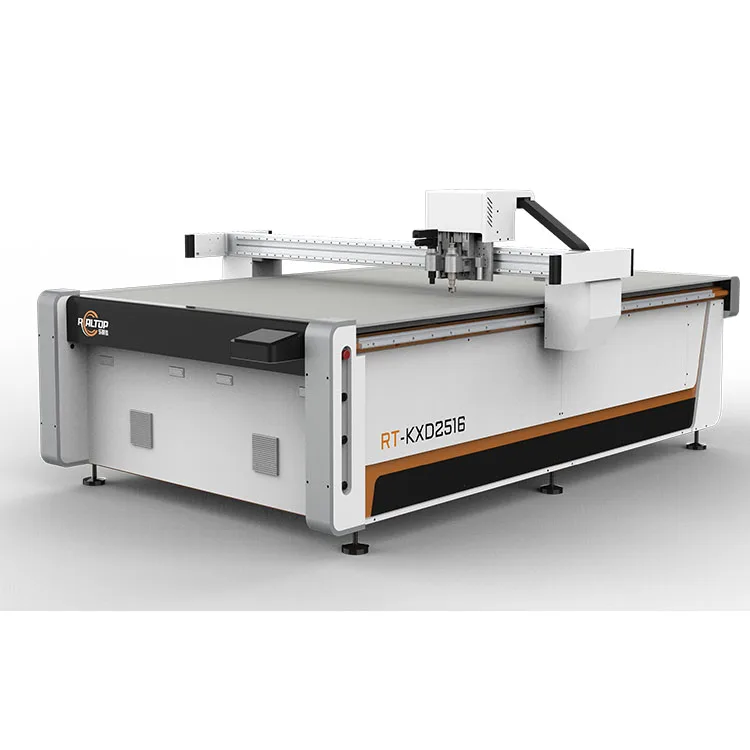
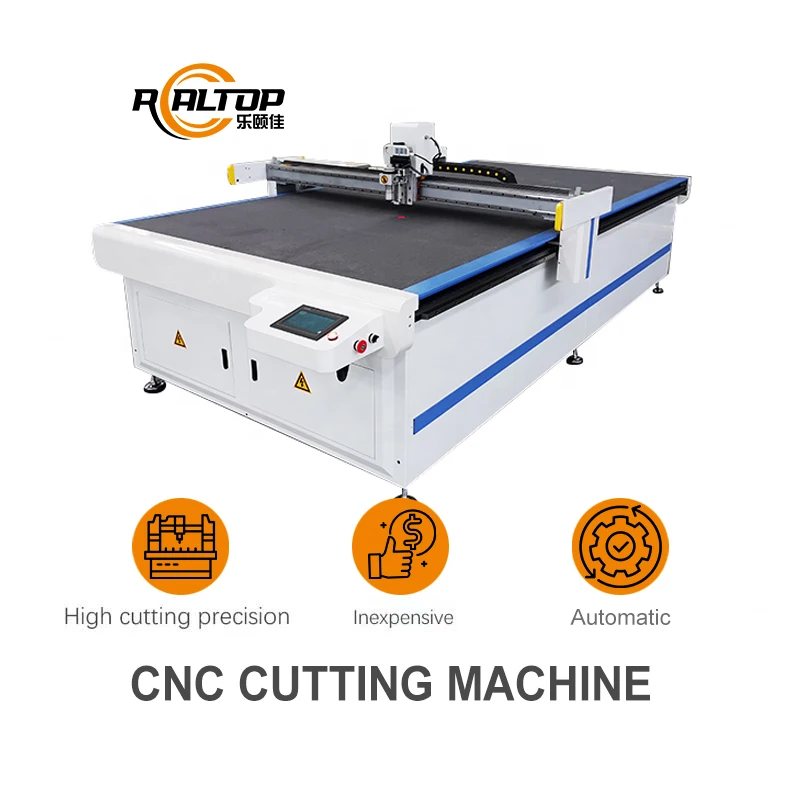
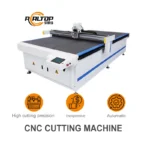
Swiss Vibration Knife Head — full-cut, half-cut and cursor location modes matched to corrugated board, card stock and vinyl substrates before the machine leaves the factory.
Technical Specifications
| Parameter | Value |
|---|---|
| Model | RT-D2516/RT-S2516 |
| Product Type | CNC Vibration Knife Carton Cutting Machine |
| Working Area | 1600 × 2500 mm |
| Machine Size | 3450 × 2300 × 1250 mm |
| Rated Power | 9 kW |
| Working Table | Aluminum alloy honeycomb vacuum adsorption platform with zoned follow-cut suction |
| Multifunctional Head | Swiss imported knife with vibration full cutting, vibration half cutting and cursor location function |
| Safety Device | Infrared sensors |
| Translational Velocity | 800–1200 mm/s |
| Cutting Speed | 200–800 mm/s (varies according to material type and thickness) |
| Cutting Thickness | Up to 100 mm (varies with material, basis to be confirmed) |
| Repeated Accuracy | ≤0.1 mm |
| Transmission System | Digital servo motor, linear guide, synchronous belt, ball screw |
| Servo Motor | Delta servo motor |
| Linear Guide | Taiwan Hiwin rail |
| Vacuum Pump | 7.5 kW |
| Instruction System | HP-GL compatible format |
| Voltage | 380V ± 10% |
| Frame Structure | Welded thick square seamless steel structure with high temperature treatment |
| Software | Professional carton nesting software with customized language support |
| Standards | CE declaration where applicable |
Application Suitability
| Application | Material or Output |
|---|---|
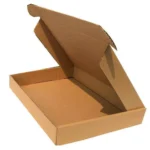
| Corrugated carton and cardboard sample making | Single, double and multi-wall corrugated board, grey board, kraft paper |
| Folding carton and paper box prototyping | Coated and uncoated card stock, art paper, specialty packaging board |
| Sticker and label contour cutting | Self-adhesive vinyl, paper labels, printed die-cut decals |
| Advertising signage and billboard production | Foam board, corrugated plastic, PVC sheet, magnetic vinyl |
| Business card and tag finishing | Laminated card stock, synthetic paper, tag board |
What Happens When the Tool Head Does Not Match the Board
The edge tells the truth before the nesting software ever shows a yield figure.
I once watched a packaging sample shop in Southeast Asia unbox a vibration knife unit that had been specified entirely on working area. The dealer promised clean creases on five-layer corrugated, but nobody had asked about flute profile or board density. The first sheet came off the table with crushed B-flute and a ragged crease line that no client would approve. The shop halted their sample room for two weeks while the supplier shipped a different oscillating knife assembly and a higher-pressure vacuum pump. That kind of delay is exactly what a detailed CNC oscillating knife cutting machine specifications review is supposed to prevent [NEED_CITE: corrugated flute profiles and tooling requirements].
Matching the Knife to the Substrate
The Swiss imported vibration knife head on the RT-D2516/RT-S2516 runs three modes: full cut, half cut and cursor location. Full cut handles solid board and thick corrugated in a single pass, while half cut scores folding carton stock without penetrating the backing liner. Cursor location positions the head for manual alignment when CCD contour recognition is not part of the build. For packaging sample makers switching between E-flute and B-flute within the same shift, swapping between oscillating knife and drag knife tooling takes minutes rather than hours, keeping the sample queue moving.
Vacuum Zoning That Holds Small Die-Cut Parts
An aluminum alloy honeycomb vacuum table with zoned follow-cut suction means only the section of the bed under the active cut path pulls vacuum. On a 1600 × 2500 mm working area, that keeps power draw manageable while holding small carton blanks and sticker contours flat. When cutting business cards or narrow label strips, full-bed vacuum would waste energy and still allow thin stock to lift at the edges. Zoned suction concentrates hold-down force exactly where the knife is working, reducing material shift that would otherwise push repeated accuracy beyond the ≤0.1 mm specification.
Reading the Specs That Actually Matter on the Floor
A 9 kW rated power figure covers the servo drives, vacuum pump and oscillating head motor together. The 7.5 kW vacuum pump alone accounts for most of that draw, and its capacity directly determines whether dense corrugated board stays flat under the knife. Delta servo motors paired with Taiwan Hiwin linear guides deliver the positioning repeatability that keeps crease lines aligned with cut paths across long nesting runs. Translational velocity reaches 800–1200 mm/s for rapid moves between cut paths, while cutting speed between 200 and 800 mm/s shifts depending on board density and flute count — a five-wall corrugated sheet will run at the lower end of that range. The HP-GL compatible instruction system accepts files from most packaging CAD platforms, so sample makers do not have to rebuild artwork from scratch [NEED_CITE: HP-GL compatibility in packaging CAD workflows].
The Cost of Skipping the Material Conversation
When a machine is ordered on bed size alone, the tool head arrives configured for a generic material list rather than the buyer’s actual substrate stack. Crushed flute, ragged crease lines and small parts lifting off the table all trace back to that missing conversation. A packaging house cutting primarily micro-flute laminated board needs a different oscillation frequency and blade angle than a signage producer slicing through 10 mm foam PVC. Neither scenario is wrong, but running the wrong setup burns blade life, wastes sheet stock and forces operators to babysit the table instead of feeding the next job [NEED_CITE: tool head selection criteria by substrate type].
Why This Configuration Path Works for Packaging Buyers
In-house design covers both the knife head assembly and the vacuum table layout, so the tooling and hold-down are specified together against the same material sample. Every RT-D2516/RT-S2516 ships with a tool head and table configuration list matched to the buyer’s confirmed substrate, not a generic catalogue pick. The professional carton nesting software is supplied without recurring licence fees, and language support is set before the control panel is wired. Voltage, plug type and control language are confirmed against the destination site before the electrical cabinet is closed. Sample cutting runs on the buyer’s own material generate a report that both sides sign off before production starts.
Documentation & Verification
- Machine specification sheet listing confirmed tool head modes and vacuum zone layout
- Electrical schematic with voltage and frequency matched to the destination country
- Tool head and table configuration list tied to your material thickness range
- Sample cutting report produced on your corrugated board or card stock before dispatch
- Software licence note confirming HP-GL file import and nesting workflow compatibility
- Factory test record showing repeated accuracy verification across a full sheet run
Installation, Commissioning & Support
- The 3450 × 2300 × 1250 mm frame requires a level concrete floor with clearance for sheet loading on both long sides
- 380V ± 10% three-phase supply with a dedicated circuit breaker sized for the 9 kW rated load
- Machine ships as a single welded frame; the honeycomb vacuum table panels are fitted and sealed on site
- First-day commissioning includes vacuum zone calibration and oscillating knife depth setting against your reference board
- Operator training covers tool head changeover between full-cut and half-cut modes for mixed substrate runs
- Spare blade stock and vacuum table seal strip included for initial production period
Before You Request a Quote
Send the material type, flute profile or board density, sheet dimensions and the range of sample quantities you run per day. Specify your local voltage, frequency and plug standard so the electrical cabinet is built correctly from the start. If your design workflow uses a specific CAD platform, confirm the export format so the nesting software compatibility is checked before the order is placed.
Frequently Asked Questions
Q: How do I choose between oscillating knife, drag knife and creasing wheel for my board stock?
A: Oscillating knife handles thick corrugated and dense board where a clean through-cut is needed. Drag knife suits thin card stock and vinyl where speed matters more than depth. Creasing wheel scores fold lines without cutting through. The tool head is configured after your material samples are tested, and the configuration list is locked before production begins.
Q: Will the vacuum table hold small carton blanks and narrow sticker strips without lifting?
A: The zoned follow-cut suction activates only the vacuum area beneath the active cut path. This concentrates hold-down force on small parts and reduces energy draw compared to full-bed vacuum. For very narrow label stock, the zone layout is confirmed against your typical nesting pattern before the table is assembled.
Q: What file formats does the nesting software accept from my existing CAD system?
A: The instruction system is HP-GL compatible and accepts DXF and PLT exports common in packaging CAD platforms. File format compatibility is verified against your software version before the order is confirmed, and language settings are loaded into the control panel prior to shipment.
Q: How are voltage and control panel language confirmed before the machine ships?
A: Voltage, frequency and plug type are matched to your facility’s electrical standard and written into the specification sheet. Control panel language is selected from available options and confirmed alongside the software licence note. Both items appear on the pre-shipment checklist that you sign off before the crate is closed.
Q: Can I send my own material for a sample cutting test before placing the order?
A: Sample cutting on your actual corrugated board, card stock or vinyl is standard practice. The resulting sample cutting report documents edge quality, crease depth and cutting speed for each substrate. Both sides review the report before the tool head configuration and vacuum table layout are finalized for production.


商品评价
Clear filtersThere are no reviews yet.