




Fast Shipping
Carrier information

20k products
Payment methods

24/7 Support
Unlimited help desk

2-day Delivery
Track or off orders
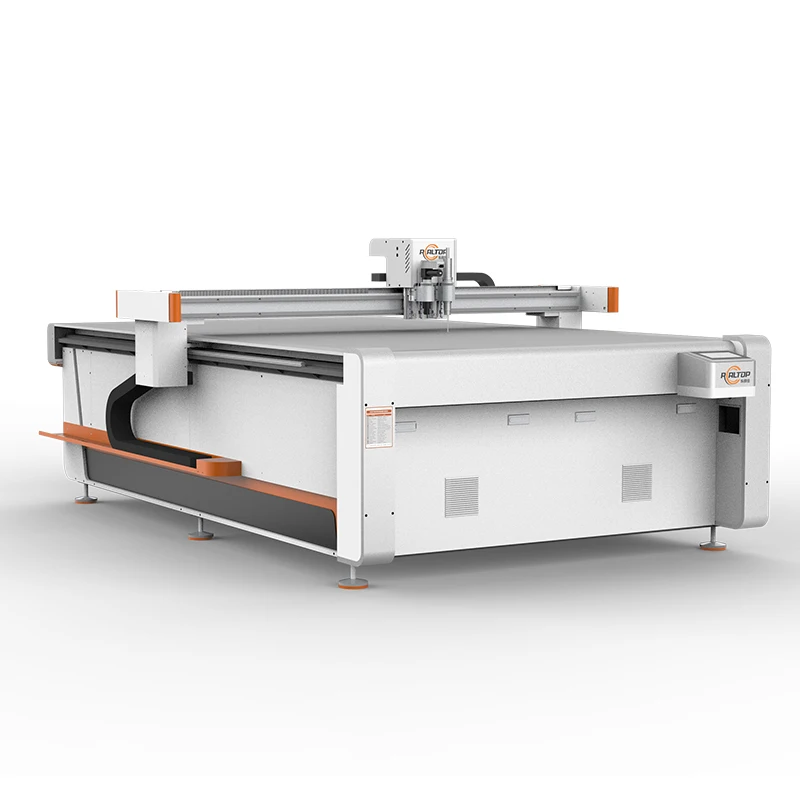
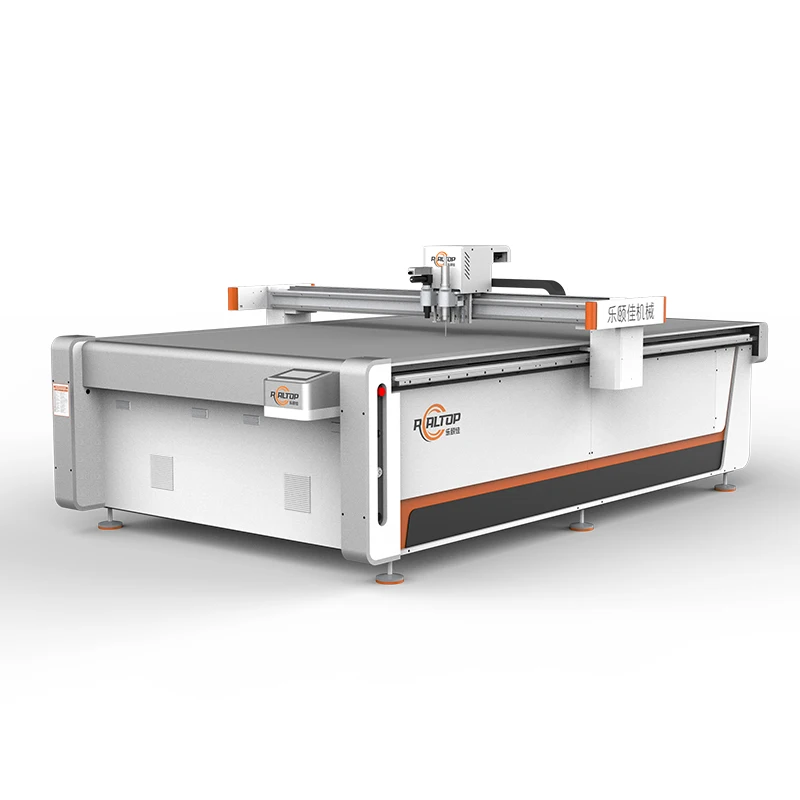
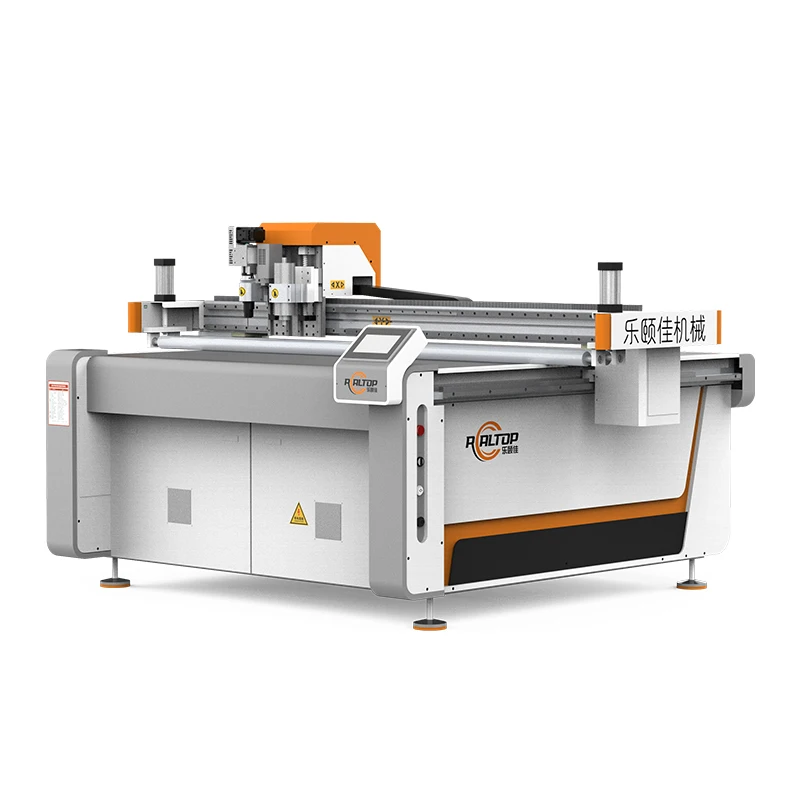
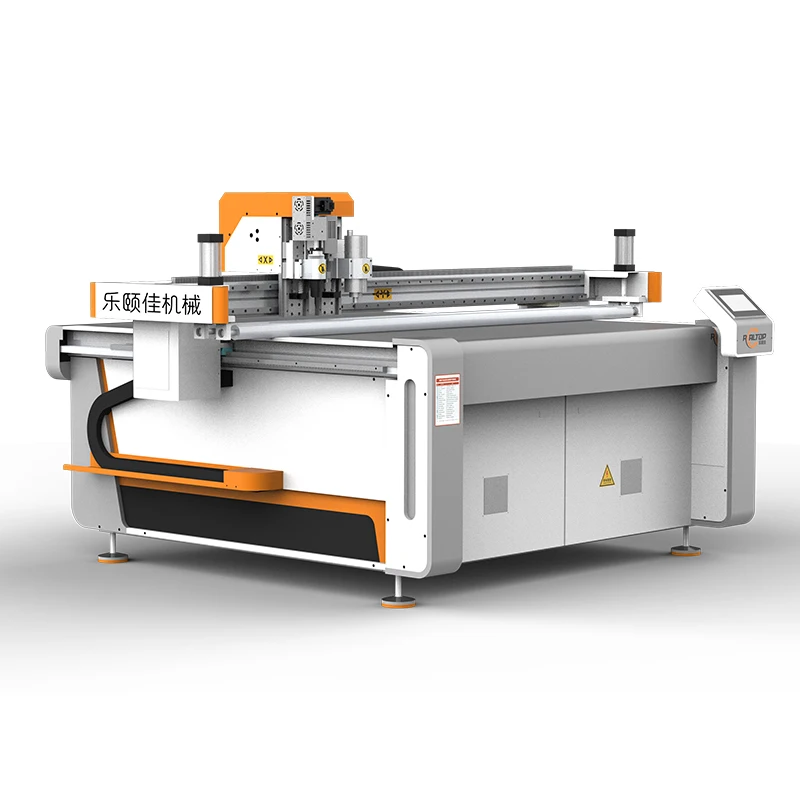
Tool Head Versatility — The multifunction head accepts oscillating, V-cutting, creasing and drag knife tools on one table, letting packaging and composite shops switch between full cut, slot milling and fold-line creasing without re-fixturing the material.
Technical Specifications
| Parameter | Value |
|---|---|
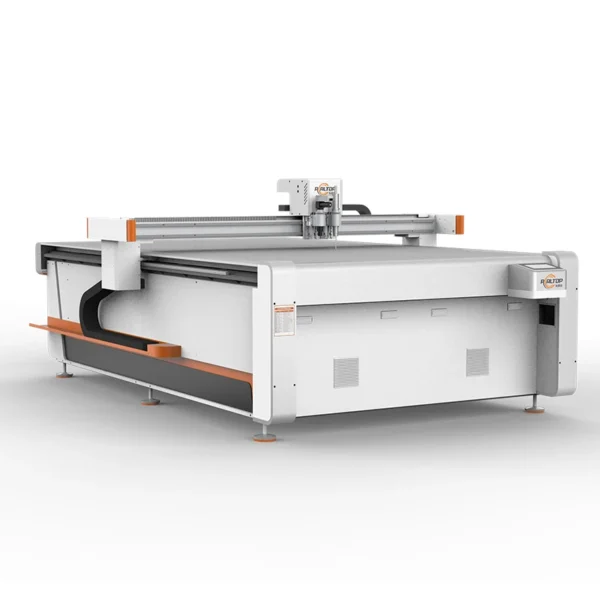
| Product Type | CNC Oscillating Knife Cutting Machine for Packaging |
| Model | RT-D2516 / RT-S2516 |
| Working Area | 1600×2500 mm |
| Machine Size | 3450×2300×1250 mm |
| Rated Power | 9 kW |
| Voltage | 380V ±10% |
| Translational Velocity | 800–2000 mm/s |
| Cutting Speed | 200–800 mm/s (basis: varies by material) |
| Cutting Thickness | ≤100 mm (basis: varies by material and density; confirm before order) |
| Repeatability | ≤0.1 mm |
| Tool Head Options | Oscillating knife, pneumatic knife, high-power vibrating knife, circular knife, V-cutting knife, drag knife, creasing wheel, dotted line knife, punching tool, brush |
| Multifunctional Head | Swiss imported knife with vibration full/half cutting and cursor location |
| Visual Positioning | Small CCD camera mark point, panoramic camera recognition, projection positioning (optional) |
| Transmission System | Digital servo motor (Delta or Panasonic optional), linear guide, synchronous belt, ball screw |
| Vacuum Table | Magnesium-aluminum alloy with PVDF powder spraying and anodic oxidation |
| Vacuum Pump | 7.5 kW, integrated aviation aluminum shell pump with built-in silencer |
| Control Panel | Touch screen, multiple language support |
| Software | Auto typesetting and nesting; PLT, DXF, AI, HP-GL compatible |
| Safety Devices | Infrared induction blocking, anti-collision sensors, emergency stop with in-situ resume |
| Table Options | Flat working table or auto-feeding conveyor table with Germany imported belt |
| Rail | Taiwan Hiwin |
| Language Options | English, Russian, Italian, Chinese (custom available) |
Application Suitability
| Application | Material or Output |
|---|---|
| Packaging and carton sample making | Corrugated cardboard, honeycomb cardboard, PVC sheet, folding carton stock |
| Gasket and sealing pad production | Rubber, PTFE, ETFE, composite sealing sheets |
| Automotive interior fabrication | Foam board, EVA, XPE, PU, leather layers for dashboards and door panels |
| Footwear and luggage cutting | Natural leather, PU leather, synthetic textile, lining fabrics |
| Composite and soft furnishing work | Carbon fiber prepreg, fiberglass mat, carpet, floor mat, sponge |
| Graphic advertising and printing | Sticker film, vinyl, non-woven fabric, self-adhesive roll stock |
Why CCD Contour Accuracy Collapses at Full Traverse Speed
The right positioning system must be matched to production speed before the purchase order is signed.
Many buyers assume any CCD camera will track printed marks equally well, only to find registration drifts when the machine runs at high traversal velocity. On corrugated sample work where the knife must follow a tight die-line after a creasing pass, even a millimeter of drift pushes the cut outside tolerance [NEED_CITE: CCD camera mark tracking accuracy at varying traverse speeds]. Choosing between small CCD mark-point positioning, panoramic recognition or projection positioning depends on print density and the speed at which you intend to run the CNC oscillating knife cutting machine specifications.
Tool Head Selection by Board Flute and Laminate Type
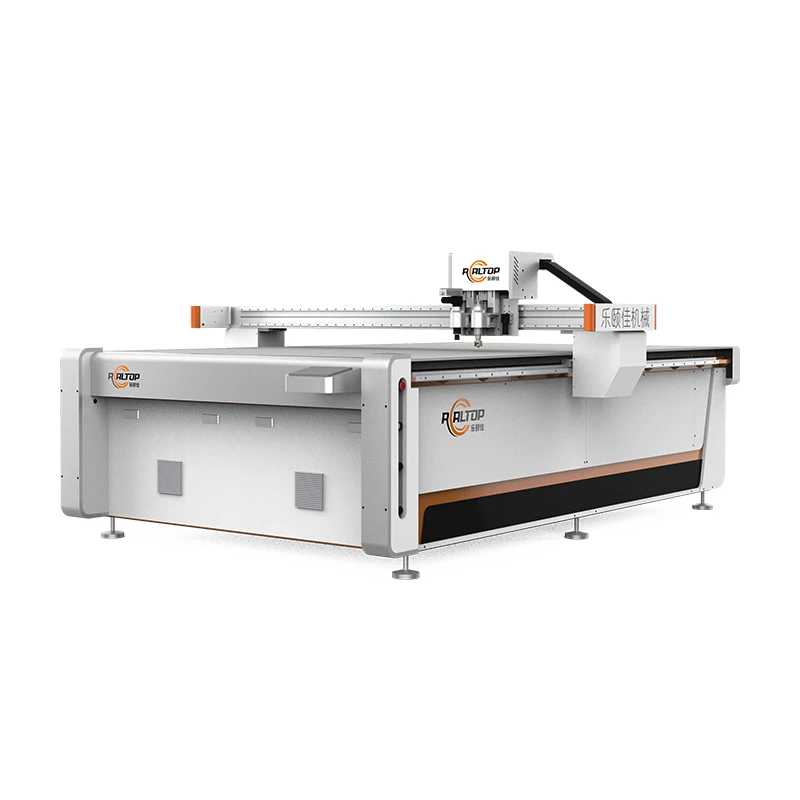
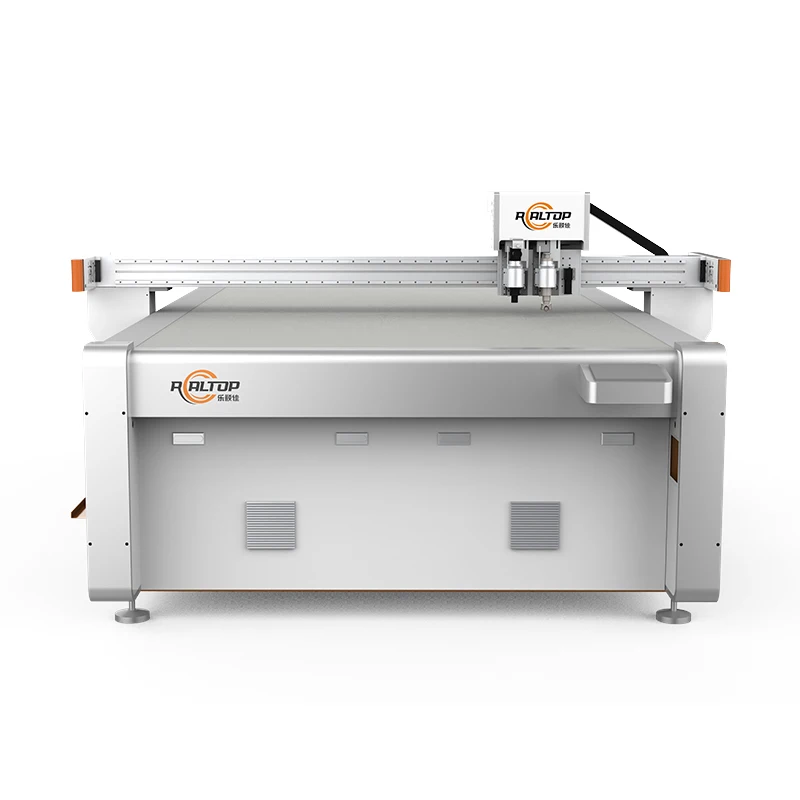
The multifunction head on the RT-D2516 and RT-S2516 accepts oscillating, pneumatic, V-cutting and creasing tools without swapping the entire carriage. This means a single setup can full-cut the outer contour of a corrugated blank, V-groove the fold lines on heavier board, and crease the minor folds in one pass. Shops that run both E-flute and double-wall on the same day save the downtime that separate machines would demand.
Vacuum Table Zoning for Small Die-Cut Parts
The magnesium-aluminum alloy table with PVDF surface treatment provides a flat cutting bed that resists scoring over repeated use. Zoned suction holds small carton tabs and narrow gasket strips that would otherwise lift under high-speed knife traversal [NEED_CITE: vacuum hold-down performance on small-format die-cut parts]. The integrated aviation aluminum pump housing with built-in silencer sponge reduces ambient noise in shops where operators run the machine beside manual finishing stations.
Reading the Specs That Actually Matter on the Floor
The ≤0.1 mm repeatability is driven by the Delta or Panasonic digital servo paired with Taiwan Hiwin linear rails; together they keep the die-line closed after repeated start-stop cycles. Translational velocity between 800 and 2000 mm/s defines non-cutting moves, while cutting speed between 200 and 800 mm/s must be dialed back for dense materials like PTFE gasket stock. The 9 kW rated power covers the knife oscillation and carriage motion, and the 7.5 kW vacuum pump must be wired to its own dedicated circuit. When evaluating CNC oscillating knife cutting machine specifications, buyers should confirm that voltage at the installation site matches the 380V ±10% range, and that the control language on the touch screen matches the operator pool before shipment.
The Cost of Skipping Material-Specific Configuration
A shop that orders a drag knife head for thick corrugated board finds ragged edges and crushed flute structure that requires secondary trimming. When the vacuum zone layout is not matched to the smallest part in the nesting file, operators waste time re-taping sheets to the bed mid-run [NEED_CITE: vacuum table zoning and small-part lift during high-speed knife cutting]. These problems surface after the machine arrives, when lead times for a replacement head or re-zoned table can stall production for days.
Why Buyers Source This Configuration Here
The in-house design team covers both knife and laser cutting technologies, so a packaging buyer can match the cutting method to the material rather than forcing one method across all jobs. Tool head and table configuration are specified per material and production volume before the order is placed. CCD camera positioning for printed contour work is confirmed during sample cutting on the buyer’s own stock. Software compatibility with PLT, DXF, AI and HP-GL is verified before shipment so existing nesting files load without re-drawing. Voltage, plug type and control language customization are documented in writing to prevent site-commissioning delays.
Documentation & Verification
- Machine specification sheet listing selected tool heads and vacuum zone layout for your board weight range.
- Electrical schematic and voltage confirmation matched to your site’s 380V supply and breaker rating.
- Sample cutting report on your own corrugated or gasket stock with measured edge quality and cycle time.
- Software licence and file format compatibility note covering PLT, DXF, AI and HP-GL import verification.
- Factory test record showing repeatability measurement and full-cut, crease and V-groove pass on sample material.
- Spare parts list with oscillating blade, creasing wheel and drive belt part numbers for local sourcing.
Installation, Commissioning & Support
- Machine footprint of 3450×2300 mm requires a level concrete pad with clearance for the 1600×2500 mm table stroke and operator access on three sides.
- 9 kW cutting system and 7.5 kW vacuum pump must each connect to dedicated 380V ±10% circuits with matched breaker ratings.
- Touch screen control configured in English, Russian, Italian, Chinese or custom language before dispatch to match operator skill level.
- First-run commissioning includes vacuum zone mapping, servo tuning and CCD mark-point calibration on your print registration file.
- Operator training covers tool head changeover, nesting file import and emergency stop in-situ resume procedure.
- Consumable blade and creasing wheel stock recommended for the first production month based on your daily cutting volume.
What to Include in Your Inquiry
Provide the exact board flute profile or gasket material, sheet size and maximum thickness you plan to cut, along with your daily part count target. State your local voltage, frequency and required control language so the electrical package and touch screen are set before shipment. If you already run nesting software, send a sample die-line file so we can confirm format compatibility and run a sample cut on your actual stock before the order is finalized.
Frequently Asked Questions
Q: How is the stated cutting thickness capacity verified for my material?
A: The ≤100 mm figure depends entirely on material type and density. Before the order, a sample cutting test is run on your actual stock — corrugated flute profile, PTFE sheet thickness or foam density — and the result is documented in a cutting report that specifies the exact knife type, oscillation frequency and feed rate used.
Q: Which CCD positioning option fits my printed carton workflow?
A: Small CCD mark-point positioning suits jobs with consistent registration marks. Panoramic camera recognition handles sheets with multiple marks or distorted print. Projection positioning overlays the die-line onto the material for manual alignment. Your print layout and daily volume determine the best option.
Q: How is vacuum zoning configured for small packaging parts?
A: The magnesium-aluminum table is divided into independently valved zones so only the area under the workpiece draws suction. During specification, your smallest nested part size is used to set zone boundaries, preventing lift at high traversal speeds without wasting pump capacity.
Q: What voltage and language details are confirmed before shipment?
A: The 380V ±10 electrical package, plug type and touch screen language — English, Russian, Italian, Chinese or custom — are documented in the specification confirmation signed before production. This prevents rewiring or reprogramming at your site after delivery.
Q: Can the software import my existing die-line files without re-drawing?
A: The nesting software accepts PLT, DXF, AI and HP-GL formats. Before the order, you send a sample file and we confirm import accuracy, layer recognition and auto-nesting yield in a written compatibility note delivered with the machine documentation.


商品评价
Clear filtersThere are no reviews yet.