

Fast Shipping
Carrier information

20k products
Payment methods

24/7 Support
Unlimited help desk

2-day Delivery
Track or off orders
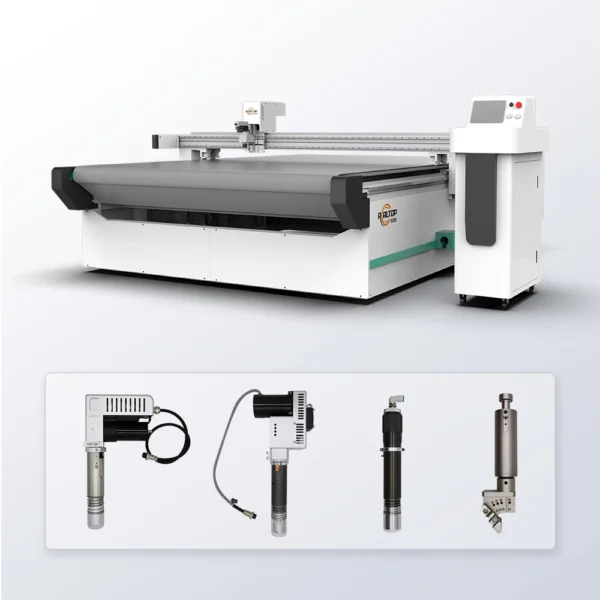
In-house knife-cutting engineering — tool head and vacuum table are specified per material rather than offered as a fixed package, so the oscillating, drag, creasing and punching tools are matched to fabric, leather or foam thickness before the order is locked.
Technical Specifications
| Parameter | Value |
|---|---|
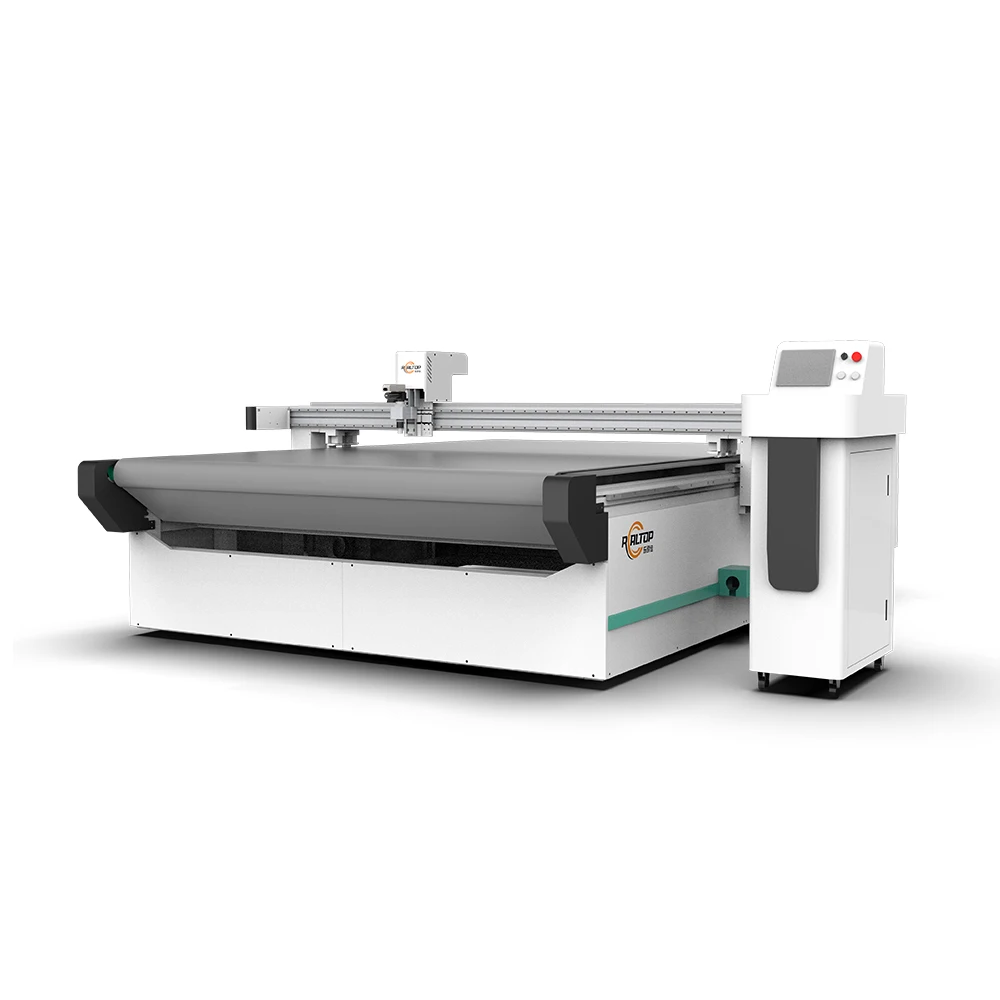
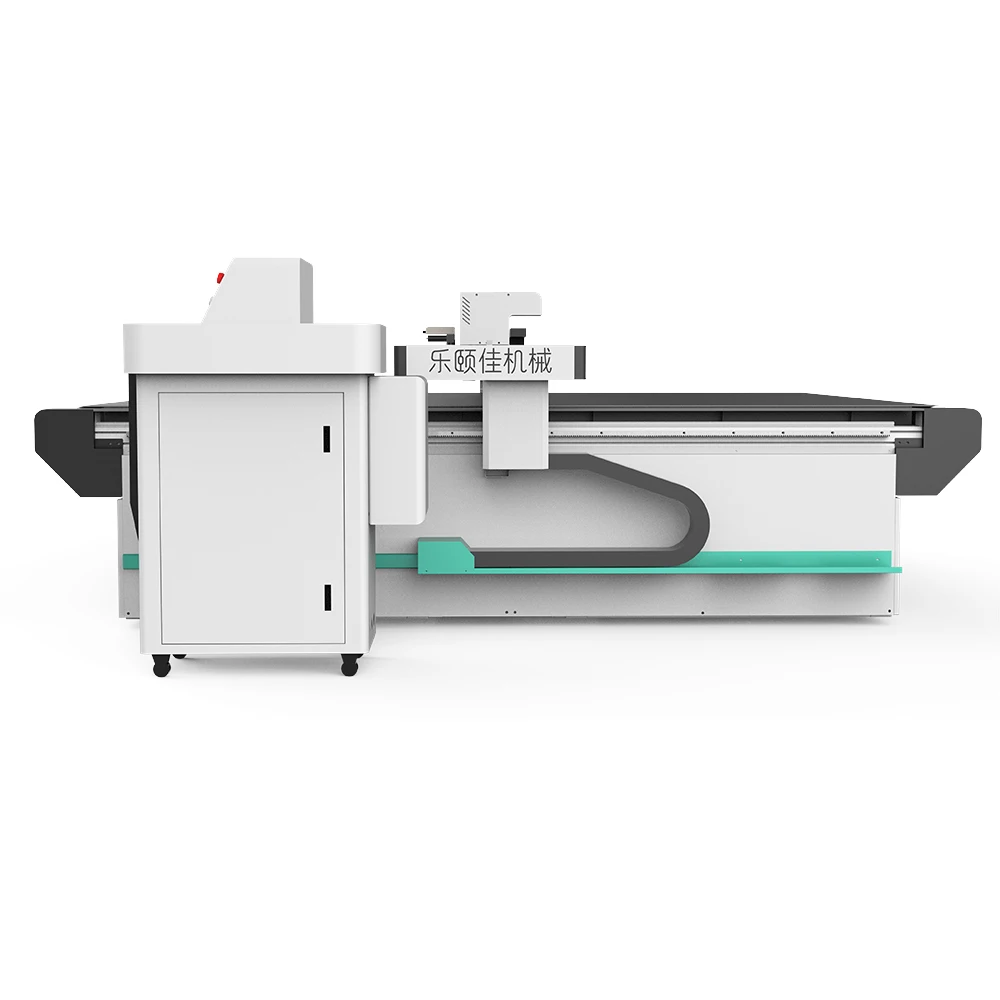
| Product Type | CNC Oscillating Knife Cutting Machine |
| Model | RT-D2516/RT-S2516 |
| Working Area | 1600×2500 mm |
| Machine Size | 3450×2300×1250 mm |
| Rated Power | 9 kW |
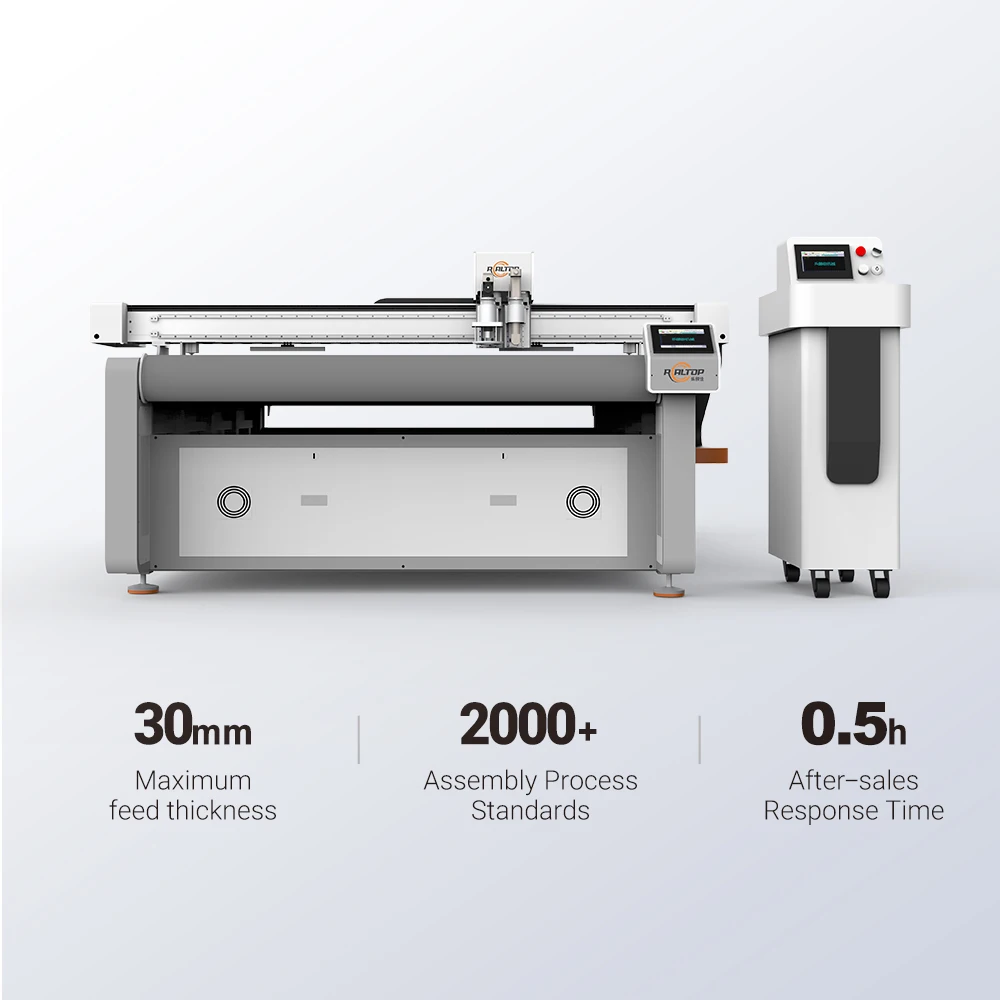
| Cutting Thickness | ≤100 mm (varies with material) |
| Translational Velocity | 800–2000 mm/s |
| Cutting Speed | 200–800 mm/s (according to different cutting materials) |
| Repeated Accuracy | ≤0.1 mm |
| Transmission System | Digital servo motor, linear guide, synchronous belt, ball screw (imported) |
| Guide Rail | Taiwan Hiwin |
| Servo Motor | Delta (optional Panasonic) |
| Vacuum Pump | 7.5 kW |
| Vacuum Platform | Aluminum air box, integrated or split box option |
| Conveyor Belt | Germany imported |
| Table Type | Flat working table or auto feeding table |
| Safety Device | Infrared sensors |
| Instruction System | HP-GL compatible format |
| Software | Auto typesetting, supports PLT, DXF, AI formats |
| Voltage | 380V±10% |
| Control Panel | Touch screen with multiple language support |
| Language Options | English, Russian, Italian, Chinese, customizable |
| Visual Positioning | Small CCD camera mark-point, panoramic camera recognition, projection positioning |
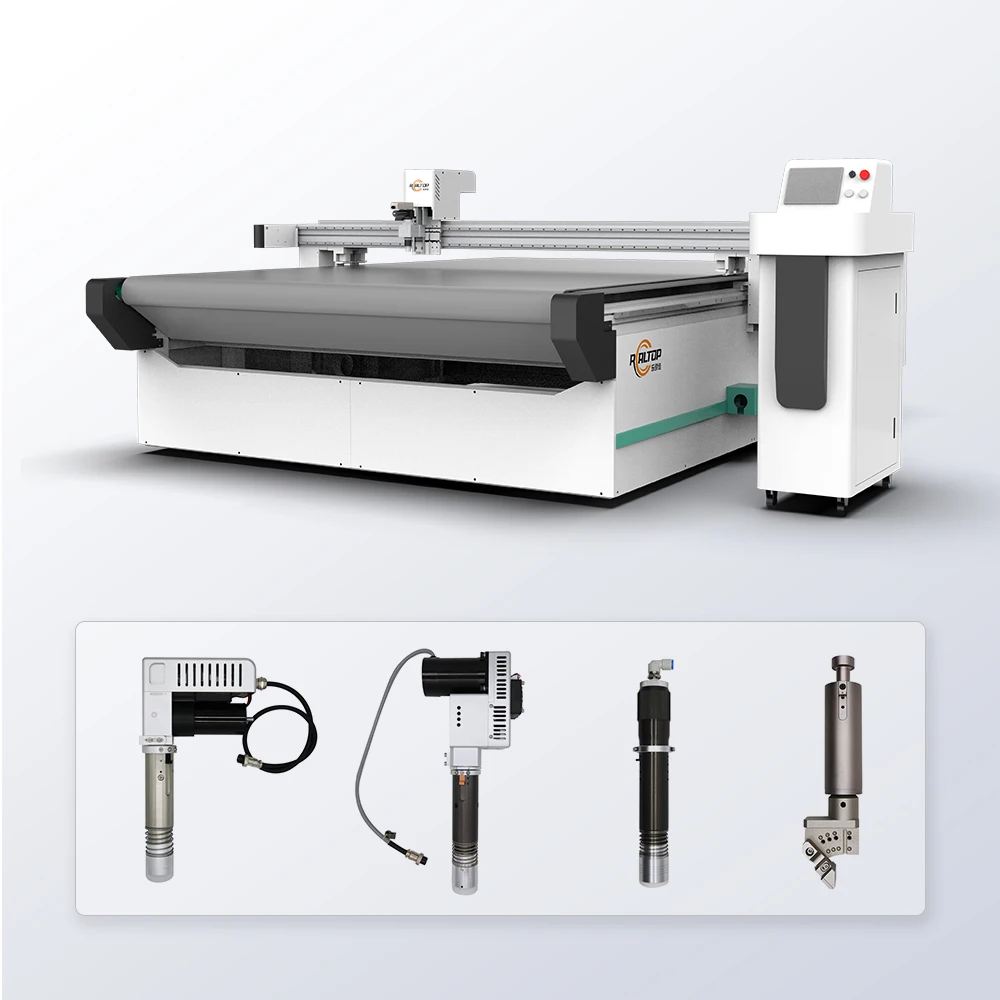
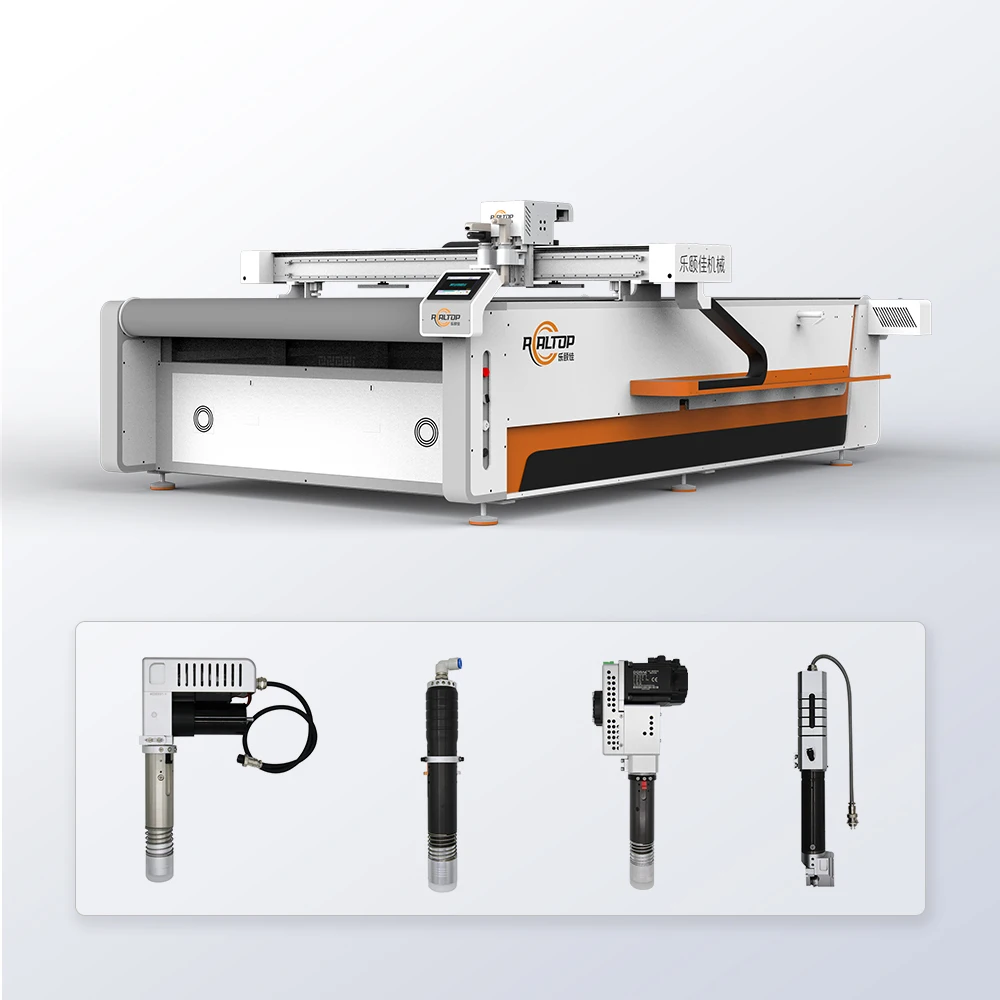
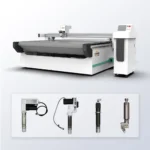
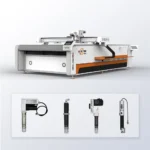
| Cutting Tool Options | Oscillating knife, pneumatic knife, high-power vibrating knife, circular knife, V-cutting knife, drag knife, creasing wheel, dotted line knife, punching, brush |
| CE Standard | Compliant |
Application Suitability
| Application | Material or Output |
|---|---|
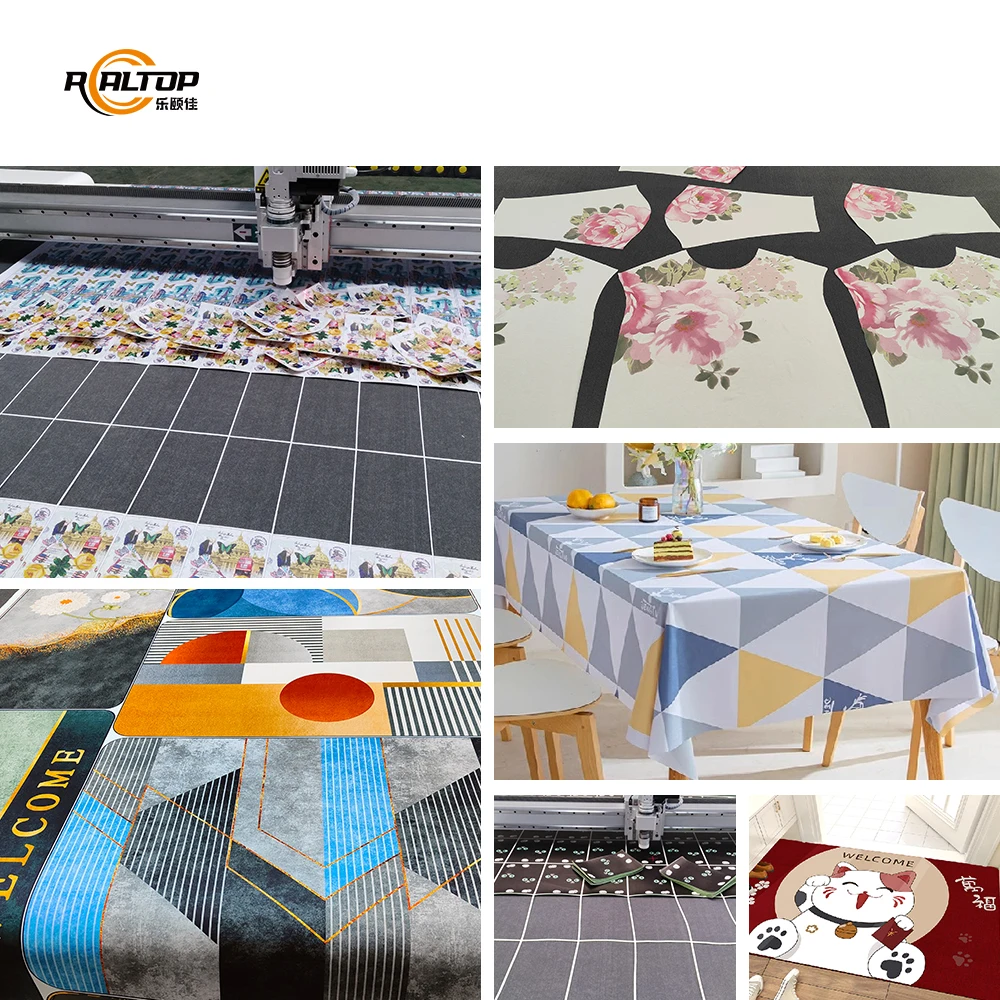
| Garment and footwear cutting | Single- and multi-layer fabric, leather, shoe material, textile |
| Automotive interior and gasket production | Sponge composite leather, rubber, carbon fiber, PU, EVA, XPE |
| Packaging and carton sample making | Corrugated cardboard, fiberglass board, cardboard |
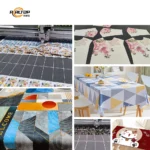
| Soft furnishing and carpet processing | Non-woven fabric, carpet, sponge, foam board |
| Graphic advertising and signage | Sticker, film, PVC sheet, soft glass, silicon |
| Outdoor and sports products | Composite materials, PTFE, ETFE, PP, PE |
Why the Wrong Tool Head Wrecks Your CNC Oscillating Knife Cutting Machine Specifications
A head chosen by catalog number rather than by material sample produces ragged edges on woven fabric and crushed cells in foam.
I have watched a production line for SMS composite surgical gowns come to a halt because the cutting head was specified for standard non-woven. The material lifted under the knife, the vacuum zones could not hold the lighter layers, and every panel drifted off-register. The daily output dropped sharply until the vacuum zoning was reconfigured on site [NEED_CITE: material hold-down requirements for multi-layer composite fabrics]. Specifying a CNC oscillating knife cutting machine without first running the buyer’s actual material through the intended tool head is how these problems get shipped inside a crate.
Matching the Knife to the Material Stack
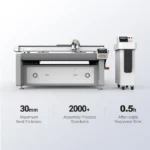
The multifunctional head on this table combines oscillating knife, drag knife, creasing wheel and punching in a single setup. For woven garment fabric, the oscillating knife at high frequency delivers a clean edge without fraying. For corrugated board and carton sample work, the creasing wheel scores the fold line while the drag knife handles the outline — both operations completed without re-fixturing the sheet.
Vacuum Zoning and Small-Part Stability
The aluminum air-box vacuum platform is available in integrated or split-box configuration. Split-box zoning concentrates suction on the area directly under the cutting path, which matters when small gasket pieces or shoe components would otherwise lift at high translational velocity. The 7.5 kW vacuum pump delivers the suction volume needed across the full 1600×2500 mm working area, and the zoning layout is confirmed against the buyer’s nesting pattern before the table is built [NEED_CITE: vacuum zoning design for CNC flatbed cutting tables].
Reading the Numbers Behind CNC Oscillating Knife Cutting Machine Specifications
The repeated accuracy of ≤0.1 mm across the full working area is maintained by Taiwan Hiwin linear guides paired with imported ball screws. In practice, this tolerance band matters most when cutting multi-layer fabric stacks for automotive interiors: if the bottom layer shifts even half a millimeter relative to the top, the assembled panel will show a visible mismatch at the seam. The Delta servo motor (with Panasonic as an option) controls acceleration and deceleration on each axis, which is what prevents the knife from dragging at corners and producing a melted edge on synthetic materials like PVC and PU. Cutting speed ranges from 200 to 800 mm/s depending on material density and thickness — a denser sponge composite leather will sit at the lower end of that band, while single-layer film or sticker runs closer to the upper limit. The CCD camera mark-point and panoramic recognition options track printed registration marks so that contour cuts on pre-printed fabric or adhesive labels stay aligned even as the material stretches slightly under feed tension.
The Hidden Cost of Skipping the Sample Cut
When a machine is specified on working area alone, the buyer often discovers at commissioning that the cutting depth falls short on their actual material thickness. I have seen foam gasket producers receive a table that handled 20 mm EVA cleanly but could not push through 50 mm XPE without leaving uncut fibers at the base. Re-tooling after delivery means new knife holders, re-calibration and lost production days [NEED_CITE: post-delivery reconfiguration costs for CNC cutting equipment]. A sample cutting report on the buyer’s own material, showing edge quality and achievable speed at the required thickness, removes this risk before the order is confirmed.
Why Buyers Specify This Table for Their Line
Tool head selection is confirmed against the buyer’s sample material, not picked from a generic chart — the oscillating, drag, creasing and punching tools are tested on the actual fabric, leather or foam before the configuration is locked. Voltage, plug type and control panel language are verified against the destination workshop before shipment, so the machine powers up correctly on arrival. The software supports PLT, DXF, AI and HP-GL formats, which means the buyer’s existing CAD and nesting workflow carries over without a new license investment. Both flat-table and auto-feeding configurations are available, letting a high-volume garment producer choose conveyor feed while a carton sample shop keeps the fixed flat table for rigid board. The CCD positioning system is matched to the print mark size and contrast on the buyer’s material, not assumed to work across every substrate.
Documentation & Verification
- Machine specification sheet listing confirmed tool head and vacuum zone layout for your material
- Electrical schematic with voltage, plug type and phase verified against your workshop supply
- Sample cutting report on your fabric, leather or foam at target thickness and speed
- Software license and file-format compatibility note for PLT, DXF, AI and HP-GL workflows
- Factory test record with repeated accuracy measurement across the full 1600×2500 mm travel
- Packing photographs showing crate condition and component securing before dispatch
Installation, Commissioning & Support
- Floor space planning around the 3450×2300 mm footprint with clearance for material feed and operator access
- Dedicated 380V±10% circuit with correct phase and breaker rating for the 9 kW rated power draw
- Assembly of table frame, gantry and vacuum pump on site with alignment check against Hiwin guide rails
- First-run calibration of oscillating knife depth and CCD mark-point tracking on your material
- Touch-screen control panel configured in your chosen language before or during commissioning
- Spare knife blades, conveyor belt section and vacuum seal strip included for initial maintenance cycles
What to Include in Your Inquiry
Send the material type, maximum thickness and sheet dimensions you plan to cut, along with the daily volume your line needs to sustain. Note your local voltage and frequency, the control language your operators require, and whether your existing CAD files are in PLT, DXF or AI format. If you are cutting printed fabric or labels, share a sample of the print mark so the CCD recognition can be validated before the build is finalized.
Frequently Asked Questions
Q: How do I choose between oscillating knife, drag knife and creasing wheel for my material?
A: Oscillating knife suits woven fabric, foam and multi-layer stacks where a vibrating cut prevents fraying. Drag knife works on thin film, sticker and single-layer leather. Creasing wheel scores fold lines on corrugated board and carton stock. A sample cut on your exact material confirms which tool delivers the required edge quality at your target thickness.
Q: Will the CCD camera track printed marks on stretchy fabric at full production speed?
A: Panoramic and mark-point CCD options are available. The camera reads registration marks before each cut cycle, compensating for fabric stretch under feed tension. Validation on your printed material confirms mark size, contrast and spacing are sufficient for reliable tracking at the cutting speed your job requires.
Q: How does vacuum table zoning prevent small parts from lifting?
A: The split-box aluminum air-box platform concentrates suction on the active cutting zone rather than the full table area. This holds small gasket or shoe components in place even at high translational velocity. The zone layout is designed around your nesting pattern before the table is built.
Q: What electrical details must be confirmed before the machine ships?
A: Voltage, phase, frequency and plug type are verified against your workshop supply. The control panel language is set to match your operators. An electrical schematic is provided in the documentation package so your electrician can prepare the circuit before the machine arrives.
Q: Is my existing nesting software compatible with this cutting table?
A: The controller accepts PLT, DXF, AI and HP-GL format files. If your current nesting workflow outputs in one of these formats, the files transfer directly. A file-format compatibility note is included in the documentation to confirm the pipeline before the machine ships.


商品评价
Clear filtersThere are no reviews yet.