



Fast Shipping
Carrier information

20k products
Payment methods

24/7 Support
Unlimited help desk

2-day Delivery
Track or off orders
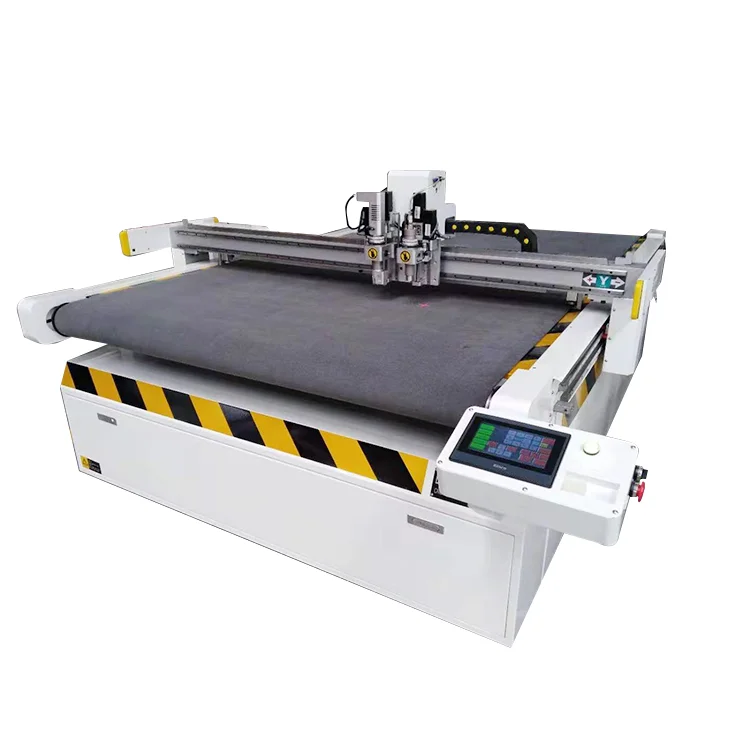
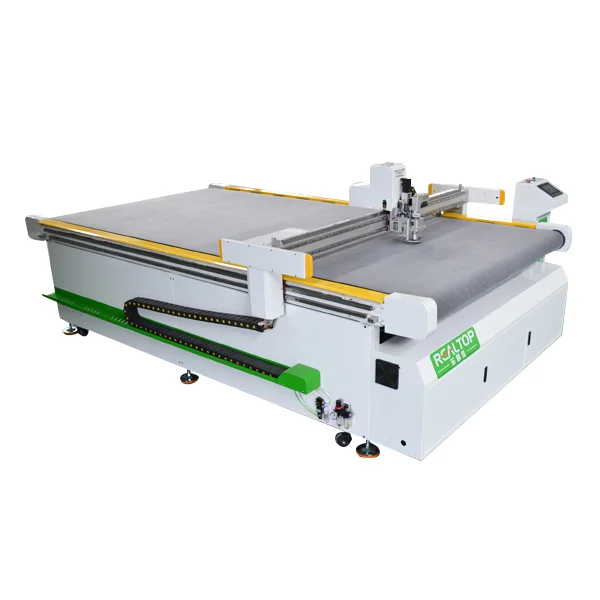
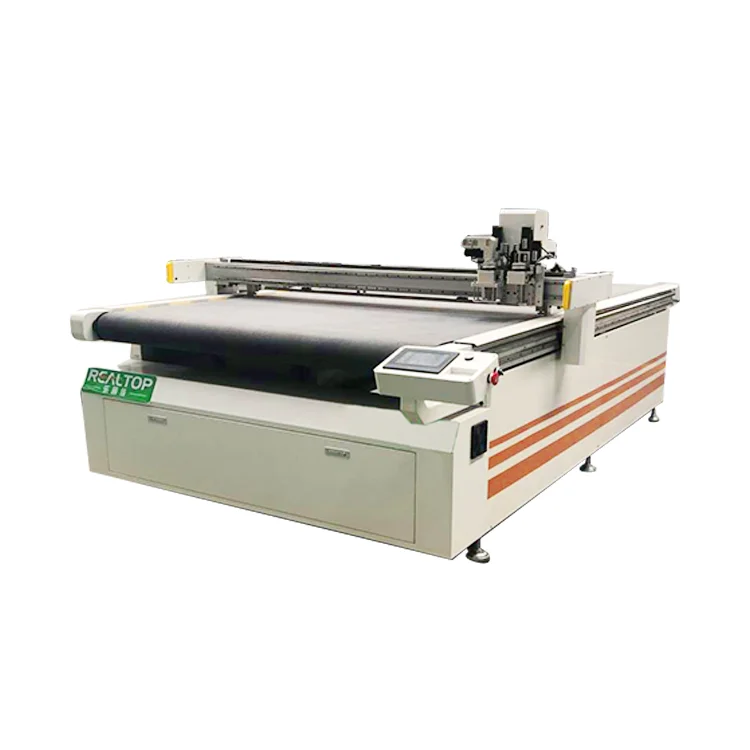
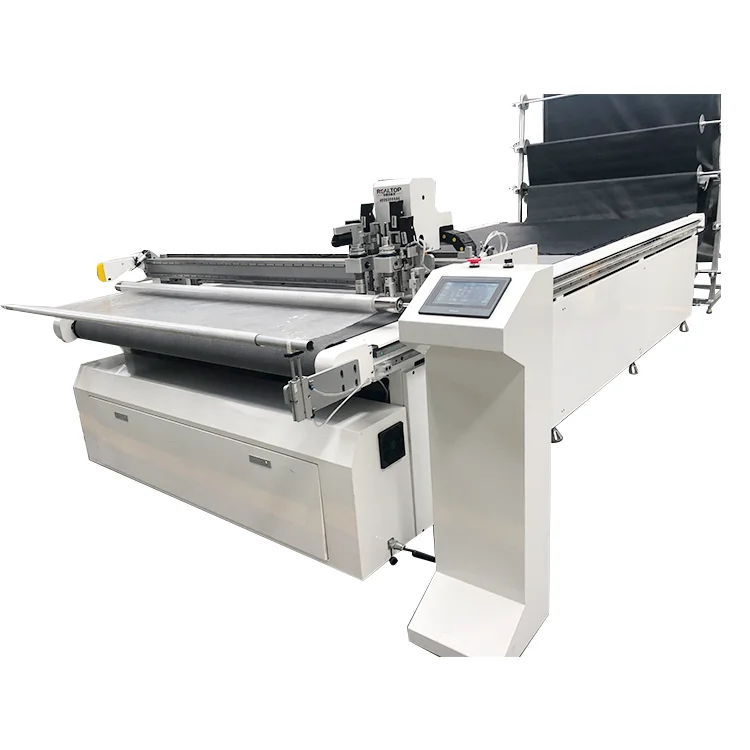
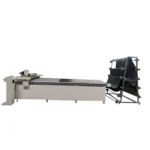
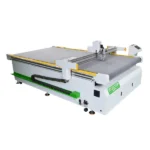
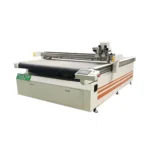
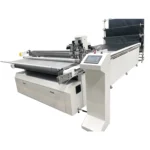
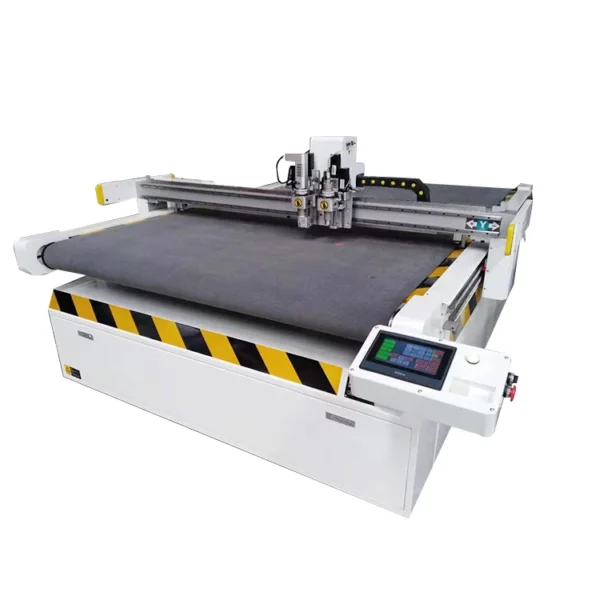
Precision Knife Configuration — Each oscillating knife cutting machine is matched to fabric type, layer count, and part geometry rather than sold as a generic table.
Technical Specifications
| Parameter | Value |
|---|---|
| Product Type | Multi-Layer CNC Oscillating Knife Cutting Machine |
| Model | RT-D2516/RT-S2516 |
| Working Area | 1600 × 2500 mm |
| Overall Dimensions (L × W × H) | 3450 × 2300 × 1250 mm |
| Rated Power | 9 kW |
| Voltage | 380V ±10% (frequency to be confirmed) |
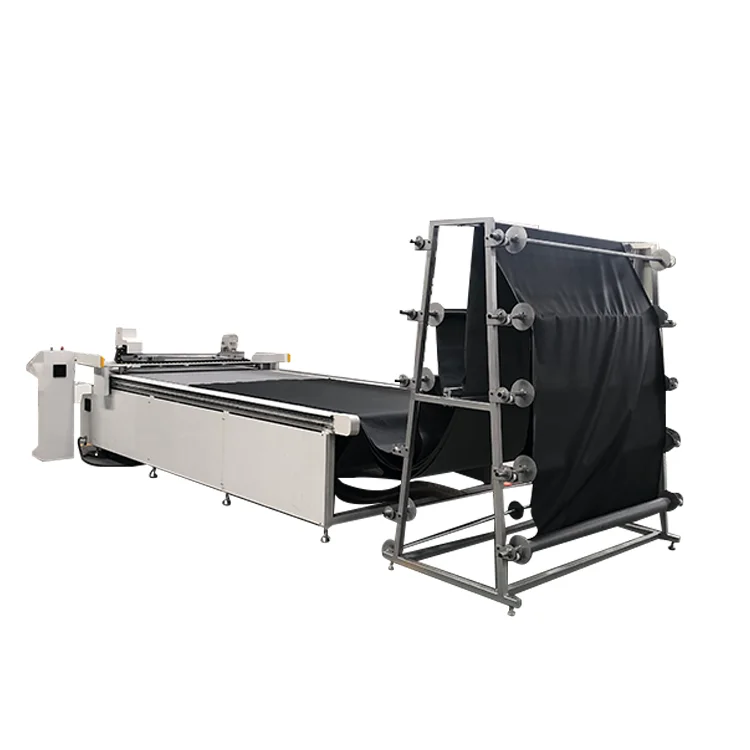
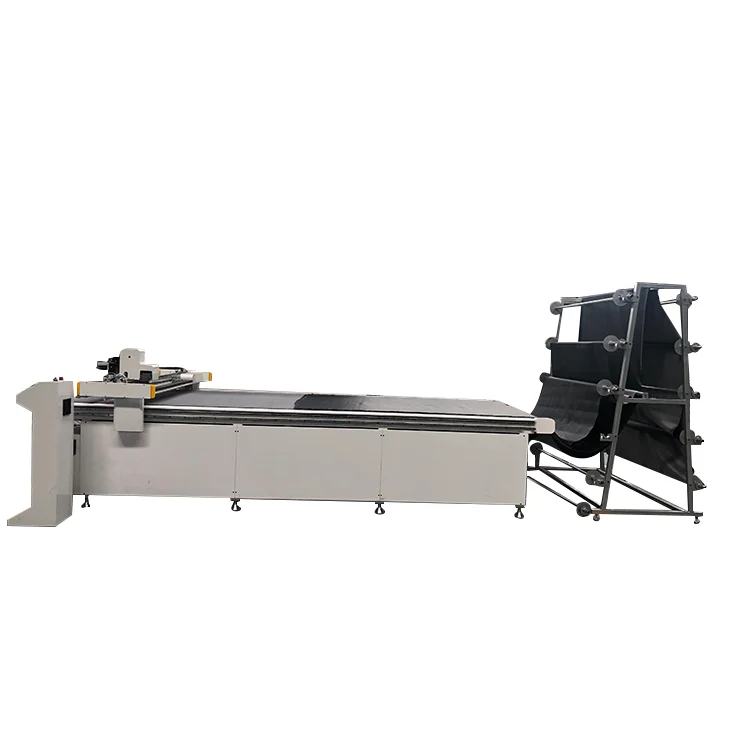
| Table Type | Flat working table with vacuum and auto-feeding conveyor |
| Vacuum Pump | 7.5 kW |
| Tool Head | Swiss imported oscillating knife (vibration full cutting, vibration half cutting, cursor location) |
| Translational Velocity | 800–1200 mm/s |
| Cutting Speed | 200–800 mm/s (basis to be confirmed — dependent on material type and layer count) |
| Repeated Accuracy | ≤0.1 mm |
| Transmission System | Japanese Yaskawa digital servo motor, Taiwan Hiwin linear guide, synchronous belt, ball screw |
| Conveyor | Germany imported conveyor belt |
| Safety Device | Infrared sensors |
| Instruction System | HP-GL compatible format |
| Key Features | Auto-feeding, vacuum hold-down, infrared safety, HP-GL compatibility |
Application Suitability
| Application | Material or Output |
|---|---|
| Multi-layer garment cutting | Woven, knit, and technical fabric stacks for high-volume pattern production |
| Footwear component cutting | Natural leather, synthetic leather, and composite uppers |
| Flexible industrial materials | PVC sheets, sponge composite, silicon, rubber, soft glass |
| Automotive interior panels | Foam-laminated fabrics and composite trim materials |
Why the Tool Head Decision Matters More Than Table Size
A cutting table is only as effective as the tool head matched to your material stack.
I have walked into factories where a machine specified purely on working area sat idle because the oscillating knife head could not handle the fabric weight the buyer actually ran. The CNC oscillating knife cutting machine specifications on paper looked adequate, but the edge quality on multi-layer sportswear knit told a different story — frayed edges, crushed foam interlinings, and delaminated composites. The cutter was right-sized for the room, not for the job [NEED_CITE: oscillating knife selection criteria for multi-layer textile cutting].
Knife Oscillation and Fabric Stack Behavior
The Swiss imported oscillating knife head on this model supports full-cut, half-cut, and cursor location modes. Full-cut drives through the entire fabric stack in one pass, which is standard for garment pattern pieces. Half-cut scores the top layers without penetrating the backing — useful when kiss-cutting adhesive-backed materials or scoring crease lines on packaging samples before folding.
Selecting between these modes is not a software toggle you figure out later. The oscillation frequency and blade geometry must align with the stack density and fiber composition. A high-twist polyester behaves differently under vibration than a loose-weave cotton, and the CNC oscillating knife cutting machine specifications should document which blade profile suits which material family.
Vacuum Hold-Down and Small Part Stability
A 7.5 kW vacuum pump delivers substantial suction across the flat working table, but raw pump capacity does not guarantee small-part stability. When cutting dozens of small collar stays or belt loops from a multi-layer lay, the vacuum zoning determines whether those parts stay flat or lift into the knife path. In my experience commissioning tables across Southeast Asian garment workshops, insufficient zoning causes lift on parts under roughly 80 mm, which then shifts the entire downstream nest [NEED_CITE: vacuum table zoning requirements for small textile parts].
The auto-feeding conveyor — built with a Germany imported belt — moves the next fabric lay into position once the current cut completes. This continuous workflow reduces idle time between lays, but the vacuum must re-establish hold-down quickly after each feed cycle to maintain positional accuracy across the 1600 × 2500 mm area.
Reading the Transmission and Accuracy Numbers
The ≤0.1 mm repeated accuracy figure comes from the combination of Yaskawa digital servo motors and Hiwin linear guides. In practical garment cutting, this means that the hundredth piece in a production run aligns with the first piece within one-tenth of a millimeter — critical when pattern pieces feed directly into automated sewing cells that expect consistent geometry.
The synchronous belt and ball screw transmission handles the translational velocity range of 800–1200 mm/s during non-cutting moves, while the actual cutting speed drops to 200–800 mm/s depending on material resistance and layer count. A dense denim stack demands slower traversal than a single-layer nylon lining, and the servo system adjusts feed rate accordingly without losing positional reference. The 9 kW rated power covers the combined load of the servo drives, oscillating knife motor, and control electronics, while the 7.5 kW vacuum pump operates on a separate circuit.
What Happens When Configuration Is Skipped
I have seen the aftermath of a machine ordered on working area and price alone. A sportswear factory ran a multi-layer lay of moisture-wicking knit on a table where the vacuum zones were not adjusted for the small裁片 in the nest. The first pass lifted half the pieces, the knife dragged them across the table, and an entire lay was scrapped. The operator spent the rest of the night redrawing zone boundaries while production stood still. A ragged edge on a foam interlining or a crushed composite panel is not a quality issue you catch at final inspection — it is a configuration issue that should have been resolved before the machine shipped [NEED_CITE: common causes of material waste in CNC knife cutting operations].
Why Source This Table From Realtop
In-house design covers both the knife cutting platform and the vacuum system layout, so the zoning map can be configured around your actual nest geometry rather than a default grid.
Sample cutting runs on your own material — with layer count, thickness, and edge quality documented — give you evidence before commitment rather than promises after payment.
The tool head and table configuration list specifies oscillation mode, blade type, and vacuum zone count matched to your documented production mix.
Voltage, plug type, and control panel language are confirmed against your facility’s electrical infrastructure and operator preference before the machine enters production.
Software compatibility is verified against your existing HP-GL workflow and nesting format, so file import is functional on day one rather than after weeks of troubleshooting.
Documentation & Verification
- Machine specification sheet confirming working area, power, voltage, and frequency for your market
- Sample cutting report on your fabric stack with layer count and edge quality photographs
- Tool head and vacuum table configuration list matched to your documented material range
- Electrical schematic with circuit layout for 380V supply and 7.5 kW vacuum pump isolation
- HP-GL file format compatibility note confirming integration with your nesting software
- Spare parts list covering oscillating knife blades, conveyor belt sections, and vacuum seals
Installation, Commissioning & Support
- Foundation must support 3450 × 2300 mm footprint with level tolerance for the 1600 × 2500 mm table plane
- Dedicated 380V circuit with separate breaker for the 7.5 kW vacuum pump motor
- Conveyor belt tensioning and vacuum zone calibration performed on-site during first power-up
- Servo parameter tuning and cutting speed validation across your specific fabric stack types
- Operator training on full-cut, half-cut, and cursor location mode selection by material
- Scheduled blade replacement intervals and Hiwin rail lubrication calendar provided at handover
What We Need to Quote Accurately
To configure the RT-D2516/RT-S2516 for your production floor, share the fabric types and layer counts you run most frequently, along with typical sheet dimensions and daily cutting volume. Confirm your facility voltage, frequency, and plug standard so the electrical package matches local supply. If your current nesting software outputs specific file formats, provide a sample file so we verify import compatibility before the order is finalized.
Frequently Asked Questions
Q: How is cutting speed verified for my specific fabric type, thickness, and layer count?
A: We run a sample cut on your actual material stack before the order is confirmed. The test documents cutting speed, edge quality, and layer integrity across the thickness range you specify. The resulting sample cutting report becomes part of your machine configuration file, ensuring the oscillating knife parameters are preset for your production materials when the table arrives.
Q: What voltage, plug type, and control panel language are confirmed before shipment?
A: Your facility’s electrical specifications — voltage, frequency, and plug standard — are captured during the inquiry stage and written into the machine specification sheet. Control panel language is confirmed at the same time. The electrical schematic delivered with the machine reflects these confirmed values, and a factory test at the specified voltage is completed before packing.
Q: How do I choose between full-cut and half-cut oscillating knife modes for my material?
A: Full-cut penetrates the entire fabric stack and is standard for garment pattern pieces. Half-cut scores upper layers without cutting through the backing, suited for kiss-cutting adhesive materials or crease scoring. The correct mode depends on your material construction and end-use. We document the recommended mode for each material in your configuration list during the sample cutting phase.
Q: What vacuum zoning options are available to prevent small fabric parts from lifting during cutting?
A: The vacuum table can be configured with multiple independent zones so that suction concentrates under the active cutting area. For nests containing small pieces — collar stays, belt loops, or intricate appliqué shapes — finer zoning prevents lift caused by airflow across unoccupied regions. Your typical part size distribution determines the zone layout we specify before production.


商品评价
Clear filtersThere are no reviews yet.