








Fast Shipping
Carrier information

20k products
Payment methods

24/7 Support
Unlimited help desk

2-day Delivery
Track or off orders
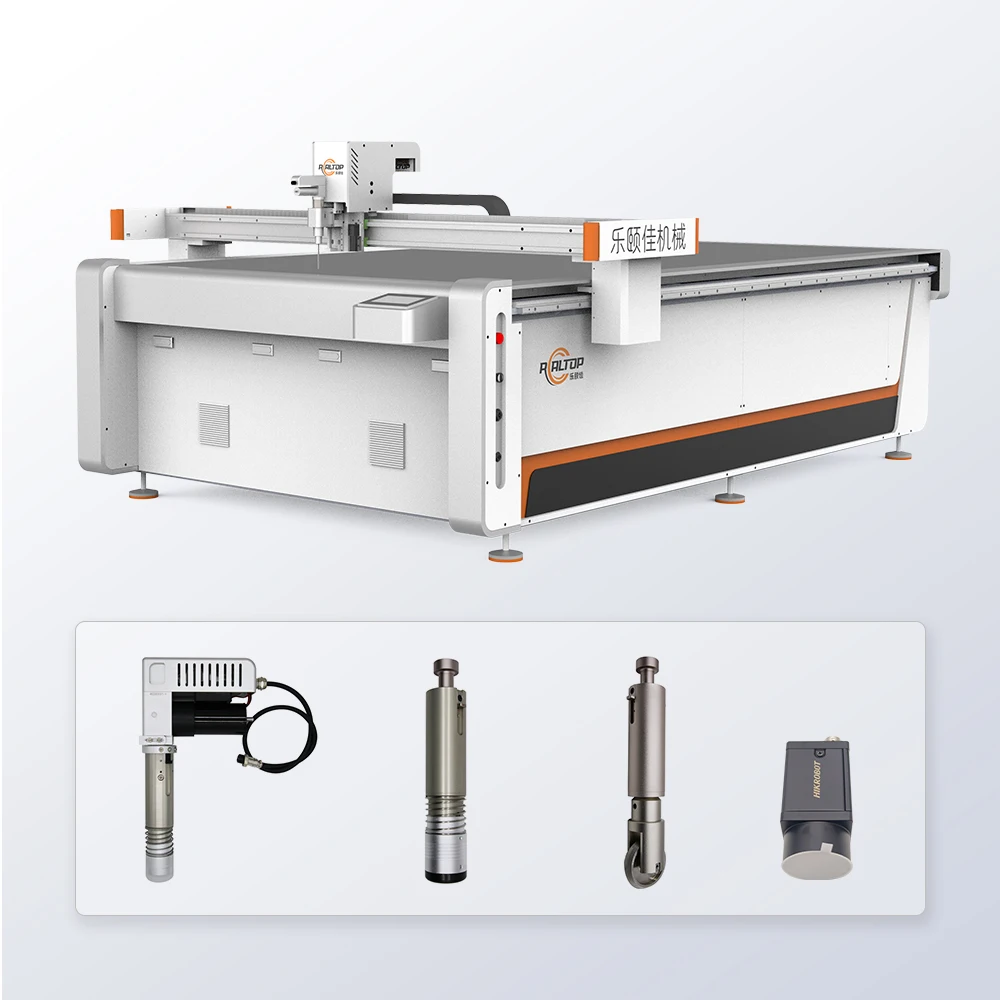
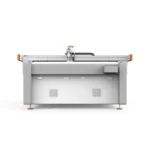
Tool head configured per substrate — oscillating knife, creasing wheel and kiss cutting tools matched to corrugated flutes and greyboard density rather than relying on a single blade setup.
Technical Specifications
| Parameter | Value |
|---|---|
| Product Type | CNC Oscillating Knife Cutting Table |
| Model | 1625 |
| Working Area | 1600×2500 mm |
| Machine Dimensions (L×W×H) | 3300×2100×1350 mm |
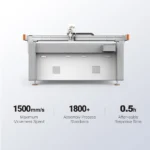
| Cutting Speed | 0–1500 mm/s |
| Cutting Thickness | ≤ 40 mm |
| Cutting Accuracy | ±0.1 mm |
| Tool Head Options | Oscillating knife, Driven rotary knife, Creasing wheel, Kiss cutting tool, Pneumatic knife, Milling tool, V groove knife |
| Vacuum Table | Aluminum bellows with full-surface adsorption |
| Vacuum Pump Power | 9 kW |
| Servo Motor Options | Panasonic, Delta, Dorna |
| Positioning System | CCD camera contour recognition |
| Control System | PLC control panel with optional display languages |
| Software & File Formats | PLT, DXF, AI, PDF; dedicated packaging box structure design software included |
| Voltage Options | 110V, 220V, 380V |
| Language Options | English, Russian, Italian, Chinese; custom languages available |
| Safety Device | Infrared sensor device and emergency stop device |
| Standards | CE (2026) |
Application Suitability
| Application | Material or Output |
|---|---|
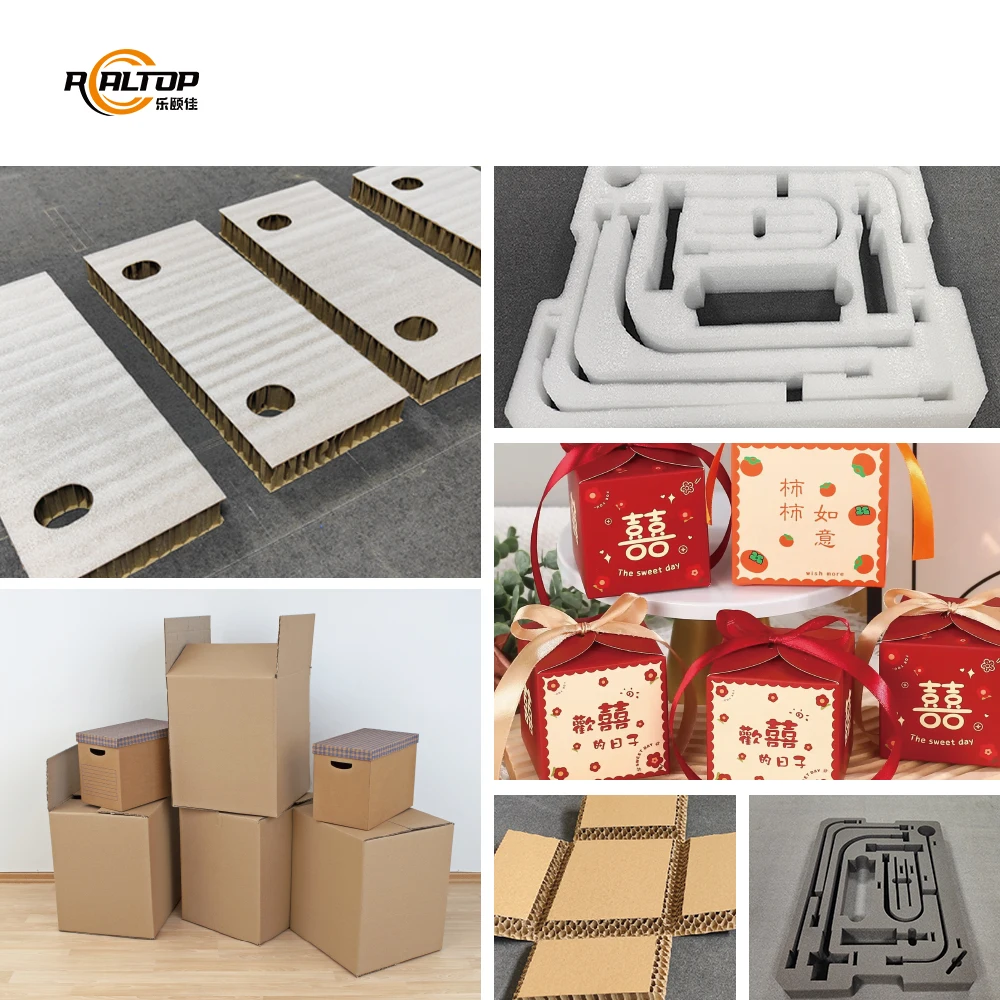
| Packaging sample making and short-run production | Corrugated cardboard (E-flute, B-flute, BC-flute), greyboard, cardstock, art paper, specialty paper |
| Carton and corrugated board prototyping | White card, kraft liner, coated and uncoated folding carton board |
| Gasket and foam fabrication | EVA foam, EPE foam, PU foam, rubber, PTFE |
| Signage and display board cutting | PVC sheets, thin plastic sheets (PVC, PET), composite display materials |
| Textile and leather pattern cutting | Fabric, synthetic leather, leather, composite and adhesive-backed materials |
Why Cutting Depth Claims Fail When Flute Profiles Change
A 40 mm cutting thickness rating means nothing if the tool head cannot shear through the specific flute geometry and liner density you run.
Buyers often specify a CNC oscillating knife cutting table based on working area and maximum cutting depth alone. When the machine arrives and the operator loads BC-flute corrugated board or dense greyboard, the oscillating knife may stall or produce crushed edges because the tool head was selected for lighter stock. The vacuum table zoning also matters: small packaging parts lift off the bed if the suction area is too broad and unsegmented, ruining dimensional accuracy mid-cut. This mismatch between specification and real substrate is a recurring cause of line stoppages [NEED_CITE: common CNC cutting setup errors in packaging workshops]. The 1625 addresses this through tool head options and full-surface vacuum adsorption, but only when the buyer’s actual material is confirmed before the order is placed.
Tool Head Selection Across Packaging Substrates
The 1625 CNC oscillating knife cutting table supports seven tool head types, each designed for a different material behavior. Oscillating knife handles corrugated flutes by shearing through the medium without crushing the structure. Creasing wheel scores fold lines into greyboard and cardstock. Kiss cutting tool penetrates face stock without cutting through the liner on adhesive-backed labels. V groove knife produces clean channels in foam and composite boards for folding display structures. Choosing the wrong head produces ragged edges or requires secondary finishing that adds time to every sample.
CCD Contour Recognition on Pre-Printed Stock
Printed packaging stock introduces a registration challenge that mechanical stops alone cannot solve. The CCD camera on this flatbed digital cutter tracks printed marks and adjusts the cut path in real time, keeping contour cuts aligned with the graphic even when the sheet has shifted during loading. This capability is critical for short-run packaging jobs where each SKU uses a different printed layout and manual alignment would consume too much of the operator’s shift. The positioning system must be verified against your specific print contrast and mark size before the machine is configured [NEED_CITE: CCD positioning accuracy on printed corrugated packaging].
How Vacuum Zoning, Speed and Accuracy Interact on Small Parts
The 9 kW vacuum pump drives full-surface adsorption through the aluminum bellows table, which is important when cutting small carton inserts or intricate gasket profiles that have insufficient surface area to hold themselves flat. Cutting speed ranges from 0 to 1500 mm/s, but the usable speed on any given job depends on the material’s tendency to shift under blade pressure. At ±0.1 mm cutting accuracy, the machine holds tight tolerances on crease lines and interlocking tab features common in structural packaging design, provided the vacuum hold-down is matched to the part geometry being produced.
The Cost of Skipping Material Testing Before Shipment
When a cutting table is ordered on working area alone, the consequences surface at installation. A pneumatic knife that handles white card cleanly may tear through corrugated B-flute. A vacuum table without adequate zoning causes small die-free patterns to drift during the final cut pass. Software that cannot import the buyer’s existing DXF or PLT files delays the first sample by days while the operator redraws the pattern. These are not defects in the machine; they are specification gaps that a pre-order sample cut on the buyer’s own material would have revealed [NEED_CITE: CNC knife cutting table commissioning issues caused by incorrect tooling].
Why Sourcing Directly from the Factory Matters Here
The 1625 CNC oscillating knife cutting table is built by a manufacturer that designs both knife and laser cutting systems in-house, so the cutting method is matched to the material rather than forced into one technology. Tool head and table configuration are specified per substrate and production volume, not sold as a single standard package. Software compatibility with PLT, DXF, AI and PDF files is confirmed before the order is finalized. Voltage and control language are customized for the destination market, and sample cutting on the buyer’s actual material is conducted before commitment. Every machine ships with a factory test record specific to the buyer’s material range.
Documentation & Verification
- Machine specification sheet listing selected tool heads and vacuum configuration
- Electrical schematic and voltage confirmation matched to your local supply
- Sample cutting report on your corrugated flute or greyboard grade
- Factory test record covering cutting accuracy and edge quality on your material
- Software licence and file format compatibility note for PLT, DXF, AI, PDF
- Operation and maintenance manual with selected control language
Installation, Commissioning & Support
- Floor space clearance based on 3300×2100 mm footprint plus material loading access
- Dedicated circuit for 9 kW vacuum pump and PLC control system at confirmed voltage
- Machine arrives fully assembled; leveling and vacuum seal check on site
- First-run parameter setting for your specific flute profile and cutting speed
- Operator training on tool head changeover and CCD camera calibration
- Spare parts list with consumable blades, creasing wheels and vacuum seals
Preparing Your Inquiry
To configure the 1625 correctly for your packaging workflow, share the substrate types you run, including flute profile and liner weight for corrugated or GSM and caliper for card stock. Provide your typical sheet size and daily volume so we can confirm whether single-head or multi-pass cutting fits your throughput. Let us know your local voltage and frequency, and whether your design team works in PLT, DXF, AI or PDF so we verify software compatibility before building the machine.
Frequently Asked Questions
Q: How do I verify cutting thickness across different corrugated flute types?
A: Maximum cutting thickness is rated at 40 mm, but the usable depth depends on flute profile and liner density. BC-flute requires different oscillating knife frequency and downforce than E-flute. We run a sample cut on your actual board grade and provide a cutting report showing edge quality and achievable speed before you place the order.
Q: Which tool head works for corrugated board versus foam versus adhesive composites?
A: Oscillating knife is standard for corrugated flutes. Creasing wheel handles fold lines on greyboard. Kiss cutting tool penetrates face stock on adhesive-backed materials without cutting the liner. V groove knife suits foam and composite boards. We confirm the correct combination based on your material sample.
Q: How are voltage and control language confirmed before shipment?
A: We request your local voltage and frequency at inquiry stage. The PLC control panel supports English, Russian, Italian, Chinese and custom languages. An electrical schematic showing the confirmed configuration is included in your documentation package before the machine leaves the factory.
Q: Is the software compatible with our existing CAD files and nesting workflow?
A: The included packaging box structure design software imports PLT, DXF, AI and PDF formats. We test your actual file imports during the pre-order sample phase and document compatibility in the software licence note that ships with the machine.
Q: Will the vacuum table hold small packaging parts flat during cutting?
A: The aluminum bellows vacuum table provides full-surface adsorption driven by a 9 kW pump. For very small carton inserts or intricate die-free patterns, we review your part geometry during configuration and confirm that the hold-down is adequate through the sample cutting test.


商品评价
Clear filtersThere are no reviews yet.