

Fast Shipping
Carrier information

20k products
Payment methods

24/7 Support
Unlimited help desk

2-day Delivery
Track or off orders
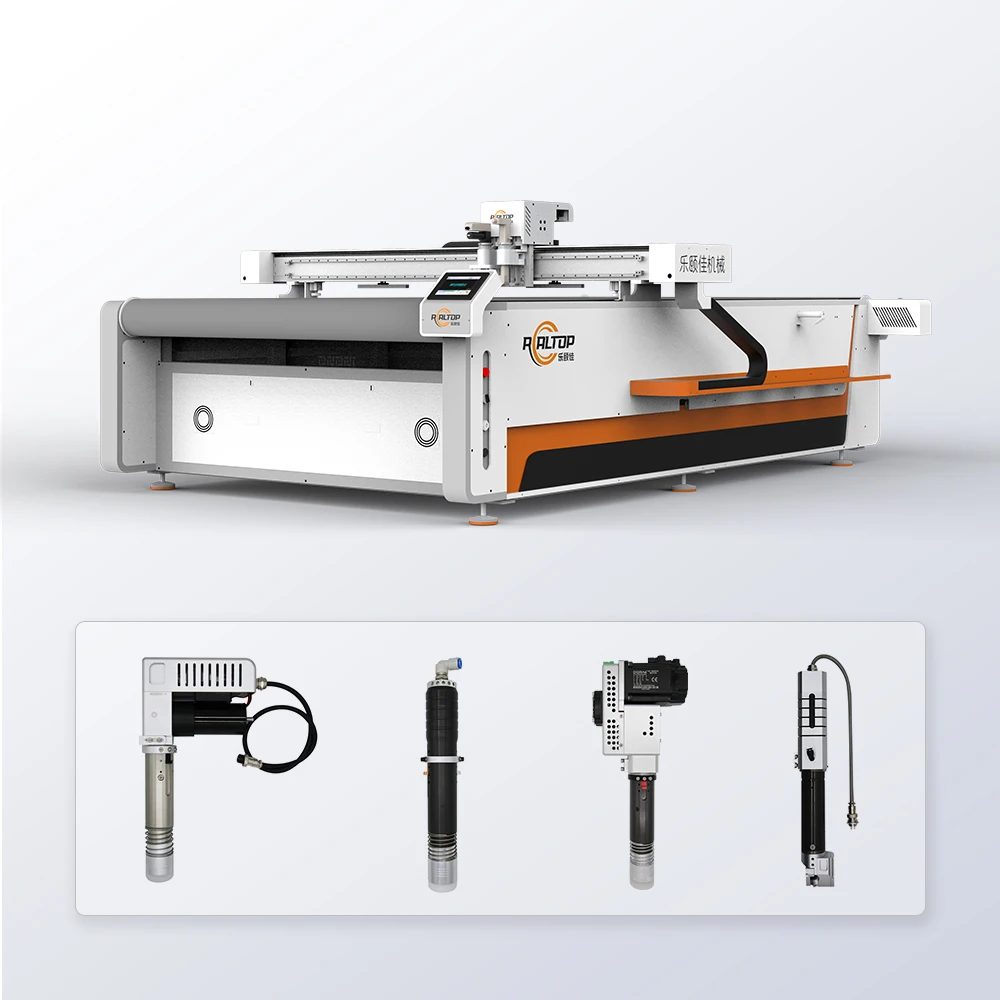
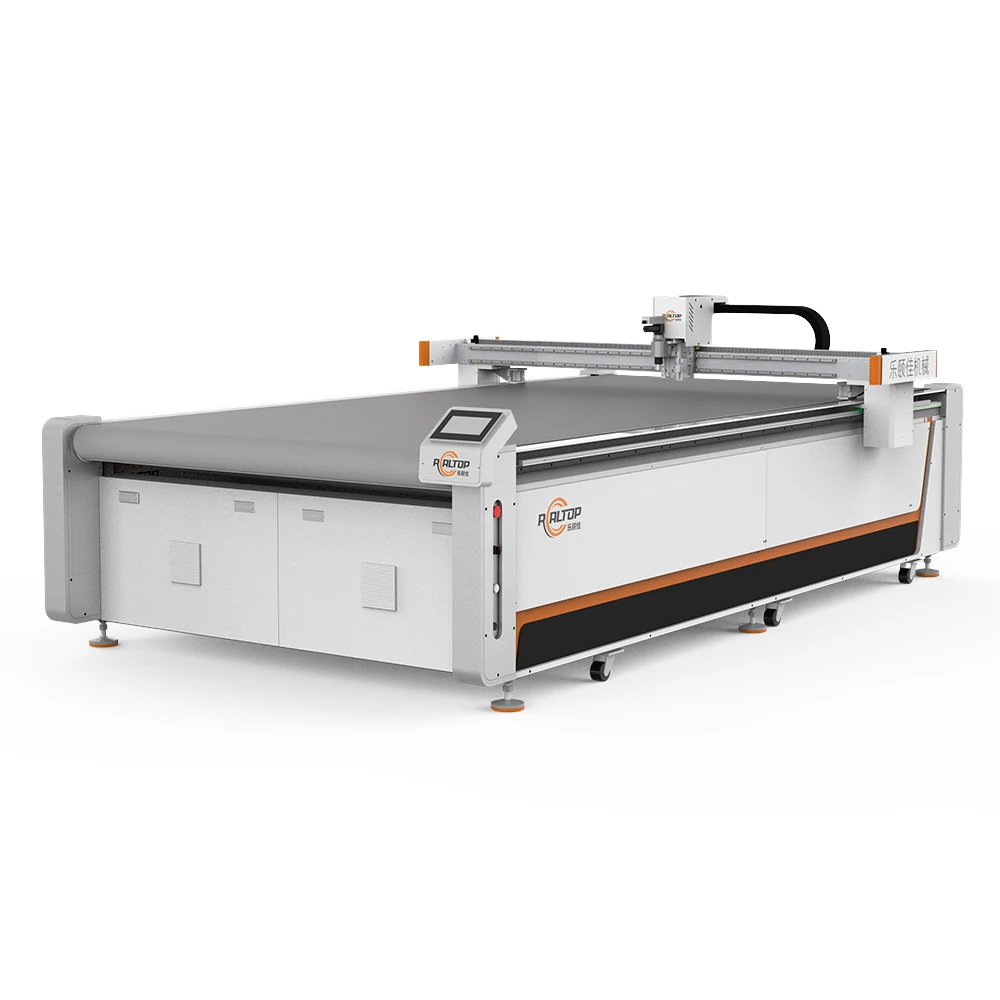
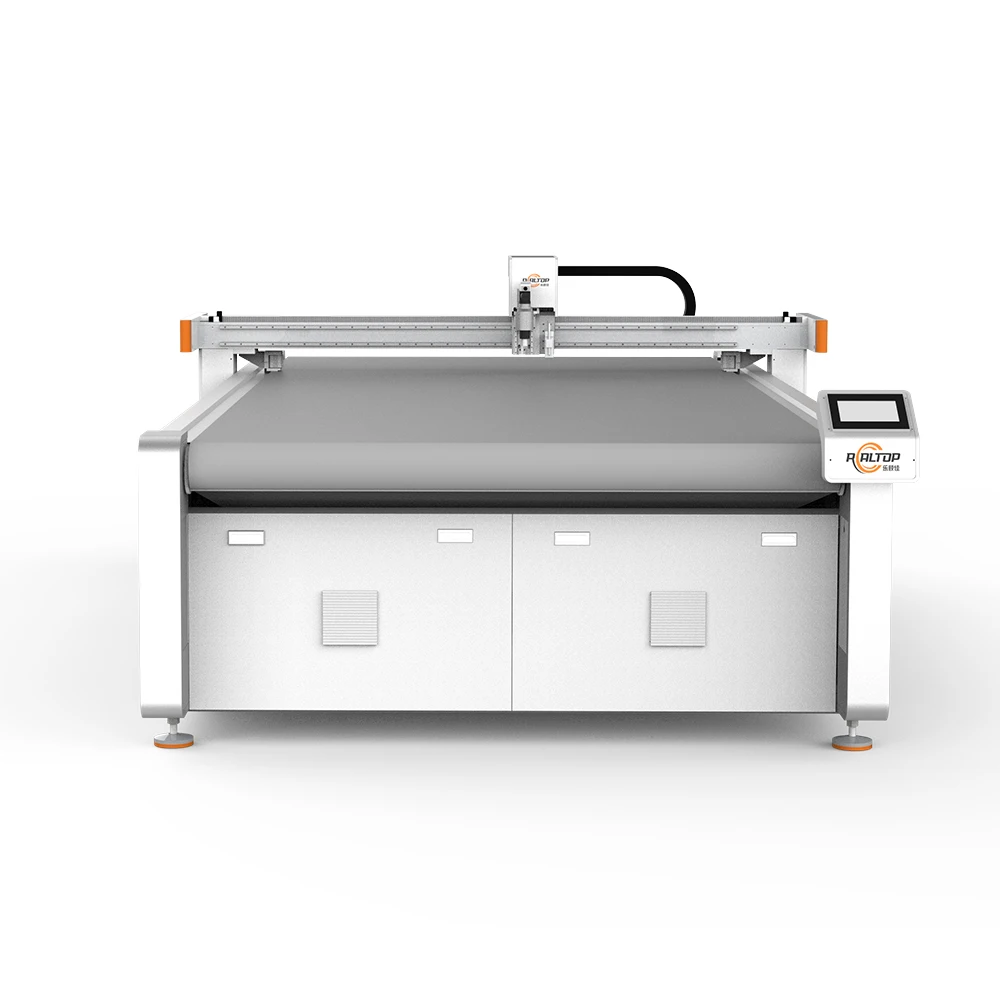
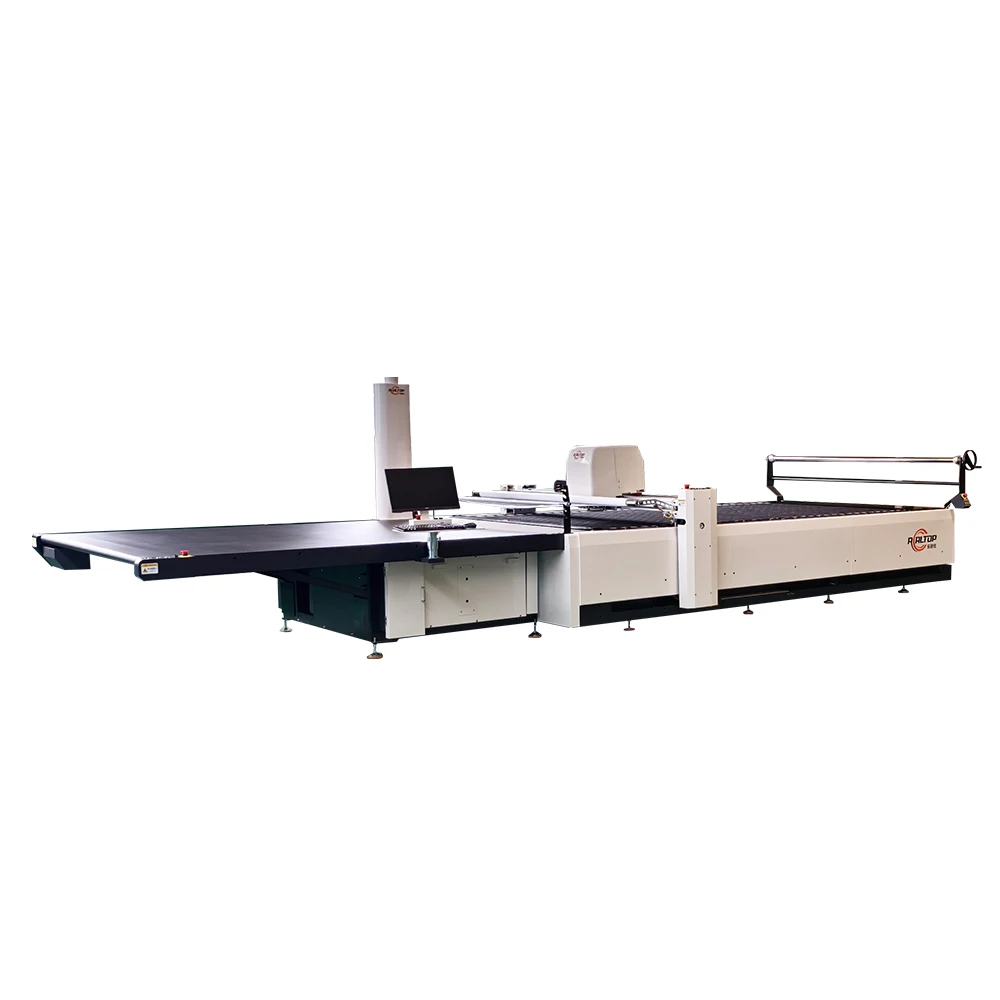
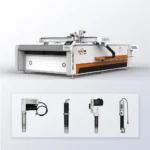
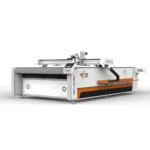
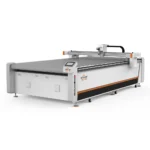
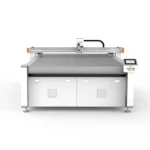
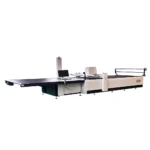
Matched Tooling to Material — the RT-D2516/RT-S2516 platform supports oscillating, drag, pneumatic and circular knife heads on one flatbed, so the cutting method follows the material behavior instead of forcing a single blade across every job.
Technical Specifications
| Parameter | Value |
|---|---|
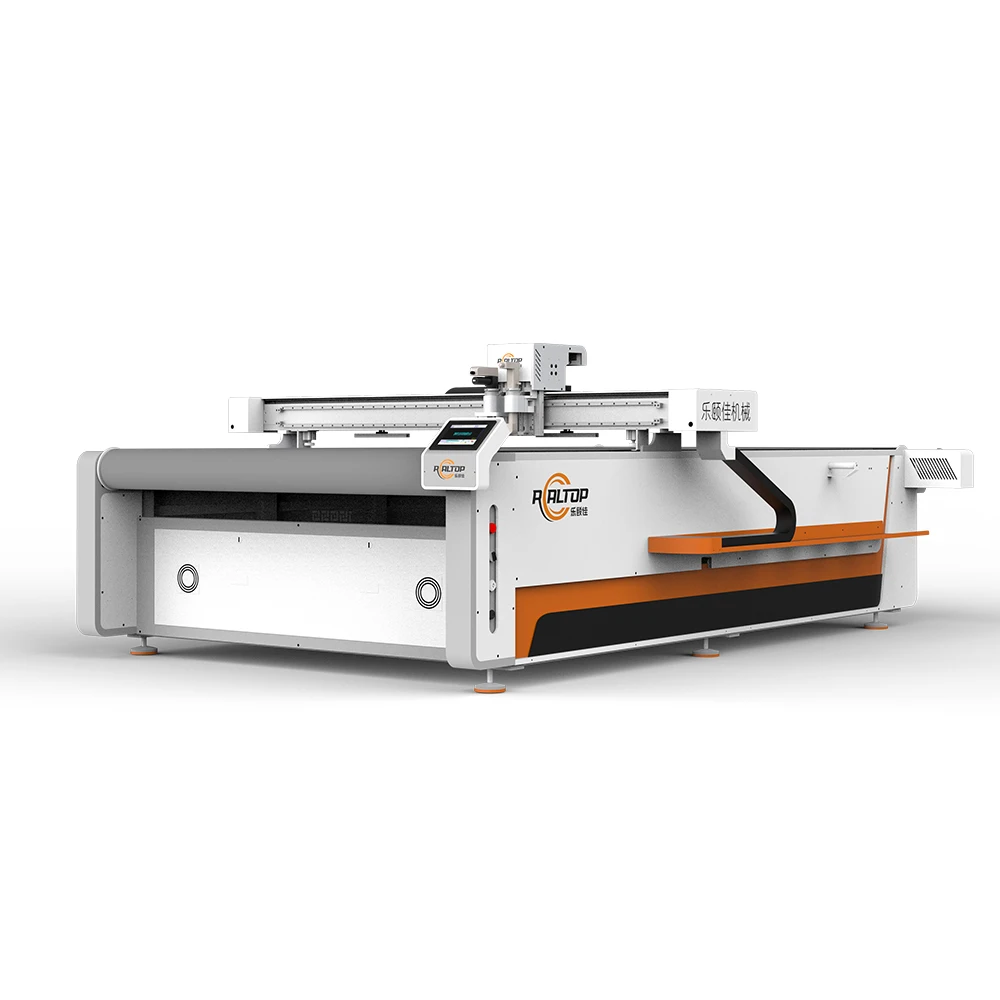
| Product Type | CNC Oscillating Knife Cutting Machine |
| Model | RT-D2516/RT-S2516 |
| Working Area | 1600 × 2500 mm |
| Machine Size | 3450 × 2300 × 1250 mm |
| Rated Power | 9 kW |
| Vacuum Pump | 7.5 kW |
| Translational Velocity | 800 – 2000 mm/s |
| Repeated Accuracy | ≤ 0.1 mm |
| Max Cutting Thickness | ≤ 100 mm (varies with material) |
| Transmission System | Digital servo motor, linear guide, synchronous belt, imported ball screw |
| Guide Rail | Taiwan Hiwin |
| Conveyor Belt | Germany imported |
| Servo Motor Option | Delta or Panasonic (China or Japan origin) |
| Voltage | 380 V ± 10 % |
| Control Panel | Touch screen, multiple language supported |
| Software File Formats | PLT, DXF, AI |
| Visual Positioning | Small CCD mark point, panoramic camera recognition, projection positioning |
| Tool Head Options | Oscillating knife, pneumatic knife, high-power vibrating knife, circular knife, V-cutting knife, drag knife, creasing wheel, dotted line knife, punching, brush |
| Safety Device | Infrared sensors, anti-collision, emergency stop |
| Instruction System | HP-GL compatible format |
Application Suitability
| Application | Material or Output |
|---|---|
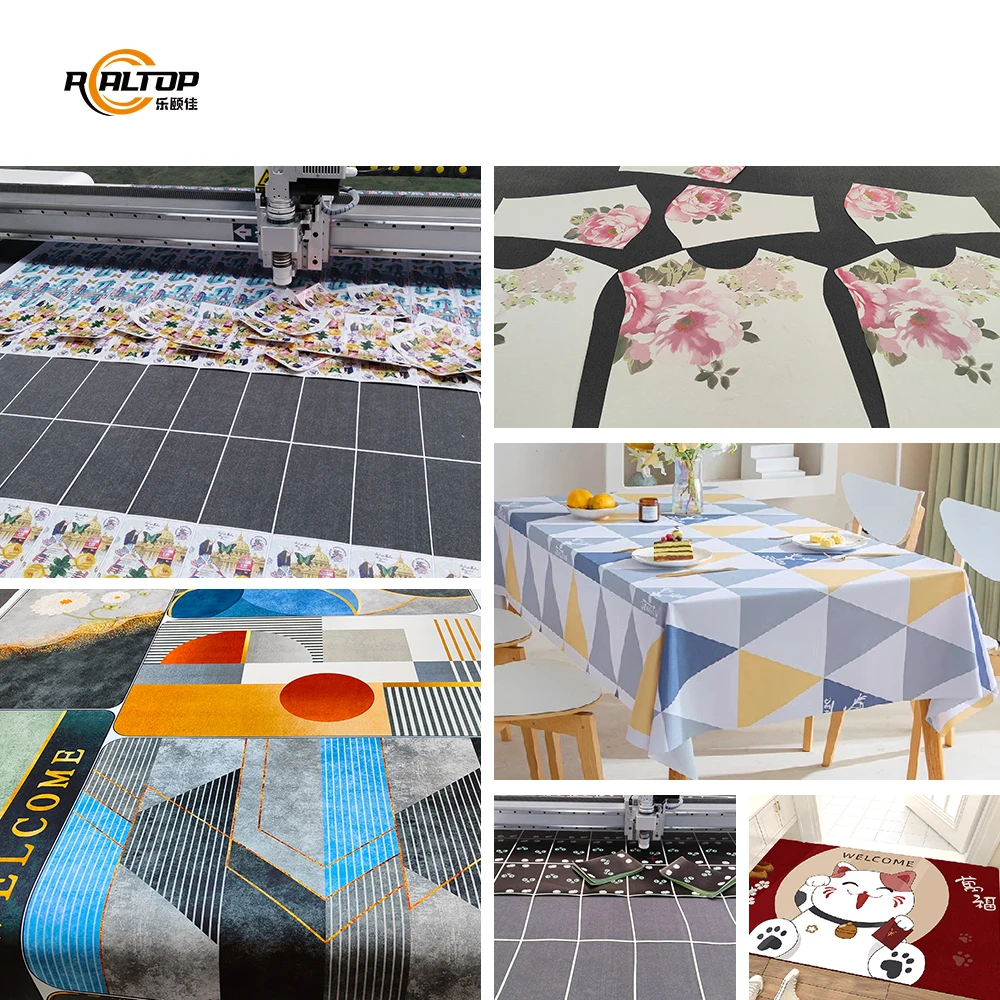
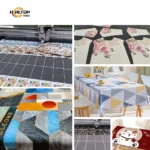
| Garment pattern cutting | Woven fabric, knit textile, non-woven fabric, clothing cloth |
| Footwear and luggage panels | Leather, PU, shoe material, luggage material |
| Automotive interior trimming | Multi-layer sponge, PU, EVA, XPE, carpet, floor mat |
| Gasket and sealing pad production | Rubber, PTFE, ETFE, silicone, composite sheet |
| Packaging sample making | Corrugated cardboard, cardboard, plastic box |
| Advertising and signage | Sticker, film, PVC, PP, PE, foam board |
Why Ragged Edges Start at the Tool Head, Not the Blade
Choosing the wrong tool head for a given material is the most common reason buyers report poor edge quality after commissioning. The cutting method must match material density, layer count and edge requirement, not just thickness. A high-power vibrating knife slices cleanly through multi-layer sponge, while a drag knife suits single-ply PTFE gasket stock. When the tool head is mismatched, the result is crushed foam cores, frayed textile edges or delaminated composites — problems that no amount of speed adjustment can fix [NEED_CITE: oscillating vs drag knife selection for composite materials]. I have watched operators spend hours tweaking feed rates on CNC oscillating knife cutting machine specifications, only to discover the oscillating head should have been swapped for a circular knife on that particular roll goods. The RT-D2516/RT-S2516 addresses this by offering ten selectable tool heads on one multifunctional carriage, letting production managers assign the correct knife type per job rather than per machine purchase.
Swiss Knife Carriage and Vibration Modes
The multifunctional head carries a Swiss imported knife supporting vibration full cutting, vibration half cutting and cursor location. Full cutting penetrates the entire material stack in one pass, while half cutting scores the top layer without cutting through the backing — essential for kiss-cut sticker sheets or crease-line packaging samples. Cursor location lets the operator register a physical reference point before the CCD camera takes over for contour tracking, reducing first-piece waste on printed fabric rolls.
Vacuum Zoning Across a 1600 × 2500 mm Bed
Holding small parts flat during high-speed traversal is where many flatbed tables fail. The RT-D2516/RT-S2516 uses a magnesium-aluminum alloy vacuum adsorption table with PVDF coating and hard oxidation, delivering high flatness across the full working area. The 7.5 kW vacuum pump sits inside an aviation aluminum shell with built-in silencer sponge, keeping noise levels manageable during continuous shifts. Zoning can be configured so that suction concentrates on the active cutting zone rather than bleeding across the entire bed, which matters when nesting small gasket profiles or shoe upper pieces [NEED_CITE: vacuum table zoning strategies for small-part CNC cutting].
CCD, Panoramic and Projection Positioning
Printed contour cutting requires the vision system to track registration marks at production speed without lag. Three options are available: a small CCD camera for mark point positioning on individual nests, a panoramic camera for full-bed pattern recognition on dye-sublimated textile, and projection positioning for manual alignment of irregular hide or leather pieces. The correct choice depends on whether the buyer runs pre-printed rolls, sublimation fabric or natural material with grain direction constraints.
Reading the Specs That Matter on the Shop Floor
Translational velocity of 800 – 2000 mm/s defines how fast the head moves between cuts, but actual cutting speed depends on material resistance and layer count. A single ply of non-woven fabric allows the upper end of that range, while six layers of composite sponge will pull speed toward the lower bound. Repeated accuracy of ≤ 0.1 mm ensures pattern pieces stay within tolerance across a full bed of nested garment panels, reducing downstream sewing rejection. The imported ball screw and Taiwan Hiwin linear guide maintain this precision over extended production runs, where belt-only systems tend to drift. Software compatibility with PLT, DXF and AI formats means the machine integrates with most nesting workflows already in use at textile and gasket factories, avoiding the cost of re-purchasing CAD licenses.
The Hidden Cost of Specifying on Working Area Alone
Buyers often select a flatbed based on sheet size, then discover the machine cannot handle their actual material thickness or layer count. A 100 mm maximum cutting depth sounds generous until a buyer attempts eight layers of 15 mm EVA foam and the oscillating knife stalls mid-pass. Vacuum suction that covers the full bed may still lift small parts if zoning is not matched to the nest layout [NEED_CITE: material lift failures on CNC flatbed cutting tables]. Software that imports DXF but ignores the buyer’s proprietary nesting macros forces the programming team to rebuild every job file from scratch, adding hours to each shift. These mismatches rarely appear on a spec sheet — they surface only during sample cutting on the buyer’s own material.
Why Source This Platform From REALTOP
In-house design covers both knife and laser cutting technologies under one roof, so the buyer can evaluate which method suits the material before committing to a machine family. Tool head and table configuration are specified per material sample and production volume, not pulled from a default list. CCD camera positioning is tested on the buyer’s printed stock before order confirmation, proving mark recognition at actual traverse speed. Software file format compatibility is documented in writing, covering PLT, DXF and AI along with any nesting macros the buyer currently uses. Voltage, plug type and control panel language are confirmed before production begins, preventing on-site electrical rework. Sample cutting on the buyer’s own material is standard procedure, generating a cutting report that records knife type, speed and edge quality before the purchase order is signed.
Documentation & Verification
- Machine specification sheet listing every selected tool head and vacuum zone layout
- Electrical schematic with 380 V ± 10 % confirmation and servo motor origin noted
- Sample cutting report on buyer material showing edge quality and achieved speed
- Tool head and table configuration list matching the quotation line by line
- Software licence and file format compatibility note covering PLT, DXF, AI
- Factory test record documenting repeated accuracy across a full 1600 × 2500 mm traversal
Installation, Commissioning & Support
- 3450 × 2500 × 1250 mm machine footprint requires level concrete floor with anchor points
- 9 kW rated power plus 7.5 kW vacuum pump need dedicated 380 V three-phase circuit
- Taiwan Hiwin guide rails and imported ball screw arrive pre-aligned; bed leveling verified on site
- Touch screen control panel language set to operator preference during commissioning
- Servo motor tuning for Delta or Panasonic drive confirmed against material-specific cutting profiles
- Spare parts list includes Swiss knife blades, conveyor belt sections and vacuum pump filters
What to Include in Your Inquiry
Send the material type, maximum thickness, layer count and typical sheet dimensions so the correct tool head and vacuum zoning can be proposed. Confirm the local voltage and frequency, the control panel language your operators need, and whether your existing nesting software outputs PLT, DXF or AI. If you run printed contour work, provide a sample roll or sheet so the CCD or panoramic camera can be tested against your actual registration marks before configuration is locked.
Frequently Asked Questions
Q: How do I choose between oscillating knife, drag knife and pneumatic knife for my material?
A: Oscillating knife suits multi-layer fabric and foam where clean vertical edges are required. Drag knife handles single-ply gasket and thin rubber with minimal blade deflection. Pneumatic knife applies constant downward pressure for dense or abrasive composites. The correct choice depends on material density, layer count and edge finish requirement, all confirmed during sample cutting before order.
Q: What print mark formats does the CCD contour recognition support?
A: The small CCD camera tracks standard printed registration marks, while the panoramic camera recognizes full-bed patterns on dye-sublimated textile. Tracking performance at production speed is verified on the buyer’s own printed material before shipment, ensuring the vision system keeps pace with the 800 – 2000 mm/s translational velocity without losing mark lock.
Q: Can the vacuum table hold small nested parts without lifting?
A: The magnesium-aluminum alloy table with PVDF coating offers configurable zoning so suction concentrates on the active cutting area. Zone layout is specified based on the buyer’s typical nest pattern, preventing vacuum bleed across unused bed sections and keeping small gasket or shoe upper pieces firmly seated during high-speed head traversal.
Q: Will the software accept my existing nesting files?
A: The control system reads PLT, DXF and AI formats natively. Before shipment, a file format compatibility note is issued confirming that the buyer’s specific nesting output and any custom macros import correctly, avoiding workflow disruption on the shop floor.
Q: How are voltage, plug and language handled for export markets?
A: Standard voltage is 380 V ± 10 %. Other voltages and plug types are confirmed during the specification review before production starts. The touch screen control panel supports English, Russian, Italian and Chinese, with special languages customizable on request and documented in the electrical schematic.


商品评价
Clear filtersThere are no reviews yet.