





Fast Shipping
Carrier information

20k products
Payment methods

24/7 Support
Unlimited help desk

2-day Delivery
Track or off orders
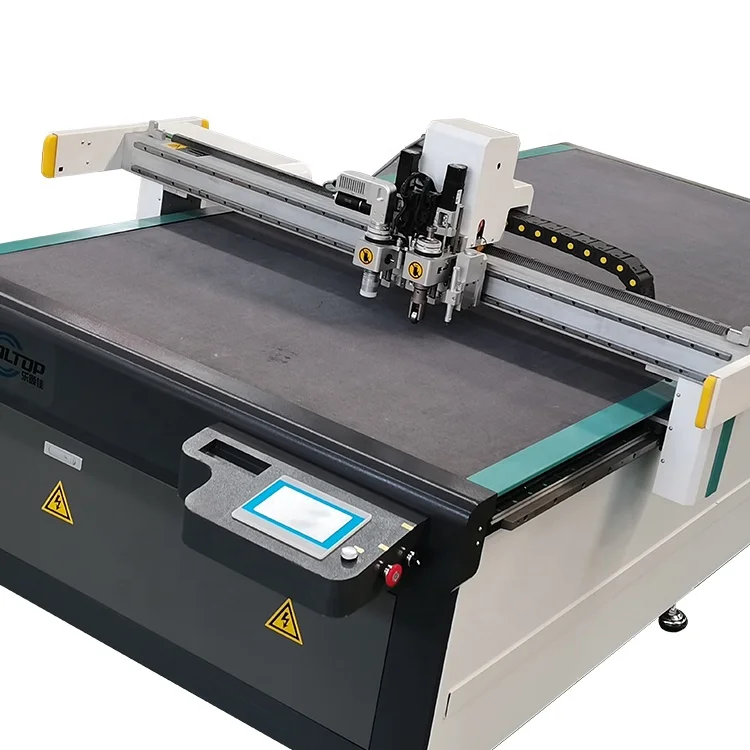
Tool Head Matched to Material — oscillating knife, drag knife and creasing wheel configured per your corrugated grade and box format, not forced into a one-size-fits-all head.
Technical Specifications
| Parameter | Value |
|---|---|
| Model | RT-D2516/RT-S2516 |
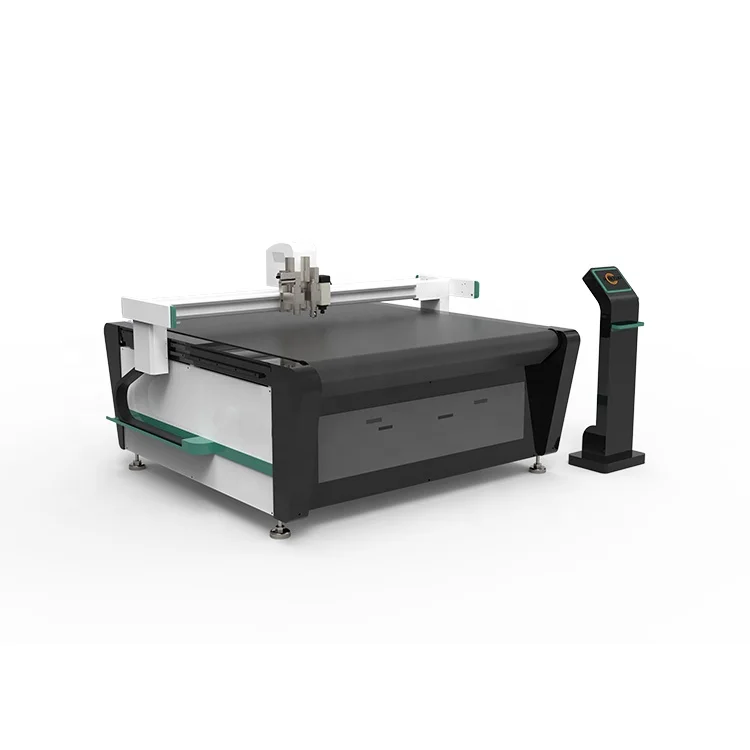
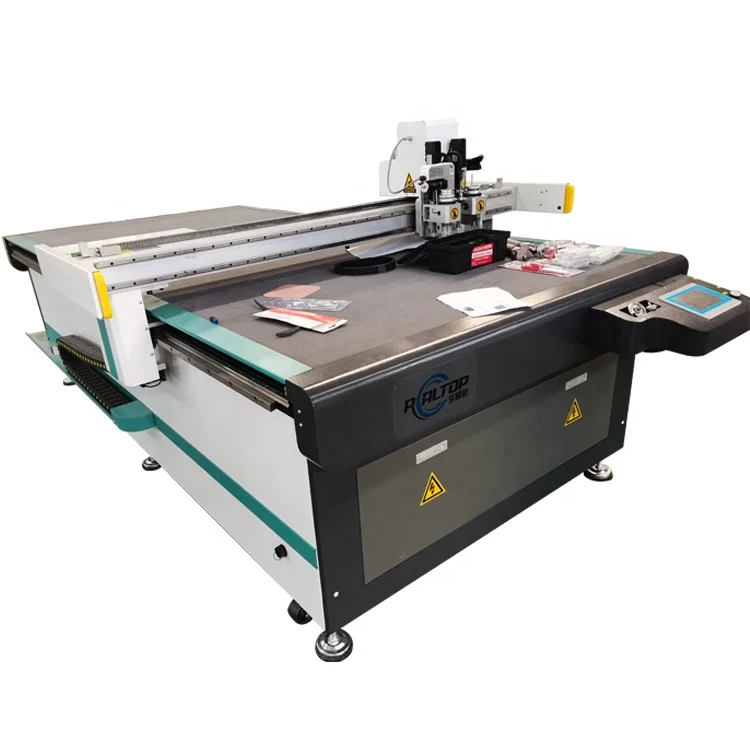
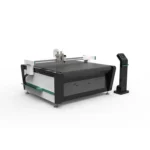
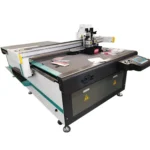
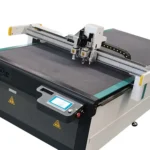
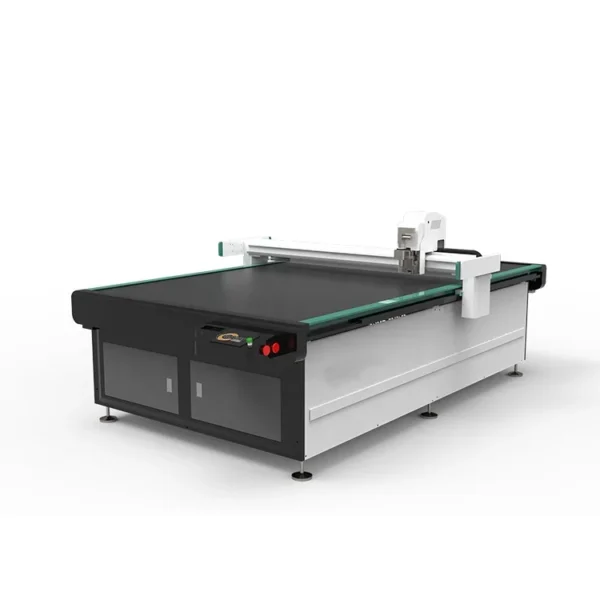
| Product Type | CNC Oscillating Knife Cutting Table for Packaging |
| Working Area | 1600×2500 mm |
| Machine Size | 3450×2300×1250 mm |
| Rated Power | 9 kW |
| Worktable | Flat working table with conveyor belt and vacuum table (7.5 kW vacuum pump) |
| Tool Head | Oscillating knife (vibration full cutting, vibration half cutting), cursor location |
| Translational Velocity | 800–1200 mm/s |
| Cutting Speed | 200–800 mm/s (varies by material) |
| Cutting Thickness | Up to 70 mm with pneumatic cutting tool (basis not stated in source) |
| Repeated Accuracy | ≤0.1 mm |
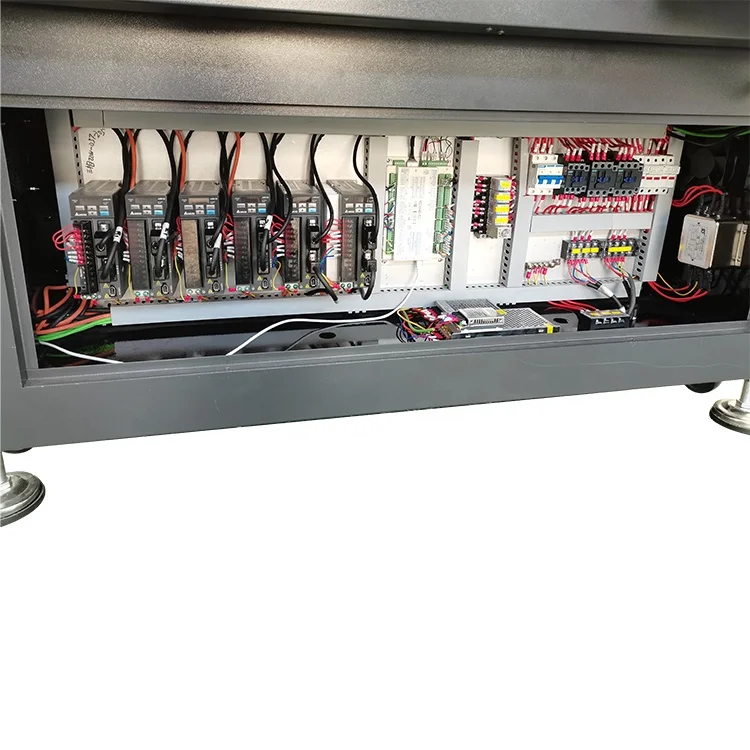
| Transmission System | Digital servo motor (Yaskawa), linear guide (Hiwin), synchronous belt, ball screw |
| Instruction System | HP-GL compatible format |
| Voltage | 380V ±10% |
| Safety Device | Infrared sensors |
| Standards | CE |
Application Suitability
| Application | Material or Output |
|---|---|
| Corrugated carton sample making | Single, double and triple-wall corrugated board |
| Pizza box prototyping | E-flute and B-flute corrugated, grey board |
| Packaging prototype cutting | Cardboard, kraft, sticker sheets |
| Flexible material cutting | Leather, clothing fabrics, sponge composite, PVC, soft glass, silicon, rubber |
| Gasket and seal production | Rubber sheets, composite gasket materials |
| Automotive floor mats | Carpet, composite mat layers |
Why Cutting Speed Claims Mean Nothing Without the Board Grade
The real question is not how fast the head moves, but whether the vacuum holds your smallest box format flat at that speed.
I have walked into packaging workshops in Chile where the CNC oscillating knife cutting table sat idle for days. The machine was specified on working area alone, and nobody checked whether the vacuum table zoning matched the small pizza box blanks they ran daily. The board lifted, the blade chipped, and the line stopped. [NEED_CITE: vacuum zoning requirements for small-format corrugated cutting]
That is why this page walks through how tool head selection, vacuum pump capacity and cutting speed are matched to your actual corrugated grade and box dimensions before the machine is built.
Oscillating Knife Modes for Corrugated Creasing and Through-Cutting
The oscillating knife head supports both vibration full-cutting and half-cutting modes on a single CNC oscillating knife cutting table. This means you can score a crease line and cut the outer contour in one pass, without swapping tools mid-job. For packaging sample making, that keeps registration tight between the fold line and the cut edge.
Motion System and Edge Quality at Speed
Translational velocity reaches 800–1200 mm/s, driven by Yaskawa digital servo motors on Hiwin linear guides. On corrugated board with printed registration marks, the motion system must track contours without lag or overshoot. Repeated accuracy of ≤0.1 mm keeps crease-and-cut sequences aligned, which matters when a gift box blank has multiple fold lines converging at a single corner. [NEED_CITE: servo motor and linear guide influence on contour cutting accuracy]
Reading the Specs That Actually Affect Your Output
The 7.5 kW vacuum pump paired with a conveyor belt feed addresses two problems at once. Small corrugated blanks tend to lift off the table during cutting, especially near the end of a contour where the remaining vacuum area shrinks. A pump rated at this level provides enough suction across the zoned table to hold these pieces down. The conveyor belt allows continuous sheet loading, so the operator feeds the next board while the current one is being cut. The HP-GL compatible instruction system accepts standard DXF and PLT files from common packaging design software. Cutting thickness is listed up to 70 mm with a pneumatic tool, but actual depth depends on material density and flute structure — confirm on your own board grade before committing.
What Happens When the Wrong Tool Head Ships
A drag knife on double-wall corrugated produces ragged edges and crushes the flute structure near the cut line. An oscillating knife set at the wrong frequency tears the liner instead of slicing it. I have seen packaging lines in Mexico replace blades every two days because the tool head was chosen for the machine, not the material. The creasing wheel must also match the flute profile — too wide and the crease is blunt, too narrow and it punches through the liner. [NEED_CITE: tool head selection for corrugated board grades]
Why Buyers Source from This Production Line
In-house design covers both knife and laser cutting technologies, so you select the method that fits your material rather than forcing one. Tool head and table configuration are specified per your corrugated grade, board thickness and daily volume. CCD camera positioning is available for printed contour work on packaging artwork. Software compatibility and file format are confirmed before order, so your existing nesting workflow transfers without re-drawing. Voltage, control language and plug type are locked to your local standard before the machine enters production. Sample cutting on your own material validates edge quality, crease depth and vacuum hold before you commit.
Documentation & Verification
- Tool head and table configuration list locked to your corrugated grade and box format
- Sample cutting report on your board showing edge quality, crease depth and hold-down performance
- Software licence and file format compatibility note confirming HP-GL and DXF workflow
- Factory test record at your specified voltage with packing photographs before dispatch
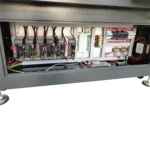
- Electrical schematic with voltage and frequency confirmation for your market
Installation, Commissioning & Support
- Floor space must accommodate 3450×2300 mm footprint with clearance for conveyor sheet loading
- Dedicated 380V ±10% circuit rated for 9 kW total draw, separate from vacuum pump startup surge
- Machine ships assembled with conveyor and vacuum table pre-mounted, requires leveling and belt tensioning
- First-run calibration includes vacuum zoning check on your smallest box blank format
- Operator training covers tool head swapping between oscillating knife and creasing wheel
- Spare blade and creasing wheel inventory sized to your monthly cutting volume
Before You Request a Quote
Send the corrugated flute type and board thickness you run most often, along with the smallest and largest box blank dimensions. Confirm your local voltage and frequency, and whether your design team works in DXF, PLT or another file format. If your current workflow includes nesting software, note the brand so file compatibility can be checked before production starts.
Frequently Asked Questions
Q: How is the tool head chosen for my corrugated grade?
A: The choice depends on your flute profile and whether you need through-cut, kiss-cut or creasing. Oscillating knife handles most corrugated grades cleanly, while drag knife suits thin grey board. Creasing wheel diameter is matched to your flute type so the fold line is sharp without breaking the liner. Sample cutting on your board confirms the selection before the machine is built.
Q: Will small pizza box blanks lift off the vacuum table?
A: Small-format parts are exactly where vacuum zoning matters most. The 7.5 kW pump provides sufficient suction across zoned sections of the table, but the zone layout must match your blank size. This is checked during sample cutting with your actual board and box format, so hold-down performance is verified before shipment.
Q: Does the CCD camera track printed marks at production speed?
A: CCD contour recognition reads printed registration marks on packaging artwork and adjusts the cut path in real time. Tracking accuracy at speed depends on print contrast, mark size and the translational velocity setting. Your printed sheet is tested during the sample cutting stage to confirm the camera locks on and follows the contour without drift.
Q: Can the software import my existing nesting workflow?
A: The HP-GL compatible instruction system accepts DXF and PLT files from standard packaging design software. If you use a specific nesting application, the file format and import workflow are tested before order. This avoids the situation where a production manager discovers after delivery that every job must be redrawn from scratch.
Q: What voltage and control language are confirmed before shipping?
A: The machine is configured for 380V ±10% as standard, but your local voltage, frequency and plug type are confirmed before production. Control panel language is set to your operator’s preference. The electrical schematic and voltage confirmation document are included in the documentation package so your electrician can verify the installation on arrival.


商品评价
Clear filtersThere are no reviews yet.