


Fast Shipping
Carrier information

20k products
Payment methods

24/7 Support
Unlimited help desk

2-day Delivery
Track or off orders
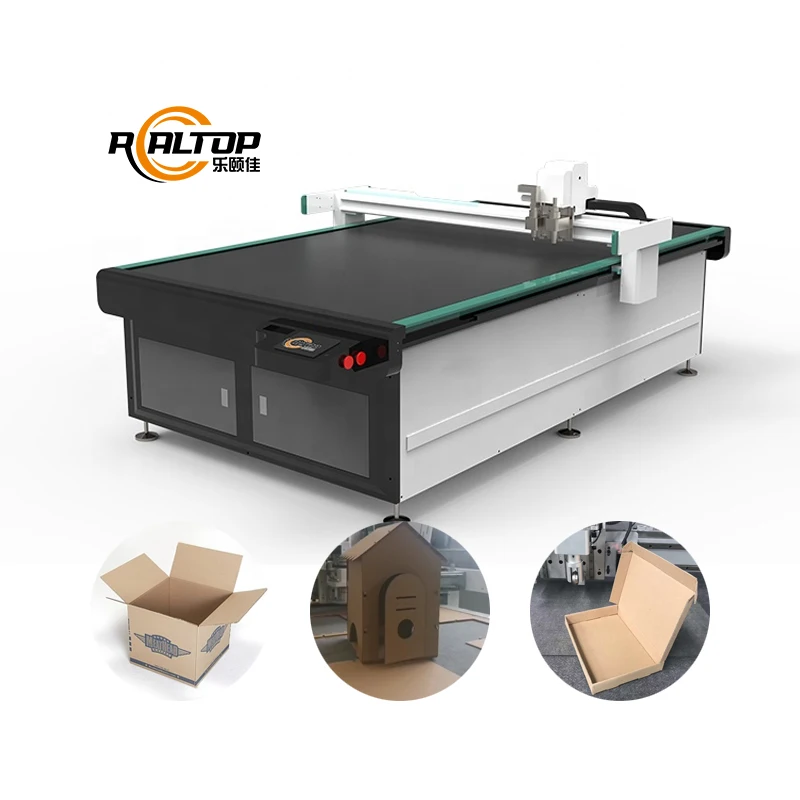
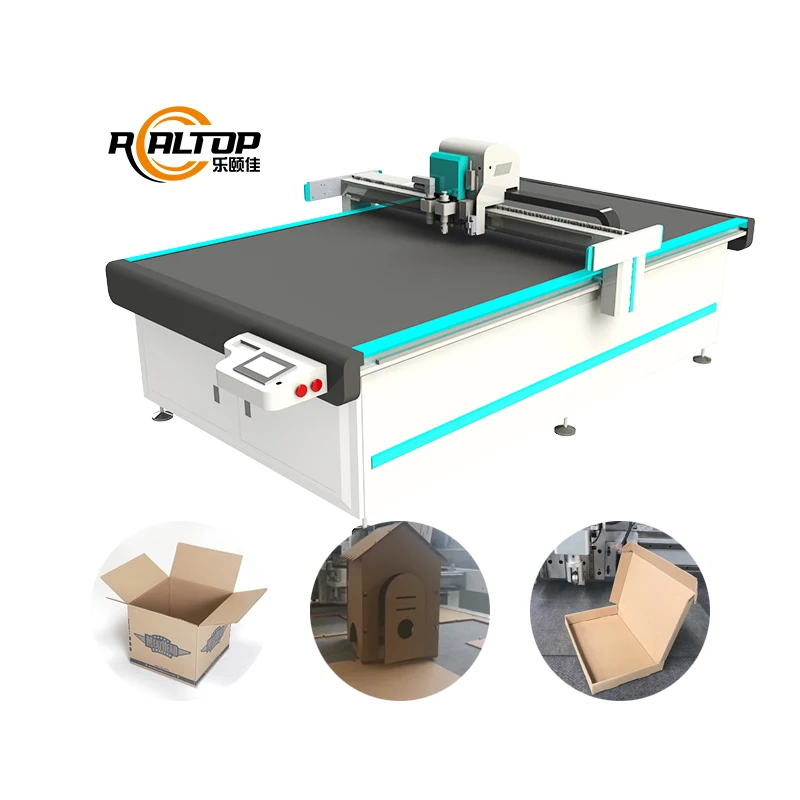
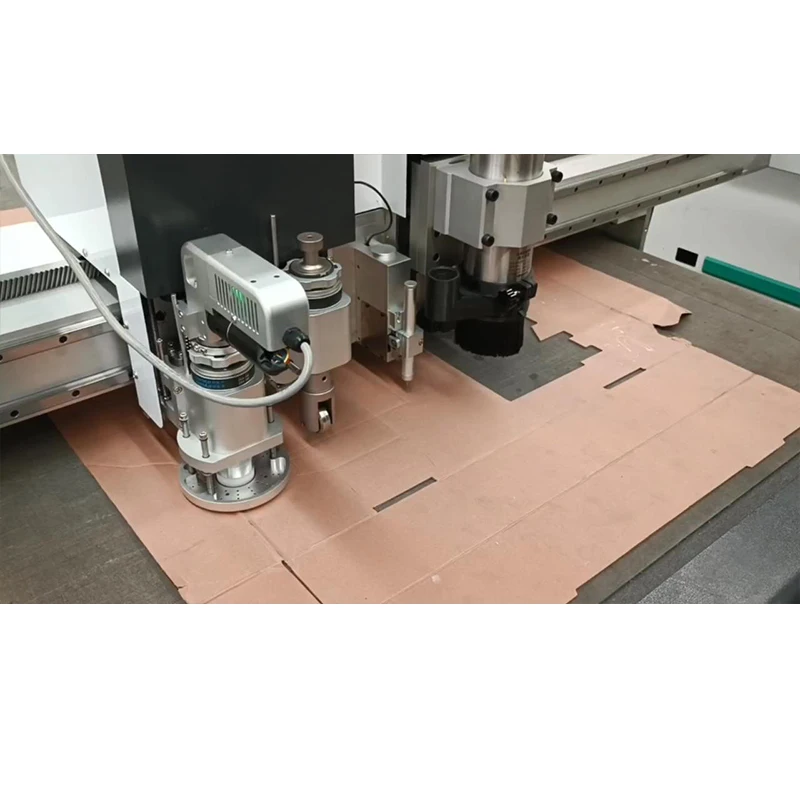
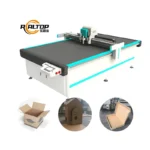
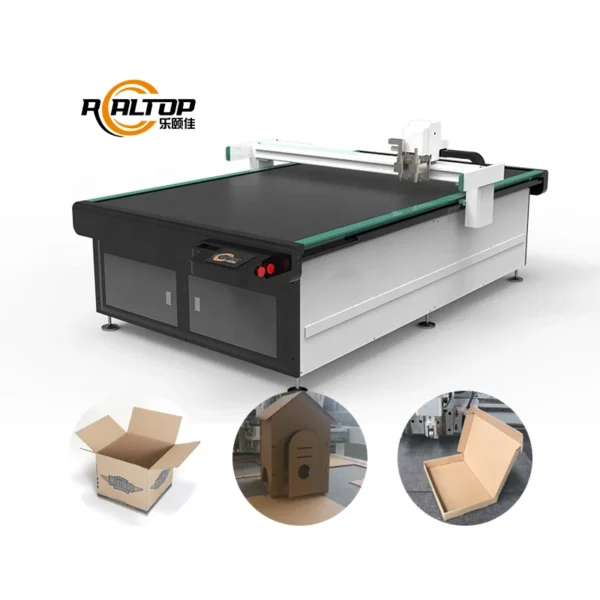
Tool-Head Versatility — oscillating, creasing, kiss-cut and punch tools on one RT–R2513 table so you match the blade to the corrugated flute or sticker stock instead of forcing a compromise.
Technical Specifications
| Parameter | Value |
|---|---|
| Model | RT–R2513 / RT-D2516 / RT-S2516 |
| Product Type | CNC Oscillating Knife Cutting Machine for Packaging and Sticker |
| Working Area | 2500×1300 mm (RT–R2513) / 1600×2500 mm (RT-D2516 / RT-S2516) |
| Machine Size | 3550×1910×1400 mm (RT–R2513) / 3450×2300×1250 mm (RT-D2516 / RT-S2516) |
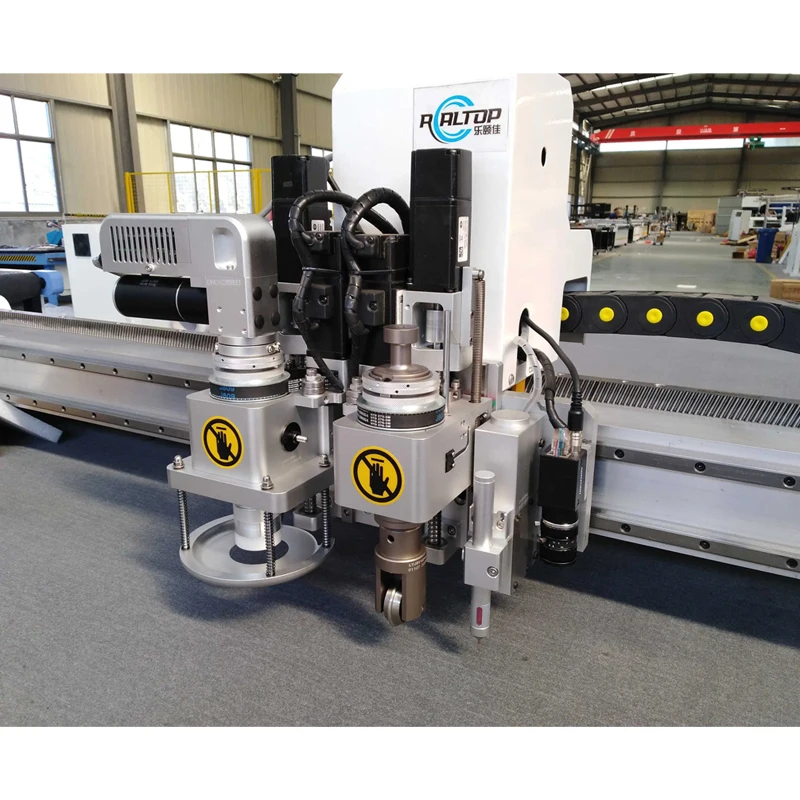
| Cutting Tools | Oscillating knife, creasing tool, kiss-cut knife, round punch |
| Cutting Thickness | ≤18 mm (basis not stated in source — confirm with material type and flute profile) |
| Fixing Method | Vacuum system with aluminum alloy honeycomb table |
| Vacuum Pump | 7.5 kW |
| Rated Power | 9 kW |
| Voltage | 380V |
| Drive System | Servo motors and drivers (Taiwan Delta or Dongling — verify with order) |
| Guide Rail | Taiwan Hiwin linear rail |
| Repeated Accuracy | <0.05 mm |
| Transmission | Ethernet port |
| Safety Devices | Infrared sensors, emergency stop |
| Profile Formats | DXF, OLT, PDF, AI |
| Conveyor Belt | Germany-imported material |
| Auto Feeding | Available |
| Frame | Welded thick square seamless steel, high-temperature treated |
| Standard | CE declaration where applicable |
Application Suitability
| Application | Material or Output |
|---|---|
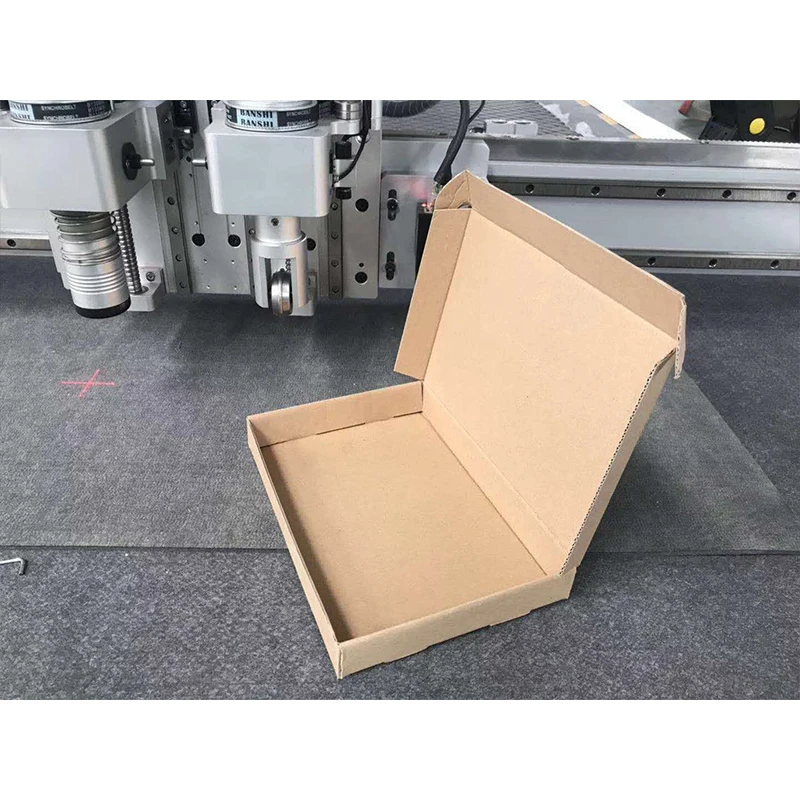
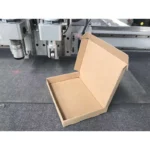
| Corrugated carton sample making | Single, double and triple-wall corrugated board up to stated thickness |
| Sticker and label contour cutting | Self-adhesive vinyl, PP paper, coated label stock on release liner |
| Packaging short-run production | Cardboard, greyboard and folding carton blanks |
| Large-format electrical carton packaging | Heavy-duty corrugated sheets for appliance and industrial equipment boxes |
| Express and snack-food box prototyping | E-flute and B-flute corrugated with kiss-cut window inserts |
| High-end gift box sample making | Thick cardboard with combined creasing and cutting passes |
What "Cutting Thickness ≤18 mm" Actually Means on a CNC Oscillating Knife Cutting Machine
The number only holds value when you test it against your exact flute type and board density.
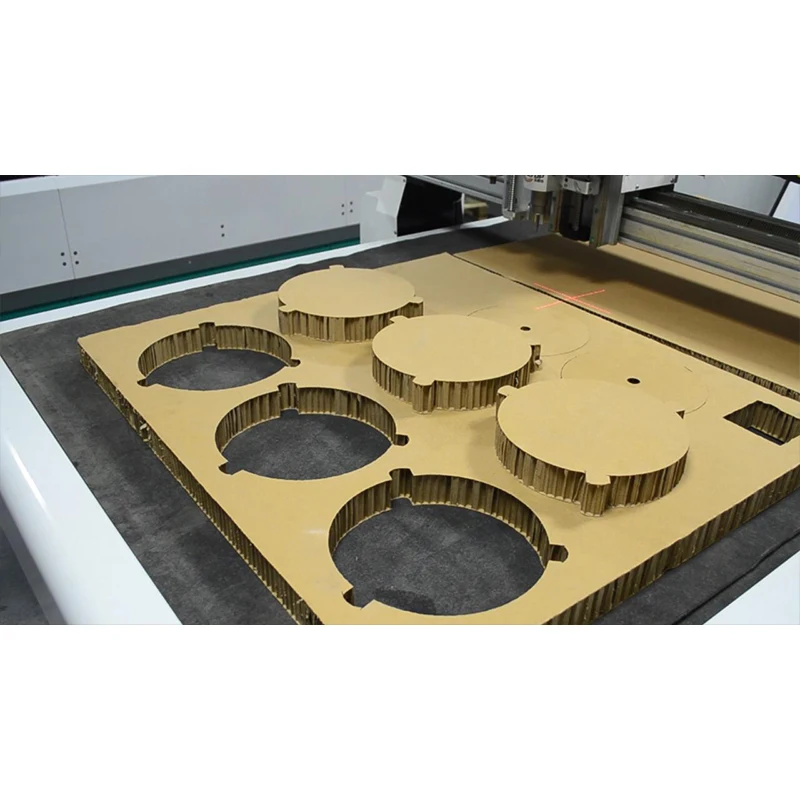
Most flatbed cutting tables quote a maximum thickness measured on soft, low-density foam or single-face corrugated. Double-wall and triple-wall board behave differently under the blade — the oscillating stroke that slices clean through E-flute can crush the outer liner on BC-flute if the amplitude and feed rate are not adjusted. I once watched a sticker job in Guadalajara where the operator pushed 16 mm honeycomb cardboard at full speed and the kiss-cut blade tore through the release liner because the vacuum zoning could not hold the small die-cut shapes flat. Before you sign off on any CNC oscillating knife cutting machine specifications, send your thickest and most abrasive sheet to the factory for a documented sample run. [NEED_CITE: corrugated flute classification and crush resistance standards]
Tool Head Selection for Mixed Packaging and Sticker Runs
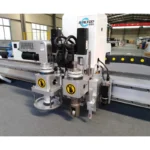
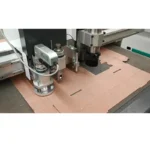
The RT–R2513 carries four tool positions: oscillating knife for through-cutting corrugated and cardboard, creasing wheel for fold lines on carton blanks, kiss-cut knife for sticker contours without damaging the release liner, and round punch for registration holes or ventilation slots. Switching between a corrugated sample and a sticker run means the controller calls a different tool path and the head lifts, rotates and engages the next tool without manual changeover. This matters when a packaging house runs short-run carton prototypes in the morning and adhesive label jobs in the afternoon on the same table. The oscillating amplitude and stroke frequency are set per tool, so the blade does not drag or chatter when moving from dense BC-flute to thin vinyl.
Vacuum Zoning and the Small-Part Problem
The 7.5 kW vacuum pump feeds an aluminum honeycomb platen that is divided into independently valved zones. On a full-sheet corrugated cut, you open all zones and the board stays flat. On a sticker sheet with dozens of small die-cut labels, you close the outer zones and concentrate suction under the active cutting area. Without that zoning, the vacuum spreads thin and the oscillating knife lifts the corner of a 30 mm label mid-cut, ruining the contour. I have seen this exact failure on a flatbed digital table in Monterrey — the operator blamed the blade, but it was the vacuum map that needed reconfiguring. Every sticker job should start with a zone map saved in the software profile so the operator does not guess which valves to close. [NEED_CITE: vacuum hold-down requirements for die-cut label production]
Reading the Specs That Matter Beyond Working Area
Working area is the first number buyers compare, but it is the least likely to cause a production stop. The repeated positioning accuracy of <0.05 mm determines whether a kiss-cut blade follows the printed contour tightly enough to leave a clean 1 mm matrix around a label — any drift and the label peels with a ragged edge. The Taiwan Hiwin linear guide blocks resist deflection when the oscillating head pushes through 15 mm corrugated at speed; cheaper round rails flex and leave a stepped edge on the second pass. The welded steel frame with high-temperature stress relief keeps the gantry square over years of vibration from the oscillating knife, which otherwise loosens bolted joints and throws the geometry off by tenths of a millimeter. The Ethernet transmission port avoids the USB bottleneck that stalls large nesting files mid-job, a common complaint on older CNC oscillating knife cutting machine specifications sheets that still list serial or parallel ports.
When the Wrong Configuration Stops the Line
A carton sample maker in León ordered a flatbed table with a single oscillating knife and no creasing wheel, assuming he would score fold lines by hand. He spent the first month cutting and then manually creasing every carton prototype, which doubled his labor time and introduced inconsistent fold angles that failed the client’s drop test. The machine sat idle during creasing because the cutting head could not do both operations in one pass. Another shop bought a table with a vacuum pump sized for full-sheet work and never opened the zoning valves, so small sticker parts lifted and jammed the blade — they burned through three times the expected blade consumption before we traced it to vacuum configuration rather than blade quality. [NEED_CITE: oscillating knife blade consumption rates by material type]
Why Buyers Source This Table From the Builder
The design team specifies the tool head, vacuum zone map and conveyor configuration per material sample, not from a fixed catalog page. Every RT–R2513 ships only after a sample cutting report is signed off on the buyer’s own corrugated stock and sticker material, so thickness and edge quality are verified before the crate is closed. Voltage, plug type and control language are confirmed against the destination market’s electrical standard, avoiding the 380V-to-local-grid mismatch that strands machines at customs. The software license is activated for the buyer’s chosen file formats — DXF, OLT, PDF, AI — and tested with a nesting file from the buyer’s existing carton design workflow before dispatch. Spare blade packs, creasing wheels and sealing strips are packed beyond the standard kit because running out of a consumable in a market with slow air-freight means days of downtime.
Documentation & Verification
- Machine specification sheet listing all four tool heads and their stroke parameters
- Electrical schematic with 380V wiring diagram and circuit breaker schedule
- Sample cutting report on buyer’s corrugated and sticker stock before shipment
- Tool head and vacuum zone configuration list matched to quoted applications
- Software license key with DXF, OLT, PDF and AI format compatibility note
- Packing photographs showing blade kit, creasing wheels and sealing strips
Installation, Commissioning & Support
- 3550×1910 mm footprint requires level concrete floor with anchor bolt provisions
- Dedicated 380V three-phase circuit rated above 9 kW machine draw plus 7.5 kW vacuum pump
- Gantry and table ship in one crate; vacuum pump and conveyor feed assembled on site
- First-run calibration of oscillating knife amplitude against buyer’s corrugated flute profile
- Operator training on vacuum zone valve settings for sticker versus full-sheet carton jobs
- Spare oscillating blades, creasing wheels and felt pads included beyond the 10-piece starter kit
What to Send With Your Inquiry
Tell us the corrugated flute type and board thickness you cut most often, the sticker stock and release liner brand, and your typical sheet size. Include your local voltage and frequency, the control language your operators read, and whether you need auto-feeding with the conveyor or manual sheet loading. If you already run carton design software, send a sample DXF or AI file so we can confirm nesting and format compatibility before quotation.
Frequently Asked Questions
Q: How do I confirm the machine cuts my specific corrugated board without crushing the liner?
A: Send a stack of your thickest and most abrasive board to the factory. We run it on the RT–R2513 at production speed, document the blade type, oscillating amplitude and feed rate, and ship the cut samples back with a report. You verify edge quality and flute integrity before committing to the order.
Q: Which tool head handles kiss-cut stickers without slicing the release liner?
A: The dedicated kiss-cut knife tool uses a depth-limited stroke that cuts through the face stock and adhesive but stops at the silicone-coated liner. The controller stores a separate Z-axis offset for kiss-cut versus through-cut jobs, so switching from sticker contours to corrugated blanks does not require manual recalibration.
Q: Will the vacuum table hold small die-cut labels flat during high-speed contour cutting?
A: The aluminum honeycomb platen has independently valved zones. For small sticker parts, you close the outer zones and concentrate the 7.5 kW pump’s suction under the active cutting area. The zone map is saved per job in the software, so the operator selects the profile rather than adjusting valves manually each time.
Q: Can my existing carton design software export files this machine will read?
A: The controller imports DXF, OLT, PDF and AI formats. Before order confirmation, send a representative file from your design system. We run it through the nesting software, check layer recognition for cut and crease lines, and confirm that the tool path generates correctly for both oscillating knife and creasing wheel passes.
Q: What electrical preparations does my workshop need before delivery?
A: The RT–R2513 draws 9 kW at 380V three-phase, and the vacuum pump adds 7.5 kW on a separate circuit. Confirm your local voltage and frequency with us before production so we can match the transformer, plug and motor winding. We ship the electrical schematic in advance for your electrician to prepare the panel.


商品评价
Clear filtersThere are no reviews yet.