


Fast Shipping
Carrier information

20k products
Payment methods

24/7 Support
Unlimited help desk

2-day Delivery
Track or off orders
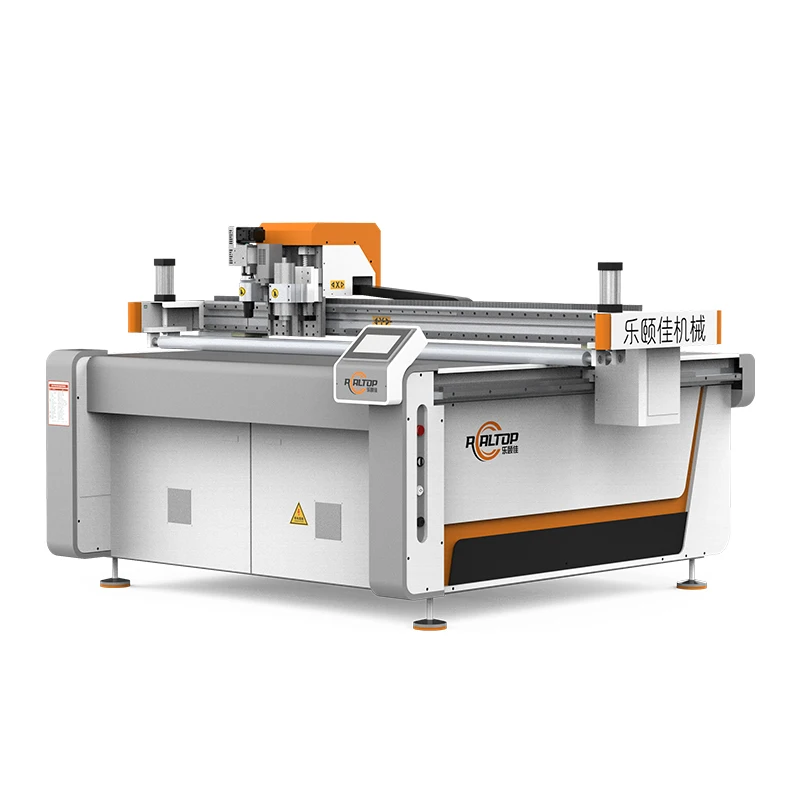
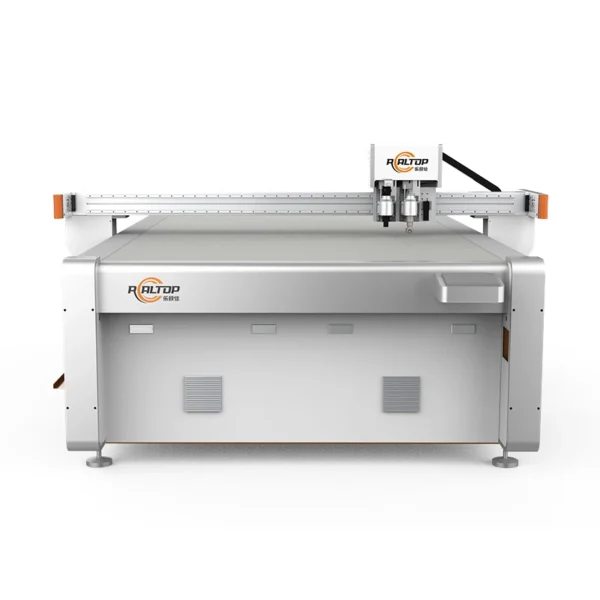
Tool Head Matched to Material — Oscillating, drag, pneumatic and V-cut knife options are selected per composite thickness and edge requirement, so you are not forced into a single cutting method for every insulation board you run.
Technical Specifications
| Parameter | Value |
|---|---|
| Model | RT-D2516 / RT-S2516 |
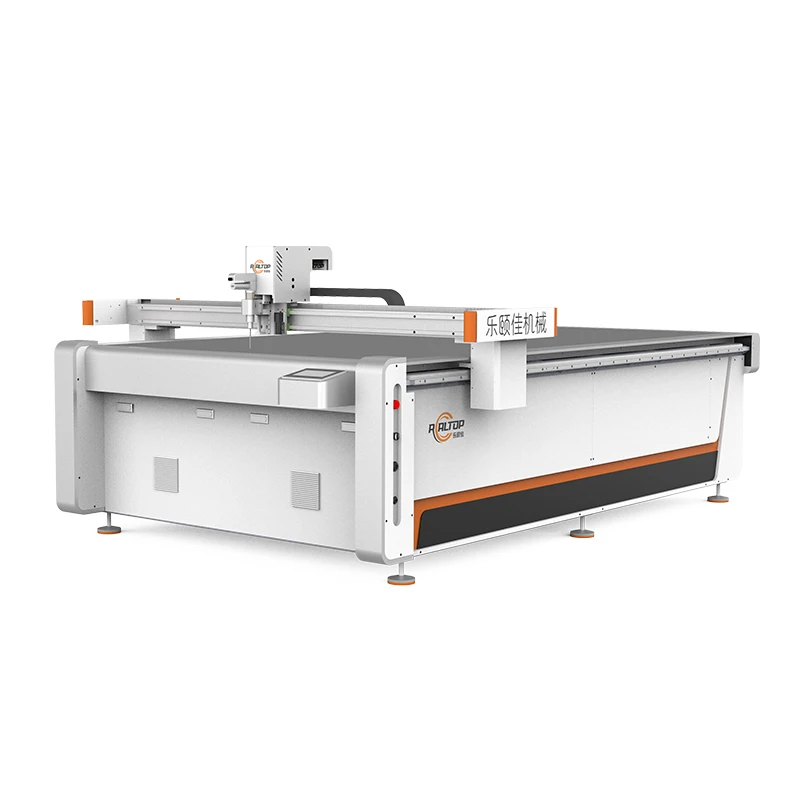
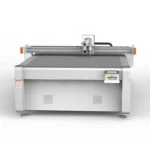
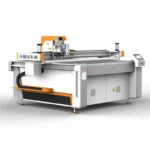
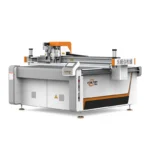
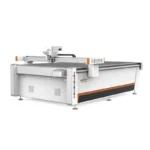
| Product Type | CNC Oscillating Knife Cutting Machine |
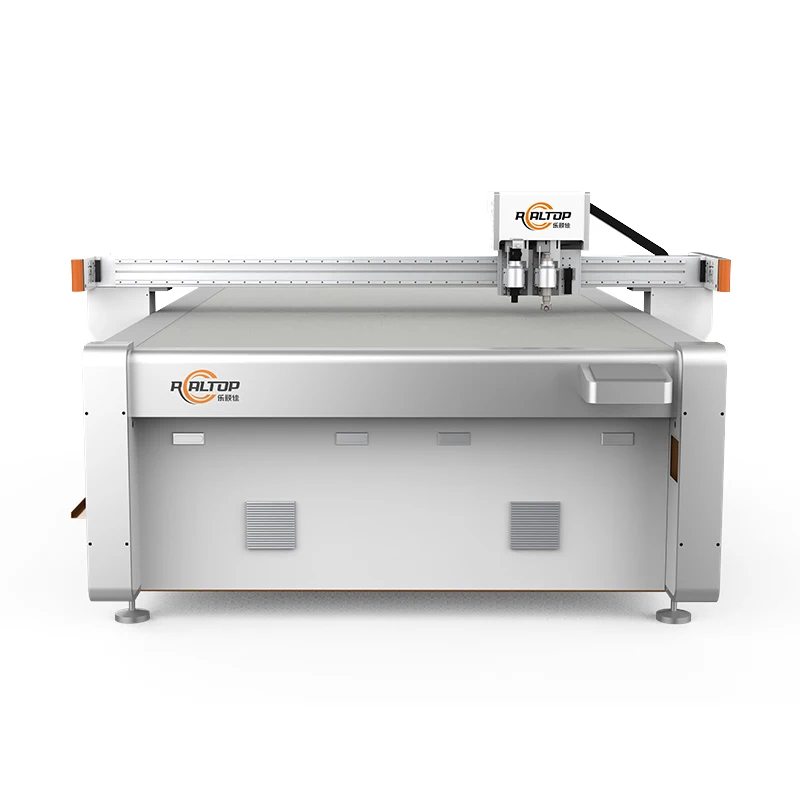
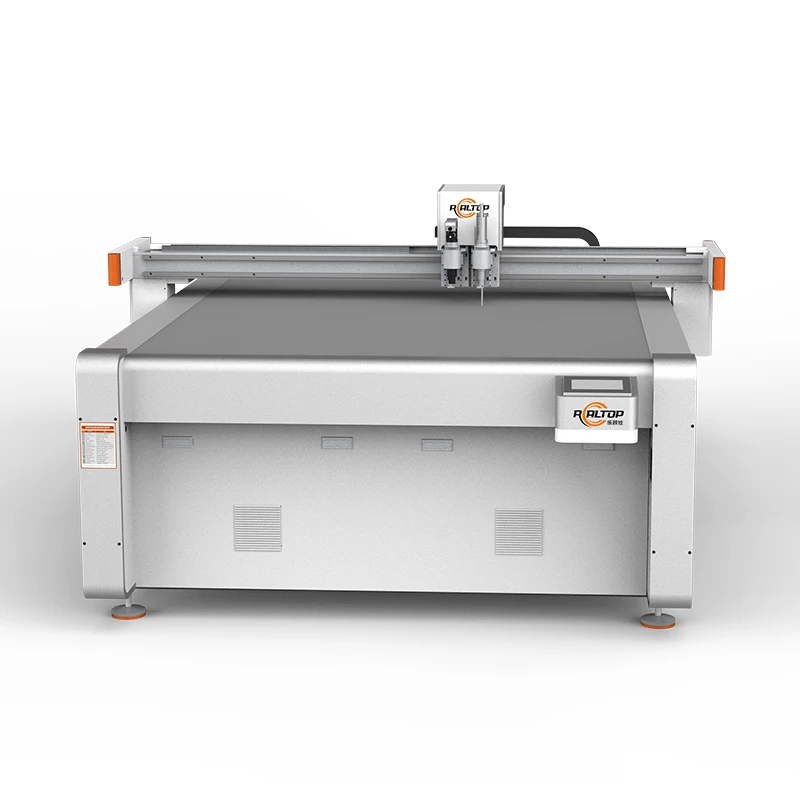
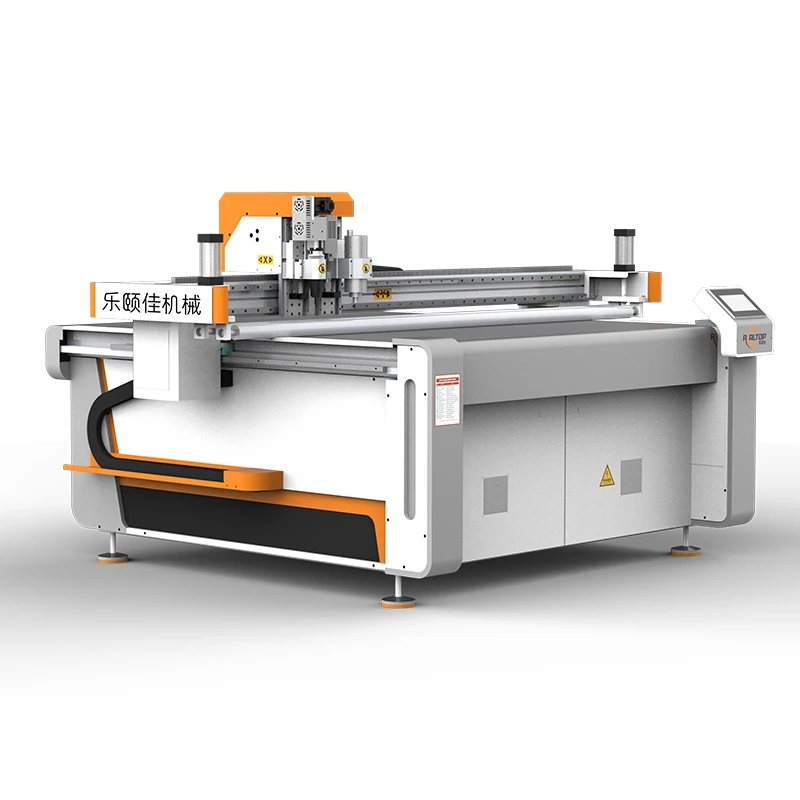
| Working Area | 1600 × 2500 mm |
| Machine Size | 3450 × 2300 × 1250 mm |
| Rated Power | 9 kW |
| Table Type | Flat magnesium-aluminum alloy with PVDF fluorocarbon coating |
| Vacuum Pump | 7.5 kW, integrated aviation aluminum shell with built-in silencer sponge |
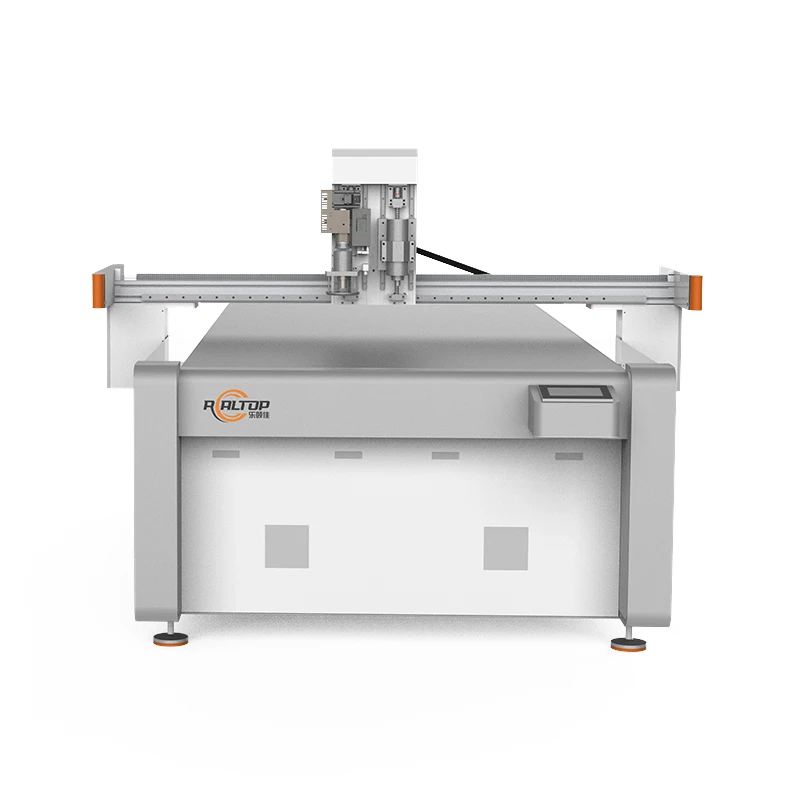
| Tool Head Options | Swiss imported knife (vibration full/half cutting, cursor location), oscillating knife, pneumatic knife, high-power vibrating knife, circular knife, V-cutting knife, drag knife, creasing wheel, dotted line knife, punching, brush |
| Cutting Thickness | Up to 100 mm (varies with material) |
| Translational Velocity | 800–2000 mm/s |
| Cutting Speed | 200–800 mm/s (material dependent) |
| Repeated Accuracy | ≤0.1 mm |
| Transmission System | Digital servo motor, linear guide, synchronous belt, ball screw |
| Servo Motor | Delta (Panasonic optional) |
| Instruction Format | HP-GL compatible |
| Voltage | 380V ±10% |
| Conveyor Belt | Germany imported |
| Safety Devices | Infrared sensors, anti-collision, emergency stop |
| Visual Positioning Options | Small CCD camera mark point positioning, panoramic camera recognition, projection positioning |
| Standards | CE declaration where applicable |
Application Suitability
| Application | Material or Output |
|---|---|
| Insulation board fabrication | Mineral wool, rock wool, rigid PU foam, XPS, EPS panels |
| Gasket and seal production | Rubber sheet, silicone, PTFE, compressed fiber |
| Automotive interior trimming | PVC composite, soft glass, sponge-backed leather |
| Footwear and leather goods | Sponge composite leather, flexible hide, synthetic uppers |
| Signage and packaging samples | Corrugated board, foam core, honeycomb composite |
What a "Cutting Thickness" Figure Hides About Your Material
The stated 100 mm maximum depends entirely on material density, fiber structure and the tool head selected — not a universal guarantee across every insulation board.
When buyers compare CNC oscillating knife cutting machine specifications from different suppliers, cutting thickness is often the first number they check and the first number that disappoints on arrival. A rigid PU foam board at 50 mm cuts clean with a standard oscillating knife, but the same thickness in compressed mineral wool demands a completely different blade profile, oscillation frequency and feed rate. The density and fiber direction of composite insulation materials vary between manufacturers, and those variations change the cutting forces enough to affect edge quality and hold-down stability [NEED_CITE: material density variation in composite insulation panels].
Tool Head Selection Drives Edge Quality
A single composite cutting job may involve layered materials — a foil-faced PU panel bonded to a fiberglass scrim, for instance. The Swiss imported knife head on the RT-D2516/RT-S2516 handles full and half cutting passes, which allows scored fold lines on packaging composites without penetrating the full depth. For denser insulation boards like phenolic foam, the high-power vibrating knife applies greater downward force and wider oscillation amplitude. Drag knife and creasing wheel tools cover thinner gasket and carton-sample work on the same table, eliminating the need for a second machine when product lines span both rigid composites and flexible sheet stock.
Vacuum Table Construction and Zoned Hold-Down
Composite insulation boards warp when released from their original packaging, and uneven surfaces defeat flat-bed cutting accuracy. The magnesium-aluminum alloy table surface with PVDF fluorocarbon coating resists the resin transfer and adhesive residue common in composite panel work. Anodic and hard oxidation treatments maintain flatness across the 1600 × 2500 mm working area over repeated production cycles. The 7.5 kW vacuum pump generates sufficient negative pressure to hold low-density foam boards flat, while the built-in silencer sponge inside the aviation aluminum pump housing reduces operational noise in enclosed workshops. Proper zoning of the vacuum table prevents small nested parts from lifting during the final cuts of a nesting pattern [NEED_CITE: vacuum zoning requirements for small-part CNC cutting].
Reading the Specifications That Matter Beyond Working Area
Working area defines the maximum sheet size the RT-D2516/RT-S2516 accepts, but repeated accuracy at ≤0.1 mm is what determines whether cut gaskets and insulation inserts actually fit their assemblies. The digital servo motor and ball screw transmission maintain positional accuracy across long cutting paths, which matters when a single nesting layout runs dozens of parts from one board. Cutting speed at 200–800 mm/s varies with material — a figure that only becomes meaningful once your specific composite has been tested, because fiber-reinforced insulation boards demand slower passes than unreinforced foam at the same thickness. The HP-GL compatible instruction format accepts nesting files from most standard CAD/CAM packages used in composite fabrication.
The Cost of Skipping Material-Specific Configuration
A machine configured for rigid foam that is then asked to cut mineral wool at production speed will produce frayed edges and inconsistent part dimensions. The wrong oscillation frequency causes the blade to deflect inside fibrous composites, and the vacuum table — even at full pump capacity — cannot compensate for a tool head that is pushing material upward instead of shearing through it. These failures show up only after installation, when the machine is already on the workshop floor and return shipping is no longer practical. Requesting a sample cutting test on your exact material before order confirmation is the only reliable way to verify that the specified tool head, vacuum pressure and feed rate produce acceptable edges [NEED_CITE: importance of pre-order sample cutting in CNC equipment procurement].
What Separates This Source from a Trading Company Listing
The design team covers both knife and laser cutting technologies, so the recommendation for your composite material is based on which cutting method actually suits the stock — not on whichever machine happens to be in inventory. Every RT-D2516/RT-S2516 ships with a tool head and table configuration list that names the exact knife type, oscillation head and vacuum zoning chosen for your application. CCD camera positioning is offered as an option — small mark-point, panoramic or projection — and its capability is demonstrated on your printed layout before the order is finalized. Voltage, control language and plug type are confirmed in writing so that 380V ±10% compatibility matches your facility’s electrical supply. Factory testing runs your material, not a generic sample.
Documentation & Verification
- Machine specification sheet listing every selected tool head and optional positioning system
- Electrical schematic with confirmed voltage, frequency and plug type for your facility
- Sample cutting report on your composite material documenting blade type, speed and edge result
- Factory test record showing repeated accuracy measured on your nesting pattern
- Software license and file format compatibility note for your existing CAD/CAM workflow
- Spare parts list matched to the configured knife heads and consumable blades
Installation, Commissioning & Support
- Power supply requires a dedicated 380V ±10% circuit rated for the 9 kW total draw plus vacuum pump
- Floor space must accommodate the 3450 × 2300 mm machine footprint with clearance for material loading on all sides
- Magnesium-aluminum vacuum table arrives pre-assembled; conveyor belt and pump housing connect on site
- First-run commissioning includes parameter calibration for your specific composite thickness and density
- Operator training covers tool head changeover, CCD camera calibration and nesting file import procedures
- Consumable blade inventory and oscillation head maintenance intervals documented in the operation manual
Before You Request a Quote
Share the exact composite material you cut — including density, thickness range, fiber content and any facing or lamination layers — along with your typical sheet size and daily volume. Specify your facility voltage and frequency, preferred control interface language, and whether your existing nesting software outputs HP-GL or a different format. If your material is not a standard insulation board, send a physical sample so the cutting test reflects your actual production conditions.
Frequently Asked Questions
Q: How do you select the right oscillating or drag knife head for my composite material thickness?
A: The selection depends on material density, fiber structure and whether the composite includes laminated facings. A sample cutting test on your actual material determines the correct blade profile, oscillation frequency and feed rate. The configuration is documented before the machine is built.
Q: Does the CCD camera reliably track printed marks at production cutting speed?
A: Small mark-point and panoramic camera options are available. Reliability depends on print contrast, mark size and ambient lighting in your workshop. We test with your printed layout at the cutting speed your material requires, not at the machine’s maximum translational velocity.
Q: Is the vacuum table zoning sufficient to hold small nested parts flat?
A: The flat magnesium-aluminum table provides uniform suction, but zoning effectiveness depends on part size and material porosity. Low-density insulation foam may require adjusted pump pressure or hold-down strategies for parts below a certain footprint. Your nesting pattern is tested during the sample cutting stage.
Q: Can I send my own material for a cutting test before placing an order?
A: Yes. The standard sales process includes sample cutting on your composite material before order confirmation. The test documents the tool head, cutting speed, edge quality and dimensional accuracy achieved, so you can evaluate results before committing.


商品评价
Clear filtersThere are no reviews yet.