





Fast Shipping
Carrier information

20k products
Payment methods

24/7 Support
Unlimited help desk

2-day Delivery
Track or off orders
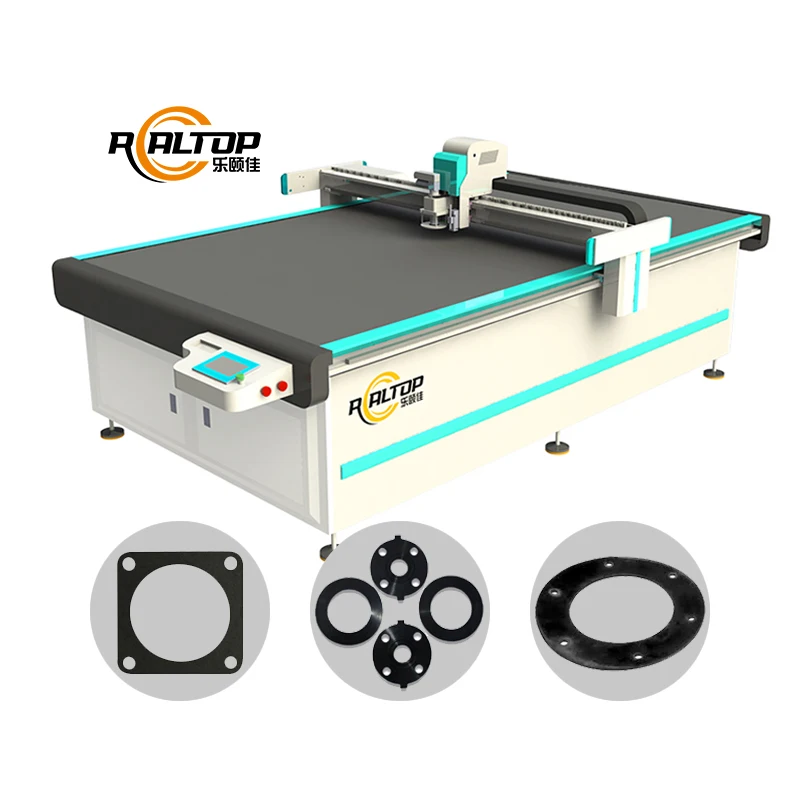
Configured Per Material — Each RT-D2516/RT-S2516 leaves the Jinan workshop with a documented sample-cut report on the buyer’s own gasket stock, proving edge quality before the crate closes.
Technical Specifications
| Parameter | Value |
|---|---|
| Model | RT-D2516/RT-S2516 |
| Product Type | CNC Oscillating Knife Cutting Machine |
| Working Area | 1600 × 2500 mm |
| Machine Footprint | 3450 × 2300 × 1250 mm |
| Rated Power | 9 kW |
| Voltage | 380V ± 10% |
| Translational Velocity | 800 – 1200 mm/s |
| Repeated Accuracy | ≤ 0.1 mm |
| Cutting Thickness Range | 20 – 80 mm (basis not stated in source — confirm material type and density) |
| Servo Motor | Delta (Panasonic optional) |
| Transmission | Imported ball screw, linear guide, synchronous belt |
| Vacuum Pump | 7.5 kW, aviation-aluminum shell with silencer sponge |
| Table Surface | Magnesium-aluminum alloy, PVDF fluorocarbon powder coat, anodic and hard oxidation |
| Instruction Format | HP-GL compatible |
| Safety | Infrared sensor curtain, anti-collision, emergency stop |
Application Suitability
| Application | Material or Output |
|---|---|
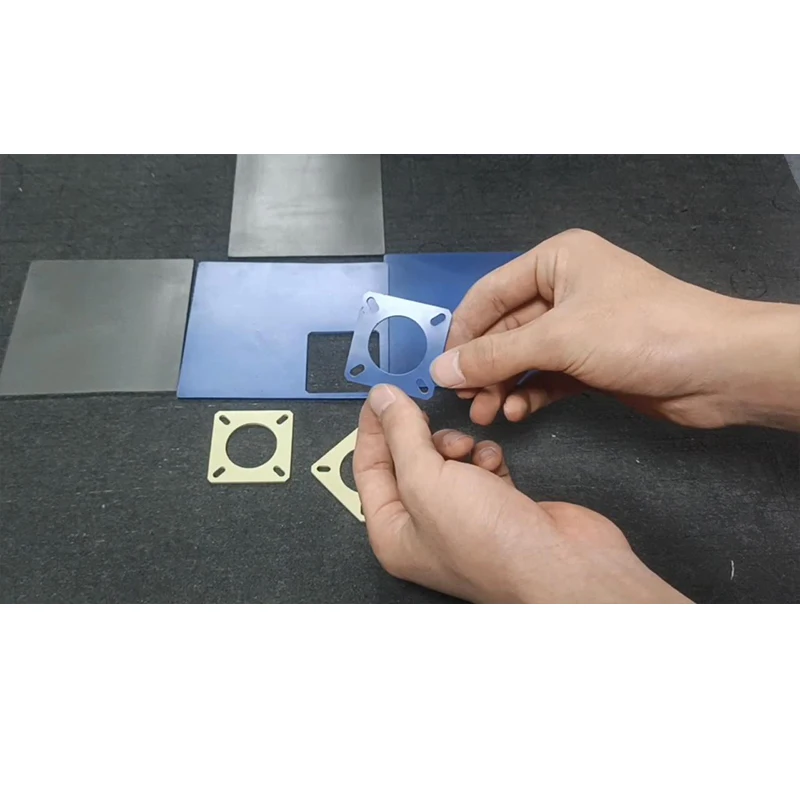
| Automotive sealing gasket fabrication | Nitrile rubber, silicone, PTFE and composite sheet up to 80 mm nominal |
| Industrial flange and pump gasket cutting | Fiber-reinforced rubber, cork-rubber, aramid composite |
| HVAC and plumbing seal production | EPDM, closed-cell sponge, PVC foam board |
| Electrical enclosure gasket runs | Silicone sponge, conductive carbon-loaded elastomer |
| Aftermarket automotive interior trim | Open-cell PU foam, non-woven acoustic felt |
What "Cutting Thickness 20 – 80 mm" Actually Means for Gasket Buyers
The published range assumes a specific material density and durometer; the number you can trust is the one printed on a sample-cut report from your own stock.
I once shipped a CNC oscillating knife cutting machine to a sealing supplier who sent back photos of shredded PTFE edges. We had validated the tool path on mid-hardness nitrile rubber at the factory, and PTFE behaves nothing like rubber under a vibrating blade. After two days of line downtime we re-ran the sample with a high-power oscillating head and lower stroke frequency, which solved the issue — but the lesson stuck. Thickness claims mean little without material context [NEED_CITE: material durometer and blade stroke relationship in oscillating knife cutting]. Whenever a buyer quotes gasket specs, I ask for a roll or sheet sample before we confirm the tool head.
Matching Tool Head to Gasket Material
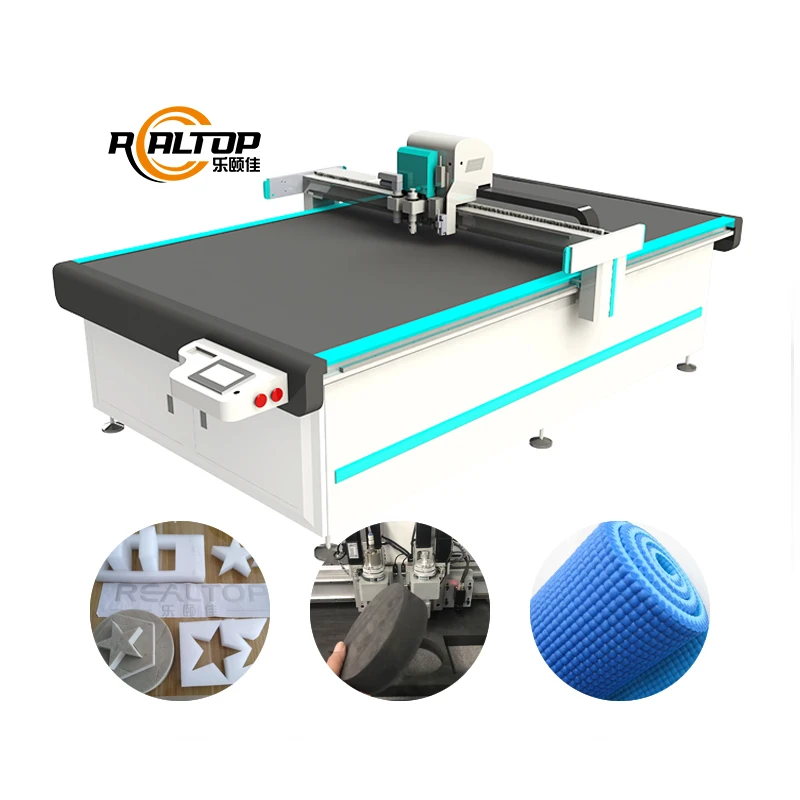
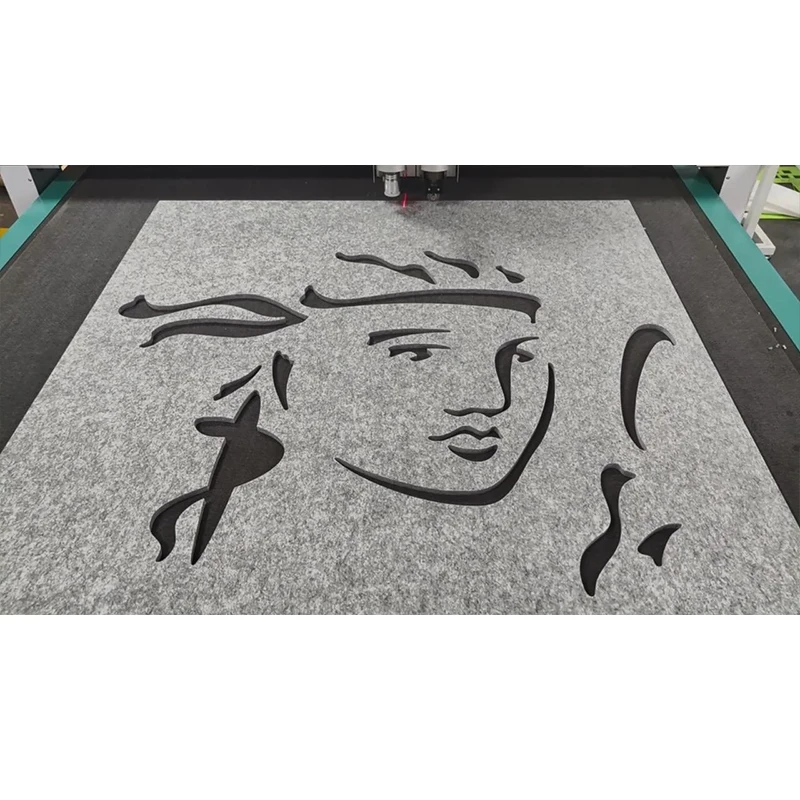
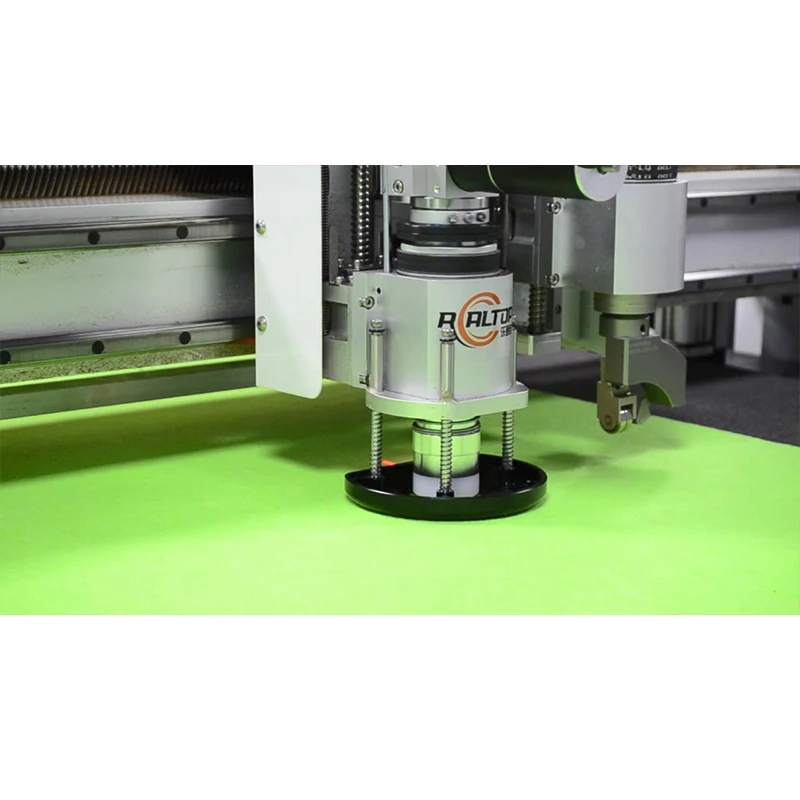
The multifunctional head on the RT-D2516/RT-S2516 accepts Swiss-imported blades across several tool types — oscillating full and half cutting, drag knife, circular knife, V-cutting, creasing wheel, punching and brush. Soft, compressible materials like closed-cell sponge respond well to a high-frequency oscillating stroke, while dense fiber-reinforced gasket sheet often needs a slower, higher-amplitude vibrating knife to avoid delamination. Getting this choice right at order stage prevents the ragged edges that force secondary trimming.
Vacuum Zoning for Small Gasket Profiles
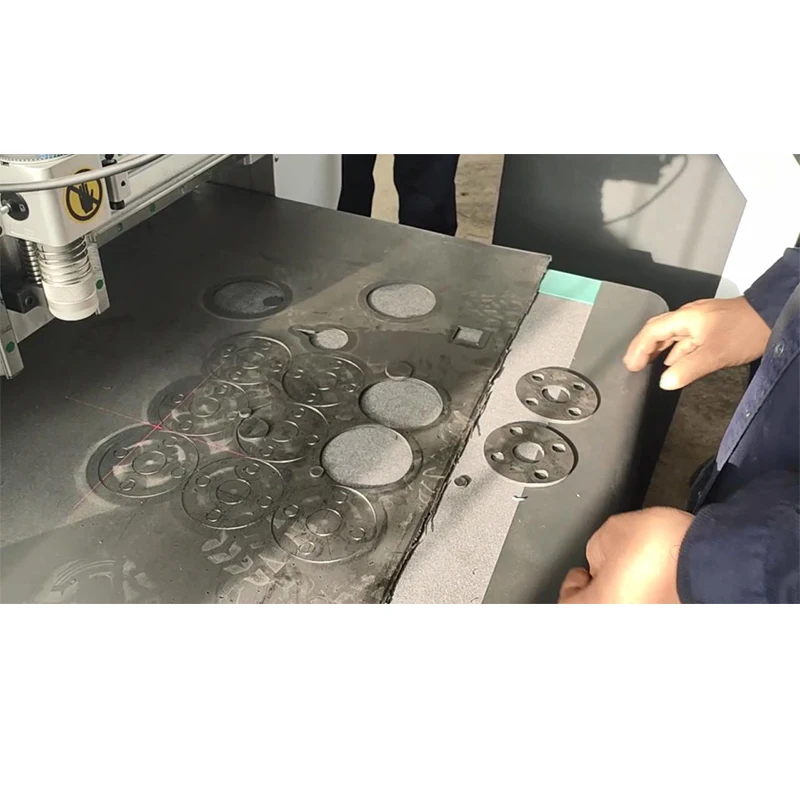
Gasket nests often contain dozens of small O-rings, flange seals and custom shapes that lift under blade drag if the table suction is uneven. The magnesium-aluminum alloy platen on this CNC oscillating knife cutting machine is finished with PVDF fluorocarbon powder and hard anodizing to keep the surface flat and corrosion-resistant. A 7.5 kW vacuum pump with integrated silencer holds the sheet across the 1600 × 2500 mm area, and zoning can be discussed during specification so small parts stay pinned even at 1200 mm/s traverse speed.
How Drive Precision Affects Gasket Tolerances
Repeated accuracy of ≤ 0.1 mm is achieved through imported ball screws, linear guides and digital servo motors. For an automotive supplier cutting multi-layer composite gaskets that must mate with machined flanges, this repeatability keeps bolt-hole positions inside drawing tolerance across long production runs. Digital servo feedback also reduces the drift that cheaper stepper-driven tables show after hours of continuous vibration [NEED_CITE: servo versus stepper positional drift in continuous CNC operation].
The Cost of Skipping the Material Sample
Choosing a tool head based only on sheet thickness is one of the most common reasons gasket buyers re-order blades within weeks. A drag knife that slices cleanly through 3 mm cork-rubber will tear 6 mm aramid composite, and a standard oscillating head that handles nitrile rubber can crush low-density silicone sponge. These mismatches surface only after installation, when the buyer is already committed to a production schedule, and the resulting scrap and downtime outweigh any upfront savings on configuration [NEED_CITE: hidden cost of incorrect tool head selection in digital knife cutting].
Why Configure This Machine at Our Jinan Workshop
In-house design and production of both knife and laser cutting platforms lets us match the cutting method to the gasket material rather than forcing one technology across every job. Tool head and table zoning are specified per material type and daily volume, and CCD or panoramic camera positioning can be added when printed registration marks are part of the workflow. Software compatibility — HP-GL import, nesting routines and the control language — is confirmed before the order reaches production. Every unit ships after a factory test on the buyer’s actual gasket stock, not on generic demo rubber.
Documentation & Verification
- Machine specification sheet listing chosen tool heads and vacuum zoning layout
- Electrical schematic with 380V ± 10% supply diagram and breaker sizing
- Sample cutting report on your gasket material showing edge and tolerance results
- Tool head and table configuration list signed off before production starts
- HP-GL and file format compatibility note covering your existing nesting software
- Packing photographs of the RT-D2516/RT-S2516 before crate closure
Installation, Commissioning & Support
- Dedicated 380V circuit sized for 9 kW machine plus 7.5 kW vacuum pump
- Level floor with 3450 × 2300 mm clearance plus operator access on three sides
- Infrared sensor curtain and emergency stop verified during first power-up
- Tool head stroke and vacuum zone mapping tuned on your gasket stock
- Operator training on HP-GL import, nesting and blade change routines
- Spare oscillating and drag knife blades included for initial production run
Before You Request a Quote
Send us the gasket material data sheet, including durometer, density and the thickest sheet you plan to run. Tell us your daily cut volume and whether your drawings arrive as HP-GL, DXF or another format. Confirm your workshop voltage and the language your operators prefer on the control screen so we lock these details before the RT-D2516/RT-S2516 enters build.
Frequently Asked Questions
Q: How do I pick the right tool head for my gasket material?
A: Share a material sample and thickness range; we run trial cuts with oscillating, drag and high-power vibrating heads, then document which produces the cleanest edge without delamination. The winning tool head is written into the configuration list before the machine ships.
Q: Will small gasket parts lift off the table during cutting?
A: The 7.5 kW vacuum pump and magnesium-aluminum platen are zoned to keep suction even across the 1600 × 2500 mm area. We verify hold-down on your actual nest layout during the sample-cut stage so no small seal drifts under the blade.
Q: Can the CCD camera keep up with printed marks at full traverse speed?
A: Small CCD mark-point, panoramic camera and projection positioning are all available options. We test recognition on your printed gasket sheet at production speed and record hit rate in the sample report before confirming the positioning package.
Q: How is voltage and control language handled before shipment?
A: The electrical schematic is confirmed against your facility supply at order stage. Control language — English, Russian, Italian, Chinese or a custom option — is loaded and verified during factory test so operators see the correct interface on day one.
Q: What if my gasket material cuts differently than your factory demo stock?
A: That is exactly why we insist on sample cutting with your material before commitment. Edge quality, blade life and cycle parameters are recorded in a signed report, and any needed tool head swap is completed before the RT-D2516/RT-S2516 is crated.


商品评价
Clear filtersThere are no reviews yet.