



Fast Shipping
Carrier information

20k products
Payment methods

24/7 Support
Unlimited help desk

2-day Delivery
Track or off orders
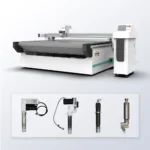
Tool Head Matched to Material — Configuration locked after sample cutting on the buyer’s actual nonwoven or surgical gown composite, preventing ragged edges or crushed layers at production speed.
Technical Specifications
| Parameter | Value |
|---|---|
| Model | RT-D2516/RT-S2516 |
| Product Type | CNC Oscillating Knife Cutting Machine for Surgical Gown and Nonwoven Fabric |
| Working Area | 1600×2500mm |
| Overall Dimensions (L×W×H) | 3450×2300×1250mm |
| Rated Power | 9kW |
| Voltage | 380V±10% (50/60Hz to be confirmed for target market) |
| Table Type | Flat working table or auto feeding conveyor |
| Tool Head Options | Oscillating knife, pneumatic knife, high-power vibrating knife, circular knife, V-cutting knife, drag knife, creasing wheel, dotted line knife, punching, brush |
| Cutting Speed | 200-800mm/s (basis to be confirmed — varies with material, thickness and ply count) |
| Translational Velocity | 800-2000mm/s |
| Cutting Thickness | Up to 100mm (varies with material) |
| Repeated Accuracy | ≤0.1mm |
| Transmission System | Digital servo motor, linear guide, synchronous belt, ball screw |
| Linear Guide | Taiwan Hiwin rail |
| Servo Motor | Delta (optional: Panasonic) |
| Vacuum Pump | 7.5kW, aviation aluminum shell with built-in silencer sponge |
| Vacuum Table | Magnesium-aluminum alloy, fluorocarbon PVDF powder spraying, anodic oxidation, hard oxidation |
| CCD / Vision Options | Small CCD camera mark point positioning, panoramic camera recognition, projection positioning |
| Safety Device | Infrared induction blocking, anti-collision beam sensors, emergency stop |
| Control System | Touch screen control panel |
| Language Options | English, Russian, Italian, Chinese (other languages customizable) |
| Software & File Formats | HP-GL compatible, PLT, DXF, AI; automatic nesting software |
| Conveyor Belt | Germany imported |
| Frame Construction | Thick-walled seamless steel structure, high-temperature tempering, CNC machining center finish |
| Warranty | 1 year (parts provided free; buyer pays shipping; on-site engineer available at buyer’s cost) |
Application Suitability
| Application | Material or Output |
|---|---|
| AAMI Level 3 surgical gown production | Multi-layer nonwoven fabric panels and composite barrier materials |
| Medical curtain and drape cutting | SMS, SMMS and spunbond-meltblown nonwoven laminates |
| Disposable protective garment manufacturing | PP, PE and coated nonwoven sheets in single or multi-ply layups |
| Garment and soft furnishing cutting | Woven textile, knit fabric, carpet and sponge |
| Footwear and luggage component cutting | Leather, PU, EVA, synthetic uppers and lining materials |
| Automotive interior soft trim | Composite foam, headliner fabric and gasket material |
| Packaging and graphic sample making | Corrugated cardboard, sticker, film and foam board |
What "Cutting Thickness Up to 100mm" Actually Means for Nonwoven Producers
Cutting depth is only valid when the correct tool head, vacuum zoning and blade stroke are matched to the buyer’s specific material and ply count.
Many buyers see a headline thickness figure and assume the machine will handle their surgical gown layup without further discussion. In practice, a nonwoven stack that compresses under vacuum behaves differently from a rigid foam board of the same nominal depth. When the tool head is selected only by catalog default rather than by material trial, the result is frayed edges on SMS fabric or incomplete cuts through coated barrier layers. I have seen production lines lose half their expected throughput because the oscillating knife stroke was set for a single ply while the operator was running a four-ply layup. The only reliable way to confirm real cutting performance is a sample trial on the exact material before the order is placed [NEED_CITE: material-specific cutting validation in digital knife cutting systems].
Multi-Tool Head Configuration for Nonwoven and Composite Materials
The RT-D2516/RT-S2516 supports oscillating knife, pneumatic knife, drag knife, circular knife, V-cutting knife, creasing wheel and punching tool heads on a single gantry. For nonwoven surgical gown fabric, the oscillating knife handles most single and multi-ply layups with clean edge separation. When the material includes a coated film layer or a denser laminate, the high-power vibrating knife provides the additional downforce needed. Drag knife and creasing wheel options cover marking and folding line work on packaging samples produced in the same facility, giving a CNC oscillating knife cutting machine for nonwoven fabric the flexibility to cover adjacent production tasks.
CCD Contour Recognition on Printed Surgical Gown Panels
Surgical gown and drape production often requires cutting around printed registration marks or pre-printed panel outlines. The system offers small CCD camera mark point positioning, panoramic camera recognition and projection positioning as selectable options. Panoramic recognition suits large-format printed nonwoven sheets where multiple panel outlines appear on a single layup. Projection positioning lets the operator visually verify alignment before the cut begins, reducing material waste on expensive barrier fabrics [NEED_CITE: CCD positioning accuracy standards for digital cutting tables].
How Vacuum Table Design Affects Edge Quality on Lightweight Fabric
The magnesium-aluminum alloy vacuum table on this machine uses PVDF powder spraying and anodic oxidation for a flat, wear-resistant surface. A 7.5kW pump with aviation aluminum shell and built-in silencer sponge provides suction across zoned sections. For small nonwoven pattern pieces, zoning lets the operator activate only the area under the cut, concentrating holding force where it matters. Without this, lightweight SMS fabric lifts at the trailing edge during high-speed oscillating knife passes, producing ragged or shifted cuts that fail AAMI panel dimension tolerances. The rep*ear guides and Delta servo drives, is only achievable when the material stays firmly in place.
The Hidden Cost of Specifying by Working Area Alone
Buyers who choose a cutting table based only on bed size often discover that the default tool head cannot handle their specific nonwoven weight or ply configuration. A machine delivered without material-specific configuration may require weeks of blade and stroke adjustment on the factory floor before achieving acceptable edge quality. Vacuum zones left unconfigured for small parts cause fabric lift and dimensional drift, forcing operators to slow the cutting speed well below rated values. Electrical mismatches discovered after shipment — wrong voltage or frequency — add further delay and cost [NEED_CITE: consequences of unspecified electrical standards in machinery exports].
Why Buyers Source This CNC Knife Cutting Equipment From Jinan
In-house design and production cover both the knife cutting head and the vacuum table system, so tool head selection is matched to the buyer’s material rather than limited to a single default option. Every configuration is validated through sample cutting on the buyer’s own nonwoven or surgical gown fabric before the order is finalized. Software compatibility with HP-GL, PLT, DXF and AI formats is confirmed against the buyer’s existing nesting workflow, preventing file import failures after delivery. Voltage, frequency, plug type and control panel language are documented and locked before production begins. The frame uses thick-walled seamless steel with high-temperature tempering and CNC machining center finish for long-term geometric stability.
Documentation & Verification
- Factory test record showing cut quality on your nonwoven material and ply count
- Electrical schematic with voltage, frequency and plug type confirmed for your market
- Tool head and vacuum table configuration list specified per your material type
- Software licence and file format compatibility note against your nesting workflow
- Sample cutting report with edge quality photos on your actual surgical gown fabric
- Spare parts list with part numbers for oscillating knife blades and vacuum pump consumables
Installation, Commissioning & Support
- 9kW rated power requires a dedicated 380V±10% circuit with confirmed 50 or 60Hz frequency
- 3450×2300mm footprint needs level concrete floor with clearance for conveyor feed and material loading
- 7.5kW vacuum pump connects via dedicated line; silencer sponge reduces workshop noise at source
- Touch screen control panel set to your chosen language during commissioning before operator training
- Taiwan Hiwin linear guides and ball screws inspected and lubricated during initial parameter calibration
- One-year warranty covers parts replacement; on-site engineer support available at buyer’s travel cost
Before You Request a Quotation
Tell us the exact nonwoven material type, weight in GSM, and whether you run single-ply or multi-ply layups. Share your daily panel volume and whether you need CCD contour recognition for printed marks. Confirm your local voltage, frequency and the control panel language your operators require. If you have an existing nesting software workflow, send a sample file so we can verify format compatibility before building the machine.
Frequently Asked Questions
Q: How do I confirm which tool head is correct for my nonwoven fabric thickness and ply count?
A: We run sample cuts on your actual material using oscillating knife, pneumatic knife and high-power vibrating knife options. The trial confirms edge quality, cutting speed and whether the vacuum hold-down is sufficient at your production ply count. Results are documented in a sample cutting report before you commit to an order.
Q: Can the CCD camera track printed marks on surgical gown material at full production speed?
A: Panoramic camera recognition and mark point CCD are both available. The correct option depends on your print layout and panel density. We test recognition on your printed nonwoven sheet during sample trials to confirm that tracking keeps pace with your target cutting speed without misregistration.
Q: Is the vacuum table zoning sufficient to hold small nonwoven parts without material lift?
A: The magnesium-aluminum alloy table is divided into zones activated independently. During your sample trial, we configure zoning for your smallest pattern piece and verify that fabric edges remain flat through the full cutting pass at production translational velocity.
Q: Will the software accept my existing nesting files and pattern workflow?
A: The system supports HP-GL, PLT, DXF and AI formats with automatic nesting. Before order confirmation, we request a sample file from your current workflow and verify import, nesting output and toolpath generation so there are no compatibility issues at delivery.
Q: Are voltage, plug type and control language confirmed before the machine ships?
A: Yes. Your electrical schematic specifies 380V±10% with the frequency and plug type for your market. The touch screen control panel is set to your chosen language — English, Russian, Italian, Chinese or another custom option — and verified during the factory test before packing.


商品评价
Clear filtersThere are no reviews yet.