








Fast Shipping
Carrier information

20k products
Payment methods

24/7 Support
Unlimited help desk

2-day Delivery
Track or off orders
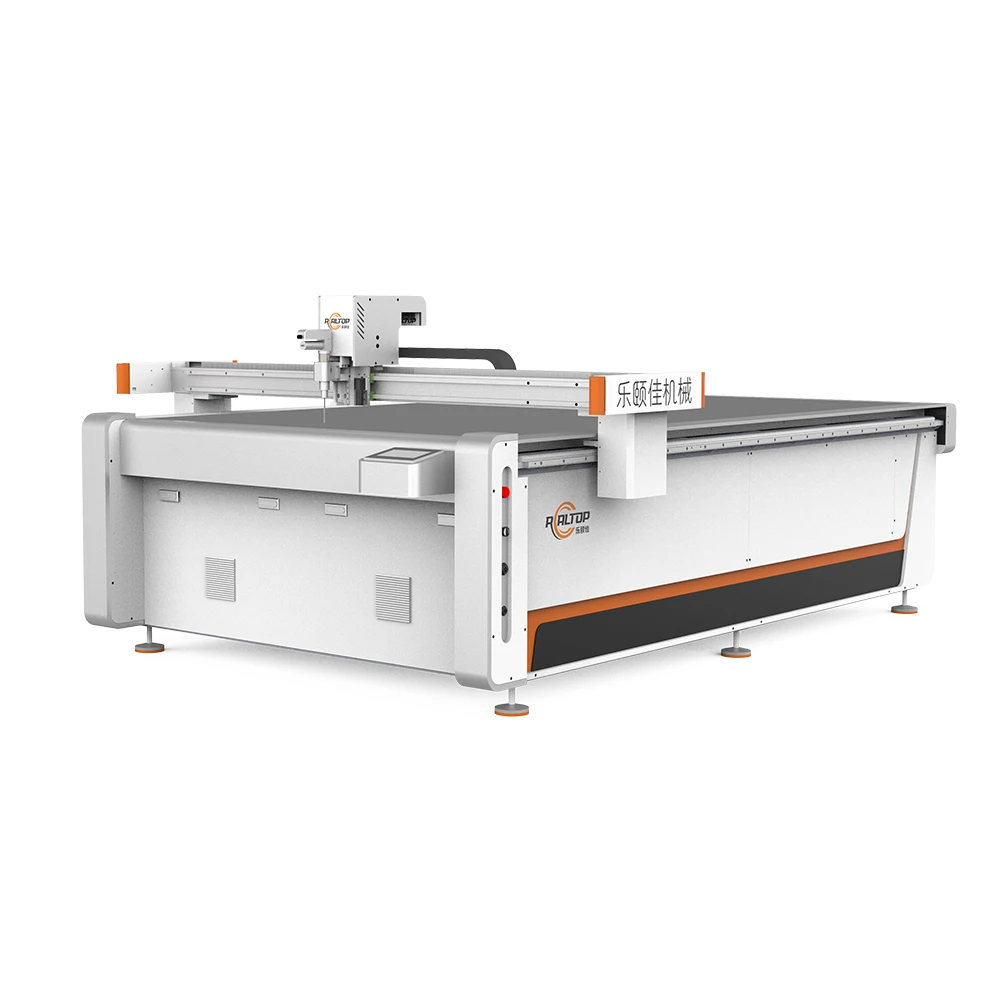
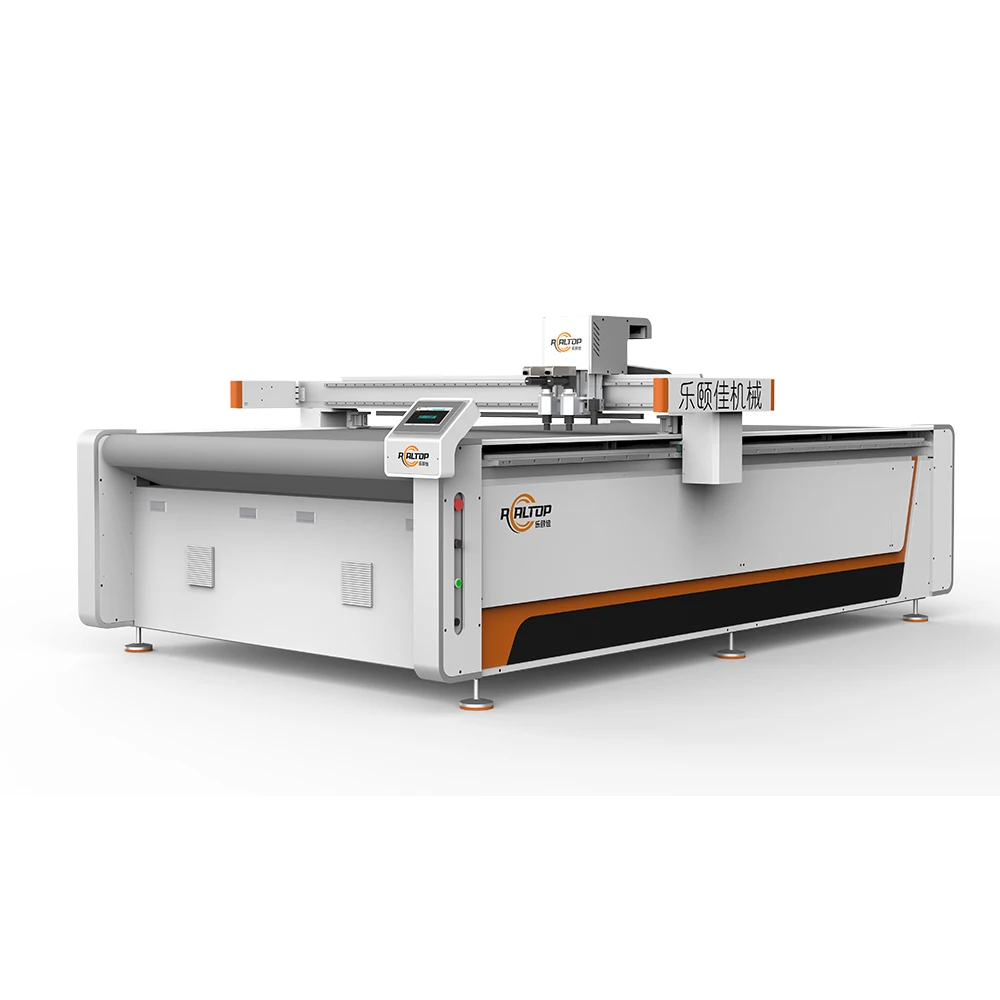
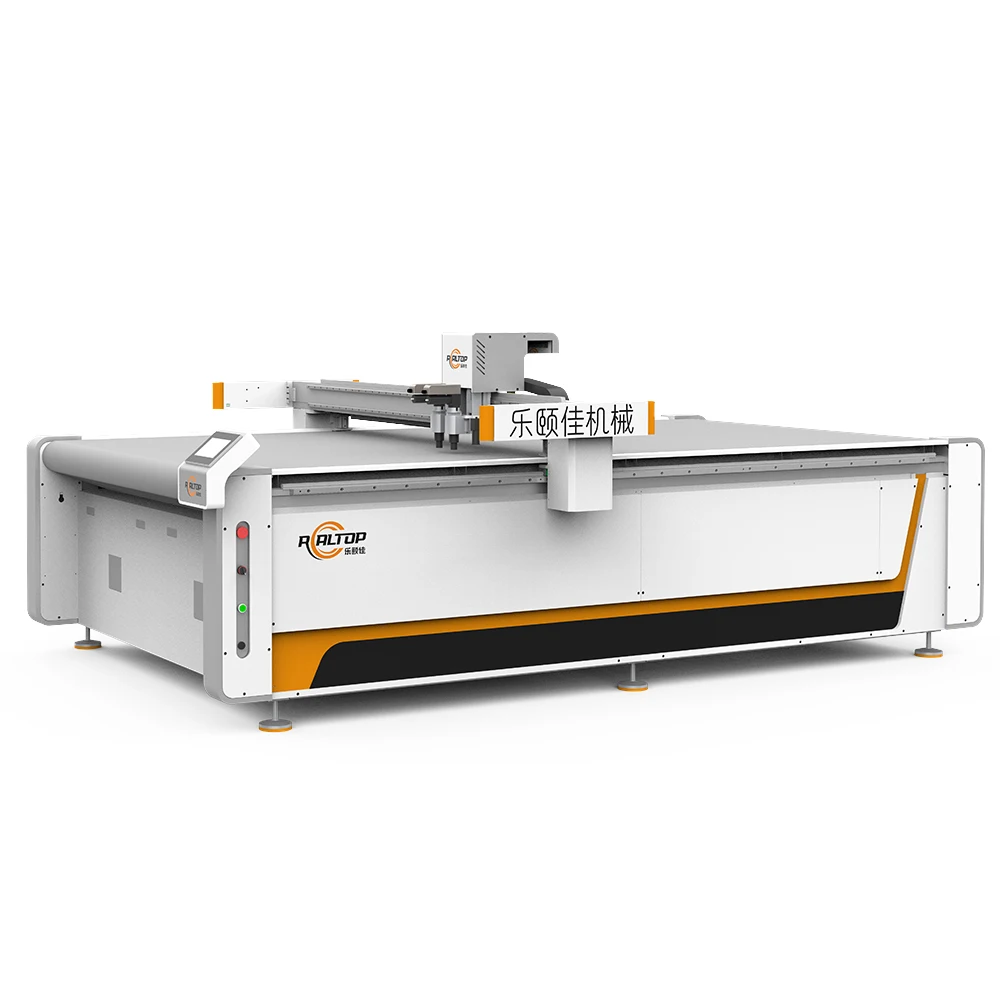
Multi-tool configuration per material — Each 1625 flatbed cutter leaves our Jinan workshop with its tool head list, vacuum zoning map, and CCD calibration logged against the buyer’s actual corrugated grade, not a generic catalogue promise.
Technical Specifications
| Parameter | Value |
|---|---|
| Product Type | CNC Oscillating Knife Cutting Machine |
| Model | 1625 |
| Working Area | 1600 × 2500 mm |
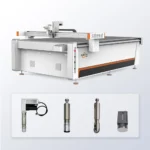
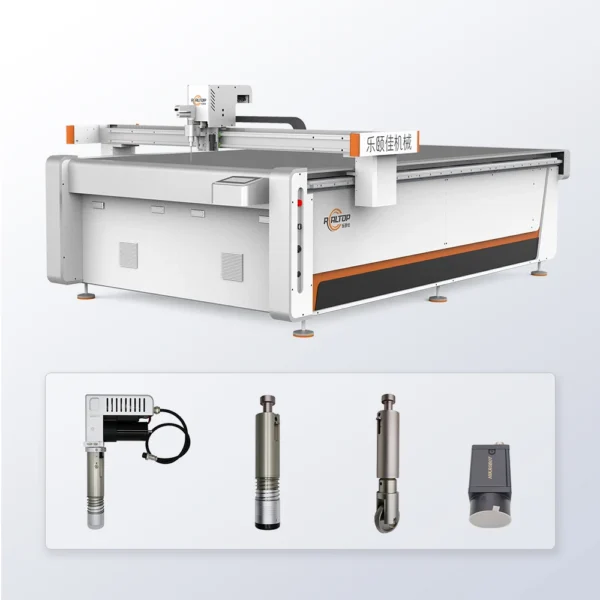
| Tool Head Options | Oscillating knife, Driven rotary knife, Creasing wheel, Kiss cutting tool, Pneumatic knife, Milling tool, V-groove knife |
| Positioning System | CCD camera available for printed contour recognition |
| Cutting Speed Range | 0–1500 mm/s |
| Maximum Cutting Thickness | Up to 40 mm (material dependent) |
| Cutting Accuracy | ±0.1 mm |
| Vacuum Pump | 9 kW |
| Vacuum Table | Aluminum bellows construction |
| Control System | PLC control panel |
| Servo Motor Options | Panasonic, Delta, or Dorna |
| Voltage Options | 110V / 220V / 380V (to be confirmed per destination market) |
| Supported File Formats | PLT, DXF, AI, PDF |
| Safety Devices | Infrared sensor barrier and emergency stop |
| Machine Dimensions | 3300 × 2100 × 1350 mm |
| Control Language | English, Russian, Italian, Chinese; other languages configurable |
| Certification | CE |
Application Suitability
| Application | Material or Output |
|---|---|
| Packaging sample making | E-flute, B-flute, and BC-flute corrugated board |
| Carton prototype short runs | Greyboard, cardstock, and specialty art papers |
| Display and POP production | Coroplast, EVA foam, and PVC foam board |
| Gasket and seal prototyping | Rubber mats and non-woven fabric |
| Mixed-material packaging inserts | EPE foam, PU foam, and thin plastic sheets |
| Protective case and insert cutting | Velvet, fleece fabric, and synthetic leather |
The Wrong Tool Head on the Wrong Flute
When a packaging converter quotes a CNC oscillating knife cutting machine specifications sheet based on working area alone and skips the flute profile, the first production run often delivers crushed B-flute crests and ragged fold lines on BC-flute board. Tool head selection must follow the material stack, not the machine brochure. I once watched a carton sample room in Lagos shut down for three days because the oscillating knife they received was tuned for single-wall E-flute while their actual stock was double-wall BC-flute running 6 mm thick. The blade simply dragged through the corrugation medium, tearing the liner instead of shearing it. That line lost an entire sample approval cycle before we swapped to a higher-amplitude oscillating head and a wider V-groove tool for the fold channels [NEED_CITE: corrugated flute profiles and tooling compatibility].
Oscillating, Creasing, and V-Groove on One Carriage
Packaging sample rooms rarely run a single material all week. The 1625 carriage accepts an oscillating knife for through-cutting corrugated board, a creasing wheel for scoring fold lines without breaking the liner, and a V-groove knife for producing clean 90-degree channels in foam board and greyboard. Swapping between these tools happens at the spindle, so a single CNC oscillating knife cutting machine specifications package covers an entire sample workflow without requiring a second table.
CCD Camera Contour Work at Sample Speed
Printed packaging prototypes require the cutter to read registration marks off the pre-printed sheet and align the cut path to the graphics. The optional CCD camera captures these marks and adjusts the toolpath before the knife drops. This matters when a cosmetics brand sends you fifty different SKU dielines on pre-printed stock and each sheet has slight stretch from the offset press [NEED_CITE: CCD registration accuracy on printed corrugated substrates].
What the Specification Numbers Mean at the Cutting Bed
The 9 kW vacuum pump paired with the aluminum bellows table is not a marketing number — it determines how well small packaging inserts stay flat during high-speed traverses. A 1600 × 2500 mm bed cutting nested gasket layouts from 2 mm rubber generates dozens of small parts per sheet, and without sufficient adsorption force those parts lift and catch the knife on the next pass. The ±0.1 mm accuracy figure matters most on crease-to-cut registration: when a fold line misses the cut edge by even a fraction of a millimetre, the assembled box sits crooked on the retail shelf. Cutting speed reaching 1500 mm/s is useful on straight runs, but complex dielines with tight radii force the servo system to decelerate constantly, so the Panasonic, Delta, or Dorna servo choice affects real cycle time more than the headline speed number. Maximum thickness at 40 mm covers most corrugated and foam board grades, though actual achievable depth depends on material density and the selected oscillating knife amplitude [NEED_CITE: vacuum holding force versus part geometry on flatbed cutters].
What Happens When the Vacuum Zoning Does Not Match the Nesting Layout
A converter cutting small pharmaceutical carton inserts from a full sheet often discovers that the vacuum zones on their flatbed are sized for large panels, leaving the corners of the sheet with weak hold-down. The nested small parts lift at the edges, the knife snags, and the entire nest is scrapped. On a 1600 × 2500 mm table, zone granularity determines whether you can run a mixed nest of sample boxes and foam inserts in one pass or must separate them into two jobs. Getting this wrong at the quoting stage means living with the limitation for the life of the machine [NEED_CITE: vacuum table zoning and small-part cutting on flatbed systems].
Why This Is the Right Desk to Sit At
Our design team in Jinan engineers both the knife carriage and the vacuum plenum in-house, meaning the tool head list and the table zoning map are developed together against your material sample rather than sourced from separate suppliers. Every 1625 cutter ships with a factory test record cut on the buyer’s own corrugated grade, so you see edge quality and crease depth before the crate closes. Voltage and control language are confirmed on the electrical schematic before production starts, eliminating the arrival-day surprise of a 380V machine in a 220V workshop. The CCD camera, when specified, is calibrated and tested on printed stock from your file format — PLT, DXF, AI, or PDF — not demonstrated on a generic test pattern.
Documentation & Verification
- Machine specification sheet listing confirmed tool heads and vacuum zone layout
- Electrical schematic with voltage and frequency matched to destination country
- Tool head and table configuration list tied to your material sample
- Sample cutting report on your corrugated board grade before dispatch
- Software licence and file format compatibility note for your design workflow
- CE declaration and factory test record with dimensional verification
Installation, Commissioning & Support
- 3300 × 2100 × 1350 mm footprint requires a level concrete floor with clearance for sheet loading on two sides
- 9 kW vacuum pump and servo drives need a dedicated circuit matching confirmed voltage and frequency
- Machine ships in single crate; rigging and positioning require a forklift rated for the assembled weight
- First-day commissioning includes vacuum zone calibration and CCD mark registration on your printed stock
- Operator training covers tool change procedure across oscillating, creasing, and V-groove heads
- Spare parts list provided with recommended consumables for your primary material
Before You Send the Drawing, Send the Board
A dieline file tells us the geometry. Your actual corrugated board — the exact flute profile, basis weight, and liner type you run in production — tells us which tool head, oscillation amplitude, and vacuum zone map will hold the sheet and deliver a clean crease. Along with a material sample, let us know your destination voltage, preferred control language, and the CAD software you already use so we confirm file format compatibility before the order goes to the workshop.
Frequently Asked Questions
Q: How do I choose between an oscillating knife and a driven rotary knife for my flute type?
A: Oscillating knives work well on single-wall E-flute and B-flute up to moderate thickness, shearing through the corrugation medium cleanly. Driven rotary knives suit thicker BC-flute and double-wall board where continuous rotation reduces drag. We confirm the correct head by cutting your actual board sample before the machine is finalized.
Q: Can the CCD camera track registration marks on pre-printed corrugated sheets at full speed?
A: The CCD camera captures printed marks and adjusts the cut path before the knife engages. Accuracy depends on mark contrast, print quality, and sheet flatness on the vacuum table. We test the system on your printed stock during the factory acceptance stage to verify tracking performance.
Q: Is the vacuum table zoning adequate for small packaging inserts nested on a full sheet?
A: The aluminum bellows table on this 1600 × 2500 mm bed is divided into zones that can be activated independently. We map the zone layout to your typical nesting pattern during configuration so that small parts at sheet edges receive sufficient hold-down force.
Q: How is voltage and control language confirmed before the machine ships?
A: We issue an electrical schematic showing the exact voltage, frequency, and plug type for your market alongside the control panel language setting. Both are signed off before production begins, so the machine arrives ready to connect.
Q: What is involved in the sample cutting process before I commit to an order?
A: You send us your actual corrugated board, foam, or specialty material. We run your dieline file on a matched configuration, document edge quality, crease depth, and dimensional accuracy in a sample report, and send it back with the cut pieces for your evaluation.


商品评价
Clear filtersThere are no reviews yet.