

Fast Shipping
Carrier information

20k products
Payment methods

24/7 Support
Unlimited help desk

2-day Delivery
Track or off orders
Tool head matched to material — every configuration is validated against the buyer’s actual sample before a specification sheet is signed, preventing edge quality failures on the shop floor.
Technical Specifications
| Parameter | Value |
|---|---|
| Model | RT-D2516/RT-S2516 |
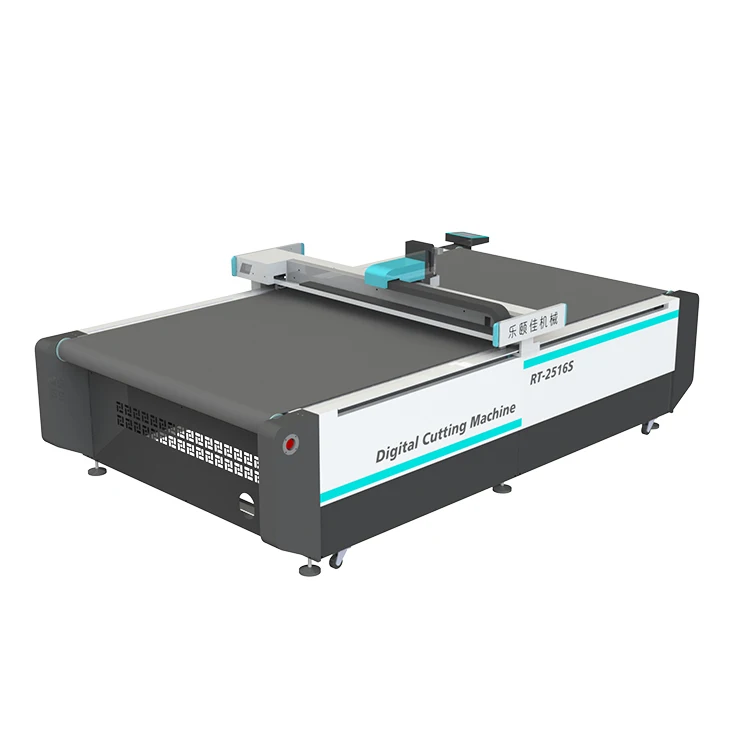
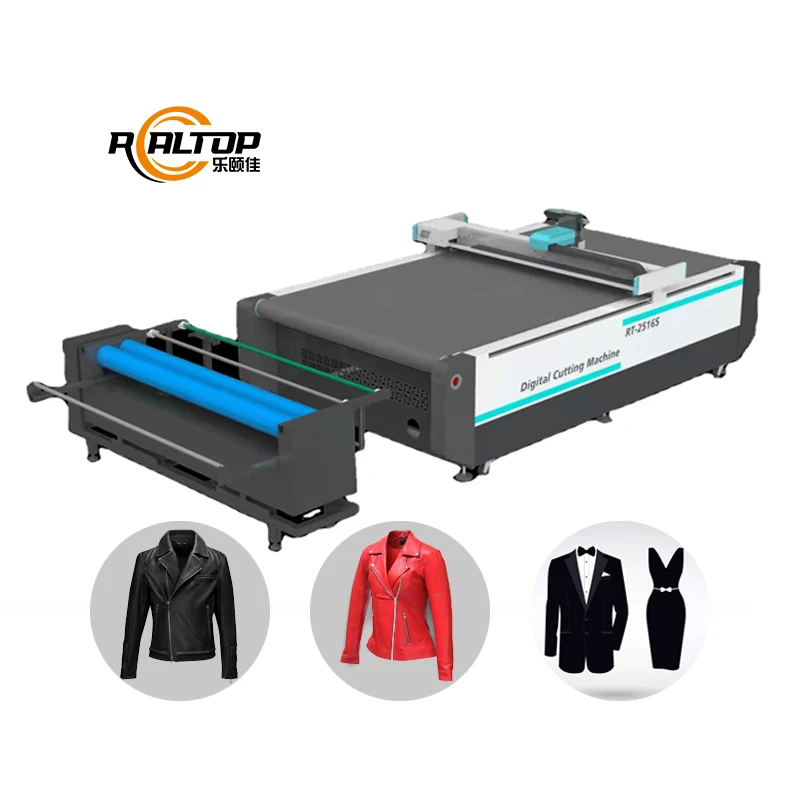
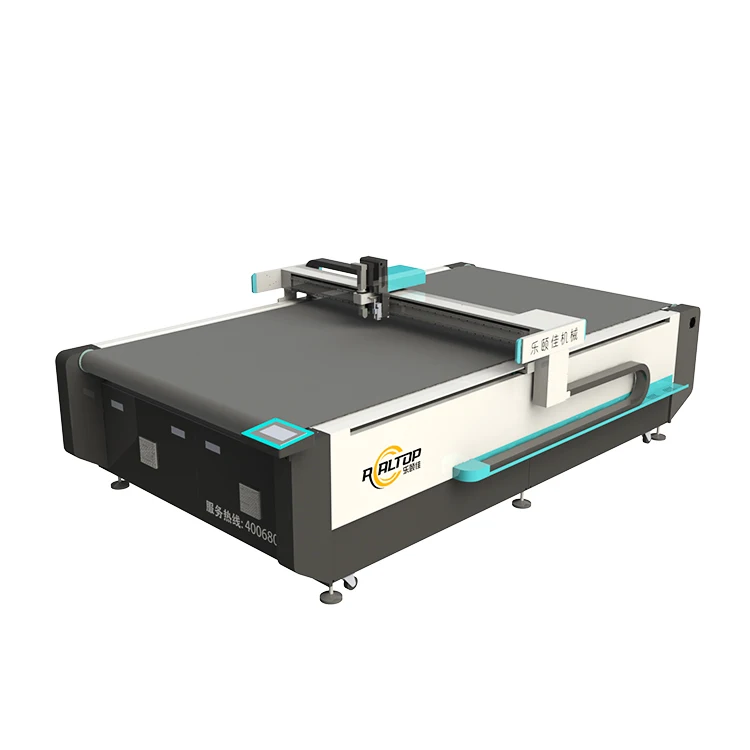
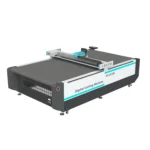
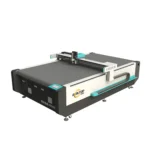
| Product Type | CNC Oscillating Knife Cutting Machine |
| Working Area | 1600 × 2500 mm |
| Machine Size | 3450 × 2300 × 1250 mm |
| Rated Power | 9 kW |
| Voltage | 380V ±10% |
| Cutting Thickness | ≤50 mm (varies by material density and tooling) |
| Translational Velocity | 800–1200 mm/s |
| Repeated Accuracy | ≤0.1 mm |
| Vacuum Pump | 7.5 kW |
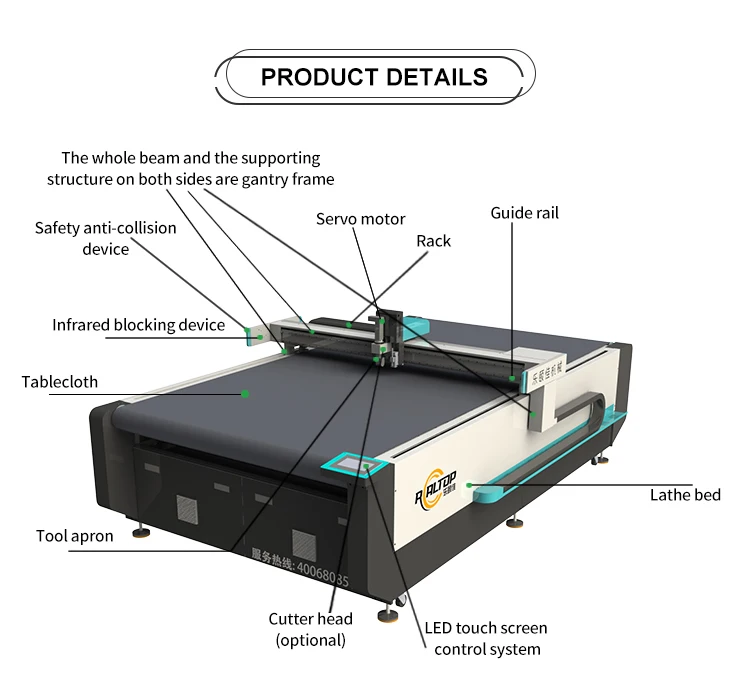
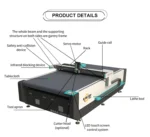
| Transmission System | Imported digital servo motor, linear guide, synchronous belt, ball screw |
| Multifunctional Head | Swiss imported knife with vibration full cutting, vibration half cutting, cursor location |
| Instruction System | HP-GL compatible format |
| Safety Device | Infrared sensors |
| Fixed Model | Flat working table with vacuum, auto feeding, Germany imported conveyor belt |
| Rail | Taiwan Hiwin linear guide |
| Servo Motor | Delta digital servo |
| Standards | CE |
Application Suitability
| Application | Material or Output |
|---|---|
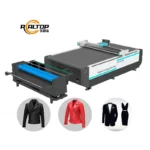
| Garment fabric cutting | Multi-layer woven and knitted textiles for apparel production |
| Leather goods manufacturing | Genuine and synthetic leather for bags, belts, and upholstery |
| Automotive interior trimming | Composite leather, sponge-backed materials for floor mats and seats |
| Footwear component cutting | Flexible uppers, linings, and sponge composite panels |
| Soft material fabrication | PVC, soft glass, silicon, and rubber sheets for gaskets and seals |
| Textile processing | Sponge composite leather and layered clothing flexible materials |
Why "Cutting Thickness ≤50 mm" Is Not the Whole Story
A CNC oscillating knife cutting machine specifications sheet lists the maximum depth, but what matters on the production floor is whether the tool head can actually shear through your specific material density at that depth without fraying or crushing the layers beneath.
I once worked with an automotive floor mat producer who ordered a vibrating knife table rated for 50 mm, assuming their 30 mm composite fiber board would be straightforward. The density of their material was considerably higher than the sample used during testing. The knife couldn’t maintain a clean shear plane, and the cut edges came out with visible burrs. Their effective throughput dropped sharply because every panel needed secondary trimming. We resolved it by switching to a higher-torque spindle and adding CCD camera positioning to hold registration on printed contours, but the delay cost them two production weeks [NEED_CITE: material density impact on oscillating knife cutting performance]. The lesson is that thickness alone never tells the full story — density, layer composition, and adhesive bonding all change how a blade behaves.
Knife System and Edge Quality on Flexible Materials
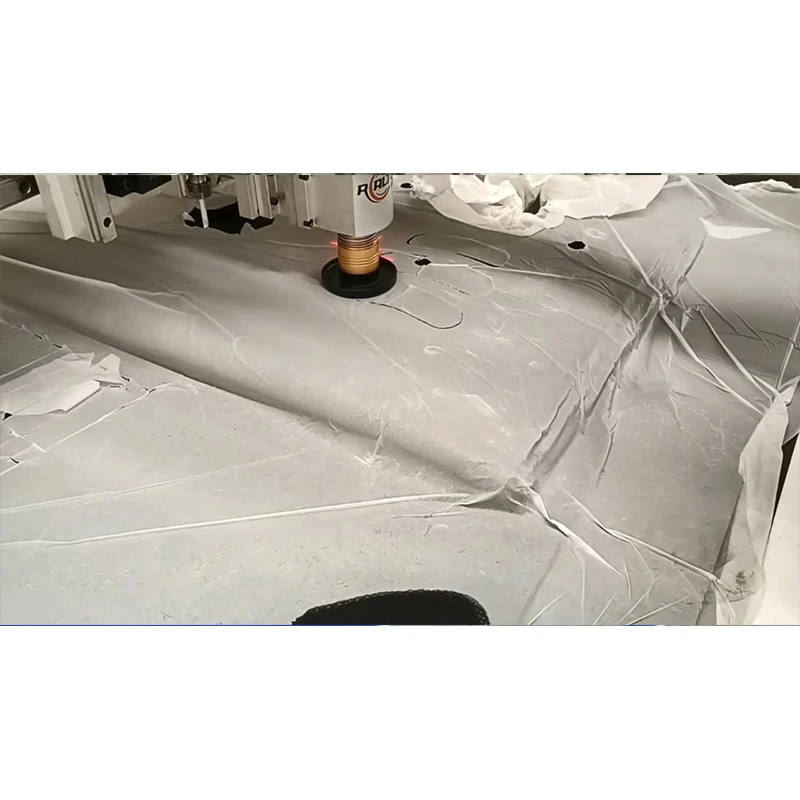
The Swiss imported oscillating knife head on the RT-D2516/RT-S2516 delivers full and half-cut vibration modes with an integrated cursor location function. For garment fabrics and soft composites, this means the blade angle and stroke frequency can be adjusted to match fiber toughness. A full vibration cut suits dense leather and sponge composites where a clean through-cut is required, while a half-cut kiss-cut mode scores release liners and adhesive-backed films without penetrating the carrier layer. The result is edge quality that reduces or eliminates secondary finishing.
Vacuum Table Zoning and Conveyor Feed for Continuous Workflow
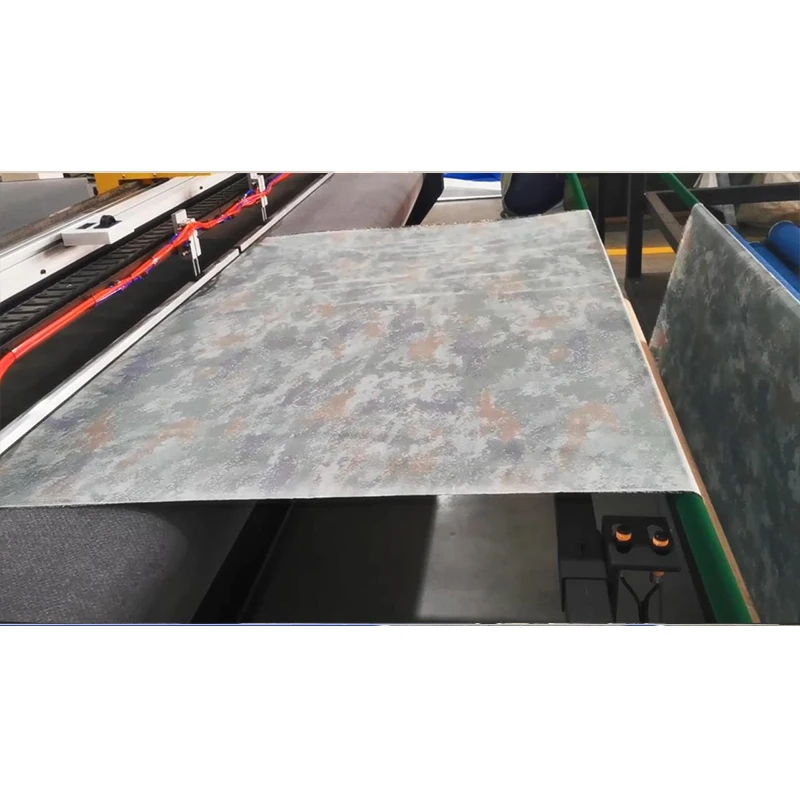
The 1600 × 2500 mm flat working table pairs a 7.5 kW vacuum pump with zone-controlled suction areas. This zoning matters when cutting small pattern pieces — a full-table vacuum spreads suction too thin, and lightweight fabric lifts off the table mid-cut, shifting registration. Sectional valves concentrate hold-down force exactly where the nest is active. The Germany-imported conveyor belt and auto-feeding system advance roll stock between cuts, reducing manual repositioning for high-volume textile runs.
Repeated Accuracy and Transmission Integrity
Holding ≤0.1 mm repeated accuracy across a 1600 × 2500 mm cutting envelope depends on the entire motion chain. The RT-D2516/RT-S2516 uses Delta digital servo motors driving Taiwan Hiwin linear guides through a combination of synchronous belts and ball screws. Belt-driven axes handle the high-speed traversals at 800–1200 mm/s, while ball screws manage the precision positioning at cut engagement points. When cutting nested garment panels where a 0.3 mm drift over a long cut path would push pieces out of tolerance, this transmission layout keeps cumulative error within the spec sheet claim [NEED_CITE: linear guide and ball screw accuracy standards for CNC cutting tables].
Reading the Specs That Actually Matter for Your Material
The HP-GL compatible instruction system means the RT-D2516/RT-S2516 accepts plotter-standard file formats common in pattern-making CAD software. Before committing to an order, confirm that your nesting software exports cleanly to HP-GL or that an intermediate post-processor is available. The 9 kW rated power covers the spindle, vacuum pump load, and servo drives collectively; verify that your facility’s 380V ±10% supply can sustain this draw on a dedicated circuit without voltage sag affecting servo performance. The infrared safety sensors stop motion when an operator breaches the cutting zone perimeter — essential for CE compliance on export machines.
The Cost of Skipping Material-Specific Configuration
Choosing a tool head based on catalog description rather than sample testing creates downstream problems that don’t appear until production starts. A drag knife used where an oscillating knife is needed will tear woven textiles along the bias. An underpowered vacuum zone lets thin silicone sheets creep during cutting, producing oversized gaskets that fail assembly inspection. Incorrect conveyor tension stretches knitted fabric before the knife engages, and the cut pieces shrink back undersized once released. These failures rarely show up in a single test cut — they emerge over a full shift of continuous operation [NEED_CITE: tooling selection errors in CNC knife cutting operations].
Why Sourcing This Machine Here Makes Sense
In-house design and production means the knife cutting technology is developed within the same engineering team that builds the frame and motion system, so tool head performance and machine rigidity are matched rather than sourced separately. Configuration is specified per material — the RT-D2516/RT-S2516 arrives with the exact knife type, vacuum zoning, and feed system validated against your samples, not a generic setup. CCD camera positioning for printed contour work can be integrated where pattern registration is required. Software compatibility is confirmed before the order is finalized, so your existing nesting workflow connects without middleware surprises. Sample cutting on your own material happens before commitment, giving you a physical report on edge quality and cutting speed to evaluate against your production standards.
Documentation & Verification
- Machine specification sheet with electrical schematic confirming 380V ±10% supply requirements for the RT-D2516/RT-S2516
- Tool head and vacuum table configuration list matched to your material density and thickness range
- Sample cutting report produced on your fabric, leather, or composite material before order confirmation
- CE declaration of conformity covering the oscillating knife cutting table and safety sensor system
- HP-GL instruction system compatibility note verifying file format integration with your nesting software
- Factory test record documenting repeated accuracy verification across the full 1600 × 2500 mm working envelope
Installation, Commissioning & Support
- Floor space planning for the 3450 × 2300 mm machine footprint with operator clearance on all sides
- Dedicated 380V circuit sized for the combined 9 kW rated load plus the 7.5 kW vacuum pump
- Table leveling and linear guide alignment checked after transport to restore ≤0.1 mm repeated accuracy
- First-run parameter tuning on your material to set oscillation frequency, feed rate, and vacuum zone pressure
- Operator training covering knife change procedures, conveyor belt tensioning, and HP-GL file loading
- Spare parts list identifying Swiss knife blades, Delta servo components, and Hiwin rail blocks for local stocking
What We Need to Configure Your Machine
To recommend the correct tool head, vacuum zoning, and feed system for the RT-D2516/RT-S2516, send us the material types you cut, typical thickness and density, maximum sheet or roll width, and daily cutting volume. Include your local voltage and frequency, preferred control language, and the CAD software you currently use for nesting. If you have printed contour work requiring optical registration, specify the mark style and minimum print-to-cut tolerance.
Frequently Asked Questions
Q: How do I select the right tool head for my material?
A: The choice depends on material type, thickness, and edge quality requirements. Oscillating knives suit dense composites and leather where clean shearing is needed, while drag knives handle thinner vinyl and film. We test your specific material sample before confirming the configuration, so the tool head is matched to your actual production stock rather than a generic catalog recommendation.
Q: Can the voltage and control language be customized before shipment?
A: Yes. The RT-D2516/RT-S2516 is built for 380V ±10% as standard, but electrical components can be configured to match your facility’s supply. Control interface language, plug type, and wiring standards are confirmed during the specification review stage so the machine arrives ready for connection without on-site electrical modification.
Q: Does the system support CCD contour recognition for printed materials?
A: CCD camera positioning is available as a configuration option for tracking printed registration marks during contour cutting. This is specified based on your print mark style, material surface reflectivity, and production speed requirements. We verify tracking accuracy on your printed samples before the configuration is finalized.
Q: How is vacuum table zoning configured for small parts?
A: The vacuum table is divided into zones with individual valves, so suction concentrates under the active cutting area rather than spreading across the full 1600 × 2500 mm surface. This prevents lightweight fabric and thin composites from lifting during cutting. Zone layout is planned around your typical nest pattern and smallest piece size.
Q: Will my existing CAD files work with this machine?
A: The instruction system accepts HP-GL compatible format, which covers most pattern-making and nesting software exports. Before order confirmation, we verify file format compatibility with your specific CAD platform and confirm that nesting data, cut order, and tool path information transfer correctly without manual rework.


商品评价
Clear filtersThere are no reviews yet.